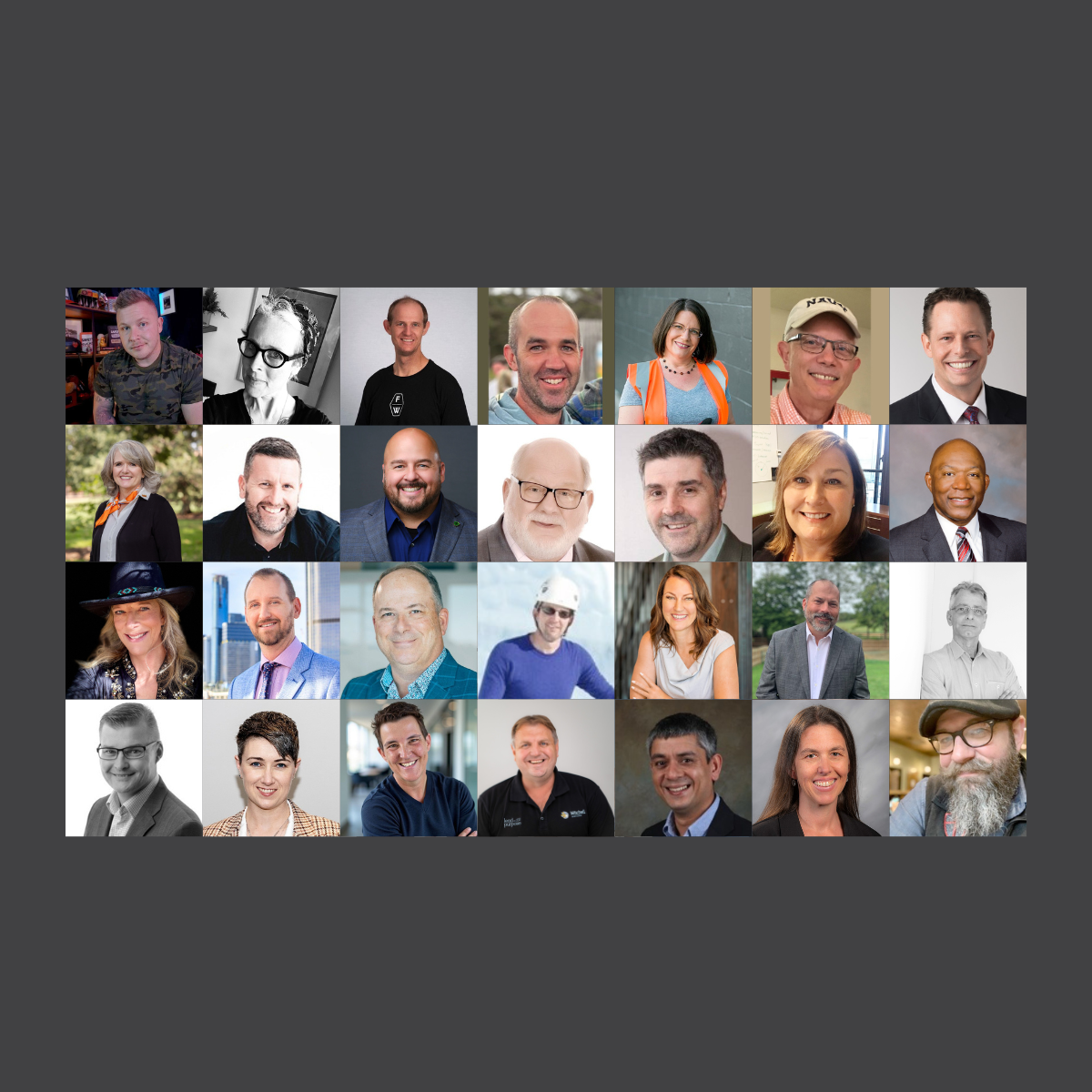
[Mary] Hi there. Welcome to a special edition of Safety Labs, our 100th episode. Yay! To mark this milestone, we've compiled highlights from the podcast so far, featuring a selection of strong opinions and memorable moments from our wonderful guests.
Over the previous 99 shows, we aimed to provide a balanced, open-minded platform to explore the full range of themes, debates, and challenges impacting the safety profession. However, certain subjects inevitably featured heavily in the conversation, and generated more lively discussion on LinkedIn. So expect lots of firmly held views on hot topics, including safety theories and metrics, blame, frank assessments of the role of EHS professionals, psychological safety, Heinrich, and emphatic statements on safety porn, zero harm, and safety culture. If you're looking for a relaxing listen, maybe save this episode for later.
A huge thank you to all the guests who have featured on Safety Labs and shared their candid views on workplace safety, and even bigger thanks to the Safety Labs team that produces, writes, edits, and manages the show. We also appreciate every listener, viewer, and social media commenter. Enjoy the special compilation, and here's to the next 100 episodes.
[Sam Goodman, Human and Organizational Performance Consultant] Safety professionals, green safety professionals, when you find yourself in this world of the professional practice of occupational safety and health, you often find yourself immersed in a world of organizational beliefs, of rules, procedures, and they're all a little different from organization to organization. Especially when you're new, and you find yourself in your first organization, you kind of start with this idea of, this has to be right — there are people here who've been doing this for thirty or forty years, who am I to question any of these things? I've been doing this for a month, surely I can't question these things, surely they know exactly what they're doing. That's not always true.
I think being willing to let go of that fear, and step forward and say, "I don't know that I necessarily agree with that, I don't know that that's necessarily the best way" — when you're green, you have a really hard time doing that. That's the piece of advice I'd give to new, green safety professionals: don't be shy, don't be afraid to step out and challenge, don't be afraid to dissent. If it looks like bullshit, smells like bullshit, it's probably bullshit — say that it's bullshit, that's okay. What I've found, especially as I grew in my career, is that the more you do that, you realize, wait a second, they actually value that. Most good organizations value dissent, they want to hear a dissenting opinion.
[Fred Sherratt, Founder at Straight Talk Safety] One of your assertions is that safety is a social construct — so can you explain what that means to you? Safety isn't actually a tangible thing, really, in any given way — and I agree, that's a fairly pedantic, semiotic way of putting it, but what safety is, is what we make it, collectively. Different groups have a different understanding of safety, that's the easiest way of explaining it. Safety is what you make it — what are the accepted boundaries, acceptable behaviors, norms, and those change depending on who you're talking to and what situation you're in. So when we talk about "a safety culture" on a job site, frankly, that's fairly nonsensical, because there isn't a homogeneous culture — everybody's doing it in different ways, as they interact with different people. Safety is something we create and recreate, as humans, all the time.
"Safety Fix It" is really about the safety professional being the easy button, or the counterweight, for incompetent leadership in the organization. We see that play out a lot — leaders aren't really good at dealing with people, they're really screwing things up, let's not focus on that, let's throw a safety professional on the other side of the scale to balance it out. So while they're out there running people into the ground, we send out the safety professional to say, "there's no such thing as time pressure." That's part of that "safety fix it" mentality — organizations look at it and think, we'll hire someone to manage safety for us, and we all know how that tends to work out — crap safety management systems, crap safety programs, and a burnt-out safety professional you'll cycle through at least once or twice a year at that point. That could be down to something as simple as, "hey, there's a trip hazard out there, you need to go do something about that," or, "there was an event, you're the punching bag now" — if it's even remotely tied to safety, it automatically goes to the practitioner to manage, own, run to ground. The one that sticks out to me — I was at a site years back, early in my career, and they said, "hey, we need more chairs in the lunchroom, that's a safety thing, you need to figure out how to order more chairs." That's "safety fix it."
[David Provan, CEO at Forgeworks] In the past, I think organizations were so politically sensitive to the moral pursuit around safety that if you questioned any safety practice in the business, you were automatically seen as someone who didn't care enough about safety. If you put your hand up and said, "I don't want to be audited next week, these audits don't add any value," or "I think these incident investigations are a waste of time, we keep coming up with rubbish actions," you were treated as a recalcitrant leader. Organizations were hypersensitive to any critical feedback on their safety management regime, and that really stagnated and limited our progress — I think we've had two decades of stagnation in industry, because of our inability to have open, safe conversations about whether anything we're doing in safety is actually adding the value we intend it to, and if not, having the ambition, the audacity, to make some wholesale changes. We're only just now starting to see organizations make some very big changes in how they approach safety, and I'm kind of excited by that.
We really need to be far more centered in what's happening today, and proactive about what's happening in the future. The challenge we face as a profession is that most safety professional activity is reactive, or it's planned and scripted — responding to incidents, non-conformances, regulator or customer requests, or a planned meeting, audit, inspection, some other planned activity. When I talk with safety professionals, I say, to be really effective in your role, you should have fifty percent of your week, starting Monday, completely unallocated — look at your calendar and leave that white space, because that's the space you need to spend roaming your organization, connecting with people, understanding what's going on in real time, investigating weak signals, getting involved in work planning and real-time decision-making. When I've raised that, mostly people say, "that's just a pipe dream, I'm forty hours a week, wall-to-wall meetings, every week." So when we talk about the future of the profession, aligned with that role and purpose, I've come up with a whole bunch of activities safety people should focus on instead — but it has to start with having more space, which means stopping a whole bunch of things safety people are currently doing on the safety clutter side of their role.
[Tim D'Ath, Head of Safety and Wellbeing at Yarra Valley Water] I was a frustrated safety professional — well, I still am, sometimes — but it's really about these traditional approaches to safety that so many safety managers or professionals are clinging to. These paternalistic approaches that reinforce a parent-child relationship between the safety team and the workforce really undermine a lot of the great work happening in safety circles, with progressive safety leaders genuinely trying to understand people, rather than imposing safety processes or procedures on the workforce with little or no consultation. When I become frustrated, I often go back to a question I used to ask myself to pull me out of that mode — stop trying to look scientific, and get on with the job of understanding your people. I feel like so many organizations, when it comes to safety, are so preoccupied with endless reports on safety metrics, measuring lag indicators that don't really tell us much, that they forget to actually engage with their people, and recognize that the people hold the solutions. We hire experts to do expert work, and we shouldn't be developing safety programs on their behalf and then trying to implement them in the field without their involvement. It just doesn't work, and it undermines what I think the safety profession is really about — engaging with people, helping them identify solutions, and being a conduit between them and senior management.
[Brye Sargent, CEO at The Safety Geek] So many times, management teams look to safety managers to hold everybody accountable for safety. But safety managers have no authority over the employees — zero. By authority, I mean the ability to administer consequences that actually mean something. I've written employees up before, but because it's me writing them up, it doesn't mean anything, because I can't fire that employee — that's the ultimate accountability. When a safety manager doesn't have the ability to fire someone, you can't administer consequences that are meaningful, it's just a joke, a piece of paper in their HR file that maybe someday gets used against them, but it has no real meaning. I have been in a situation where I was a safety manager with hire-fire authority, and I had zero issues getting my safety policies followed, because I had authority. But that's not the case in most places — in most places, the people with authority over employees are the frontline supervisors or department managers, and they're the ones who actually have to implement safety policies and procedures, so they can hold that accountability with employees.
When a safety manager goes out and shares company policies and trains people on how to do something correctly, they'll listen, they'll absorb some information — but what they actually do on the floor is whatever the supervisor tells them to do. If you flip that around, and all the training, coaching, and observations are done by the frontline supervisor, guess what, you've now built the culture, because now the person they listen to most is the one telling them to do it right, and of course they're going to follow it. Unfortunately, that's not how most organizations are set up, because they see it as, "the supervisor doesn't have time for that, why did we hire a safety person if the supervisor's going to do all the safety stuff?" That's the gap we need to close.
[Tony Muschara, Author of "Risk-Based Thinking"] Part of the safety professional's duty is to help line managers understand that safety is not the safety professional's responsibility — he or she is a facilitator, helping line managers understand what needs to happen when safety-critical activities or functions are in progress. Too often I've sat in planning meetings where the line manager said, "okay, let's start with our safety moment," and someone talks for two or three minutes about safety, and everybody breathes a sigh of relief, "we've accomplished our safety objective, we've checked that off, now we can talk about production." That mindset is antithetical to safety. Safety happens at exactly the same time as production. I always talk about work as the use of force to create value — if you're creating value, manufacturing something, running operations, that means there's a hazard in play, because creating work, force over a distance, means something changes. So you'd better be thinking about safety at the same time you're thinking about production. One of the safety professional's primary duties to the organization is to educate and train line managers, not to take on the role or responsibility for safety itself — that's not their purview. It's important for managers to maintain that responsibility.
[Scott Gesinger, Experienced Safety Professional] You had a bit of a shot across the bow near the beginning of the book, where you said, quote, "safety professionals have become complacent and unfocused, ignorantly relying on an eighty-year-old paradigm" — talking about Heinrich. Where do you see this complacency, and why do you think it's happened, what's the cause of the stall? Like any large problem, complacency among safety professionals is complex, and a lot goes into it, but a lot traces back to that original idea that eighty-eight percent of workplace accidents are the fault of the employee — that got drilled into us, generation after generation. Another part of the problem is that, for a long time, a large portion of the safety professional population wasn't adequately educated in how to be a safety professional — people got drafted into safety, or worked somewhere else and ended up there, without the educational background to really understand it as a science, an art and a science. Some of those people did wonderfully, so I don't want anyone to think I'm knocking them, I just think over time we've become more educated, more adept at looking at things scientifically.
Alongside that, you had a lot of consultants and vendors catering to behavior-based safety, making a pretty good living off it. You had a safety professional who'd either been taught that it's the employee's fault, or hadn't been educated at all, and then somebody comes in and says, "we've got this great safety program, it'll solve all your problems, it's X, Y, Z," it takes hold, you invest time and resources, and it's hard to disinvest from over time. I'm glad you described it as a shot across the bow, because I did feel that way writing the book, and I feel it now — in safety, a lot of us devalue ourselves, because we're not demonstrating to employers that safety is a hard science. We do things like put up a mirror that says "this is the person responsible for your safety" — an awful message to send employees, telling them, "you're on your own, we might own everything, make all the rules, give you all the equipment, but you're on your own."
[Leslie Rex Stockel, Associate Professor of Professional Practice at Oklahoma State University] Right now it's sort of in vogue to dismiss Heinrich, say he was wrong. If you actually read his text, he was saying the pyramid is descriptive, not causative. What he was trying to convey, and you have to remember the context of the time, companies weren't doing anything if it wasn't a fatality — anything less than a fatality, it was, "nice working with you, see you later," since this is before modern workers' comp came up. He was trying to convince people, hey, you need to pay attention not just to fatalities, but to these lower-level events too, because you're having a lot more of them, and if you take those seriously, eventually, theoretically, the fatalities should decrease. We know statistically that's not quite happening that way today, but there are things to consider as to why — I think how we manage workers' comp cases and OSHA recording, to keep things out of the system, is part of the reason for the gap between injuries and fatalities, because you can't hide a fatality.
[Sam Goodman, Human and Organizational Performance Consultant] You had a social media post recently criticizing the way some safety professionals use social media, specifically sharing videos of near misses, or even horrific accidents — what's your beef with that practice? There's a small group of us, kind of LinkedIn rebels, who don't get into that groove, and we refer to it as "safety porn" — it's occupational murder porn, frankly. I've seen videos on LinkedIn of people actually dying, getting killed, on LinkedIn. It's rampant — or if they're not dead, it's the kind of footage where you watch and think, they probably wish they were, just bad, gnarly stuff. First and foremost, that's the worst day that person has ever had, and now we're sharing it across the internet, where their family might stumble across a video of them dying at work — that's a really horrible thing to do, memorializing the worst day of someone's life. Beyond that, we often share these things as an opportunity to point at that person and say, "look at that stupid person who killed themselves, if they'd been more situationally aware, cared more about their safety, they wouldn't have gotten killed." That's even worse — we start with a video we have zero understanding of, then armchair-quarterback it, "should've, would've, could've cared more, tried harder, followed the rules harder," and use it as an opportunity for a massive comment section, pointing and saying, "my workers would never do that," then sharing it with the workforce, "see that person, you should care more than they did, so you don't die at work." That's just dumb, it doesn't really do anything, it's shock and awe, and I've never shocked and awed a workforce into not getting hurt. You just can't.
[Stephen Harvey, Founder at Hotch Potch Safety] I have my own little "Safety Boy" sort of Instagram page, where I capture some of those crazy videos people post online — what some call safety porn, but I actually use it differently. I know people don't like the judgmental comments that come after this stuff, but what I found in the past, sitting in toolbox talks, was that people would see these safety alerts and go, "all right, cool, can you tell me what's happening on Safety Boy?" We'd go through some of the stories and videos, and just have a talk about it — trenches, excavations, people working at heights, falls, and have a sensible conversation. If I heard judgment, I could call it out, because I was driving the conversation — if someone said, "he was an idiot," I'd say, "no, no, hang on a minute, how could that happen with us, can it happen with us?" And they'd usually say, "well no, it can't, because we use this or we've got these controls in place, that would never happen here." It just changes the conversation.
[Todd Loushine, Associate Professor at the University of Wisconsin] I was preparing for this by going on LinkedIn and reading, and it's almost like taking poison a little at a time, you kind of become resistant to it. But it's interesting how many people have to cut others down in an effort to say, "no, it's this way," or feel that, in order to feel righteous, they have to put other people down. That's too common in this profession right now, and it obviously upsets me, but I try not to engage in the pettiness of it. I'm really disheartened by the level of discourse on LinkedIn — the immediate response, with like-minded people, is to retreat into your own echo chamber, "yeah, that's bad" — but I try to search out, what's their background, what are they actually talking about? The problem is, someone comes in with a dissenting idea, in a proper, civil way, and they get smashed down. I got into a few of those fights earlier in my career too, and my students would say, "that person said some really bad things about you," and I'd say, "so what, you let this stuff roll off." This yelling thing — and through my career, I've dealt with people who think they're communicating, but it's communication with a definite form of intimidation, and that's not communication, that's forcing your ideas onto someone who doesn't feel comfortable saying anything back except, "I agree." In the safety field, that's dangerous, we shouldn't be yelling — though I understand why people do it. We have to acknowledge the anger, the emotion, sure, but what are we truly trying to accomplish? We need to understand, from the worker's perspective, what happened, from the student's perspective, why didn't things go as well? If yelling is your approach, you'll never get there.
[Gary Namie, Director and Co-Founder at the Workplace Bullying Institute] OHS, are you listening to me, you safety professionals? It's time to come out of the closet, raise, elevate your status within your organizations, and make known that you have what they need. You want to put out the headline of "toxic work environment," and getting branded as such in your organization — we can help you. You want to show the C-suite how it's preventable, ask for a seat at the table. HR's been asking for decades, they don't deserve it — you deserve it, because you actually have something relevant, you can bring the science of psychosocial safety climate research to bear and apply it in your organizations. You hold the key to snuffing out the toxic work environment, so that company doesn't end up in a lawsuit with me as an expert witness complaining about their toxic work environment. I think it's really critical that they rediscover, or recommit to, a new status. I never met with the safety people, when I used to go into organizations — why would I, it was all about preventing broken legs, taking care of physical hazards, trip hazards, MSDS fact sheets, all that other stuff. But no — now it's in the human realm. I see an opportunity, but also a necessity, because HR and legal are never going to fix this. Never.
[Tim Marsh, Managing Director at Anker & Marsh] We were very wary of talking about the link between mental health and accidents — any discussion of that seemed to be blaming the victim, rather than analyzing it as a risk factor. Slowly, through understanding the data more clearly, we've realized it's just a huge risk factor, whether you're coming at it from a continuity point of view, a resilience point of view, or an individual thriving and doing well perspective. The data here in the UK is that for every worker we kill, thirty-one workers will take their own lives — and when you realize that for every person who takes their own life successfully, something like twenty-five will attempt it on a given day, we know about Heinrich's triangle, you don't have to extrapolate very far to realize you're talking about a lot of people in work, operating heavy machinery, making really difficult and important decisions, interacting with colleagues who really aren't in a good place at all. Clearly that's not ideal — the likelihood of them giving you above-the-line, discretionary effort is bound to be smaller on average than someone having an average day, and the likelihood of them having an accident is higher. It's not about blaming the individual at all, it's about understanding that if one in five, on any given day, is struggling with their mental health, that's a colossal risk factor, and you can either hope for the best, or proactively address it, know that it's there. We know from world-class safety culture that what you don't do is cross your fingers — what you do is proactively go out, understand where it is, why it's happening, who it's happening to, and what you can do about it. I absolutely refute any suggestion that those same principles don't apply to wellbeing and mental health as much as they do to safety itself.
[Stephanie Benay, Associate Vice President, EHSW] It's not unusual for a woman who's worked in the field to have been harassed — sexually, emotionally, physically — to this day. I remember, as a young safety professional, I don't know how many men worry about answering a knock at the door at eight o'clock on a camp job — I did, because on more than one occasion, I made the mistake of thinking it was a colleague asking a question, and the door was pushed open, and I was pushed up against the wall. That's a really awful experience you wouldn't wish on anybody, but it happens. In Canada, we started the Women in Occupational Health and Safety Association in 2017, and at our inaugural event the following year, I was shocked to hear young female professionals at the table still discussing personal safety, and the latest gadgets for keeping a door firmly shut in hotels and on camp jobs. Why would you want to expose yourself to that, yet at the same time struggle with the balance of, how do I get the field experience that adds value to my career progression? It's an interesting challenge, and incredibly unfortunate. Yes, bullying and harassment hotlines, whistleblower lines, exist at many organizations, but if you consider that ninety percent of businesses are small businesses, they don't have that infrastructure, and a young professional going to their boss might be looking for a new job the next day — they'll get rid of the safety person in a heartbeat. It still happens, and it's still the discussion twenty-five years later, it's mind-boggling to me, but we have to talk about it. More importantly, my male colleagues are phenomenal, but what we actually need is our brothers in safety to speak up, and hold their gender accountable for bad behavior.
[I. David Daniels, Founder at ID2 Solutions] "Safety is for everyone" — what do you mean by that, and how has safety maybe not traditionally been for everyone? The data suggests that, at least in the American workplace, women and people of color get injured at rates much higher than their white male counterparts, across all industries, no matter which one — often because the system itself wasn't really designed with them in mind. When I say things like that, people sometimes assume I'm accusing people of being biased, racist, homophobic, or sexist. I'm not accusing individuals of anything — what I'm suggesting is that these systems were built many, many years ago, and in the United States, built without certain people in the room, or in mind, when the system was designed. Having a culture of openness and inclusivity in everything we do means, yes, OSHA requires a policy on this, but what that policy looks like for us should be the product of all our input. I'm not naive enough to think every single person will contribute, but every interest group should have the opportunity to say, "that part doesn't work for me," and if it doesn't, let's make the adjustment, because ultimately the goal is to help people feel safe. That's what it's about — it's going to look different, and I say this so often, I heard someone else say it and kept repeating it: different does not mean deficient, it simply means different. Conversations about diversity, equity, and inclusion can feel exhausting sometimes, because they become slogans, and as soon as someone says something's different, all heads turn, "well how could you think that?" Because I do, I don't need a reason to think that way, I just do, I don't feel safe. "Well why not, what's wrong with you?" There's nothing wrong with me, and I'm not saying there's anything wrong with the system either, it just doesn't make me feel safe when it goes that way. Let's not make this something it's not, let's not make it accusatory — the question is, does the person exposed to that environment feel safe or not, and if not, what's it going to take to get them there?
[Crista Vesel, Adjunct Professor at the University of Alabama] Safety doesn't mean the same thing to you as it does to me, in this moment, next week, in this environment versus that environment — we have to activate it again, each time. The best thing you can do is ask people, how could we be safe today, how can we empower and make safety dynamic and actually do something with it, what does that mean today, in this work? Safety culture doesn't mean anything on its own, it's just culture — culture has all sorts of things involved in it, we could map it out forever, and there are things we'd say, yes, that's part of safety, but depending who you ask, it may or may not fall in that area. We don't really like the idea of "safety culture," because it simplifies something that's much more complex, and by simplifying it, we're taking away a lot of the power.
[Dr. Tristan Casey, Director at New View Safety] There's a lot of criticism that we should do away with the term "safety culture," because it's too confusing, takes attention away from broader organizational issues, and narrowly defines things. But I'd argue we're always, implicitly, evaluating our cultures, always looking at it from some point of view, and if we make that safety part tangible, define it, discuss it, say to each other, "this is what I think safety means to me," that at least surfaces the bias, and lets us move forward with a common understanding of what safety and culture mean together. It's a bit of a play on words — we're still talking about the broader organizational culture, but asking how these artifacts, beliefs, and manifestations shape the way safety is practiced. Still that broad approach, but focused specifically on how it affects safety performance or management techniques in the organization.
[James Junkin, CEO at Mariner Construction Services] It's easy to say "safety culture," which I despise that term, by the way — there's no such thing as a safety culture, only a culture within your organization. If you want to bring on another guest, I'll debate them that there's no such thing. I'm going to go on a bit of a rant and come back to your question, you cool with that? When you say "safety culture," it sits over here by itself, separate, and then you've got an accounting culture, an operations culture, an office culture, some other culture for the guys in the warehouse. It's your company's culture, and the sooner we understand that, the better. Safety and your overall company culture are the same thing. We've got to correct the language — if we say "safety culture," we're implying it's something separate and apart from our other culture. It's just the culture of the organization.
[Bob Edwards, Human and Organizational Performance Consultant at HOP Coach] Sometimes higher up in the organization, people unfortunately don't get to see enough of the context of the work — so when people hear this, it can be uncomfortable, "well wait a minute, our numbers are really good." Well, yeah, so are a lot of companies that have had fatalities — the numbers being good don't mean anything to me on their own, it's the context behind those metrics that matters. We have to get much, much better at being open and transparent about that context — what does it actually take to get that done. "Best production day ever." Yeah, we almost blew a unit up, nobody knows that, because nobody's talking about it, but the metrics said best day ever. It can be hard to hear, but once people grasp this, they're not satisfied with simple answers anymore.
[Kym Bancroft, Director at New View Safety] Tell us about the sacred cows, the assumptions and beliefs in safety management you'd like the safety industry to re-examine. Every organization would have different ones, but my version of safety sacred cows includes what I call the metric sacred cow — the idea that there are just a few metrics that brilliantly tell us the state of safety in our organization. For most organizations, that's LTIFR and TRIFR, which are king in the boardroom, and we make this core assumption that these metrics are telling us how safe our organization is — which has been proven, by many researchers in published, empirical, science-based journal articles, to actually not be the case. Those metrics tell us about injury performance and lost time, but nothing about how effective our critical controls are, or how critical risk is actually being managed. I like to really challenge that one, and I've done so in many boardrooms — I take the research to them and show that there's actually an inverse relationship between companies that report zero harm as a statistical outcome and their fatality rates.
[Stephen Scott, Human and Organizational Performance Consultant at HOP Improvement] We found ourselves trying to figure out any way possible to avoid classifying something as a recordable or a lost workday case. "Case management" was the term everybody used, because that number got so much scrutiny — it was part of our performance objectives, published all over the place, anybody who wanted to know anything about that plant saw that number first. While we felt like we were doing all the right things to manage safety, we were actually discouraging people from telling us about safety events, until we had one too big to hide — a lost workday case, or a recordable where someone actually needed medical treatment. Over time, we really started to see we were actively discouraging people from telling us things that might have let us learn, improve, and put better controls in place to prevent the next bad thing. That's kind of the trap we got caught in with this drive for zero — it was really clear that zero was good, anything else was bad, and zero became the bar we used to determine success or failure, reward or punishment. When that's the case, people just quit telling you things. It's almost human nature.
[Clive Lloyd, Author of "Next Generation Safety Leadership"] Unfortunately, BBS lent itself to a lot of those rules — follow the rules, get rewarded, don't, get punished — and all we learn to do as human beings is avoid the punishment, just don't talk about it, don't admit a mistake, or when we move away from the policy, just don't let management know. It's really fixing nothing, and it's an unfortunate unintended consequence. Don't get me wrong, well-intended — I don't mean to attack people who run behavior-based safety programs, I believe most companies that brought in BBS did so with good intent, I really believe that. But look at the unintended consequences — to this day, when our people have been "good," and listen to the language here, you can't get away from it, when people have been good, done the right thing, we reward that. What does that look like in safety? "A million hours LTI-free," you see that on LinkedIn every day, those self-congratulatory posts. We've got a million hours LTI-free, what do we do, maybe a cash bonus for that — and what does that literally do? It incentivizes non-reporting, an unintended consequence. Think about it, Mary — when we talk about behavior-based safety, whose behavior are we talking about? Not the board's behavior, not the SLT's behavior, the workforce's behavior. You can't hold that position effectively without concluding, why do we have incidents — because of them, because of the workforce. Culturally, what we're doing is blaming the workforce.
[Greg Smith, Partner and Workplace Safety Lawyer at Jackson McDonald] We seem to have created this really black-hat rhetoric in safety — that every time somebody dies at work, it's because of this evil, recalcitrant employer who doesn't care about their workforce. I think that's terribly unproductive, and terribly unfair — I understand where it comes from, but I don't think that makes it right. The safety industry often buys into this in a way I think is somewhat hypocritical. It's hard, because we're talking about such a huge spread of ideas and people, but you get this situation where we can't blame the workers, because it's not their fault, everything they do is an expression of the organization, worker behavior isn't the problem, it's an expression of the problem — okay, fine. Then an organization suffers a fatality, and it's the manager's fault, or the CEO's fault — and we don't recognize that everything they're doing is just as much an expression of the environment they operate in as anything else. I find it hypocritical that so many people jump onto social media platforms when a company officer gets prosecuted, celebrating it as though it's good for safety. It's not — I think it misunderstands a lot.
[Elisa Lynch, HSE Senior Manager at Hovione] In practice, I suppose I see traditional safety showing up as safety officers marching around with clipboards, pissing people off — and I say that because I've been that person. Who's your man that parted the waters — literally walking through a site and people are scattering as you come, because they don't want to talk to you. That's how I'd describe it. Versus, when I take a more new-view, collaborative approach, you're walking through a site and people are happy to see you coming, "hey, how's things," you can have a conversation, a chat, people come to you with problems. Whereas, in my experience of a traditional approach, people would hide things — very much underreporting, covering things up, all that kind of thing.
[Logan F. Martin, HSE Consultant, LF Martin LLC] There are so many theories out there of how safety professionals should be implementing, applying their craft — what's the theory you go by? What we should really be focusing on is something in between the theory and the actual application of the work. When you ask, where do we need to get to from where we are, I think we need to go backwards a little — I'm going to get a lot of grief for that — but I think safety professionals have gotten into this realm of just talking this stuff to death, your LinkedIn page, this conversation, and what we've really gotten away from is actually being with the workers, helping them figure out their ultimate goal, which is to go home safe every day. I don't really get into all that conversation about Safety I, Safety II, Safety Differently, HOP. I always say, and I say this a lot on my own podcast, it just depends — right down to your specific company, your specific work group. All of those theories can apply at once.
[Josh Bryant, General Manager of People, Risk and Sustainability at Mitchell Services Limited] It was always around, what did the person do wrong, how can we fix the person — almost like, how can we bulletproof the procedure, let's add another line, let's pull everyone in. If we had an incident involving one person, let's pull 120 workers in and almost retrain them — but what about the 119 who did nothing wrong, and didn't really understand what happened with the event? My personal view was always, something's happened, try to understand it, but ultimately the person's done something wrong. That view shifted almost overnight when I stumbled across Safety Differently — that's how big an impact it had on me, I thought, have I really been doing this wrong? That framework was about people being a solution to harness, not a problem to control, and I thought, maybe I've been going about this the wrong way, trying to change people instead of understanding their situations. I'd been involved in numerous behavior-based programs, and you're trying to make improvements to the work environment, but it always came back to, the person was in the line of fire, the person was doing this wrong, the person needs to fix this. The focus areas for the month would be slips, trips, and hazard management, but it wasn't actually changing anything in our business. That's where Safety Differently had an impact for me — I've actually got an ethical responsibility, for the people who work for me, to make their workplaces better, to understand what they're going through day to day, what their constraints are, and what I need to do to make things go well. That was a big shift, and then we fell into the HOP space, human and organizational performance, and the language of HOP really resonated with us as a business, which is where we started making changes as leaders too. The simple thing with the HOP principles is, error is normal, even the best make mistakes, people make mistakes — taking that view every time we have an incident or something minor happens. My CEO now, Andrew, will say, "mate, if you and I were on that rig, would we have done exactly the same thing?" Yeah, we probably would have — that's just acceptance, baked into the business. Blame fixes nothing has been one of our business principles for a long time.
[Nippin Anand, Author of "Are We Learning from Accidents?"] Every society has found a way to project its failures onto a person or group of people — it's impossible not to. If we didn't, society would fall apart. The whole idea of scapegoating is to find meaning, as we discussed, in misfortune, by looking outward rather than inward for our failures — the bigger the loss, the greater the propensity to blame, to find a scapegoat. It's one of the most powerful rituals keeping society intact. How interesting that an industry, maybe sixty, seventy, eighty years old, comes up with a slogan that "blame fixes nothing," or "you can learn, or you can blame, never both" — what you're telling me is you're denying a very basic human tendency. We deny that energy by saying blame fixes nothing, or you can learn or blame, never both. Here's the interesting thing, Mary — every organization blames and learns. We outwardly project the problem onto one person, but then close the doors, try to figure out what went wrong, put things in order, and create change. We're doing both, not just learning or blaming — they coexist, because we can't avoid either. We just do it in balance, one covertly, the other openly.
[Lori Guasta, Partner and Strategic Advisor at ERM] It comes back to that shiny object syndrome, what's hot right now — today in safety, we're very much chasing HOP, the human and organizational performance lens, energy-based safety, even new standards being created. None of that is new, none of it, and I feel very strongly that the way forward is getting back to basics, just doing safety well. The fundamentals around safety and effective risk management haven't changed, they've just been renamed — we put a new logo on it, a new name, sell another book about it, create some new standards, but it's nothing new. That's not just true in practice, but in theory too — I have yet to find a concept in safety that's genuinely new. I just haven't.
[Mikel Bowman, President at Bowman Legacies] I want safety people to really see the power of their position — to lead from the middle can not only change someone's work life, but their home life too. You have an opportunity to grow people in such a way that it can literally revolutionize their lives. I talk about legacy a lot, and I'm here to tell you, that is legacy — not money you leave behind, not statues made in your honor, none of that means anything, because after the annals of history are done, you'll be far forgotten, and the deeds you've done will be far forgotten too. But the intentions you put forward in life will perpetuate themselves for an eternity. Safety people are the true heroes of the industrial complex, and if you conceptualize and understand that, grab hold of it, and walk in it, you will see cultures change, mindsets change, you'll see what you thought was impossible move. Because I know it, I've lived it. It's not easy, it's the harder way, it's not about the box that gets checked, it's bigger than that, much bigger. When you lead that way, you'll see your citations go down, you'll see compliance go up, because you've got engaged, empowered people, doing things for you, because they're willing to march to hell and back with you, because they've watched you walk it, and it's inspired them to do the same.
This podcast is created by Safety Products Global, the world's leading manufacturer of safety knives. Through our trusted brands, Klever, Slice, and PHC, we empower companies to prevent injuries by providing safer cutting tools for every material and application. Until next time, stay safe.