[Mary] Hi there, welcome to Safety Labs. I'm sure we're all familiar with that sick feeling deep in our stomachs when we see news about a large-scale or industrial accident. The Grenfell Tower fire, Deepwater Horizon, and the disaster at Lac-Mégantic come to mind. After such an event, we look to inquiries to understand and learn from these accidents — at least that's what we say we want to do, understand and learn. Today's guest has examined the goals, structure, and underlying biases inherent in standard accident investigations, and asks whether we're learning from accidents, and if not, why not. We'll discuss his book, entitled "Are We Learning From Accidents? A Quandary, A Question, and a Way Forward."
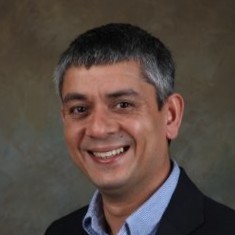
Nippin Anand specializes in the relevance of culture, belief, myth, and metaphor in the areas of risk, safety, and organizational learning. He holds a PhD in social sciences and anthropology, a master's degree in economics and social psychology, as well as a seagoing master mariner's, or captain's, license. He studies mythology, religion, anthropology, spirituality, neuroscience, depth psychology, linguistics, and semiotics to broaden his understanding of the human being. Nippin is the founder of Novellus, a team of applied researchers, business consultants, and lifelong learners that helps organizations create a learning culture. Through Novellus, he offers programs and workshops on the social psychology of learning, accident investigation, safety leadership, and more. Nippin joins us from Aberdeen. Welcome.
[Nippin] Thank you, and thank you for the wonderful introduction.
[Mary] Your book — I want to set this up a little for readers who haven't read it. It examines accident investigations, but to do that, it asks a number of fundamental questions and digs into concepts about how humans perceive, understand, and make decisions. You explore all of that through the story of the Costa Concordia cruise ship disaster of 2012. I'd like to start where you started — can you briefly tell the story of the Costa Concordia, and when I say the story, I actually mean the official investigation findings, the facts from that perspective — and start us off by describing the questions you had when you heard about it, the questions that spurred you on this journey that ended up in this book?
[Nippin] Sure. This accident happened in 2012. At that time I was a consultant at the DNV office in London. The fascinating thing about the accident was that the first news that appeared in the industry newspaper, famously known as Lloyd's List — I was sitting at my desk, and the first thing I saw was that this was a ship that went very close to an island off the coast of Giglio, in Italy, and capsized, killing 32 people. But something hit me really hard at that time — this wasn't the first time the ship had attempted that maneuver, going close to the land. That was fascinating to me. But then that part of the story quickly disappeared, within a few hours, nowhere to be seen. Instead, what started to appear was the demonization of the captain — that it was the captain who was responsible, that he'd screwed it up, that he was a negligent man, that he ran away from the ship, all sorts of accusations. That got my interest in this accident — I knew exactly where this was going, we'd found the scapegoat, and that was it, the whole industry was after this person.
That also resonated with my own story. Many years ago at sea, I had a very similar thing happen, though nothing close to this accident — a near collision at sea. We were arriving into a port in the middle of the night in Japan, I came very close to another ship, had to call the captain. At the time, we handled it very professionally, everything was done correctly. But the next morning, everything changed — I went from being a competent person to a negligent person within hours. That's always fascinated me — how one mistake, one accident, can change the perception of the world and turn it a hundred eighty degrees around. What is it about an accident that makes us look at people that way? That was the beginning of my curiosity.
At the time I had a job, and I didn't want to pursue it right away — I was waiting to see where it would go. It wasn't until 2017, when I was sitting with a friend of mine, the head of the Danish Maritime Accident Investigation Board at the time — he's no longer there now — having a coffee in London. We were discussing this case, and I said, why don't we reach out to the captain? It was just a random thought at the time. We finished our coffee, and I went back to my room and emailed somebody I knew who had a connection to the captain. The captain was under house arrest at that time. Fortunately, that person responded within hours, and set up a call between me and Captain Francesco Schettino, the captain of the Costa Concordia. We had our first call over Skype, then another call, and he decided, yes, he wanted to speak with me — this was just two months before his imprisonment, in 2017. He knew he was going to prison, and he wanted to share his story. We booked our flights to Italy, spent three or four days with him, did a lot of video footage. I'm an anthropologist, so I took a lot of field notes — everything matters in anthropology, whether it's having a meal together, going to a temple or church, or hanging around with a dog, every little detail matters. I took copious notes of all of that, and it took me another seven years to produce this book, to bring his perspective on the accident.
Mind you, there isn't another book or study, to my knowledge, that has brought forward the captain's perspective. We've had so many accidents at sea, but we've never heard the story of the captain. What's interesting to me is that I bring his story, but it's not really his story — it's my story of his story, woven into his. I think that's what makes this book unique. I don't claim objectivity from the very beginning — I'm very openly saying it's a subjective, biased view of the world, and I think that's also unique. We don't see that in the risk and safety world, which is driven by the myth of objectivity, when there is none.
[Mary] So this isn't the story of "here's the official narrative, but I found the real one." It's really just a journey, an exploration, pondering some questions — such as the first one I'd like to ask: why is it important, do you think, to reflect on how humans make meaning from misfortune?
[Nippin] That's a very good question. Why is it important? Because, you see, we are all creators of belief. Whether you call it misfortune or an accident, at the end of the day, we still have to go to bed, still have to sleep, still have to get up in the morning — we have to tell ourselves a story. If you look at the classic case of the Boeing 737, the planes that were grounded — if we started thinking the aviation world is systematically unsafe, how do I board my next flight? It becomes impossible — an existential challenge. So I have to tell myself a story — that if only those people had maintained it properly, this wouldn't have happened, if that pilot had done his job, this wouldn't have happened. We're creators of meaning in that sense — we need an answer to every problem.
If you read someone like Ernest Becker, there are ways to look at the universe and ask, does the universe even have meaning, does it even care about your meaning? That's where the power of culture comes in. Every culture gives you a particular narrative to make meaning of misfortune. The Greeks created the Hollywood narrative, the hero myth or the villain myth. Christianity created this idea of the salvation myth, the perfection myth. Every culture creates its own myth to give people some kind of solace in the face of misfortune, so you can get on with your life, get back to work tomorrow. We have to tell ourselves a story.
There's a lot of randomness in every accident — I make this very clear in the case of US Airways flight 1549, the bird strike, engine failure, so much randomness in that accident — but in the end, a myth prevailed. We had to tell ourselves a story that if it weren't for Sully, we wouldn't have been safe that day. We create this superhero, because we are creators of meaning, and we need some kind of meaning in the face of misfortune. Nothing scares us like saying, "well, I don't know," and not being able to say with confidence — that scares many, many people. But I think that's where the real wisdom, the real learning, lies — yes, I've analyzed it, looked at the depth and detail of the story, and this is my way of looking at it. That's where the problem lies — we have to give ourselves an absolutely certain meaning to get back to work, and sometimes we go too far with that meaning.
[Mary] Let's talk about myths a little. I think most people conceive of myths as stories in books, misbehaving Greek deities — but when you discuss myths, you're talking about something we're often not even aware of. Can you describe what you mean by myth in this context, or maybe in the safety world?
[Nippin] Let's talk about myth first, then we'll get to the safety world. When we talk about truth, there are three levels. The first level is absolute truth — to simplify, if I don't eat for the next month or two, I will die — that's something most of us can agree on, exceptions made. Then there's a partial truth, or incomplete truth, which is what we call a myth — you tell yourself a story, like "an antibiotic will cure your infection." That's a myth we create in this part of the world. It does cure people, but prolonged use of antibiotics has also led to a place where people become resistant — and we're not even talking about superbugs. It's an incomplete myth, a partial myth, a story with several question marks, but it gives meaning to people, to a certain culture, a certain group. In that sense, it's a myth — an incomplete story, a partial truth, not an absolute truth.
Then there's a third level of truth, which we call imagination or fantasy, which exists only in my mind or yours — it has no relevance to any group, it's like a delusion. So: absolute truth, myth, and complete fantasy — those are the three levels. This is how I'd like to define myth, and I think it's important to acknowledge the mythical nature of reality, because by calling something an incomplete truth, you remain curious forever. When you call something an absolute truth, you close the doors to learning completely. That's the power of a myth, and the reason in anthropology we see almost everything as a myth — every culture creates its own myths, which we sometimes call stories.
In the safety world, there are many myths. One of the biggest delusions in the safety world is zero accidents — that's a myth in its own right. We believe in the myth of red, orange, and green when it comes to risk matrices. There are the myths of KPIs — that everything can be measured, and therefore controlled. These are all myths we've created in the risk and safety world.
[Mary] I'm sort of skipping ahead here, but a couple things come to mind — you point out that a myth has to be shared, within a culture. For example, when accident investigations look for root cause and corrective actions, you argue there are myths underlying that, that they're already framing the exercise of investigation in a way that, to some degree, prevents learning. Can you expand on that — what's the typical trajectory of an accident investigation?
[Nippin] You have an accident, the next thing is an investigation to find a root cause or root causes, then we come up with corrective actions, and we think we've closed the loop. What we get trapped in is this vicious cycle of finding a root cause and producing a corrective action in order to close the loop, never considering that every corrective action comes with its own set of risks. No matter how hard you try, it's an incomplete truth. You start off with "root cause," which is a myth in its own right — that there's a cause to everything, and it can be corrected.
I work best with stories — let me give you an example. We've had so many seafarer suicides on board ships post-COVID, so many people jumping off ships, taking their own lives. It's become such a normal thing in the risk and safety world. The flag state administration of the ship where a seafarer has committed suicide expects a detailed report explaining why — they want a root cause and a corrective action. This is how insane our industry has gotten. What could you possibly come up with as a root cause for a suicide? A person has gone missing at sea, nobody has a clue what happened, and you're expected to produce a two-hundred-page report. This is the power of the myth — if you tell anyone there's no cause to it, they'll look at you as if you have a mental health condition yourself. That's what the power of the myth does to us — there has to be a cause to everything.
[Mary] And that brings order — what you describe in the book is that the reason we do this is because we want order, some level of certainty, or what we believe to be certainty. So the notion of fallibility comes in, and it's really important to your ideas. Why is it important to reflect on humanity's relationship with fallibility, not just fallibility itself?
[Nippin] Fascinating topic, we could talk about it all day, but let me give my own example. Nature has designed all of us as fallible, all of us unique. My son, for example, inherited a condition from me — eczema as an infant, now an allergy to dust mites that makes it hard to breathe at night. I have a similar problem too, which causes me to snore, sometimes a nuisance to the whole family. My point is, you pick up anyone in the world, and you realize very quickly that biologically we're flawed, all of us, in one way or another. In some ways it's not a flaw, it's a design, and we just need to accept it, work with it.
In some ways it's also a blessing — if we were all designed perfect, there would be no scope for learning, no scope for uniqueness, no scope for subjectivity and individuality. Nature designed us this way. I think what we do in risk and safety, deeply inherited from dogma and religion, is believe we're all fallible, but need to be on a path toward perfection — steering toward that one goal, which we call zero. I think that's a very dangerous ideology. Fallibility isn't something we should deny or be ashamed of — it's something we should embrace, and encourage people to live with, because everyone is unique and different. If you have two children, anyone who does will know they're poles apart from each other. How are you going to discipline them, bring them to some kind of standard or uniformity? That's where it's all lost. Fallibility holds an opportunity to understand subjectivity, which our industry strongly denies, doesn't even talk about, because we aim for perfection, and assume corrective actions get us closer to it.
If you look at the entire framework of a safety management system, the underlying philosophy is that there's a base standard everyone needs to conform to. What could be a bigger myth than that? It's like the Ten Commandments, and you need to adhere to them — we call it the safety management system. This shows how deeply religious the industry is, without recognizing its own myth.
[Mary] That's another facet of myths — we're typically unaware of them. Why is the concept of normal work, or work-as-done, not as straightforward as it initially sounds?
[Nippin] Going back to what we were discussing — this whole idea of normal work, or work-as-done, is a myth in its own right. It's a complete delusion to say "this is the description of work as done," because the moment somebody describes it, it's their representation of reality. Is there even such a thing as work-as-done? The moment somebody describes it, it's already a representation of their reality. As I'm speaking to you, I'm using certain language, certain metaphors. If I say, this is how I hold the bottle, this is how I open the cover, this is how I drink it — that's my representation of how that work is done. Ask another person, and they'll probably describe it differently — more detailed, more abstract. What is work-as-done? It's deeply subjective, and we run away from subjectivity all the time, because we don't appreciate the uniqueness of every individual's experience.
Is there such a thing as "normal work"? One person's description of normal work will be another person's description of catastrophe. Take the Costa Concordia — the captain of the ship, before the accident, and even five years after, when I interviewed him, was still very firm that what they did was nothing new, that maneuver was normal practice, in his own words. When people hear that, even people within the maritime industry, they jump out of their chair — how can he call it normal work, going so close to the island? The point is, are we prepared to assimilate somebody else's work-as-done into our own view? Can we even come close? We can't, because we're subjective creatures, creators of meaning — that kind of statement doesn't give us meaning, it shakes us, uproots our belief system completely. It's very naive and simplistic to use words like "normal work" or "work-as-done," or "learning from what goes well," without understanding the subjective nature of life — it's very important, and we don't ponder it at all. In the case of the captain, what he was doing, for those unfamiliar with the story, is something called a sail-by, or sail-past — it's a cruise ship, a commercial venture, and people don't want to see just the ocean, they want to see the land, so sometimes cruise captains deviate from course. When I say "sometimes," this was common practice — this was work-as-done, normal work. And yet, in the accident findings, the decision to deviate was highly questioned, and the captain was found entirely, completely at fault.
[Mary] And yet this was a maneuver, I think even in the exact same spot, that he'd done many times — not just him, it was standard in the industry.
[Nippin] It's interesting you say that, because what is "standard in the industry" is the real question — let's reflect on our words. What is "the industry"? Who is "the industry"? We create words like that, "industry," "10 Downing Street," "Washington," "the White House" — we give so much energy to these words as if they can speak truth to us. But dig a little deeper, and there are pockets within the industry completely in denial of this, and pockets that would completely align with it. That's where the power of subjectivity comes in. Some people would call it "normalization of deviance," but I don't think that's right — if you look at it through the eyes of the people actually doing the work, for them it's perfectly normal, just another day. It goes back to what gives us meaning in misfortune — my view of what's normal doesn't align with your view of normal, and therefore you must be wrong.
[Mary] There are layers of culture and myth — the industry, then the company culture, then the culture on that specific ship, and then that specific crew — layers of meaning to this. As you mentioned before, one important thing about myth is that it's unconscious. You describe learning as a process, and interestingly, it's not just learning, it's unlearning, because in order to learn, we frequently need to unlearn. You describe it as a process of surfacing the unconscious — can you explain what you mean by that?
[Nippin] Absolutely, and that's the essence of it, probably one of the most important words when it comes to learning and unlearning. If we study someone like Carl Jung, and many others in this space, we start to realize the unconscious — the source of all decision-making, coming from psychic energy — is a vast ocean. It has to be, because how else is it possible that some people achieve so much through their potential, and others come nowhere close? We're all born with that psychic energy, the unconscious, a source of so much potential. The trouble is, a lot of the time, the unconscious remains unexploited — we don't touch it, we stay safe, repeating what we're used to doing, looking for comfort.
Surfacing the unconscious means asking, are we willing to surface that untapped energy within us, willing to surface our biases, willing to accept that our understanding of the world is limited? When our worldview is challenged or confronted, are we willing to listen to another person's worldview? When I first came to the UK, nothing made sense to me — I came from India, and there were simple things, Mary, like dogs don't bark much here, but back home, all dogs do is bark, all the time. How do you reconcile that? When you engage with people, listen to their stories, you quickly realize the dog has a very different symbolic meaning. Myth always involves a symbol — back home, the dog is a symbol of protection, you domesticate one because of burglary and so on. Here, dogs have a completely different meaning — an individualist society, people have dogs for company.
As you move from one part of the world to another, or travel — and travel is so important for cultural richness — you realize how much you don't understand. But if you don't engage with that unconscious energy, you'll keep repeating things like, "what is it with people in this part of the world, they don't even understand what dogs are for, dogs are supposed to protect your house, not keep you company." If I maintain my worldview and learn nothing from a different one, I haven't tapped into that energy at all. The more I explore, the more I realize how little I know about the dog, about the world, about everything else — the more I'm surfacing what's there inside, untapped until now. When I say "surfacing the unconscious," I mean recognizing how many biases and assumptions I'm living with. As I travel, meet with uncertainty, read more books, listen to more songs, visit a graveyard in a different part of the world, where the ritual of mourning is completely different — how do I come to terms with that new reality? Am I able to assimilate it, or do I dismiss it? That's where the power of surfacing the unconscious lies.
[Mary] We could stay on that for the rest of the episode, but I need to bring it back. I'd like to talk about the foundational model of "one brain, three minds," because it plays into decision-making — can you describe that idea for our listeners?
[Nippin] Yes, this is very closely tied to surfacing the unconscious. Across theological thinking, later developed into psychology, neuroscience, linguistics, cognition, the latest cutting-edge science tells us human beings operate from three modes of being: the head, the heart, and the gut — the mind, the body, and the spirit. You can call it anything, the brain, the heart, the gut, there are many names. The idea is there are three modes of being — symbolically, this doesn't mean there are literally only three, but every part of the body has a mind of its own, my hands, my legs, my limbs, my lungs, each part equipped with its own mind.
When I say "one brain, three minds," I mean most of our decisions are actually made from the heart and the gut, mind two and mind three, not rationally from the head, mind one. Most decisions aren't thought-through, rational decisions — they're made from the heart and the gut. This has been proven through many scientific studies, there are great books on the embodied mind and so on. Cognition, active rational, logical thinking, plays a very small role — less than two percent of our decisions are made through the rational mind. Most are made through the heart and gut, mind two and mind three. The connection to surfacing the unconscious is that there's so much potential in mind two and mind three that most of us haven't explored — we need to bring it to the surface, rationalize it, and when that happens, people experience the joy of unlearning and learning.
[Mary] I think too, with accident investigations, there's a myth that we operate from the rational mind — we ask, "why did you do that," as though the person stood there doing a full risk assessment, thinking through this, that, and the other, when in an emergency, most people aren't making that type of decision. I also wanted to ask you to tie those three minds to expertise, and how people at different levels of expertise operate in terms of them.
[Nippin] Sure. The best way to think about it — I'm an existentialist, I'll go back to my own example, something familiar to all of us: driving. Many of us learn to drive at some point in our lives. You start with a theoretical test, very rational, very logical, a set of instructions. Even with practical learning, you have an instructor next to you, instructing what to do and not do, explaining everything beautifully. Everything happens in mind one, the rational, calculative, logical mind, which is very slow and terribly inefficient.
As you progress, one day you get your independent license, no longer need that person next to you. You can drive, but only on familiar roads, without the instructor, without explicit highway code instructions in your head — that's mind two, the intermediate mind. You can more or less survive without instructions, rules, or procedures, through your own micro-rules, heuristics, and habits — but you're not yet a full expert. You stay there for a while, then slowly progress into mind three, the super-fast mind — this is the stage where you'd call yourself an expert, extremely efficient, able to do much of the work, even on an unfamiliar road in a new country, settling quickly into the driving seat without following anyone's instructions or rules, relying on your own micro-rules. That's the zone of the expert.
There's an inherent tension our industry doesn't understand. When you apply for a job, the first thing you're asked is what experience you have, and the labor market compensates you for it — in essence, asking how long you've been in mind two and mind three, in order to claim that compensation, that social status, whatever you want to call it. The market compensates you for being efficient and expert. The trouble is, when things go wrong, the investigator investigates you in mind one. You were hired because you were an expert, because you could stay in mind two and mind three, because you could operate automatically without cognitively thinking, without involving your cognitive mind. Yet when things go wrong, we're unable to appreciate that paradox, and end up investigating, and demonizing people, through the kind of questions we ask in mind one, because we have no methods, no tools, no methodology to appreciate the non-rational, instinctive, intuitive nature of life. That's where the problem lies. The book pushes toward this — if you really want to understand people, you have to develop methodologies to engage with them while they're in mind three, in mind two. If you're engaging with an expert who made a decision in mind three, why would you want to drag them back into the mindset of an apprentice when they respond to your questions? You have to stay with them, remain with them, ask questions relating to their habits, their heuristics, their metaphors, their ways of doing things, what they believe and don't believe. We're not very good at that, because we don't have a methodology across the industry for it.
[Mary] I have lots of other questions, but I'm going to take a quick break here for a message from the company behind the podcast, Safety Products Global.
In busy warehouse settings, safety competes with speed and productivity for workers' attention. Teams need cutting tools that perform consistently, stay clean, and last through shift after shift. Traditional box cutters can rust or dull, adding to laceration risks and productivity slowdowns. The Slice Box Cutter is designed to lower risk holistically, with an award-winning ergonomic design, blades that never rust, and a unique finger-friendly blade edge that's safe to the touch. And you don't have to compromise performance for safety — Slice blades last up to eleven times longer than traditional metal blades. They're chemically inert and easy to clean, and changing blades is quick and easy, with no extra tools required, so workers can minimize downtime. The Slice Box Cutter's distinctive, ergonomically curved handle protects users' hands from staples and debris, and reduces the risk of repetitive strain injury. Available in manual-retract or auto-retractable handles, you can offer workers flexibility without compromising their safety.
Here's what one of our customers had to say: "Bought these for our employees to use instead of regular metal blade utility knives. Thought I would have to take the other knives away to get them to use them, but once they found out how much easier these are to open boxes, now it's the only box cutter they use." Slice makes people and places safer. To request free samples, go to https://safetylabspodcast.com/samples
Okay, we're back. Let's talk about the social psychology of risk. Can you describe what it means to look at an event through the lens of the social psychology of risk, and how that might inform a different kind of investigation?
[Nippin] In very practical terms, it's the ability to meet people where they are — as simple as that. Going back to the Costa Concordia case — when I first met the captain and asked him an open question, "we're here to meet you, how would you like to start, where would you like to begin?" Those are the kinds of questions people aren't used to. It might sound simple, but it's inherently woven into the social psychology of risk — are we ready to meet people where they are, without an agenda, without the need for an objective or a learning goal, without the urge to put a corrective action to the problem, without the urge to solve problems? Am I ready to meet the person where they are?
Being true to that philosophy and methodology, whatever comes next, I'm not going to control it, fix it, or judge it — I'll just absorb it. Sitting in front of somebody, letting them talk for as long as it takes — I've done it so many times, Mary, and never failed. I've never had to ask more than two, three, or four questions — people just want to talk. What I've realized over the years is that expertise stays in the unconscious, and all it takes is an open question. What people tell you in the end is how much they enjoyed talking, how cathartic it felt, the healing that happens as a result. You're not just unlearning and learning, you're actually healing the other person — it's a big source of healing to have somebody there to listen without judgment. Amazing things come out of it. Most of the time you start with somebody complaining about the coffee or the internet on the ship, but it's never really that — it's always hurt egos, feelings, something deep going on in somebody's life that surfaces as a result.
The captain told us so many things an investigation would never even want to bring to the surface. This is what the social psychology of risk is so good at — it makes engaging with people a truly person-centric experience, meeting them where they are, letting go of the urge to fix everything, attending to them. That person changes, something happens in you too, and you meet somewhere in between. I always ask investigators, what has changed in your world after doing this investigation or audit? If nothing, then what are you doing in the name of learning? You're supposed to be agents, or custodians, of unlearning and learning, and if you don't show that attitude, how would the organization learn anything, since everything is filtered through you?
This is where the social psychology of risk is so powerful — it gets to the heart of the problem, which isn't "what do we need to learn," "why do we need to learn," "when do we need to learn," but "who needs to learn." That "who" is so important. If, after doing an investigation, after facing misfortune, nothing has happened inside me, how do I expect that issuing a fleet circular or bulletin will change anything for other people? Having that truly person-centric philosophy is very unique. Of course, there's the mechanics of the social psychology of risk too, that's another matter — but to my mind, the purest thing about this whole interdisciplinary, or transdisciplinary, philosophy is that it touches the core of what it means to learn and to bring about transformation.
[Mary] We could talk about that for a lot longer, but I want to get to something that might be one of the more controversial ideas — blame. Many safety professionals contend that blame and learning are mutually exclusive. Can you talk about the cultural ritual of scapegoating, as you explain it in the book, and why you don't believe we should eliminate blame?
[Nippin] It's such a naive idea to start with. I wrote in my book that I come from a family where my dad would often come home — he didn't do very well financially, mum took on that responsibility — and he'd come home frustrated and vent at my mom, and mom would get mad at me, and I'd get mad at my brother, and my brother would get mad at the dog, and the dog would start scratching at the surface in frustration. In some ways, that's how projection works, how blame works. We all need a way to vent, at a very individual, personal level — I'm not even involving the organization here — we look for projection out into the world, and that hasn't changed in millennia. It starts with ancient Israel, where the idea of scapegoating originated, but it exists in every religion — every society has found a way to project its failures onto a person or group. It's impossible not to do that — if we didn't, society would fall apart.
If you read someone like René Girard, blame, or scapegoating, as we used to call it — we're modern now, we don't use that word, we want to be more sophisticated, so we call it "blame," but it's the same thing. Scapegoating is about finding meaning, as we discussed, in misfortune — looking outward rather than inward for our failures, and the bigger the loss, the greater the propensity to blame, to find a scapegoat. It's one of the most powerful rituals keeping a society intact — without it, we'd collapse, dissolve as a species. Girard goes as far as to argue that we're so violent by nature that once a conflict starts between you and me, the only way I know how to respond is to reciprocate, do exactly what you did to me. Mahatma Gandhi was a genius for saying, if somebody slaps your face, offer the other one — that was about moving past this tendency to project, blame, and scapegoat, stopping what we call mimesis, mimetic, reciprocal, opposite action.
If that cycle goes out of control, it has the tendency to wipe out the entire planet — that's how violent we are by nature. How interesting that an industry maybe sixty, seventy, eighty years old, comes up with a slogan like "blame fixes nothing," or "you can learn, or you can blame, but never both." What you're telling me is you're denying a very basic human tendency, some of our most basic instincts, the things that keep our society together. Think about insurance — how would that idea fare with insurers, that they shouldn't apportion blame? Or with the legal system? It would completely fall apart. So you start with a fantasy, not even a myth — "blame fixes nothing" is a complete fantasy, with no resemblance to reality whatsoever.
My point is, you need to acknowledge, first and foremost, that this will always be our first instinct. Going back to the Costa Concordia book — on that night, if we hadn't made the captain the scapegoat — and this was the power of the myth, of course — the whole maritime industry, the cruise line industry, would have collapsed for all its systemic failures. We had to quickly come up with a story — not "we," exactly, myths aren't created by anybody, it's just an energy. So we deny that energy by saying "blame fixes nothing," or "you can learn or blame, never both." Here's the interesting thing, Mary — every organization blames and learns. Outwardly, we project the problem onto one person, but then we close the doors and try to figure out what went wrong, put things in order, create the change. We're doing both, not just one or the other — they coexist, because we understand we can't avoid either. The thing is, we do it in balance, one covertly, the other openly.
[Mary] So the trick isn't to deny that instinct to blame, but to acknowledge it, and at the same time not stop there, but dig deeper to get to the learning — is that right?
[Nippin] I think what I find missing is honesty in that slogan — there's no honesty, no ethical standing, no resemblance to reality in it. You're discrediting yourself, your theory, your methods, your writings, your credentials, by making statements like that. But if we started by saying blame is our first instinct, there's some common ground to agree on, and we can move forward from there.
[Mary] The intelligent cues, or IQ, method that you discuss in the book — a process of understanding, in this case an accident, though it could apply to many things — is visual and relational, whereas a traditional report is linear and textual. Can you describe this method briefly, and why it's effective?
[Nippin] The quickest way to explain it — all language is metaphorical, in the sense that, when we talk about "myth," you and I might each have a different image of what that word means. For many people, a myth is either true or false; for me, a myth is an incomplete story. Our language is very metaphorical — we could be speaking the same language, but it might have completely different meanings. Everything we say is metaphorical and symbolic. The images behind what I'm saying are only revealed to me, and the images you create as you listen are only visible to you. That could go on and on if I used a form or checklist — I'm speaking, you're taking notes, and I have no idea what images or interpretations you're forming of my words.
But what if we turn that conversation into a visual map, where as you speak, I'm mapping your words, picking up cues, and mapping them in front of you? As you watch your words being picked up, you're triggered to talk even more, because you can see I'm paying attention. And when there's a misunderstanding between us, the visual mapping lets us clarify it. It accepts that all language is metaphorical, subject to interpretation, but creating a visual of that language gives us an opportunity to sort out our differences.
There are four quadrants on the whiteboard as we do it, and layers of risk in the language. Some language is very physical — this is a bottle, I'm sitting on a chair, facing a camera, looking at you — physical language that can somehow be measured, the first layer. Then there are two more layers — for example, you look curious, want to engage, want to ask questions, telling me something about your psychological state as you're speaking with me. And a final layer, the cultural language — you might say, "this is normal, this is okay, we've always done it this way." I'm paying attention to all three kinds of language you're speaking, and mapping them on the whiteboard. I'll put a link to that for your podcast — it's very difficult to fully explain, but the key is that we become sensitive to the language, sensitive to how you interpret my words. The whole exercise becomes so much more engaging, and the opportunities for misunderstanding shrink, because I can map your decisions, your confusions, your trade-offs, your byproducts, your emotions, all of it.
The application is, if you tell me a story of an accident, or want to do a risk assessment, or have a conflict with a colleague you want to talk about, or anything — even a child coming home from school saying, "Mama, I had a bad day, the teacher wasn't being nice to me" — the controller in me would say, "let me talk to your teacher," but if I'm good at listening metaphorically, I'd say, "tell me more about what you mean when you say you're sad about it," because I'm listening to the actual words now. That's being intelligent about the cues. I'm not fixing your problems, I'm opening up those metaphors, and that's how you create event maps, by becoming more sensitive to language. You get a very powerful understanding of the event, and in the exchange, I learn something about you, you realize your own unconscious biases, and we meet somewhere in between. That's a very good kind of learning, because both the investigator and the one being investigated are learning. The beauty of it is that the process itself generates learning — not the report you write, not the corrective action, but the process.
[Mary] One thing that struck me is that because it's visual, mapping, you can use arrows or lines to connect different concepts, and arrows to indicate tension — which I think is really important to identify when you've got two competing concepts. In the cruise ship example, there were pressures on the captain to do this sail-by, through his relationship with someone who'd requested it — commercial pressure, since cruise lines like it when captains do this, because it helps sell tickets — and a tension between that and, say, the planned, charted course. So you're surfacing the unconscious, not just of the concepts, but of the tensions and relationships between them.
[Nippin] You touched on something I thought would take a lot of time to unpack, but you're quite eloquent about it. The whole idea is that tension, or what we call the dialectic, is where the real learning lies — it's not binary, not one or the other. Right now, I have the choice to stop this podcast and attend to some pressing deadlines, but I continue to engage with you instead. In life, there are always trade-offs, always tensions. As people go about their lives, as you map their decisions, those tensions, those trade-offs, are often not even visible to us until we start talking about them. But when you see those tensions, those dialectics, mapped right in front of your eyes — that's the power of visual mapping — you start to realize how much you've been carrying within you, and you open up even more as a result.
One thing I'd say toward the end is that the most important thing in all of this, going back to social psychology of risk, is the ability to let go of your agenda and just listen to the person, just map their words. The biggest trouble, the antagonist in all of this, is that safety person who wants to solve all the problems before they go to bed. I've only been doing this for a few years myself — you should talk to Dr. Robert Long in Australia at some stage, he's developed this whole body of knowledge, he's the one to talk to about this, an immense area, he'll take you into another world. But this tendency to solve all the problems comes up again and again — it's the biggest show-stopper for this industry. It wants to solve all the problems before trying to understand them. If there's one thing I'd suggest when it comes to learning, it's to push aside this idea of solving the problem, if you really want to understand what's going on in your organization. There has to be a dialectic there too — you do have to solve problems eventually — but too often that's our first point of call, and we learn nothing whatsoever as a result.
[Mary] You may have just answered my next question, which I actually ask all my guests — if you were given the power to design the curriculum for the next generation of people training to be safety professionals — not accident investigators specifically, but those tasked with developing and maintaining safety systems — where do you think the focus should be, or what's currently underemphasized?
[Nippin] Such a good question. We just set up a Center for Humanistic Ethics and Risk Management in Scandinavia, this past December. I've worked with some world-class engineers throughout my life — I started working at seventeen, all the way through to at least forty-two — incredibly intelligent engineers. What I think is really needed, and this is where I'm focused, is topping up young engineers with transdisciplinary thinking. If we layer a transdisciplinary curriculum on top of engineering education, because they're very smart people — engineering teaches a lot of discipline, for all its critiques, linear thinking and so on — it sharpens the mind, it's a real commitment. My wife is an electronic engineer, she tells me how hard it is to become one — intensive study, and it disciplines you, focuses your mind. But the flip side is an absolute certainty that comes with it — sometimes an element of arrogance creeps in with that certainty, "I have the answer to all the problems." Not always, but sometimes.
If we introduced a curriculum mixing anthropology, social psychology, linguistics, transdisciplinary thinking in the humanities, that would be a dream competence for any organization — people equipped with remarkable intelligence, but also the ability to understand and acknowledge there are other truths I don't quite appreciate. That's a very powerful place to be. In my personal experience, I've seen engineers who, after fifteen, twenty, twenty-five years in the profession, start to realize the limitations of what they know — incredibly smart people. I think we could bring that realization forward, instead of waiting fifteen, twenty, twenty-five years for it to happen. With all the geopolitical tension, climate change, and everything happening in today's world, I think it's become crystal clear to many of us that we cannot manage risk with a set of rules — that our ability to measure, control, and therefore manage something is becoming a fantasy. The more uncertainty we face, the more critical thinking we need in our competencies. Getting young engineers to think critically through a transdisciplinary curriculum would be such a benefit to the industry as a whole, to their organizations, and to themselves.
[Mary] I couldn't agree more about interdisciplinary studies, in general, for pretty much everyone. How can our listeners learn more about the topics in our discussion today? Obviously there's your book, which we'll link to, but are there websites, organizations, or concepts you think interested listeners would benefit from?
[Nippin] My first port of call would be my mentor, Dr. Robert Long — you should definitely speak with him. I have huge respect for him, a selfless man who's done so much good work for the industry. His body of knowledge needs to be acknowledged — that's the social psychology of risk, as we call it, it belongs to Dr. Robert Long, and there's immense knowledge available, a lot of it that generous man gives away for free. That's your first source, if people want to learn more — it's almost impossible to think somebody would have such a generous heart with their knowledge.
The second is the Novellus knowledge space — I've created one on our website, with podcasts and a lot of reading material. We also have an events page, with lots of events — the topical ones on my mind right now are accident investigation programs and risk assessments. I run a lot of programs throughout the year, both online and in person, and occasional webinars. I'm also very accessible and active on LinkedIn, Mary, so that's my go-to. Drop me a line either on my website or LinkedIn, and I'd be happy to engage — Rob would too.
[Mary] Excellent. Well, this has been fascinating — I'm sorry it couldn't be twice as long. Thank you so much for joining me and sharing your thoughts today.
[Nippin] When you messaged me this morning to say you'd read the book and were looking forward to speaking with me, I already had a lot of respect for you, because you took the time and effort to read the book before engaging — that already tells me something. So thank you, I reciprocate the gratitude.
[Mary] Thanks to our listeners, and also to the Safety Labs team. Bye for now. This podcast is created by Safety Products Global, the world's leading manufacturer of safety knives. Through our trusted brands, Klever, Slice, and PHC, we empower companies to prevent injuries by providing safer cutting tools for every material and application. Until next time, stay safe.