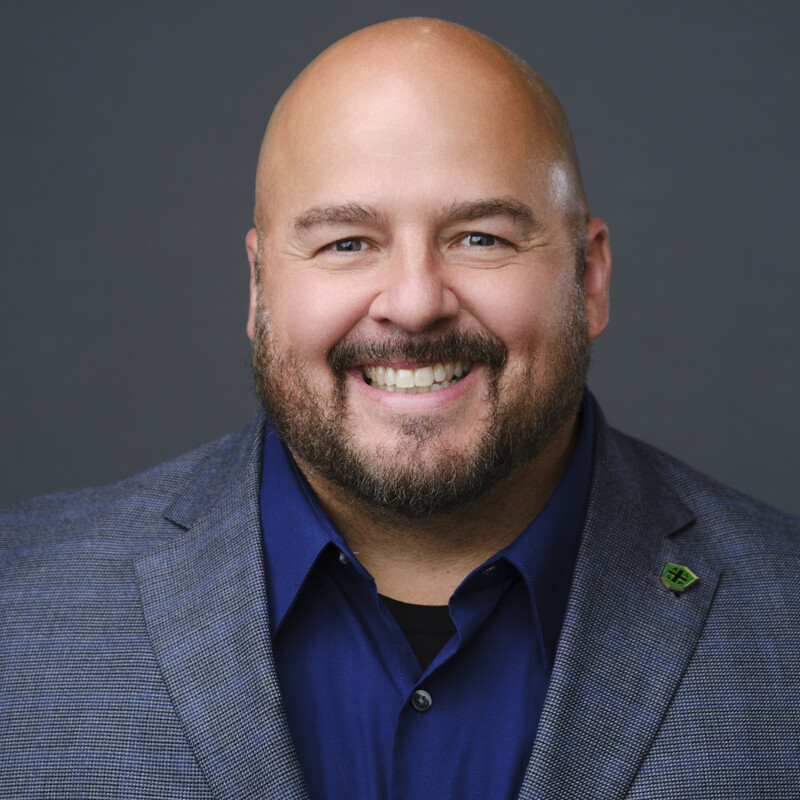
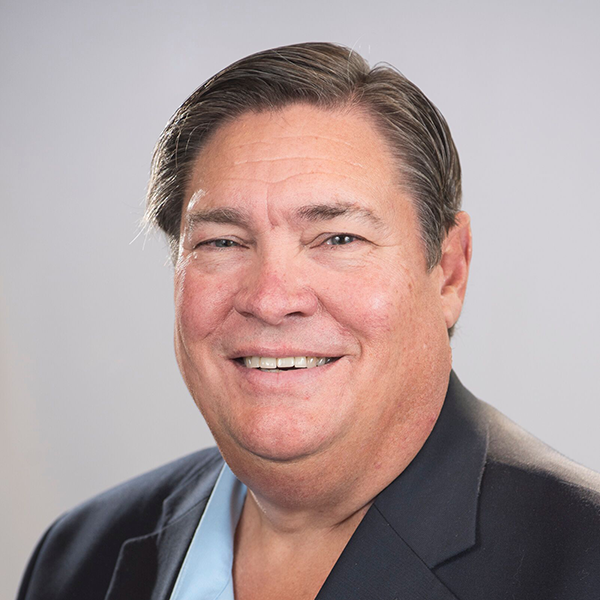
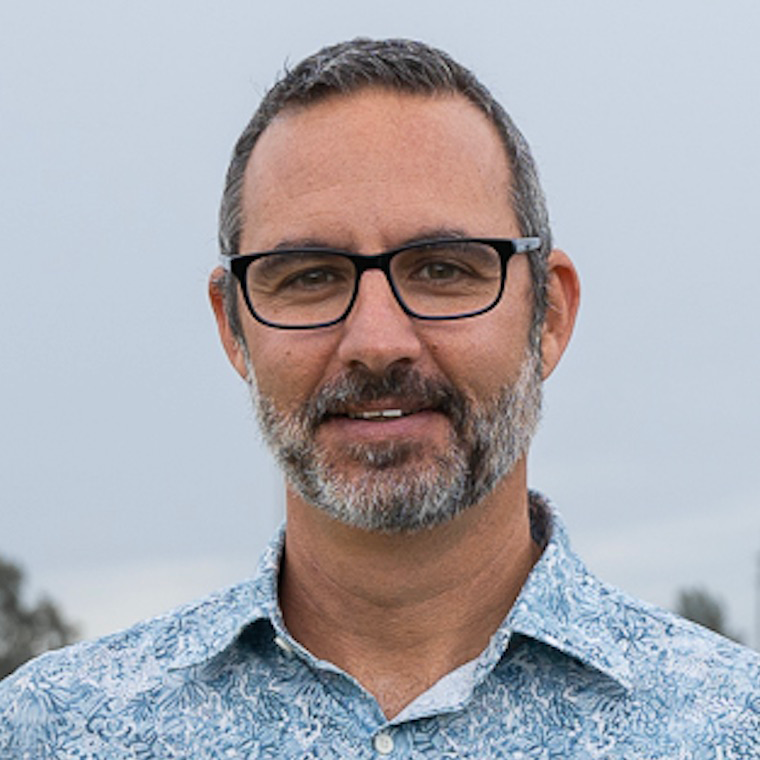
[Mary] Hi there. Welcome to Safety Labs. Safety is big — it's a big topic with a lot of different specialties, perspectives, initiatives, and research. And the variables don't end there, because each organization has its own culture, leaders, set of ideas, and goals. It's hard to wrap your head around. Statistics and industry standards help, because they give us a big picture of what's happening — but sometimes that big picture is so fuzzy that it's not particularly helpful. Today's guest has done a lot of thinking and research about how we track safety. How do we know how well we're doing, and what does "well" really look like? Hang on to your stats, we'll get into it right away.
Dr. Todd Loushine is an associate professor at the University of Wisconsin–Whitewater, teaching everything from basic OSHA compliance to advanced data analysis and research methods. Todd's career began with a BSc in chemical engineering, leading to work as an industrial hygiene engineer and compliance officer with Minnesota OSHA. He completed his PhD in industrial engineering in 2007, with emphases in psychology and sociology. Todd dedicates his energy to educating students on systematic work evaluation and organizational management to improve safety, productivity, and job satisfaction. In addition to recent work as an EHS manager, he's currently serving as a director-at-large on the ASSP Board of Directors. Todd joins us from Whitewater, Wisconsin. Welcome.
[Todd] Thank you. Just listening to that, I feel tired — so busy.
[Mary] Yes, yes. Okay, well, let's get into it. One of the most common touch points in safety is the idea of sending people home safe at the end of the day, and that serves as a north star for many safety professionals. But you've argued this is a limited perspective on work and safety. Can you tell us more about that?
[Todd] Yes, because that idea — sending somebody home at the end of the day in the same condition they came in, however you want to phrase it — doesn't account for the fact that a person can come to work, be very unsafe, put themselves at risk all day, and still go home in the same condition. What have you actually achieved? My focus, what I'd like to see adopted, is that we're working to get the worker to be as successful or effective in their job as possible, with as minimal risk as possible, and hopefully they find some satisfaction or pride in the work they do. That's something I can attend to every day, and if I have those three goals in mind, I'm more likely to send them home safe at the end of the day — but at the same time, I'm also attending to their original charge, which is to get the job done. We all know that if people take pride in their work, or enjoy what they do, they'll tend to go above and beyond. So those are the three things I focus on.
[Mary] You're obviously not arguing to ignore hazards, but you've said maybe we focus on them too much. Can you elaborate on that?
[Todd] As you said in my introduction, I started with OSHA, Minnesota OSHA specifically, and I was taught safety from the perspective of compliance — visual hazard identification, comparison to a standard, recommended solution. What I found through experience, and then went to grad school because of, is that just focusing on a hazard, just trying to correct it, may actually inhibit the worker from getting their job done. And if the solution does that, the worker has to make a choice — get the job done unsafely, or be safe and maybe not get the job done as fast or to the level it was originally designed for.
There was a study I had to review for a class in grad school — it was like finding plutonium by accident. It was published in 2003, I believe by Patrick Cox and colleagues, testing a new methodology — a decision process, a mental model, I think was the term they used. They looked at two scenarios, one involving dry cleaning chemicals, the other lead-based solder, and mapped the mental models of a safety professional versus the worker. The safety professional focused purely on controlling the hazard, and thought, I'm doing great. The worker thought about the job first, and tried to mitigate the exposure while focusing on the job. That completely changed how I practice, research, and teach.
I was also trained as an industrial engineer, so I focus on the design of work, the work system itself. If we're only looking at one aspect of it, we might find a solution that seems successful — listeners would probably agree, "well, this was the problem, this was the fix" — but that's a bit like my car isn't running well, so I'll change the oil. What if changing the oil wasn't the real issue? You're not really studying what the issue actually is, and the solution might actually be working against the correction that's needed. I think it was Eisenhower who said, if a problem seems too difficult to resolve, widen the viewpoint. That's what I'm recommending — let's study the entirety of the work: the workers, the hardware they're using, the software, the environment, the social context, the organizational influences — all these things contribute to how they get the job done. If we ignore them, we put ourselves in a position where the solution we're recommending, though well-intentioned, isn't really helping. And then if they get hurt, we blame them for not following what we prescribed, when we never fully understood that what we prescribed got in the way of, or wasn't congruent with, the actual work goals.
That's what I mean — if we narrow our focus to just the hazard, we don't fully understand the totality of it. I believe some earlier safety research falls into that trap too — if you only ask people about safety, you're isolating it from all the influences that affect it. I did a study where we interviewed top management, middle managers and supervisors, and workers about the safety of the work — but here's the thing, I didn't ask about safety. The workers weren't told it was a safety study, it was framed as a work study, and I let safety introduce itself naturally. After the first day of interviews, it became clear that injuries were expected as part of the job, so we had to change our script to figure out where safety would naturally come into play. That was one of the main findings — that in competition with getting work done, safety will lose. But if we approach issues — risks, hazards, whatever you want to call them — within the context of work, we're more likely to come up with solutions that are actually better, more functional, more customized — and we reduce the chance of the worker having to decide whether to use the solution or ignore it.
[Mary] It sounds like empathy — when you design work focused simply on hazards, it's because you're looking at it from a safety lens, but if you ask the workers, you realize they're not looking at it from a safety lens at all. So it's widening your view to a different mental model.
[Todd] One hundred percent, yes. What's interesting — this morning I was shoveling my driveway, thinking about this, contemplating how many safety professionals default to apathy when they practice, and how workers can observe that. They feel like they're not being cared for, and that affects communication — you're not going to talk to someone who doesn't seem to care about you, especially about something personal, and I think safety is very personal. That extends to supervisors and middle managers too. Even in my own profession, teaching — if I show apathy toward students, why would they ask for clarification? It becomes a battle. So you're exactly right that this is very much about pursuing empathy for the worker, just by changing the perspective, changing the goal to a worker being successful in their job, but with as minimal risk as possible.
I say this because I believe ergonomic and overexertion issues are always there, slips, trips, and falls are always there — but if they could be successful, and we're part of that effort, that helps with their primary charge of getting the job done. The supervisor's getting the job done, middle management and operations are getting the job done — it aligns our work with the organization's efforts and goals, and now we're better able to align safety work with strategic goals. I feel like I'm lecturing — but long story short, I truly believe empathy is the proper term, and we should also speak to the dangers of apathy in practice.
[Mary] I'd like to come back to apathy a bit later, in terms of the larger organization. But before that, I wanted to ask about your thinking on safety metrics. I know you're interested in the human side of safety — so how does something typically seen as dry as recordkeeping relate to the human side and the soft skills? Where's the interplay there?
[Todd] The interplay comes through OSHA recordkeeping — I teach it, that's how I learned it. There are certain qualifications that make an incident recordable. What I found is that incidents resulting in a severity that meets those qualifications are somewhat infrequent. But incidents that could have resulted in that level of severity — near misses, first aids, which aren't OSHA-recordable — happen a lot more often. We learn that from Heinrich, Bird replicated it, others have too. During my year and a half as an EHS manager, I converted the reporting system to include observations, concerns, near misses, and first aids. In that first year, I received over a hundred of those, compared to eight recordables. I approached each one the same way, to understand what allowed the exposure or observation to occur, investigated it, and improved the design of work. I believe that's what led to the reduction in injuries — treating each opportunity as a chance to improve the design of work and the performance of the worker. If I'd only had the eight recordables to work with — and here's the thing, in investigations we have a natural human tendency to blame, that's attribution error — if we're trying to correct the worker and not the elements that allowed the exposure, the underlying problem remains. I forget which researcher said this, whether Dekker, Hollnagel, or Conklin — if someone gets injured, you remove them, and put a new worker in the same position, wouldn't they make the same decisions, exhibit the same behaviors that led to it? I'd say yes — people tend to be somewhat predictable in their behavior, if you understand what to look for.
When it comes to metrics, if we're only looking at things that meet a certain severity qualification, that's a very limited view. Let's get to the nerd level for a moment — the idea of reporting the average cost of a workers' comp claim, or an average rate. Here's the thing: we're ignoring a massive chunk of the distribution. If you're going to perform any form of parametric statistics, you must first establish normality — the bell curve — because almost all statistics are predicated on that distribution, since the calculation of mean and standard deviation assumes a certain percentage of the population falls within a certain range. That lets you run calculations to determine what's an acceptable result in a comparison. Matt Law probably covered this in his podcast, he and I have talked about it. Here's the thing — if you include the near miss, the first aid, everything that could have caused something, you no longer have a skewed population statistic, you have an asymptote — as x goes to zero, y goes to infinity, as x goes to infinity, y goes to zero. I've run this distribution more times than I can count — if I had a dime for every time, I could retire. It's always an asymptote. The mean and the median — the 50th percentile, which should be close together in a normal curve — are so distant, so different, that we have to stop using "average."
I was trained, and used to train others, to calculate incidence rates — total case rate, some call it incident rate, severity rate, DART rate, lost workday rate, whatever — and compare it to the Bureau of Labor Statistics average. Do you know how wrong that is? And they report by industry, while we're individual companies — yes, within an industry, but the average is calculated across an industry, so we should only be comparing industry to industry, not company to industry average. There's also a paper by Denise Rousseau about the problems with comparing across levels within an organization — some things just aren't comparable. So comparing your company to your industry average doesn't mean much, because the mean and median are so different, with all these outliers, and we're not even talking about the zeros, the basement effect in the data.
I was looking for something comparable — salaries are similar. Within a society, what's the spread of wealth? If you give an average of wealth, it's going to be skewed much higher, because there are people on the low end, but on the very high end, there's now a trillionaire on the planet, which really skews things. It tells a different story — one that isn't accurate or helpful. So if we're asking how our safety program is performing, and we have these lagging metrics — incidence rates, average workers' comp claim — and compare to an industry average, what are we really comparing it to? It's not valid. So what should you compare to? How you were last year. And you have to come up with better metrics — the effort of searching for better, more realistic measures gives you insights you never had before, because you'd assumed this number, compared to this industry figure, was valid and made you look good.
What I teach my students is, you have to provide a fuller picture — look at the distribution, see what percentage are really high numbers and why, look at the zeros, what's interesting about them. I teach students to identify outliers and study them. What we've found — and I don't mean to offend the SIF community — is that the most expensive claims often come out of normal work. There was nothing unique, extreme, or unusual that led to these really expensive cases — the expense came from the treatment, not the exposure. For example, my most expensive claim, in that year and a half, was a slip, trip, and fall — the person hurt their wrist trying to catch themselves. Lesson learned, kids — learn to tuck and roll. First we tried pain mitigation through prescription and physical therapy, it wasn't working, so they upped it to surgery, which is expensive because of recovery time, and there was an infection from that surgery, requiring a second surgery, extending the recovery further. So what should have been a wrap-and-recover, light-duty situation turned into over a year of physical therapy and restricted duty, becoming very expensive. Normal thinking would say, present this to management — "$120,000, we've got to focus on this" — but it was a slip, trip, and fall, the person tried to catch themselves, something that happens all throughout the day, every day, especially with ice outside. We can designate lanes, try to keep floors clear, but stuff like that is going to happen.
When we think about extremes or outliers, I don't think that fully gives us what we need. I like the idea of SIFs, classifying things that didn't result in something severe as still important, because they could have — if that gets management's attention, if it drives corrections before something severe happens, that's fantastic, and I support it. But some of the foundational modeling I've seen, I believe, is incorrect — superimposing the fatality rate and the total case incidence rate on the same chart. If you actually put them on the same scale, one would be way up here, the other dwarfed, invisible. I believe honesty in presentation is what's so important — if we knew the median, the mean, saw how different they were, saw the extreme outliers and all the zeros, we'd be in a better position to understand that the best comparison is where we were before. How did we improve, what did we learn? That was a common theme in my last conversation here too — the importance of learning. What did we try, what worked, what do we need to refocus on? That's where I believe the real value of metrics lies.
What if recordkeeping wasn't about what went wrong, but how companies responded to it? If we used these metrics to judge whether to hire or contract a company, or give them an award — what if it wasn't about what happened, but how they responded, and how they measured whether their response was effective? To me, that's a much better predictor of whether they'll be a good client, contractor, or partner to work with. The work I've done at universities for accreditation is similar — it's not about being perfect, it's about the system in place to evaluate how you're teaching and how students are responding.
Let me tell another story — we survey students at the end of each semester, and I give actual course points for participating, because I really want to know how things went. What I found is the questions we're asking aren't the right ones. It shouldn't be whether they're learning, whether they enjoyed it, whether things were explained well, or how enthusiastic I seemed — it should be, did it change their thinking? Do they see that they can take what they learned and apply it to their practice, their life? I ask that in my weekly assignments and my own pre- and post-surveys. I think that measures what's actually going on better. If we're only taking one perspective, and following the old adage "if it ain't broke, don't fix it" — I'm from that generation, and I think it's wrong. We have to understand how things are being performed, and if something doesn't look right, look into it, understand it more. Because of my empathetic approach to my practice, it upsets me that we don't fully understand the numbers and statistics we currently use. It's nobody's fault, really — but if you really dig into the numbers and what they represent, we've been, I'd say, a bit misinformed. Sometimes we think we're doing well and we're not, and sometimes we think we're doing poorly when we're actually doing well.
[Mary] I want to layer that with your point about industry standards not being especially useful — I think part of the reason, which you haven't said directly but I know you think about, is that organizations differ so much in size and category. Is a biotech company in the medical industry or the tech industry? When you layer those unique challenges with the idea that industry standards aren't super useful, with what you just said — that the search for meaningful statistics is itself the learning, the active process of finding which metrics will be useful for your organization is what you need to do — does that sound accurate to what you're saying?
[Todd] Yes. Can I prescribe a set of newer, leading-type metrics? I can talk about different things, but every company is so different. I want to preface this — I'm not saying get rid of incidence rates. I know there are people on LinkedIn hollering to cancel them, and others jumping on them — we talked about that last time — I still think we can use them, but intelligently, without putting so much weight on what they really mean. In all aspects of my work, including volunteer leadership, I believe we can talk about the definition of something — a goal, for instance — but I need to know how it's measured, because that helps me understand the definition of it. So really, what we're leading to is, what is safety? Is it when no one gets hurt? Most people would say, sure, traditionally, that's part of the picture — but what do you do to get there?
That makes me think of sports — maybe something people can relate to. My Wisconsin Badgers had a bad year, and right away, when the win-loss column is imbalanced, people blame the coach, blame the players. But those of us who enjoy competition and sports know there are more intricacies — what are we doing in practice, how are we performing given the skill and performance level of the people we have, how does our play-calling adjust to how things are going within a competition? I think that's a more pragmatic representation of performance, not just win-loss. In safety, our "win-loss" is injury rates, workers' comp claims. But if we really want to improve performance, part of the effort should be to improve, to learn. What are those measures — that's the big question. At that job, I did ratios of things — reports to corrections, how long it took to correct certain issues. I could have measured positive interactions versus negative interactions, I know there are experts who talk about that — I know Jason Coons has a great story about that too. The things we're doing to improve, the learning and empathetic approach — things will improve when you apply that. Measures within that improvement cycle would be really interesting. Over time, I think we'd find the measures we currently hold in such high regard would go down, but let's not judge ourselves solely on those, because they're such an after-effect, not direct — there are a lot of other things that contribute to whether outcomes are positive or negative.
[Mary] Given that, and the sports analogy, am I accurate in naming you the Ted Lasso of Safety?
[Todd] I'd be honored, though I don't like to take titles I didn't earn — but yes, I think being positive and trying to improve fits. I actually just helped a company a couple months ago explain to top management that they shouldn't be using severity rate and things like that the way they were, that there are things going on out in the field, and the more they engage with that, the better things get, the more engaged workers are, the better we understand how to come up with effective solutions. I explained that to management based on a paper I published in SHIFT last year, and a presentation I gave with Safety on the Edge, and an updated version with Safety Connect. It's resonating — I think people are starting to understand it, but it's an approach not everybody's comfortable with yet.
[Mary] I wanted to ask specifically about that paper, "Proposal for a Better Recordkeeping Standard" — that was a few months ago, and it's part of a multi-phase project. What was the impetus? Why did you feel this was the area you wanted to look at? Was there a specific incident, a moment when you thought, this is where I need to look?
[Todd] My career began traveling around Minnesota, training people how to properly fill out a 300 log — back then it was a 200 log, for those of us old enough to remember. I thought that just by completing an incident investigation to meet 29 CFR 1904, you were doing a diligent job. But listening to employers, presenting and hearing people, drove me to try something different. It wasn't until grad school, when I took over recordkeeping for the Wisconsin Department of Health and Family Services, that I started really understanding what it meant — that there were details you had to read between the lines. I completely changed that system, changed how incident investigations were conducted, trained people never to blame the worker, find out what else could have contributed, standardized entries. The numbers increased, but they got better — we got insight into things that allowed us to triage and focus, and that drove the numbers down. It actually worked.
Then I got out of grad school and started analyzing big datasets, and that's where I noticed we were violating normality, and how critical that is for doing statistics. Because I'm an Excel nerd, on weekends in my limited discretionary time, I'll download datasets and analyze them for fun — I know that sounds sad, but I love it, I get giddy. I found that being honest and really understanding what goes into the numbers — and a lesson from grad school, learning structural equation modeling and things like that, looking at it and thinking, that's so out there, can I simplify the design of my studies to a simple ANOVA, a simple regression I can graph and visually understand — is that just a better way to go? I agreed with that simplification, so there isn't this complexity that may lead you to think something is true when it isn't.
What I want to get back to is, I have to be able to look at the numbers and understand what they mean. Having been out there on the floor, talking to people, I've seen that OSHA recordkeeping isn't the full picture, not even close, and the assumption that it represents the work we do in safety isn't close either. So I need to do the work to educate people, so they understand that and can teach it to management.
I'm also analyzing — and this is kind of sad — whether smaller entities are actually receiving the 70% reduction they're supposed to get when issued an OSHA citation. Hint: they're not. I'm also comparing smaller companies to larger companies on incidence rates — there's not a big difference, and people might find that curious, because larger companies have access to resources that small companies don't. So why is it so similar, and why does it go up when you get into mid-range size companies? I think it's because they're going through growing pains — smaller companies have a better, more empathetic, communication-based approach to work; as they grow into mid-size, they go through growing pains; then as they gain the resources of a larger company, it comes back down. So we get almost an inverted U — and those of you who do research know inverted-U patterns show up a lot, especially comparing small, mid, and large companies.
Understanding how companies view recordkeeping and incidence rates — there's a desire to underreport, to look better than you are. Is that actually beneficial? My paper published in SHIFT last year showed that the biggest issue with recordkeeping is that people don't know how to report hours worked. The basic assumption, given to us through OSHA and the Bureau of Labor Statistics, is each worker puts in about 2,000 hours, give or take — but we have non-static workforces, different employee counts, people coming and going, part-time and full-time, depending on the type of entity. Determining hours worked, in order to calculate the incidence rate, if it doesn't fall within a particular range — say 1,600 to 2,100 hours per year — what is it, then? When I analyzed the OSHA ITA data, which anyone can download as a zip file, I found some companies reporting that each worker put in about an hour a year.
[Mary] Yes, I did see that.
[Todd] Some reported zero employees with all kinds of hours, or all kinds of employees with zero hours — didn't make any sense, had to throw those out. Some were so extraneously low, or so high, they weren't believable. Did you know that in 2019, a company reported that each worker put in 4.2 trillion hours that year? That's what really drove us to look into it. We found that 13% of companies required to upload data to the OSHA ITA site submitted incorrect, unusable data. If any of us committed errors 13% of the time in our jobs, we wouldn't be employed for very long. We need to understand better what the numbers really mean, and get away from this idea of only tracking the negatives, only focusing on the win-loss record. There's something called building — being honest, being empathetic, improving on oneself relative to how things were previously — I think that's where the real metrics should focus.
Maybe even more importantly, and this came out of my presentation on a better system — what if we started developing databases of things that worked? In response to this type of laceration, this approach worked really well — we have these great safety cutting tools, hashtag shameless plug, that prevented lacerations and injuries. This particular response to overexertion injuries is actually functionally working, this is lowering slips and falls in construction. Every year, all we're talking about is the most frequently cited standards, the most expensive types of workers' comp claims, the most frequent injuries and causes of death. What have we learned? I feel like we're not learning. You touched on passion earlier — that's my passion.
[Mary] One of the things is, what are we measuring, why are we measuring it, what are the assumptions behind it — and surprise, many of them are wrong. So that's one piece, improving recordkeeping, not just what we measure but how and why. I also wanted to talk about another part of your work — a lot of safety professionals I speak with bemoan the fact that safety is often viewed as work that happens in a silo. You've suggested safety should be more integrated with other areas of the business, and other areas of education. What areas of business, and where should safety sit, not exactly on the org chart, but closely aligned with — and how can we work on that in the educational realm?
[Todd] Great question — and I'm fine using the term "org chart." I think safety should be in operations — plant management, production. There are sub-departments — maintenance, process engineers, production engineers, shift management — that's what I was able to practice in. I had hands-on experience of what it's like to be in an organization that had recently shifted safety out of HR, which is where you find it a good percentage of the time, in my experience. But I believe operations is the right fit, given my focus on approaching safety through the lens of work. I did work with HR on certain projects, particularly workers' compensation — we'd meet regularly to make sure bills were paid and people were taken care of and could come back and heal. But in operations, I was able to find correlation and alignment between machine downtime, workers, environmental conditions, how the machines worked, how the workers were doing — it was all intertwined.
I took every opportunity to educate shift managers, production engineers, process engineers, and maintenance staff, giving them examples of how considering safety within the context of their work improved not just the work itself, but the outcomes, and how it affected workers and their ability to get things done. They understood it, and it made meetings more enjoyable — typically, if safety is siloed, it's, "okay safety, report what's going on," just an audit report, who got hurt, and so on. What I was able to do was talk about what I was doing in the language of management, maintenance, and shift work, and when others presented, they'd reference or confirm what I'd said. So safety wasn't just brought up at the beginning of the meeting and then forgotten — it was referred to throughout. That made it more pleasurable for me, because other people understood that workers getting the job done with minimal risk, and hopefully some satisfaction, made everybody's job better, and made our numbers better too.
Let's transition to education — I do think business students, and I'm housed in a business school, need some education on the importance of a worker getting a job done safely, and that it's not just, "if somebody gets hurt, don't blame them" — they didn't get hurt on purpose, it wasn't a conscious decision, "I want to cut off a finger today." It's part of the job. By helping people understand work-as-done versus work-as-planned — a lot of people assume work-as-done is the way it should be, but if they really understood the intricacies and details that happen with people every day, and gave workers the knowledge, skills, and acknowledgment to be adaptable, to react and get the job done while maintaining a minimal level of risk, the whole company does better. Everybody's meeting their numbers and dealing with issues along the way, and they're happy about it — we should celebrate the ability to be resilient, to get things done in the face of volatility, change, and unexpected events. That's what a truly successful business looks like. Some businesses aren't really challenged — things are static, they just get it all done, "nobody got hurt, great job." Same thing in sports — some teams have all the talent and an easy schedule, and we celebrate them as the best, while other teams are building, without all the talent, but showing improvement each week. I think that needs to be acknowledged. We're too dichotomized in our thinking — success means being the best, the absence of negative means you're the best — and in safety, we can't afford that kind of backward thinking.
[Mary] If I gave you a magic wand to introduce safety into a business degree curriculum, what would you want it to look like?
[Todd] I'd want them to first understand it's not about compliance. Everybody listening who works in safety has had the experience of someone asking, "what do you do?" and saying "I work in safety, OSHA," or whatever regulatory framing — that's the limited viewpoint. We need a good TV series with a safety professional solving things that everybody loves — that would help us tremendously, we're the best-kept secret ever. But the real thing is, it's not about compliance, it's about people. When people get hurt, there's an effect, at different levels of exposure and severity, and decision-making can affect how workers view their work, whether they report when something isn't right, or try to handle it on their own, taking risks to get the work done — and that shouldn't be the norm. Just because nothing went wrong today doesn't mean everything went right.
I know they're required to take some coursework in organizational psychology, which is fantastic, but I think they need to understand that the behavior you're observing is more a result of the environment you've created than of the individual making decisions, and that time, resources, and money need to be invested in constant improvement and understanding. Because if you don't, you're basically planning for the big disaster or accident to happen — it's going to, if you're not trying to understand how people and machines are working. Companies are willing to invest heavily in preventative maintenance plans — safety is kind of a human preventative maintenance plan, if you want to be honest about it. I see a lot of similarities in how those programs are designed and tracked.
I was thinking about viewing safety as a disruptor — an unexpected, undesired interruption in the work. If management understood that when somebody gets hurt, it disrupts things — not just that they can't work, but it affects their coworkers, who are often their friends — that's a more empathetic perspective. The supervisor has to do something, HR has to do something — it's a disruptor, and if we can mitigate the things that lead to it, all the better. But more importantly, let's not beat up or blame anybody when something bad happens — it's a disruptor, let's figure out what we can do to prevent it from recurring. I think we kind of already do that, but we're so focused on just the hazard, or just wearing PPE, or doing the work as trained, and we don't know everything — there's a lot going on out on production floors or job sites that we don't know about, but the workers do. We need to understand it from the perspective of how it affects their ability to get the job done, because that puts them in a position to decide whether they're going to get it done, or do it safely while getting it done.
If business students — HR, supply chain management, management generally — were to take a course and understand that, at the end of the day, it's about getting the job done as safely as possible, and hopefully they take pride and satisfaction in their work and how their role contributes to that, and how they respond to disruptions, that really defines what many would call culture, though I don't love using that term unless we're talking specifically about learning culture, which I'm a hundred percent behind. But the magic wand is about understanding the basics, and it's more about the social-psychological side for management students than the technical — the technical comes from working with engineering within operations, but what's misunderstood is the social piece.
[Mary] I'm picturing a safety professional as both the workforce and management whisperer — someone in between, translating, so everyone's speaking the same language, essentially.
[Todd] Just yesterday I was on a call, and someone asked me to describe my approach to things, and I kind of blurted it out, hadn't really thought about it until I said it, and I've been thinking about it since — when I worked at that company, I was a mood manager. Sounds weird, but I do it here too, in the classroom — if somebody's having a bad day, or reacting to something that's happened, and they unleash, yell, whatever, when I speak to them afterward, I'll ask, "are you okay?" I did that a lot. What it does is lower their anxiety, their stress, and lets them refocus on what's important. In work, with high stress, when something's not going right, it's easy to succumb to apathy, to yell and blame and hope it gets taken care of — but how you react to things actually dictates how they get resolved, or whether they get resolved at all, or whether people just put up with it.
I think in safety, we can be mood managers — anybody can, really, but I think we're in a great position to not overreact, not react negatively, but to approach things with curiosity and empathy. I know I'm sounding touchy-feely, but in my practice, I get more satisfaction out of helping people lower their anxiety and stress, to approach things in a more balanced, empathetic way.
[Mary] I feel like you're reacting in a better way, so you're not putting a negative connotation on your title or what you do, so people are more likely to speak to you — they'll speak to you if they trust you, and if your reaction is to blame and yell, they're less likely to risk sharing things with you, and sometimes that information is so important.
[Todd] Yes, I do believe being able to help people bring down their temperature is really important, and I think it fits in perfectly with what we've been talking about this whole session.
[Mary] Last time we spoke, I asked you this question, and I'll ask it again in case the answer's different — if you could go back in time to the beginning of your safety career, is there a piece of advice you'd give yourself?
[Todd] Because I was born out of compliance, I probably would have told myself it's not about compliance, that's a small piece of the puzzle, a technical aspect. But in my older age, I know we sometimes have to gain our experiences and look back and grow from them. In education, I've been trying to explain to people that it's very layered — you can't just teach people HOP and expect them to be successful, they have to understand the work that built up to that concept. Some people say you have to learn to stand before you walk, walk before you run, run before you fly — I believe it's the same in safety. Would I change anything? No, I had to go through it, do the wrong things, make mistakes, and be willing to admit to those and grow.
I wish that for everybody getting into this field, whether you're the one who knows how to order the gloves and become the safety person by default, or you go get a degree — you're going to experience things in your career, and you're not always right. But one thing you can do is be empathetic, be a mood manager, try to get workers to be successful in their work, and teach others about the importance of that, of helping them be successful, of being their mood managers. Sometimes people just need to vent — let them, that's cathartic. If you're the person people go to for that catharsis, you're going to learn a lot — not just about the work going on, but about people, and none of us can get enough of that. We tend to learn how to better foster good relationships toward the end of our lives, and if we could have learned that when we were younger, instead of dealing with all that junior-high-level drama, we'd be in a much better place. But yeah, I wouldn't do it any differently, other than maybe keying into the bigger picture, the different perspective, a little sooner.
[Mary] Are there any resources you'd recommend to our listeners, if they want to learn more about anything we've discussed today — books, websites, organizations?
[Todd] I've been asked by multiple places to publish a book, I've been a little busy. I'm on LinkedIn a lot, and I like to communicate with people there, so by all means find me there. I think whatever people have access to — I participated in Safety on the Edge, and I think Corey is doing a great job with that group. Safety Connect — Jamie and Scott are doing a fantastic job. This podcast, by the way — I've been listening, and Ron Gantt, Matt Law, these are people I bring into my classes as guest speakers, because of how great they are. Going to local meetings or conferences — there's more opportunity out there than people realize, and I think it starts with the virtual side, LinkedIn, seeing what's going on in the world. Ben Hutchinson does a great job sharing more recent research, and I even enjoy reading the dissenters — I won't name names — I learn a bit more too when they push back on something, being kind about it.
So, LinkedIn, otherwise online or local conferences, professional development, super important. I believe your net worth is your network — grow it, focus on growing it every day, and hopefully you have your own board of directors, your mentors. I've got some fantastic mentors, and I think that's really important for professional growth — I don't think I'd be where I am today if it wasn't for people guiding and helping me when I needed it.
[Mary] Well, that's all the time we have today, folks. Thank you for joining us, Todd.
[Todd] Thank you.
[Mary] Thank you to our listeners — as you may have picked up, this is actually the second time Todd has been on the Safety Labs podcast, so if you want more Todd, check out episode 74, "Safety Is a Team Sport." Come find us on LinkedIn to discuss the topics we covered today, and share your thoughts on moving the safety profession forward. My thanks to the Safety Labs team for all the behind-the-scenes logistics, editing, and writing. Bye for now. This podcast is created by Safety Products Global, the world's leading manufacturer of safety knives. Through our trusted brands, Klever, Slice, and PHC, we empower companies to prevent injuries by providing safer cutting tools for every material and application. Until next time, stay safe.