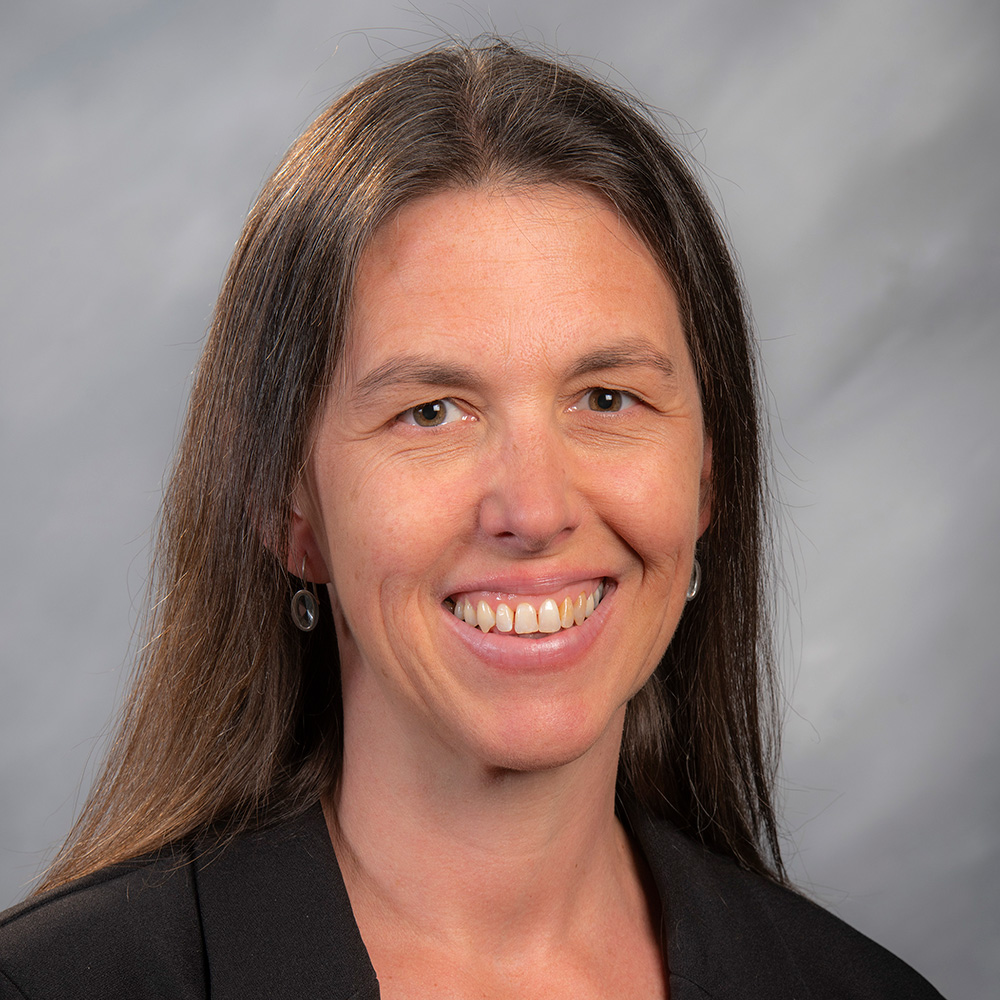
[Mary] Hi there, welcome to Safety Labs. Today's conversation is going to be a bit of a safety buffet. I'll ask our guest about how her different experiences and identities have affected her approach to safety and consulting, about the cost of shiny object syndrome, generational change in the workforce, and much more.
Dr. Lori Guasta's blend of research expertise and practical consulting insight has supported safety, leadership, and cultural transformation in high-risk sectors, including mining, manufacturing, construction, and oil and gas. Lori holds a PhD in organizational leadership and a master's in clinical sociology. She's worked with NIOSH and in the safety tech sector. At the National Safety Council, Lori led research efforts for a fatality prevention initiative leveraging technology to eliminate workplace deaths. As a consultant, Lori has helped prevent serious incidents and fatalities using HOP-based approaches. At Environmental Resources Management, Dr. Guasta supports clients in optimizing safety, sustainability, and leadership strategies. Lori joins us from Denver, Colorado. Welcome.
[Lori] Thanks, good to be here.
[Mary] You're a clinical sociologist, and you have a PhD in organizational leadership. I think a lot of people, including myself, don't necessarily understand those approaches — what is a clinical sociologist, and how does that education or perspective interplay with safety?
[Lori] Good question — I had similar questions when I went into the degree. I found the program at the University of Northern Colorado, after finishing a bachelor's in sociology in Iowa, when I was coming west. I'd had my eyes set on programs even further west, in Oregon or Washington State, but my GRE scores weren't great — okay, but not top of the class — and that standardized test component mattered a lot in the late nineties and early 2000s. So I found this clinical sociology program. At first I thought "clinical" meant you'd work in a clinic, like a counseling program — I was so wrong. It actually took a much more holistic approach, looking at how organizations are shaped, how groups are organized within organizations. Sociology is all about behavior within groups, and a group can be as small as two people. A clinical sociologist combines the interplay of group dynamics with human behavior, how we interact in groups, and how we shape groups through our behavior — it's a back-and-forth. Leadership is part of that — leadership can drive the best behavior out of any group. It was a natural progression for me, branching out of traditional sociology into something more transferable across industries and ways of working. That combination of sociology and leadership has served me well in my career, helping companies shape how their groups behave, and vice versa. It's a different degree, a different path into safety, for sure.
[Mary] Last time we spoke, you mentioned this interplay between behavior and structure being at the crux of that. At the risk of asking the impossible question, how do those two interact and influence each other — maybe some examples would help?
[Lori] There's a lot of work in communication studies showing how the size of a group, the different directions and layers of communication, all complicate things. I joke that I'm not a rocket scientist, I do even harder work, as a behavioral scientist. It's a really dynamic field, and that interplay is always changing, never constant — which is good job security for a consultant, because it's different in every organization, and even within organizations, different across subgroups, business units, or facilities globally. It's not an easy job, but it's important and impactful.
We're structured in some way even in our family lives — there's a number of people, different power dynamics, different ways we're connected to people within groups. We're always structured or grouped in some way, which is why sociology should be a prerequisite for any industry, but it's not. That's another reason it lends itself well to consulting — an engineering degree didn't give these leaders effective communication skills. It comes back to leadership, and how you foster the direction people need within a structure to get the best out of their behavior. It's really possible, it just needs to get back to basics, in my opinion, and take a human-centric approach to whatever we're trying to achieve, whether that's safety or just desired behaviors generally.
[Mary] You also mentioned having a blue-collar background. I'm wondering how that influences your work, since you primarily work with leadership — that's got to have an influence, a point of view.
[Lori] Absolutely. One reason I was attracted to ERM is their philosophy, "from the boots to the boardroom" — that's exactly what my career has entailed. I come from a long line of drug- and alcohol-affected truck drivers, blue collar to the core, first-generation college student. I come from those roots, and getting out of that culture of poverty through education allowed me to keep that perspective of boots-on-the-ground mentality, what really goes into hard work and blue-collar labor. I truly believe blue-collar labor is the backbone of our economy, maybe even our democracy — we keep the lights on, literally and figuratively. But it's usually the many layers of leadership above the frontline worker making decisions that impact that worker. So while my heart will always be at the front line, I know that to affect change there, I have to spend time in the boardroom with decision-makers and top leaders. That's also fun for me, a challenge I've grown into, and I'm very comfortable living in both of those worlds — they need each other, you can't do one without the other. Having that broad organizational perspective lets me do well on both sides of that fence.
[Mary] To add even more layers, you're also an educator, giving you a bunch of different points of view. I imagine those strengthen each other, but do they ever conflict? Do you see blind spots others might not, because of this more rounded experience?
[Lori] I'd say it's contributed effectively to my career success. Even though I sell services to help companies do whatever they're hiring us for, I'm much more an educator than a salesperson — and I've been really successful that way. If you help companies evaluate what's available to solve a problem, and provide guidance in evaluating those options, they get to choose the best option for them. That educational approach has been really helpful in my career.
From the educator perspective, I've spent so much time, over twenty-five years now, with a learning community typically between eighteen and thirty years old. I used to be that age, now I'm finally the older one in the room — though I only teach online now, very different from the first half of my career. It keeps me reminded and grounded that these are the new generation of learners, and also the new generation of workers. When I made a pretty big shift from focusing primarily on education to coming into safety and consulting, it was tough — I've got an educator's heart and spirit, and I didn't want to lose that. But through training, evaluating solutions and options for clients, I've still been able to be that educator and look after the workforce at the front line. Today, over fifty percent of the global workforce is millennial or younger, and I feel my experience as an educator has equipped me well to understand what these folks need, and meet them where they're at.
[Mary] I'll come back to that a bit later, but I'm also curious — there are layers in an organization, usually structured hierarchically. Why go through leadership transformation to change frontline safety? Why not go straight to the front line?
[Lori] We always hear that leaders set the tone for an organization, and that's so true — they also hold the purse strings, the ultimate decision-making power. As much as I'd like to just show up at a job site and get to work — and I laugh, some folks are resistant to researchers or consultants on their property, "I'm a working supervisor, I don't have time for this" — well, I'm a working researcher, a working consultant too, let me help, help me help you, that kind of thing.
The other thing I see, and it's unfortunate, is something I often share with folks on the front line: I'm sorry I'm here, but you're welcome. A lot of times blue-collar workers have raised a good idea, a safety improvement, a gap in the system, and they've been shouting from the mountaintops forever without seeing change. Unfortunately, it sometimes takes a consultant coming in with fresh eyes, talking to leaders about what needs to happen to improve a process or make significant change on the front line. It's just the door you have to go through to affect change where it matters most. In safety, you have to take a risk-based perspective in everything you do, and the greatest risks people are exposed to are on the front line. How you get there is usually more effective through leadership, gaining their buy-in, helping them see risk and see work differently — that usually makes a huge difference in my client experiences.
[Mary] How does an organization's culture change? I imagine it can change inadvertently and on purpose — what are some of the levers or inflection points that influence a company's culture?
[Lori] This is what everyone's after — I call it the big scary monster in the room, not even the elephant, it's the thing we see differently and don't know how to tackle. Culture is very slow-moving to change, unless it's not — and that's usually in reaction to something horrible that's happened. Culture typically takes at least a year to three years to see any movement, unless there's been a significant disruption — new leadership, unfortunately a fatality, or a rash of serious incidents. At the heart of it, culture is just how people interact with one another at work — it doesn't have to be a "safety culture," it's just culture, how well-suited you feel to do your job and still be who you are.
For a long time, I resisted working in the boardroom because I didn't have a blazer, didn't have high heels, these expectations I assumed existed there. I've broken some of those expectations and myths, proven to myself and others that you can be you and still bring that to work and do a good job. If you have a mission, a shared goal to see improvement in a process or culture, you can get people on board, rally around a good idea. There are points of connection we all have, related to that human spirit — we're all humans at the end of the day, no matter how we got here, and we deserve to be respected and acknowledged for who we are personally. I think that's the biggest driver of changing culture — acknowledging we have a lot more in common than difference, and breaking down those walls of difference is how you build the trust to see culture expressed in a supportive, caring, truly human-centric way. But it's not easy — it's probably the number one question I get asked, "how do we improve our culture?" Well, first, good luck, and hold on, you're in for the ride.
[Mary] That brings me to the timeline you mentioned, a year to three years. My impression is a lot of organizations don't have that level of patience — maybe larger organizations can afford more patience, I'm not sure. What's your experience giving change the time it actually needs?
[Lori] We're not good at that at all. We're in an individualistic American culture, we want results yesterday. That immediate gratification is keen with the younger generation, and even the older generation, we've become accustomed to getting what we want instantly — technology has enabled that, for better or worse. We put unrealistic time expectations on improvement efforts, and culture change is one of them — we want to see TRIR reduced drastically, immediately. You've got to be in it for the longer game with culture. In organizations, leaders come and go all the time, as do workforce members, so it's truly continuous improvement in its purest form — we just can't take our eyes off the ball, we have to keep driving, and respond thoughtfully to every new dynamic or shift. It's hard to bring everyone along to be patient, but it's truly a longer game. You can measure incremental culture change, but it requires more emphasis on leading indicators, and less on counting work hours and incident rates. It takes a village, as they say, and it's true — but unfortunately, that expectation for speed of change is a real barrier to effective, sustainable culture change. If you're really in it for the long haul, you've got to find stability in leadership and tenure, go all in, invest in the people you have, so you're not constantly retraining new people and hoping they come along for a culture journey that's constantly changing underneath them.
[Mary] You write about the power of reflection for developing safety leadership — can you explain what you mean by reflection in this context?
[Lori] Great question, following up on what we just discussed. It's about taking a pause and really thinking, even daily, about what happened today that made me feel a certain way, that impacted how I behaved — because that's how human behavior works. We typically think, "Joe did that because Steve did that" — that's not really the case. Joe observed something about his work environment, it made him feel a certain way, and he responded to that feeling. If we pause and reflect on the different feelings we've had throughout the day, we might understand that the impetus for our behaviors really sits within us, not really about Joe or Steve or Mary or whoever — it's about how we interpret the world as individuals, how it made us feel, and how we responded.
I have a PhD in leadership, I've practiced for almost twenty years, and I have to remind myself of the power of this every day — I'm not great at it either, but I know it's a good idea. It's coupled with safety practices around stop-work authority — it's really not about stopping work, it's pausing, taking a minute to look around, evaluate the risk we might be exposed to, and respond thoughtfully to that risk or those hazards. From a leadership development perspective, it can be a really powerful tool. I've been doing a lot of this very intentionally over the last year and a half or so — I created a series of quote books, profound ideas and little snippets that make you think, usable for leadership development or personal introspection, or as a vehicle to pause work and check for alignment — are we all seeing risk the same way? The answer is always no, it's a very subjective thing. Taking that moment to pause and think more thoughtfully about options or potential risk amplifiers is so important, not just in safety, but to be good humans generally.
[Mary] I want to take a bit of a turn here. Over the course of your career, you've been in safety or safety-adjacent work. Being a woman working in that industry, how do you see it, and how has it changed over time?
[Lori] When I started my career in safety, I didn't even know it was a possible career — I didn't know mining was an active industry. I was very naive in my late twenties, even finishing a doctorate degree, well-steeped in research and academics, but in terms of applying it, I was so green — and no pun intended, when you're new on site, at least in mining, you literally wear a green hat to signify inexperience. I probably wore that hat for ten years, even though I thought it was only five, maybe even fifteen. But long story short, it all comes back to great leadership and mentorship. I worked under Dr. Elaine Cullen, who spent her entire career at NIOSH doing health and safety research in mining, focused on culture, occupational culture — she fell in love with the culture of the mining industry, people who worked hard, played hard, a strong band of brothers doing important, meaningful work. I was so inspired by her work that I followed in her footsteps, learned from her for several years, and ended up writing my doctoral dissertation on the power of stories used in quantitative research environments. I was riding the coattails of her forty-two years of experience, because she spent her entire career in mining before women were even allowed in the mines — she was actually one of the first women allowed into an underground coal mine, in the 1970s.
I've learned a lot through the hard work other women paved in the industry, but in safety specifically, I see a real shift — a lot of leading safety organizations are led by women, a lot of the most effective consultants in my ecosystem are women. I don't know if it's about getting to that human side of safety, if women are more well-suited to embrace that — I don't know, that's stereotypical, but in my experience it's been true. I will say I've had mentors and supervisors who were men too, very successful in their careers, CEOs of major companies, held very high positions in government and regulatory agencies. But I'm really proud to be a woman in safety, and I think the best is yet to come, for sure.
[Mary] Speaking of what's to come, you touched earlier on meeting the moment of generational change in the workforce. What changes have come, or are coming, with new generations, and how does that affect safety work?
[Lori] I've studied and consulted on generational change for many years, and it all comes down to values — what generations value, and the belief systems shaping what they value. When I started researching this, the Greatest Generation, just older than the baby boomers and not much in the workplace anymore, also called the Silent Generation — folks who lived through World War II, I'll always say they're the greatest generation for what they went through — most of them, and most baby boomers, had some connection to the military, which shaped their worldview, beliefs, and values.
Gen Xers, the jaded ones, characterized as latchkey kids, grew up in a world where mom wasn't home anymore — a two-income requirement just to put food on the table for a small family, so the kids had the key, let themselves in, probably didn't see their parents until close to bedtime. Maybe that's where that "jaded" description of Gen X comes from, wanting the warm cookies waiting at home after school too — I don't know if that's really true, I wasn't alive yet for that. Baby boomers were very technology-focused — many breakthrough technologies we have today, medical and communication technology, came out of that generation, and we got to grow up with it slightly — I didn't know what email was until college, eighteen or nineteen years old, and had only seen big huge computers a few times in school, coming from a small, poor town.
Today's generation, millennials and younger, say forty and under, were born with technology, instant gratification, instant communication, and that shapes what they need, how they communicate, what they value. The biggest shift I've seen in my lifetime is really seeing, in practice, this idea of work-life balance — we're no longer tied to our cubicles, our desks, our employer. That loyalty is long gone — a lot of folks today don't even know what a pension is, or that it was even a thing. Older generations were loyal to their organizations because their organizations were loyal to them. Now we're in this instant-gratification, disposable-workforce mindset — "we'll just get another crew in here" — that's horrible, and I think it contributes to dysfunction in organizations, where we don't meet the moment of generational change and just think frontline workers are disposable. That's not the case — if you invest in them, they'll invest their loyalty, their blood, sweat, and tears into their job. We've got to make it meaningful.
Today's younger generation requires psychological safety — they want to know their company, or at least their direct supervisor, cares about them as a person, is willing to go to bat for them. They need to be paid appropriately — have you been grocery shopping lately? There's a study, I think Deloitte does it every year or two, looking at generations globally in the workforce. The most recent result, a sample of around twenty-five thousand Gen Z and millennials across the globe, found almost half reported feeling financially insecure, almost all, ninety-something percent, reported some kind of mental health struggle, and about half were really concerned about well-being — they wanted to know their supervisor cared about them. The model for happiness or job satisfaction, according to Deloitte, comes down to money, not money for a race car, just money to survive, meaning, they want their job to be meaningful, want to make a difference, don't want to just be a cog in the machine, want to work for a company that cares about the environment, for example. So: money, meaning, and well-being.
[Mary] I couldn't get behind that more — it's simple, easy to understand, and so important. That's the job of a leader, to meet the moment of the people following you, for whatever reason. What an easy recipe — pay them equitably, make their work matter, and care about them, at the end of the day. It doesn't seem so hard.
[Lori] It doesn't seem so hard, but I feel like a lot of companies have trouble reaching that same conclusion, and I wonder why.
[Mary] Is it that they're led by older people with a different worldview, or economic stressors? Why do you think it's hard for people to meet the moment?
[Lori] I think, one, we're not patient, like we talked about earlier — we're not in it for the long game, we're in it for the next promotion, the next phase of our career, we do what's easy, which is human nature too. It's hard work to care about people — there are a lot of people to care about. I joke in my trainings about the Golden Rule being kind of bunk — you and I are very different, so if I treat you how I want to be treated, I might offend you. I'm a straight shooter, give it to me straight, don't gloss over or soften anything — but some people need things softened, a lighter touch in bringing them along. What's more important is the Platinum Rule — treat others how they want to be treated. That's a lot harder, because it requires getting to know how they want to be treated. You treat people individualistically, and you'll get the best out of them, because it makes them feel cared for — but it's hard work, an investment. I think the state of the world being so uncertain contributes to the complexity too. Optimistically, a lot of leaders we see in organizations now are younger, with newer worldviews — they have the best chance of meeting the newest generation where they're at, because they're part of that generation. I just fear sometimes that shiny object syndrome, or financial goals, motivate the wrong behaviors at leadership levels, and I think that's an opportunity for improvement, for sure.
[Mary] You mentioned that you developed the SIF model for the NSC — first of all, what does that look like? That's a serious injury and fatality model.
[Lori] The National Safety Council's serious injury and fatality prevention model, in its current version, started development almost twenty years ago, or about fifteen. In 2020, NSC acquired a longstanding, highly reputable networking and consulting group called ORCHSE, bringing in a whole slew of subject matter experts from government, industry, and so on. They'd been working on this SIF model for at least ten years before that, so going back about fifteen years total. When I joined NSC about five years ago, they'd already done a lot of work standing up a maturity model, and the ask was to couple the SIF model with the maturity model to help companies on their journey.
I got involved tangentially for a few years early on at NSC, learning about the development of the SIF model. When I became a leader in the consulting services practice, that's what my clients were asking for, so I jumped in, really jumped in the deep end, and helped a client take what had already been developed through ORCHSE and make it fit for purpose. I worked with the Workers' Compensation Board of Saskatchewan in Canada, coupled with SaskPower, the largest utility provider there. For about eight to ten months, we looked at each element, each step of the existing model, and refined it for use, not just for the utility company, but across industries more broadly. The current 2.0 model came out of that engagement — four steps, with fifteen tools meant to be customized and made fit for purpose.
What I learned, though, is that as simple as you think a model is, it's only as good as how it's used at the work interface. Even fifteen tools to mitigate risk, identify hazards, put controls in place, and check them in a continuous-improvement PDCA cycle, only work if they're actually used — and they only work within a culture that will accept and support them, which we've already talked about being so varying. I learned, in that journey, that it's still even too complicated — it's really about SIF prevention by meeting your culture where it's at and empowering workers to see the risks, mitigate hazards, ensure critical controls are in place, verify them continually, and improve processes together because it's a shared goal, not a hack. A model is a conceptual model — it's only as good as how it's used at the work interface. I've spent a lot of time this year simplifying that approach, focusing on what matters more, which is the underpinnings of culture and the impact of leadership — that's how you get to SIF prevention.
[Mary] Last time we spoke, you mentioned that working with companies gave you some insight, sort of an ethos of "back to basics" — don't worry about Safety II, Safety Differently, just do safety well. Can you explain that more, in terms of what you've learned, or where it's brought you now?
[Lori] I've been learning this over my whole career — it comes back to that shiny object syndrome, what's hot right now. Today in safety, we're chasing HOP, the human and organizational performance lens, energy-based safety, even new standards being created — none of that is new. None of it. I feel very strongly that the way forward is getting back to basics, just doing safety well. The fundamentals around safety and effective risk management haven't changed, they've just been renamed — new logo, new name, another book, new standards. It's nothing new, and not just in practice, but in theory too — I have yet to find a truly new concept in safety. I'm a scholar of safety and organizational behavior, and some of the underpinnings of psychological safety, for example, were first published about in the 1950s, well before I was born. Edgar Schein and others get some credit here and there, but not enough — instead, we want to put our own new, modern stamp on it and sell something around it. I think that's just not good leadership. Respect the foundations, get back to basics, do safety well, keep it simple — that's how we can move the needle.
[Mary] You also mentioned that chasing shiny objects results in missed opportunities — what are those missed opportunities?
[Lori] The missed opportunities really get at the heart of why we're here, that human connection. We forget about the people when we want to implement the next best model — making sure folks feel cared about, that their well-being is in order, the total worker health concept gets missed when we focus on implementing the new shiny object. I'm just so against that. Keeping it simple, getting back to basics, respecting people where they're at, gets more out of them than implementing a new learning model, a new standard, a new job hazard analysis. If you teach people the fundamentals and empower them to do a good job every day, you don't need sophisticated models.
This brings up a tension, almost a dichotomy, between accountability and personal responsibility — it comes up a lot in HOP discussions, like, if everyone makes mistakes and we can't blame anyone, how do you hold anyone accountable? Philosophically, in my mind, if you respect people, earn their trust, and have that good culture foundation, they're going to maintain a sense of personal responsibility that holds themselves accountable. "Accountability" sometimes carries a negative connotation, you did something wrong and you're going to be held to account — but if we just empower people to act responsibly and work safely, that kind of accountability doesn't have to come up.
[Mary] Over the course of your career, what do you see has most improved in the world of occupational safety?
[Lori] I'd definitely say it's the emphasis we now see on total worker health, well-being, and psychological safety. That's the biggest shift, and the most important one. Getting back to basics, that one common thread of we're all human, is how you get there, and it's about the meaning, the "why" factor. Safety has really evolved — it's no longer just about physical risks within four walls, it goes beyond that, looking at sustainability factors, mental health and well-being factors, which are all make-or-break. If we don't take care of our planet, we'll face other physical risks we don't want to deal with in our lifetime. If we don't take care of our people, we see other negative, perhaps unintended, consequences — the opioid epidemic, suicide rates skyrocketing in certain industries, which contributes to labor shortages and an uninspired workforce, and that's not safe for anybody.
[Mary] Where would you focus, then, given that's where you've seen a lot of improvement — what skills do you think are most lacking in safety leadership, or, since you're an educator, where would you focus training for the next generation of safety professionals?
[Lori] Leadership is key, as you might expect, but at two levels. I think frontline leaders have the greatest possibility to make an impact — they're the primary change agents, mainly due to proximity, closest to the work, but still with some authority to make change and direct work. Probably more than anything in my consulting experience, I've focused on frontline leadership, but it has to include executive leadership too. In a lot of the culture transformation work I'm doing currently, it's bimodal — we have an executive leadership program tailored to senior leaders, getting them into the mindset and philosophy of a human-centric approach to safety, and on the boots-on-the-ground side, frontline leaders need different skills — effective communication, conflict resolution, skills that help direct organizational behavior, as opposed to the structural impact senior leaders have. It takes both, but if I could only pick one, I'd probably pick frontline leaders, because they're closest to where the risk is — they're so key, and many of them don't have that background or training. It's really high-impact work, and I've seen it make a tremendous difference across many industries for many years.
[Mary] If you could go back in time to the beginning of your safety career, what's one piece of advice you'd give yourself?
[Lori] I'd say — and I did do this, because I was so green — I'd really recommend that junior folks coming up just find that mentor, be a good networker. I never was — I was resistant to playing the game of business, didn't want to "fake it till I made it," I wanted to just do good work with great people. It took me many years to get over that and realize that you come into contact with folks for different reasons, and if you spend more than a few minutes with them, you'll find something in common and build that relationship genuinely — it doesn't have to be fake.
[Mary] I think that's a misunderstanding — that "fake it till you make it" is the only way to network. You can make genuine connections and relationships, professional ones, with people that aren't fake at all, and still very helpful.
[Lori] That's right. There was a book I read years ago, called "Never Eat Alone," something like that — kind of a pop psychology book, but it suggested we have something to learn and offer to every person, so strike up a conversation in the grocery line, with your waiter, with somebody walking their dog at the park. It's so true — at the end of the day, we're all human, and we have a lot in common that, if we're just more patient, we'd uncover, building those foundations of trust and connection a little more easily.
[Mary] Speaking of books and resources, are there any books, websites, or organizations you think listeners should check out, that have been particularly helpful to you?
[Lori] Gosh, well, the life's work of Edgar Schein is where I'd start — I'd point every budding safety professional or organizational development scholar there. I was a dissertation coach for a former client who did a narrative analysis of Schein's, I think, seventy years of publication. He only died maybe four years ago or so, in his mid-nineties, but truly groundbreaking in terms of thought — though I'm sure he got it from somewhere too, nothing's new, you know. In my world, it all started there, in the 1940s and fifties, so I'd point you in that direction one hundred percent. Peter Schein is Edgar's son and continues a lot of his father's work — "Humble Inquiry" is one of the books I'd highly recommend, "Humble Consulting" is another. As you might guess, that use of the word "humble" is really how I've shaped my own practice in consulting — just being humble, wanting to learn, listening to learn, collaborative problem-solving. That's part of why my role here at ERM, as a partner and strategic advisor, has been such a blessing — after twenty-plus years of boots-on-the-ground work with the folks really doing the hard work every day, now I get to make an even broader impact, from the boots to the boardroom. It's been great, but you've got to maintain that humility, that interest in learning, get really good at listening — Edgar's work will help you get there, for sure.
[Mary] Where can our listeners find you on the web?
[Lori] I post one of my little quotes from my quote series on LinkedIn every Monday, with some thoughts — a couple of my latest ones have generated some really good discussion, so you can find me there. Otherwise, I'm really busy helping clients, but I do a lot of speaking — let's see, my next talk will be at the SME, the Society for Mining, Metallurgy and Exploration, annual conference in Salt Lake in February 2026. The rest of my speaking engagements are still to come — I most recently spoke at the SafeStart Human Factors Forum in Ohio, in October or November, I believe. It was excellent, I really enjoyed learning from other speakers there, and there was a large presence of safety professionals. You can tell, in safety, we all have that common goal of preventing incidents, and I'm really proud to be part of a community that's collaborative. There's a lot of competition in providing safety services across industries, but at the end of the day, that shared goal is inspiring, moving the industry forward. I like Conklin's notion of working safely, or working toward safety, promoting safe work — I think you've got to do both, for sure.
[Mary] And that, folks, is our show for today. Thank you for sharing your experience with us, Lori.
[Lori] Thanks for having me, it's been fun.
[Mary] Thank you to our listeners — if you enjoyed this episode, share it with a colleague, and check out our back catalog as well, we've had lots of exciting discussions across over 80 episodes at this point. I'd like to thank the Safety Labs team for keeping the lights on. And that's it, bye for now. This podcast is created by Safety Products Global, the world's leading manufacturer of safety knives. Through our trusted brands, Klever, Slice, and PHC, we empower companies to prevent injuries by providing safer cutting tools for every material and application. Until next time, stay safe.