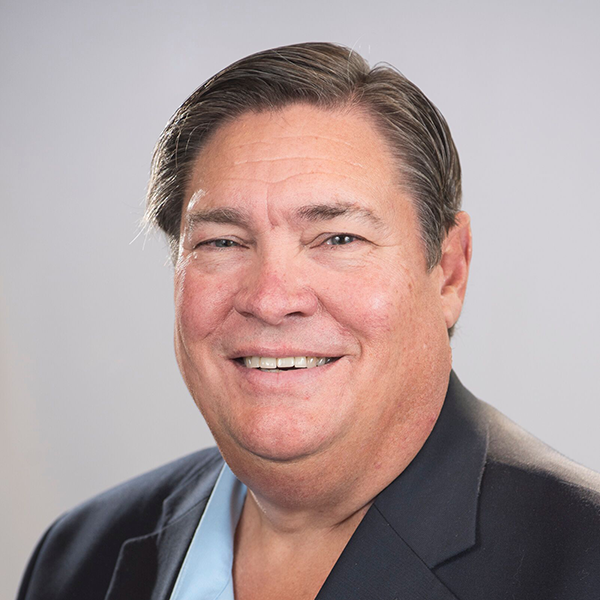
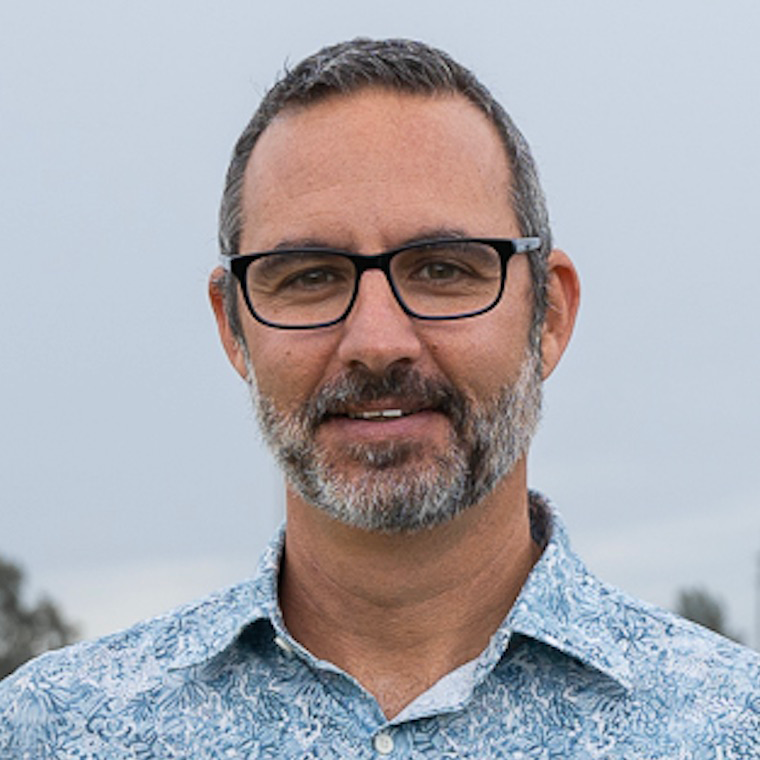
[Mary] Hi there. Welcome to Safety Labs. Today's guest has spent years researching and working on the workplace safety of construction sites. She approaches the topic from a number of different angles: academic, practical, social, and physical.
She recognizes the tension inherent in competing goals for organizations and workers. We'll discuss her experiences and philosophy for addressing the unique challenges posed by a construction worksite. Dr. Fred Sherratt is a world-leading academic in the field of construction safety and the founder of Straight Talk Safety. A chartered builder and chartered building engineer, she has over 10 years' experience working on UK construction job sites, and over 10 more as an academic in UK universities, including as a professor of construction sociology. Fred moved to the US in 2022 to continue her work in the science of construction safety. She's currently a joint coordinator of the International CIB Commission on Worker Health, Safety, and Wellbeing in Construction. She's presented her work to academic and industry audiences around the world. Fred joins us from the mountains of Colorado. Welcome.
[Fred] Hi, Mary. It's great to be here.
[Mary] Okay, so let's start with the context that you work in. You've chosen to specialize in construction. What sets workplace safety on construction sites apart from other work sites?
[Fred] Good question. The reason I'm in construction is construction kind of chose me, really — when I was 18 years old and needed a temp job, and they needed a secretary. So I worked a chunk of time in construction before I became an academic. I've got two different takes on this: the industry, having lived it and delivered a whole bunch of projects in the northwest of England, and also studying it from an academic perspective.
I think the biggest difference between trying to manage safety on construction sites versus a warehouse or factory environment is that in construction, everything's always changing. If it isn't always changing, you're not making any money — because our goal is to put up walls in places where there weren't walls before, to build things above stuff where there wasn't stuff before. So you're in a perpetually dynamic situation. That's number one — the actual space you're trying to deal with.
The other thing about construction is that we often subcontract the work, mainly because of the specialist trades needed. So what you have is an incredibly transient, in-flux workforce. The folks you start with in January are not going to be the same folks you have on the job site in May. Any kind of safety management that's looking to build something over a very long period of time — like an established safety culture, a word I don't use lightly — actually needs the same people around. But on construction sites, it doesn't work like that. You'll start with the groundwork, and as soon as the drainage is done, they leave and you get new trades in. As soon as the electrical and mechanical crews come on site, that's a whole new set of people. You may have people who come for one day to do one specialist job, like fitting a roller shutter door, and you never see them again. But those people are still part of the safety community on that site for that one day, and that matters. So you've got an incredibly shifting workspace, filled with an ever-changing group of people, all with different priorities for getting their work done, and everyone's work attached to everyone else's, either as a precursor or something coming after. It's a pretty messy place to try to organize. Those two things, I think, are the biggest challenges we have. Throw in a load of dangerous machinery, large bits of kit, heights, leading edges, and high-energy hazards, and that's pretty much a construction site in terms of safety that you've got to manage. It's pretty unique.
[Mary] It sounds incredibly complex.
[Fred] Yeah, it's not straightforward.
[Mary] So you have a philosophy I want to go through some of the elements of. One of your assertions is that safety is a social construct. Can you explain what that means to you?
[Fred] Sure. Safety isn't actually a tangible thing, for a start — it's not really a "thing" in any given way. I agree that's a fairly pedantic, semiotic way of putting it, but what safety is, is what we make it collectively. Different groups have a different understanding of safety — that's the easiest way to explain it.
Let's take a construction example. On a large construction site with a big contractor, they'll be investing a lot in their safety, and you'll be expected to behave in certain ways. That's the version of what's okay and what's not okay on that site. That can be very different on a much smaller job site. In the UK, we used to say this was the difference between a roofer on a big job, who had all their PPE on and was working hard — that was a certain sort of safety in that environment — versus if you went down the road to a small residential project, where they'd probably have their trainers and shorts on, and very little else if it was a nice day. That's their idea of safety within that space. There'd be less focus on edge protection and more on other things. So safety is what you make it — what's accepted, what you can and can't do in terms of rules, boundaries, acceptable behaviors, norms. Those change depending on who you're talking to and which situation you're in.
So when we talk about "a safety culture" on a job site, frankly, that's fairly nonsensical, because there isn't a homogenous culture. Everybody's doing it in different ways as they interact with different people. Safety is something we create and recreate as humans all the time. Does that make sense? It's not a thing, it's a way of understanding.
[Mary] Yeah, it makes perfect sense, and actually leads to the next question you just hinted at: does the social construct of safety on a given site stay the same once it's established?
[Fred] It's forever shifting. It could — because it's always changing. You have new people coming in, you have different events. It's even to the point that — we've got the World Cup next year — if England win the World Cup, the morning after on a construction site in the UK, I'll tell you, you'll be wanting to look out for a whole bunch of different things than you were the night before. So no, it isn't consistent.
You can have a guiding mind — if you have a really good project leader, project director, or foreman in a certain space, they're going to impose their understanding of safety and get people to come along with them, and that creates a certain sort of environment. I'm being kind to myself here, but my blocks always worked in a certain way when I was the superintendent. I knew everyone on my job and tried to bring new people in — "this is how we do it" — and you have to make your feelings known sometimes quite forcefully. But no, it doesn't stay the same, which is why I've often struck "safety culture" as a concept. We actually wrote a paper on it last year that said we need to stop using this as a concept, because it is constantly changing — it's a social construct. We shouldn't be trying to measure it in ways that suggest you can do a safety culture survey and that's it, you're done. You're quite right — it's always shifting, and it's not going to be the same safety culture, certainly not in construction, a couple of weeks down the line. Maybe in a factory things are more stable, but construction doesn't roll like that.
[Mary] So I'm hearing that a lot of it is, or can be, silent — because it's expectations and ideas. What are some practical ways that safety professionals can affect the construct of safety, the understanding of safety?
[Fred] The thing is, words are cheap. We say "safety's our number one priority" all the time — it's an absolute lie. Building things is the priority. Safety becomes a close second in many people's hearts. So in order for — you're right, most of this isn't said. The second you have to say something, like if I said, "I'm really punk rock, me," you immediately know I'm not, because there's no way I'd have to say it if I was. You just know it.
So there's my tip for a safety person: be it. You've got to be the safety that you want to see. It's mostly unspoken — it's about what you walk past, what you call out, what you prioritize, how you give advice and instructions. A lot of this falls on the superintendent and supervisor, who have to balance it with production. But there are ways of managing your production that show you absolutely value safety, and that you really do care about the workers, and that it's not just a "get it done" situation. There used to be an old phrase on UK job sites, back when I first started: "You do it safely, or you do it on Saturday." There's nobody around then.
But that's the kind of thing — you've just got to be it. It's through your actions, how you respond to things, how you reach out to people, how you talk to them. Not necessarily the words you're using, but how you're doing it. It's this tacit, hard-to-write-down stuff that's really where safety lives, which is why I do social science — because that's able to capture all that intangible, weird stuff that we know makes safety, but that we can't simply put into a checklist and be done with.
[Mary] One of your critiques of how safety is often practiced — not always — is that it's often isolated from other activities in an organization. Why is that a problem?
[Fred] Well, in construction, it's all the non-production stuff. You end up with some poor soul being the HSWEQ coordinator or VP — and that's all the things that don't make money. Production is the other thing. So we end up with safety getting bundled up with environmental stuff, sustainability stuff, and quality gets bundled in too, even though quality is so fundamental — it's ironic that it gets "othered," but it does.
The reason that matters is that safety has long been othered as a bolt-on, and in construction, I think that's partly because production is key — cash is king. You've got to be making things change, you've got to get your valuations in, you've got to get your money in. Most construction is built on credit, and you can easily run out of being able to pay people if you don't focus on production. I always used to say to my students that we'll know we've sorted safety when it isn't talked about, because we're not trying to apply a risk assessment to something that's already been decided will be done a certain way. In construction, a lot of what we do, the way we plan to do it, was set out around 1870 — when people were queuing up to be killed on job sites. Human life wasn't valued the same way back then. I'm semi-convinced that if we unpeeled the way we do a lot of construction work and tried to put it back together with safety baked in — as opposed to "we're not really bothered about this" — it's like when someone invented the telephone and people said, "Why do we need that? There are plenty of young boys who can run messages." It's the same logic — people were presumed to die doing construction work back in the eighteenth and nineteenth centuries. I've wandered off on a tangent here, Mary.
[Mary] No, it's true though. If you think about it culturally, at that time — not just in safety, but diseases were more rampant, life expectancy was lower for a number of reasons. So it's a very different context we're working in now, but we haven't changed how we're doing it.
[Fred] Ha — tell a bricklayer we could transport some bricklayers in time machines and they could get right to work.
[Mary] I wanted to ask how you'd suggest reducing that isolation. You touched on it when you talked about peeling things apart and putting them back together. Can you be more specific?
[Fred] Peeling apart procedures — financing is an interesting one. I hadn't really thought about it, but yes, when it's built on credit, time is really important. So procurement — the procurement routes we use in construction, and there's a whole load of them, that's a whole module and class in itself — predominantly favors lowest-cost tenders winning. People are doing it as cheap as possible, and then we're surprised they're not the safest. It's like — duh. We also quite often pay people on price, which pushes them to go as quickly as possible. Again, a great motivator for doing things safely and not cutting corners, right?
So there are some really obvious things we could start doing differently right from the start. But in other ways, it's about educating your commercial folks, your quantity surveyors, your procurement people, about why this matters and how you're going to change your processes. I would love for a very brave construction company to let me come in — I could quite easily show how you could change these higher-level processes. We need to be talking about safety, learning more about and understanding safety, nowhere near the job site — there's a lot of work to do in offices, with the white-collar folks whose decisions, and this has been well documented — you'll have heard of blunt end and sharp end, and upstream decisions — that's where an awful lot of the problems are baked in. By the time you get to the job site, the poor superintendent and the crews don't have a chance. They're being asked to do things in ways where the best price has already shaved a couple of weeks off the program, which means they have to accelerate, and they can't necessarily optimize that. That's where that balance is in construction, and it's always there — a perpetual pressure, unfortunately.
[Mary] Yeah, I think there's always going to be a tension between production and safety. If everything was perfectly safe, we'd all be at home wrapped in bubble wrap.
[Fred] Yes, you're not going to get that. And on the opposite end, it's production over all else. I wonder if it's a question of education for the leadership, because I imagine people in procurement don't tend to think about safety.
[Mary] I'm not sure how you end up in procurement, but if you take courses in it, I rather doubt there's much information about the safety implications.
[Fred] I'm sure it gets a little shout-out, but not to the depth that could really make a difference in how we're packaging things up. It's interesting that on certain projects, hands are tied in terms of procurement rules and legislation regarding how you can judge criteria. But I don't think there's any situation where you can't judge evaluation criteria with the subcontractors you're working with. In fact, if you're working for a private client and they're okay with it, there's no obligation to go to competitive tendering — you don't have to do that, you can just negotiate. It's not a rule. I think it is a rule for government work — in Europe there are very strict rules on this. But if you're building something for a private, wealthy client, I don't think there's a rule that says you have to get three tenders and go with the lowest one — I don't think that's actually a rule, in terms of public sector spend specifically.
But if you look at how EU regulations were working, there was scope to develop alternative criteria beyond just price — things like how companies were performing, not just their accident rates, which don't actually have much predictive meaning either, but how they were engaging in other areas. You could have prioritized awards based on other criteria than just cost. That opportunity was always there, but people tended not to take it, mainly because money makes the world go around, doesn't it? But there are certainly opportunities for thinking differently about how we're building things. I'm optimistic, because the more technology and BIM happens, and the more we're able to build a digital twin before we even go near the job site — which is ideal, because obviously folks aren't going to get hurt in a digital twin, as long as it's put together meaningfully, so edge protection doesn't just magically appear like fairy dust on the edge of the roof, and the designer remembers that some poor roofer has to actually go and build that stuff before everyone else is safe. There's scope to really start challenging this and thinking differently, particularly in construction. I think there's some stuff we could do that would really start to change things.
[Mary] Do you think the onus is on the safety practitioner? Certainly some of it is — do you think all of it is, or is there a balance?
[Fred] I don't think safety practitioners actually have anything like as much power as the commercial team does in a construction company. But I think what really made a difference in the UK was clients and owners, and their expectations. Back in the day — it was the nineties — John Prescott, a particularly outspoken politician, got the whole UK construction industry into a room and said, "Guys, you're killing too many people. This is not okay." The industry said, "We agree, but we're being made by clients to maintain this lowest-cost approach — it's not helping." And John Prescott, to be fair, didn't just say "get on with it" — he said, "You know what, you've got a point." So the UK government wrote their own rules for procurement and how they were going to behave as a client, and we saw a really significant drop in fatalities as a result. We can see that in client expectations for things like worker welfare — you'll very rarely find a porta-potty on a big British construction site now; it's all plumbed-in toilets, proper ones. But I worked on a job in the UK once where the welfare setup alone — lockers, showers, everything for the workers — was about three hundred thousand pounds a year. We factored that into the cost, and the client was very happy to pay it, because that's the expectation.
It's all about client demands shifting the dial on this. That's what made the big difference in the UK — there was a big summit, everyone got together, everyone growled at each other, but then they went away and actually changed how things were done. The UK government was the biggest construction client in the UK, and their expectations started to raise everyone else's expectations. For any sizable job — not small projects, those are a different animal altogether — you really started to see a change. Workers were expecting proper toilets, showers, canteens, warm places to sit out of the rain. That's not difficult. It's a bit rubbish if we're still treating workers like, "Well, you can go in the porta-potty or sit in your truck, and that's you done on our job site." That's not how it should be.
[Mary] It sounds like when someone takes the lead, people will follow — and the workers especially, once you've worked on a site with better conditions, you're going to want better sites, and if you want to attract the best workers, that matters.
[Fred] It knocks onto everything else, including how much everybody is respected, and that makes a big difference in how people will then behave and want to engage in doing other things better, like safety. It's all part of a piece.
[Mary] You've also said that safety has a smaller physical aspect and a larger social aspect. What do you mean by each of these, and why is it important to understand this idea?
[Fred] There are seriously physical things we need to do for safety — direct controls that directly address high-energy hazards. But they have certain caveats around them, one of which is that they still need to work even if someone makes a mistake. That brings the person straight into it, because accidents happen to people — those are the people who get hurt. An individual not going home has a serious impact on their family, their community. So I always value the people over everything else, because an enormous amount of construction work happens where there could have been an accident, but there isn't — and it's only because the person made the right choice, did the adaptive behaviors, and kept things going. I think this is fundamental to ideas around Safety I and Safety II. It's actually people — when things go right, quite often it's the adaptability, the resilience of the workers, that made that happen, within a space where perhaps the physical barriers weren't there. That's not to diminish the value of direct controls, physical barriers, or other tangible ways we protect people, but it's to point out that we actually need to be talking about people, because people make mistakes — and they will. They'll do dumb stuff, because that's called being a person.
[Mary] Well, yeah, I don't know what you mean — I've never done anything dumb in my life.
[Fred] So you're thinking about those adaptations people choose to make. Your safety philosophy is also to ground safety practice in the unique context of the workplace.
[Mary] Yeah, tell me a bit more about that — why is that important, and how does it relate to the social aspect you're talking about?
[Fred] Within construction specifically, this really matters for what we ask people to do as part of the work. We have a bunch of folks coming to a space that's often either too cold or too hot, too dusty or too rainy — it's a beautiful day here in the mountains today, but there are many that really, really aren't. And what we do then is ask them to do some really quite scary things — go up on scaffolds that wobble, drive tower cranes that move like hell if you've ever been up one, do deep excavations, go down into holes with things on the side of them. We ask them to do all this scary stuff. You would never get my husband up a scaffold. You have to have a certain amount of bravery to do this. I've been up in man baskets, in work harnesses, where you have to use contraptions to be lifted about, and it's just you in a little bucket.
But then what we do, stupidly, is take people who have to have a certain amount of bravery — "right, I'm going to do this" — because most people would shy away from a lot of these activities — and then say, "Right, we want you to be brave. You've got to take that risk that a lot of normal people wouldn't want to take... but then just stop. Be brave, but not like that. Don't be silly brave." You need to be brave enough to do the work I want you to do, but then not so brave that you don't see the added risk of, say, leaning over a guardrail. Because you're already at a level of risk that most normal people wouldn't want to go near. People who choose to work in offices, the most dangerous thing that can happen is the photocopier gets a bit excited. There are hazards in offices too, I'm not belittling that, but it's not the same as having to take your heart in your mouth and do some scary stuff. But then you're told to artificially rein that in, as if there's some invisible line between "this is okay" and "that isn't."
I wrote an interesting paper on risk a long time ago, about this presumption that everyone has a zero risk tolerance, that everyone's thermostat is set to zero. It really isn't, because otherwise people wouldn't go rock climbing, skiing, or flying small aeroplanes. In a world where we're ever more constrained in terms of our autonomy and freedoms, being able to decide, "You know what, I am going to climb all the way up that ladder and feel a little bit of..."
[Mary] That's called feeling alive, isn't it?
[Fred] I mean, come on. It is interesting. But you have to acknowledge we're dealing with a whole bunch of people who have no trouble standing on the edge of a twenty-story building. If you're okay with that, great — I'm okay with it, I don't mind heights. Every time we go on holiday, my husband's terrified — "get away from there, get away from there" — and I'm like, "I'm literally three feet from the edge," and he's still flipping out. My mum's exactly the same. To me, that's okay — I'm fine with it. But a lot of people aren't, and you need to start understanding that, be aware of it, and not presume you're dealing with a bunch of people who are incredibly risk-averse, because they're probably not. From my experience, they tend to do things like motocross, or come in with a broken arm on Monday from playing rugby, or still have stitches in their face from a game on Saturday.
So we're kind of asking these people to artificially rein themselves in, where it's a lot better to work with people — thinking about the work tasks we're asking them to do, and finding ways to manage these so we're not overstepping or blurring the boundaries around acceptable risk.
[Mary] So I suppose everyone has their own personal line — "this is my risk level, and this is dangerous, I wouldn't do this" — and you're saying these people who already do brave things are going to have different lines, and you can't go through every potential scenario where they might have to make a decision. That's just impractical. So is the best approach to go through the general task they're going to do — not every specific thing, but making it explicit, saying it out loud, having that shared understanding?
[Fred] It is. And once you've acknowledged that you know they're probably okay with a lot more risk than most people would like them to be, that's a different conversation. It also depends very much on experience, and how somebody's doing that day — remember the World Cup match England are going to win, and the knock-on effects the morning after. So there's all sorts of other things at play. But the best way to handle it, I always found as a superintendent, is to work with people who know the crew, who are with them every day, and can tell how somebody's doing — is this a good day for them to be doing this particular task or not — and then articulate it.
In many cases, senior workers — I'd say nearly all senior workers — know if they're doing something stupid or not. Younger workers, perhaps not — I actually had to remove someone from a job site once because they put a cigarette lighter to a can of floor adhesive, because somebody had told them the "flammable" sign on the side was a joke. I've never moved so fast. So with younger workers, it's a different kettle of fish.
[Mary] Senior people know if they're doing something stupid — we all do, you know it in your bones. I would think the senior people could also observe the junior people and say, from their years of experience, "Yeah, I used to think that was okay, but then I learned..."
[Fred] Yeah, but you also get, "I've always done it like this, and I've never had a problem." Like I say, it's super messy. There aren't easy answers or easy ways to do things. I think one of the most important things for anybody who does construction is to be really quite personable, because you have to be — it's a people game, you're always talking, working with people. I'd say safety folks in construction are the same — you need to be able to connect with someone super quickly. If you've worked construction, that happens a lot, because you're immediately on a new job site, and you immediately have to think, "Right, where's the forklift? I'm going to have to make friends with the driver." You have to be able to connect well with people. So, to jump back — safety is a people game.
[Mary] Sorry, yes — safety is a people... I nearly said "people is a safety game."
[Fred] Safety is a people game. So it's about connecting and getting people to understand what's going on, why, and how. I'm afraid, Mary, there isn't a simple answer to how you do this — it doesn't work like that.
[Mary] And of course, I don't expect there is an ideal answer — it's really just your perspective on it. We've talked about how it's complex and every worksite is different. If every worksite is different, what kinds of ideas, approaches, or practices do you think are useful regardless of the site, that aren't site-specific?
[Fred] In terms of construction safety, I think the way we tend to map out tasks and jobs is pretty good — ideally with the people doing it. I remember we built a plant room six stories up, right on the edge of a building, and put the roof on it. Then someone remembered there was a generator that had to go in there, and we couldn't fit it through the door. So we had to take some of the roof off to get it in. This was on my project — there was no parapet on the roof, and I knew I'd have to tie two men back with full restraint, since we were six stories up. So me and the two lads who were going to do it just sat down and worked it out together, because they were the ones going up there to do it — I'd just be standing on the flat roof. I really wanted them involved in how we were going to do it step by step, because this wasn't regular work, and it certainly had its dangers.
So mapping things out with people, making sure you're not just handing them a file to read in twenty minutes — there's too much of that going on. I think I was quite lucky in construction, because I was quite young, and I was a woman, and often the only one — so what that enabled me to do was ask an enormous number of questions and bring everyone along with me, rather than "I know what I'm doing, I'm going to tell you how to do it." That was never how I worked — it wouldn't have worked, and it's not how I roll anyway.
It's important that we do that, but across construction sites, I think we don't do enough to leverage the knowledge and expertise in the workforce that does this work regularly. We're very obsessed with CYA — making sure we've got paperwork signed by people who've never had a hope of actually reading it. So it's important to engage with people on a personal level. Beyond that, various safety management systems are definitely needed, whether yours is big, fat, and bloated, or lean and agile so folks can find what they're looking for within the first two seconds, rather than having to dig back into the archive with a torch.
I also think the actual legislation matters, because the other thing we do a lot is rely on people telling us we have to do other things — like that whole push to "zero harm." No legislation says "get to zero" — not here, not in the UK, not anywhere. It's "what's reasonably practicable." And the way the legislation generally works in most Western countries is that whoever creates the hazard controls it and controls the risk. It's not actually as prescriptive as people think — nobody's saying you're banned from hurting anyone, because the legislation understands safety doesn't work like that. The folks who wrote the legislation back in the day were actually quite forward-thinking. In the UK, we started around 1840 with the first Factory Act, and it just got thicker and thicker, like a phone book, until the seventies. It was all prescriptive — "you must, you shall" — for every scenario. Then someone said, "You know what, let's take that out and just put in these requirements, these obligations."
I used to love teaching safety legislation to my construction management students, because they were part-time students who'd been on job sites, heard everyone chatting, and had all these wild misconceptions about what was required of them — mostly hearsay, or a consultant putting the fear of God into somebody. When we actually read the legislation, I'd ask, "Do you think that's awful?" And they'd say, "No, that seems perfectly reasonable" — things like making sure people can safely get to their work and back again. That seems pretty okay. So it was interesting to see how this idea of legislation as "red tape," tying everyone in knots — actually, if you read it, generally it isn't. It's usually quite sensible, and there's nothing in there that you wouldn't think you should be doing for another human being you're paying for their labor.
[Mary] Interesting. When you teach others, or if you were to advise a safety person going onto a construction site for maybe the first time — someone experienced with safety perhaps, but not construction work sites specifically — what would you tell them to look out for to determine the context of the work site? And what are common challenges you'd expect them to find?
[Fred] There was a great piece of work done by Loughborough University in the UK about how anyone who knows a job site can tell you in two seconds how safe it is. Some of the things people would say: everyone's got their PPE on, everyone seems to be interacting well. I'd be looking for little piles of rubbish — because little piles of rubbish become big piles of rubbish, and that shows you people aren't looking after housekeeping. I'd be looking for a tidy site, a site where people can work, where nobody's on top of each other, where there isn't a cherry picker having a fight with a chute around some corner — so you can see people have thought things through, and the pace seems okay, not particularly frantic.
But the interesting thing, having said all that, is that's all construction management stuff, not necessarily safety stuff. I spent ten years standing in cold, wet mud — mainly Manchester, which is like Seattle, it just rains constantly. I was very lucky to get into that, so I know whether it's a good job or not. And whether it's a good job or not shows how much attention people are paying to safety over production. If something's not going well, if you're right at the wire and really have to push, you can feel that in the air. You can tell how the work is going, and that's when we start to see workarounds. The thing about construction that's wonderful is there's nothing you can't do — you can build anything, there's no problem you can't fix or solve. The people who work in construction get things done. That's also when workarounds start to go wrong, because somebody wants to get this done, wants to help out, wants to contribute, wants to help their work crew — and that's when work-as-planned, even if planned by the crew themselves, starts to take a little detour, and that's when we see vulnerabilities and accidents. So looking at the work and how it's being delivered will help you understand the safety aspects of it.
If you were a safety professional going onto a construction job site, I think your biggest gift would be humility, and not presuming you know why something is being done a certain way, particularly if you're not a construction person. It's all about being able to talk to people and engage. I loved working on site, because it's super chatty and friendly — you can have someone normally laugh. My laugh is kind of notorious, people used to be able to hear me coming from the floor slab above. It's a place where people generally come together, and nobody comes to work to have a really boring, dull time — they want to have a laugh and get things done. I read a paper once that said a certain level of banter keeps the wheels of productivity turning — though I agree it can go wrong in many ways. But a certain level keeps things moving in a way you're able to understand.
Interestingly, in that environment, I was never discriminated against for being a woman — ever.
[Mary] Interesting — yeah, I was curious.
[Fred] No, because construction is a meritocracy entirely — you build a wall, and it either stays up or it falls down. It's either there or it's not. You can't sit behind a computer pretending you've sent forty emails in a day when you've done nothing — which, in offices, it's a lot easier to bullshit your job. On construction, you've either done it or you haven't, and it's there. So that was never a problem, because it was always, "Can you do the job? Yeah, you're doing a good job, great, we'll have you." I actually found it to be a super inclusive environment, to be honest, because of that — people value folks who can do a good job, because nobody wants to have to do anything twice.
But in terms of safety folks, it also depends on the safety folk who came before, unfortunately — it takes one very pedantic, annoying safety person to really set things wrong on a job site, and that isn't what you want. So it's about being humble, asking questions, just chatting — it wouldn't be a waste of your time to spend all morning just wandering around talking to people, in my opinion. Just getting to understand and know people. This is a social thing — safety is a social construct, and you can get an awful lot out of understanding how people make sense of safety, just by letting them talk. Don't pepper them with questions — just say, "I'm the new safety person, how's that been going?" and then shut up. The way they take the conversation, the way they lead it, will show you what they valorize, what they value, what they think is rubbish — they'll do that themselves, in the way they structure their own thoughts. You don't need to do a formal interview and build a hierarchy out of it. Just listen, and that will work really well.
[Mary] Without naming any organization, do you have any stories about how safety can go very wrong, or even better, very right, on a construction site?
[Fred] The ways it tends to go wrong — I can talk about when I did a whole bunch of work around zero harm, because that landed in the UK when I was a superintendent. I had to implement it with my crew, went on the training, did all that. I actually think that didn't go well, and the reason is that we were doing IIF — Incident and Injury Free — which is an American program, and they were showing it to British construction workers. I've lived here three and a half years now — we're completely different countries. It's lovely, we're good mates, we speak the same language, although I do use some words nobody understands, and my accent can fool you. But it just didn't land, because it was all about feelings and emotions, and the UK in the nineties was not yet at that point.
So I was sat with a bunch of my crew, my steel fixers, and I could just feel everyone getting more and more uncomfortable — particularly as construction workers. Here's a good safety tip for construction workers: they don't all like being indoors very much. I know a lot of people who work in construction because they hate being inside, and that's why they do it. So the second you do safety and it has to be in a classroom, you're already not doing very well. And then everyone's had to come indoors and they're not making any money, because you're probably paying them on price, so they don't like that. And then you're trying to get them to share feelings with each other in nineties England. Are you mad? So that really didn't work at that time, and I don't think that program lasted particularly long in that organization — they have something else now that's really pretty impressive.
I think that's where it doesn't land — getting a new safety program, a new slogan, "making safety personal," a whole new load of hi-vis vests, a sticker for your hard hat. The problem with most of these things is that if nothing physically ever changes, it doesn't matter, and workers become more and more disengaged with what you're trying to achieve, because you're doing the superficial stuff, the easy wins — which look great if you want to tweet about them — but if you're not doing the hard work of unpacking what we're doing, how we're embedding safety in how we procure subcontractors, that's thankless work. It's not necessarily going to make you any more money, there's no easy ROI you can state, but it's worth doing in the long run.
But safety isn't easy to measure either, because for most people it's "not having an accident," and safety is a non-event. So how do you measure something not happening? That's quite hard to do, so you just don't know the outcomes of that.
As for when something went really well — let me think. I used to pride myself on being able to talk to people about safety, and I think being a woman made a difference there too. Get more women doing superintendent and trade work, and you'll have a different conversation, because you can actually say to somebody, "What are you doing? I don't want you to get hurt — get off there," and actually start calling people out on stuff rather than walking past. If I had a pound for every time someone said, "Can you come back in a minute, Fred?" — no, I can't, do you want to get off that, do you want to stop doing it that way, because you know that isn't the right way to be doing what you're doing — and they'd say, "Yeah, I know, but—" and I'd say, "No, bolts, get off." If I had a pound for every time everybody said that to me, I'd probably have had quite a nice car, to be honest.
[Mary] So, for future safety professionals, specifically those working in construction — is there an area you'd focus training or research on? You've also got an academic career.
[Fred] Do you mean training for the safety folks, or training for the workers?
[Mary] For the safety folks — listeners who are hoping to or thinking about going into practicing within construction.
[Fred] There are some great papers that focus just on construction and how things work within that industry. I've actually written a book about it that sets it all into context — very much about construction safety. It wouldn't do you amiss to give that a read, it's quite funny, but it covers things about zero harm, how construction is different — that was something I was really keen to emphasize in that book. Details are on my website. There's also a whole bunch of academic papers that focus specifically on how construction does what it does, and the consequences of that.
If you were a safety professional going into construction with no construction experience, I'd recommend reading "Introduction to Construction Management," a textbook for eighteen-year-old students, or finding any textbook about construction management and reading it. That's going to set the scene and give you the context, because it isn't like any other industry — it's not the same as occupational safety in factory or workshop settings, where you have fixed installations and set ways things move through your production processes. It's as if you're tearing all that apart and putting it back together in different ways. That's the complexity there. So I'd highly recommend "Unpacking Construction Site Safety" by me — that one won't do you wrong. It's got a good introduction as to why it's different, why it matters, and why all these other social aspects matter. If you're a good construction safety person in the UK, you better know your soccer and cricket schedules; in the US, there's a lot more to it than just how things work, because a lot about safety doesn't start and end at the door, the hoarding, or the gate. Safety is something we take with us in all different ways.
It's been interesting to see some firms encouraging folks to report safety stuff in their everyday lives outside of work, just to keep that observer mindset. I can see some merit in that, though I think it creates enormous databases that nobody can then manage. I don't think generating the data is actually the point — the point is to have people very safety-conscious in everything they do, and that works really well if that's your jam. So I think that can help quite a lot.
But construction is the best industry in the world. I would still be building stuff if there hadn't been a recession and they'd stopped funding the schools I was putting up at the time — then I had to become an academic, and I've stayed there ever since. It's a wonderful place to work, and we really need good safety people there, because it still kills far too many people — it really does. We might not get to zero, and given the way neoliberal economics works, there might always be some calculation of how many people get sacrificed for that much production — that might be the case. But it shouldn't be. There should be ways of building shelter and everything else we need the built environment for, in ways that don't result in people getting hurt within our industry. That's my firm belief. Even though I don't believe in "zero harm" as a way of selling it, in my heart, that's where I always want to be.
[Mary] Yeah, absolutely. If you could go back in time to the beginning of your safety career, is there a piece of advice you'd give yourself?
[Fred] The beginning of my safety career was the beginning of my construction career, because it's embedded completely within that. What advice would I give myself? You've got to be tough as nails, because people will want to try to talk you out of things — they'll say, "That doesn't matter, that doesn't matter," and yeah, it bloody does. You've got to be a certain sort of character to not only make that clear, but bring people with you. It's not just "I say this, you do what I say" — that isn't how anything works, because safety is a social construct, it's how we both agree it should be. If I'm trying to impose something on you, that's never going to work. So it's certainly about staying tough — there were a couple of times I didn't make a big enough fuss, and I probably should have. That's probably one of my only regrets. But you've just got to stay super strong, and if it needs saying, it needs saying.
[Mary] You've mentioned a couple of places already — is there anything else you wanted to mention to our listeners about how they can learn more about the topics in our discussion? Any other books, websites, or groups?
[Fred] I'm actually really easy to find, because there isn't another Fred Sherratt in the world — if you Google me, I come up. Also, my company is Straight Talk Safety, because, as you can tell from what I've been saying — "zero harm"? No, that's just spin, just stop it. So Straight Talk Safety will absolutely tell you, very bluntly, that there's no silver bullet, it's a mess — but we can still do stuff to try to improve things. Straighttalksafety.com is my website, and under the philosophy page, you'll see a whole bunch of ideas that expand on the social construction concept. There's also a lot of papers I've written on specific areas — all the stuff around zero harm is on there if you're interested. If you can't access anything, just shoot me an email and I'll sort that out for you straight away. Academic publishing is an interesting place — things behind paywalls doesn't mean you can't get them, you've just got to talk to the author. There's also stuff on there about my academic history, including the book "Unpacking Construction Site Safety," if you want to check that out. But if anyone's interested, give me a shout — I love construction, and I love safety in construction, and that's what I'm all about and here for.
[Mary] Sounds good. Well, that's a wrap for today. Thank you, Fred, for talking to me about your experience and your approach to construction safety.
[Fred] Thank you, Mary, it's been great.
[Mary] Thank you. My thanks to our listeners — if you'd like to join the conversation, come find us on LinkedIn. And as always, thank you to the Safety Labs team for keeping the conversation going. Bye for now. This podcast is created by Safety Products Global, the world's leading manufacturer of safety knives. Through our trusted brands, Klever, Slice, and PHC, we empower companies to prevent injuries by providing safer cutting tools for every material and application. Until next time, stay safe.