[Mary] Hi there. Welcome to Safety Labs. When you move to a new town, meet your significant other's family, or start a new job, one of the first things you pay attention to is how things are done. In this new context, there's rarely a manual, so you need to be observant and figure out what's going on unsaid. Today's guest has called this information "unwritten ground rules," and he examines them in the context of workplace safety. So we'll ask about how they fit in, and what tools can help shift a culture so that how things are done enhances safety.
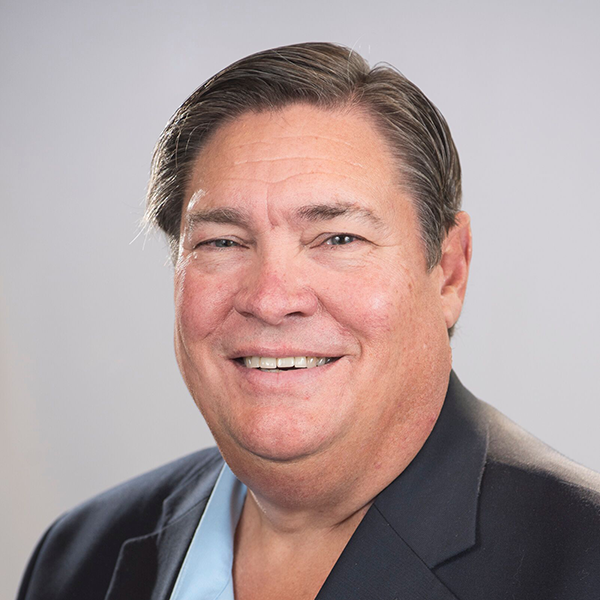
For more than thirty-five years, Steve Simpson has been working with organizations across the world to help them boost performance and productivity by transforming workplace cultures. He's a sought-after speaker at conferences across the globe and the creator of the UGRs — Unwritten Ground Rules — concept. Steve is an international speaker, author, and consultant who has worked with the likes of McLaren Automotive and Next in the UK, Kmart Australia and New Zealand, SAP globally, and Toyota Australia. Steve is the author of two books, including "UGRs: Cracking the Corporate Culture Code." He has a master's degree from the University of Alberta, and he joins us from Melbourne. Welcome.
[Steve] Thanks, Mary. It's great to be with you.
[Mary] Let's get right into it. When you talk about unwritten ground rules, or UGRs, what exactly do you mean?
[Steve] UGRs are people's perceptions of "this is the way we do things around here." That definition is really important — and the key word is "perceptions." When a person is new to an organization, no matter how senior they are, they will normally stay quieter than they otherwise would. Why? Because at an unconscious level, they are tuning in to the UGRs so that they can conform. They hold enormous power over each and every one of us, and yet remarkably they are seldom, if ever, talked about openly. People have to deduce them, work it out themselves. That's UGRs in a nutshell.
[Mary] And what does that tell us about the power of UGRs in our social contexts?
[Steve] This normally happens at an unconscious level, and it's not confined to work — any new group of people we're with, we will normally stay quieter, to find out what the UGRs are so that we can conform. A new person to an organization will look at a whole range of things, almost always unconsciously: how people are treated, whether people take their lunch at workstations, dress codes and the consequences for not adhering to them, how customers and clients are referred to — are they the butt of jokes or are they taken seriously — punctuality, whether people are eyeing the clock at five o'clock ready to sprint. This almost infinite number of cues forms our view of "this is the way we do things around here."
Here's an example of their power. If I'm new and the start time is nine o'clock and on my first day I arrive at nine and everyone is already there, it's probable I'll arrive a bit earlier the next day. If I arrive at nine and no one is there, it's probable I'll arrive a little bit later. And that's day one. They hold enormous power.
[Mary] What are some typical UGRs you've seen that strongly affect occupational safety — either positively or negatively?
[Steve] This is territory we've ventured into over the last fifteen or so years. I created the UGRs acronym more than thirty-five years ago, and for twenty years or so I worked with organizations only at a broad culture level. I came into the safety space a little later — only in the last fifteen years or so have we worked with mining companies, aviation, and construction — and we've come to realize the incredible power UGRs have in relation to safety.
One we've encountered in the mining industry: "around here, production is more important than safety." No one ever says that. No one ever says it. But people work out quickly what the priorities of leaders are, and that locks in fast.
There's also this notion I've only recently encountered, which has enormous power — legacy UGRs. A UGR can be true in the perception of most people at some point in time, but then all the players move on and the UGR remains. I was working with an underground coal mine, running a series of two-hour sessions for the workers — some of the toughest sessions I've ever had. They were bordering on nasty to work with, partly because there was no one there to introduce me: I was just on site and they were told they had to be there. I was eventually able to win each group over, and I found out that contractors who work side by side with the workers were treated as second-class citizens — and the language they used was far more colourful than that.
I asked why, and they told me about strikes in coal mines in Australia in the nineteen-eighties. The contractors were the ones who came in and did the work in place of the striking miners. And therefore, in their minds, contractors were second-class citizens. I said to them, "so that's a legacy UGR from forty years ago." And they went, "yeah, I guess you're correct." That's remarkable. Once UGRs lock in, they can shift irrespective of who's sitting in the chair.
My second example involves an automotive company's sales and marketing division. The day prior to a full-day conference, a young man on staff made a mistake on social media. The next day at the conference, the senior director of the division was addressing everyone. During his presentation, he physically moved toward this young man, pointed at him, referenced the social media mistake, and literally said, "Be careful, young man, be careful." Now I ask people, what's the UGR? And people say, "never make a mistake." I say I disagree — I think the UGR is "never get caught making a mistake." I'd hazard a guess that UGR has now locked in and become a legacy UGR, long after that leader was promoted and many players changed within the division. In a division where there's meant to be creativity, dynamism, and agility — if the UGR is "never get caught making a mistake," good luck with that.
[Mary] We have UGRs and we also have formal safety management systems — procedures, documentation, that sort of thing. I imagine they don't always perfectly align.
[Steve] For five consecutive years I've spoken at an international helicopter safety conference in North America. Prior to the first time going, I knew very little about aviation or safety management systems — I've learned a lot attending these conferences. At one presentation, from the New Zealand Civil Aviation Authority, they described moving away from strictly compliance-checking toward a more educative role. In their educative role, they advised operators to focus on five elements: data collection, analysis of that data, incorporation of the analyzed data into leader decisions, actions based on those decisions, and a review of the whole process.
As I was hearing this, my head was exploding. Because at each of these five conferences, they had stressed so hard that safety culture is fundamental to safety. And I was thinking: so what data do you collect around safety culture? I became an intrepid researcher and spoke to people in the corridors during breaks, asking exactly that question. I got two responses: either "we don't really collect any," or "we have engagement surveys." What I believe is that there is a potential gap in safety management systems — on one hand saying "our safety culture is fundamental," while on the other hand very little relevant data is actually collected around that very thing. I'd suspect this is not confined to the aviation industry, and it's partly because of the difficulty of understanding what culture really means. Once you understand that, the benefit of the UGRs acronym — unwritten ground rules — is that it becomes very simple for everyone to understand, and we can actually collect data around the UGRs in any organization.
[Mary] Most people consider culture hard to measure. How does the UGRs approach address that?
[Steve] There are plenty of culture measurement tools around, and I don't want to discredit them, they play a vital role. But I think there are a couple of issues: they try to measure everything, and they're often based purely on numeric scale assessments, so the richness of the data is a little lacking.
More than twenty years ago, I got two Australian universities involved in doing world-first research into UGRs, and thanks to Professor Jeff Suter, then at the University of Western Australia, we found a simple but remarkably powerful way to surface the prevailing UGRs. We had people from five client companies anonymously complete what we now call lead-in sentences. In our research — not in a safety context at this stage — we got people to complete the sentence "around here, customers are." The responses were remarkable. We had people write "customers are a pain in the neck." One person literally wrote "customers are an interruption to my working day." Each of these companies had wonderful documentation proclaiming their commitment to customer service. What a load of rubbish if those are the prevailing UGRs.
We realized we'd surfaced an incredibly simple, powerful way of finding out what the UGRs actually are, and we've developed it significantly since. For safety, I say to people: we can get a fix on the current state of your safety culture simply by getting people to complete two lead-in sentences, maybe even one. They are: "around here, when an unsafe act occurs" — and secondly — "around here, when it comes to safety." You could probably get away with one just to get a fix on where you are. We get people to complete the sentence in a free-range text box. But we also get people to self-categorize their response as having a positive, neutral, or negative impact overall. If somebody writes "around here, when it comes to safety, we try and avoid it because there's too much paperwork," they'd self-categorize that as negative. So we can report back on the percentage of positive, neutral, and negative responses for each lead-in sentence — but the real richness is in the words. That's the qualitative richness which isn't normally available from a purely quantitative survey.
And by the way, for those who'd like to try this with a team, it doesn't have to be computer-based. I've done it many times with people in the room, getting them to complete the sentence on an index card, then fold it in half to stay anonymous. You need twenty or more people in the room to retain anonymity if you're doing it manually. Then you can split the group into smaller groups to analyze the written words from each lead-in sentence. It's gobsmackingly interesting and riveting for people. I say to them: this is probably the first time you've had the opportunity to see your workplace through other people's eyes.
My broader argument is that safety culture is bigger than safety culture alone — there are contributing cultural attributes that impact on safety. If I'm treated badly by my manager, I might breach safety protocols out of spite when the manager isn't there. So care and respect is a contributing cultural attribute that impacts on safety. And I think there are three others: a willingness to have challenging conversations, a desire for continuous improvement, and teamwork.
[Mary] I want to dive into those four attributes, but first let's hear from the company behind the podcast.
In labs, R&D, and manufacturing, precision manipulation requires precision tools. Most precision knives on the market, like scalpels, can rust, don't have the right shape, and are incredibly sharp and dangerous. Slice precision knives feature finger-friendly blades that are safe to the touch, oil-free, and chemically inert. They offer a number of different handle and blade options — straight blades, hook blades, and chisels — and the cutters give the user control with textured grips and a design that prioritizes balance and stability. With no-tool blade changes, workers can quickly switch to the blade they need for the task at hand. If you'd like to learn more about which tools will work for your materials, you can request free samples at safetylabspodcast.com/samples.
And now, back to our discussion. Some people only trust numbers. What do you say to leaders who are skeptical of qualitative approaches — is there a way to satisfy both needs?
[Steve] Partly for that reason, but also to add extra meaning, we can derive both quantitative and qualitative data from doing this. We call it a UGRs stock take — for those in North America, "stock take" is similar to "inventory." And that's why we get people to self-categorize their responses as positive, neutral, or negative — so we can report back on the percentages for each lead-in sentence. But the richness is in the words. The qualitative provides such depth — we provide reports that bunch up all the positive, neutral, and negative responses, so people can gain meaning. That's not normally available from a purely quantitative survey. And this feels very different to a survey. We've all filled out surveys where your brain is thinking, "but none of these five options actually match what I'm thinking." Here, there's only a free-range text box. You can write one word or multiple paragraphs, with no limit, and then self-categorize your response.
[Mary] How do you present potentially confronting data back to organizations in a way that's honest but still constructive — say, if the majority of responses are fairly negative about safety?
[Steve] I look forward to those circumstances, and I'm being serious. I say to people: get excited about the prospects. The culture you have and the UGRs you have are a consequence of history — some may be legacy UGRs, a consequence of personalities and issues that maybe weren't touched on when they should have been. The fact that you're going down this path, revealing the UGRs, should tell you there is really good intent and a genuine desire to say, how can we make this better collectively? Because there are spin-offs from having a better safety culture, and that includes having a better culture generally. If we can improve those contributing cultural attributes, the whole culture gets better. We can get to a point where we truly differentiate ourselves — not only on safety culture but on culture generally, and very few organizations are able to climb that mantle.
[Mary] Now let's come back to the four key cultural attributes. Can you give us an overview and then we'll dive into each?
[Steve] I've tested these with my aviation audiences and asked whether I was hitting the mark and whether there were others to add. The answer was that these were correct and nothing else needed to be added.
The first is care and respect. If I'm treated badly by my boss, I might become devious out of spite when the boss isn't there. But that's worth fighting for almost independent of safety anyway — who wants a workplace without care and respect? The lead-in sentence for this one is "around here, people are treated." I'd ask any listener to reflect: how would your people complete that sentence, and what percentage do you think would categorize their response as positive versus neutral versus negative?
The second is a willingness to have challenging conversations. The lead-in sentence I've crafted is "around here, when challenging conversations need to happen." I can share actual results from a helicopter company where everyone at their base was invited to complete the sentence — we ended up with a response rate of around seventy percent. The results were: seventeen percent positive, twenty-nine percent neutral, fifty-four percent negative. That means eighty-three percent non-positive. And I say to the pilots, engineers, and support staff in the room: does this impact on safety? The correct answer is obviously yes. And I ask them: has this ever been discussed or addressed as part of your safety management system? The answer is no. This sort of thing is never talked about, and it needs to be. This is fundamental to safety.
The words people are writing in response say things like "it's not worth it," "you get your head bitten off," "we tried it once and they weren't interested," "it's not worth the grief." Frontline people are seeing things and withholding them. That is a massive risk. And sometimes there's a UGR layered on top of it — "if you speak negatively, you're a spoiler." There's a happiness-above-everything culture where challenging conversations are to be avoided not just because they're difficult, but because raising a concern makes you look bad. That gives people further cause not to speak up.
And as you just described, once someone tries to have a challenging conversation and it's dealt with badly — they're blamed, humiliated, or simply not listened to — that experience becomes a UGR in itself. They've learned it's not worth their time, and that can spread through private conversations in the car park after work. Negative UGRs spread more easily and more quickly than positive ones.
The third attribute is a desire for improvement. The lead-in sentence is "around here, when someone comes up with a new idea." Often when leaders see results from this one, their response is "let's put in place a better system to get ideas." My counsel is that's going down the wrong path. What people are really responding to is: what is the appetite my boss has for better ways of doing things? We can put systems in place, but if there isn't a genuine appetite for improvement, the systems will count for zero. These might be small, seemingly insignificant ideas — but without this attribute, we can argue safety is at risk.
The fourth is teamwork, and there are two aspects to it. The within-team lead-in sentence is "around here, when someone needs help." That normally gets a very high percentage of positive responses — most smaller teams do seem to get along and help each other. But there's also the cross-team element, and this is often very different. The lead-in sentence there is "around here, when it comes to dealing with other work areas." If there's one thing I've learned in thirty-five years of working with companies, it's that the silo mentality is endemic. Absolutely endemic in so many organizations.
The results I got from the helicopter company on the cross-team question were not very positive. And I honestly don't think this is very difficult to address, despite the fact that it seems globally endemic. All you need to do is get two teams who have an interdependent relationship together and ask each other one question — and it should go in both directions: "how can we help you do your job better?" Genuinely listen, don't get defensive. I honestly think that simple question could resolve so many problems.
[Mary] Let's talk about change. You've said there are two levers — you can change people's perceptions or you can change the reality that drives those perceptions. How do you help organizations diagnose which is the main problem?
[Steve] You're right that it's usually a mixed bag. If culture is people's perceptions of "this is the way we do things around here," then logically there are only two ways to improve it: change what's causing those perceptions, or change the perceptions themselves. After doing the UGRs stock take, we give the results back to leaders and do a thorough analysis of them. We gain meaning from the words, identify priority improvement areas, and then ask leaders: what do you believe is the source of these negative or less-than-positive UGRs? Is there validity to the concerns?
For example, if somebody writes "around here, people are treated like garbage," and I were a fly on the wall watching how leaders interact with people, I might come to exactly the same conclusion — in which case we need to reflect on how leaders relate to and interact with their people. Equally, the UGR might have been correct five, ten, or forty years ago, in which case it's a legacy UGR, and we need to give people an awakening to that.
Part of the process after sharing results with leaders is sharing them with employees — redacting where necessary, but giving people the actual words that others have written, and letting them come up with what they as individuals can do to make things better. My argument is that the vast majority of unhappy people in a workplace do not want it to be that way — they've merely given up hope. That includes leaders. Many leaders have given up hope; they don't know what to do to make the culture better. So this gives them a framework, something of substance, where we can collectively have shared ownership of the UGRs and the culture.
Our process gets employees involved, and that's pivotal. It might be as seemingly trivial as saying, "we should say good morning to each other when we come to work." Write that one down. These seemingly trivial ideas, if enough of us do them, can make a substantial difference. We've seen cultures transform very quickly when organizations have genuinely taken this on board.
[Mary] Where does the responsibility for change transition from you as an external consultant to the organization itself?
[Steve] I was working with a large company in the UK. On day two I did a debrief with the leaders, and I asked them: "If I'm working with your people and they are being open and honest with me, and you leaders are not in the room, how would you predict they would answer this question — what are your leaders' top three priorities?" There was a stunned silence. After some time, one of the leaders, to his credit, spoke up and said, "Steve, we don't even know what our own top three priorities are. So how would they?" I said to this leadership group: you don't go to jail if culture, people, or values is not a top three priority in your company. But without culture or people or values being a top three priority — and without employees believing that to be the case — we're not going to gain much traction.
I was working with Kmart in Australia, a discount department store that used to be bottom of the league in their sector. I worked with them over eight years. They lost money for ten years in a row; they now make half a billion dollars in profit. When I was working with their leadership team, I asked how often they meet — every Monday morning — and whether they had standing agenda items. Finance and safety. I said, "so culture's not important?" Their boss, Guy Russo, a brilliant man, said no, it is important. I said, "no, it's not — finance and safety are important." Guy turned to his leaders and said: we're adding a third standing agenda item, culture. This has to be a top priority.
And we can retain momentum within the organization through culture champions — in-house experts. We've seen this work. The UGRs acronym becomes everyday language, even a joke while people are queuing for coffee: "hey, is that a UGR?" It becomes top of mind. The vast majority of people want to be part of a positive, productive, dynamic, safe, hardworking team — but they've given up. Give them half an opportunity to be involved and the vast majority will jump at it.
At Kmart, across thirty thousand people and over two hundred stores, we created momentum in head office in a single day. Guy Russo changed the name from "head office" to "support office" — words matter. We invited culture champions and they were oversubscribed. One day I got a phone call from the IT division saying, "Steve, we'd like you to come in and be a participant in our lunchtime learning about UGRs." I was invited as a participant, not as a speaker. When I walked into the room, I knew the IT people not by their faces but because they were all wearing white t-shirts with a love heart and the words "I love UGRs" — which they had designed themselves. They ran the session, crowdsourced ideas, and had fun with it. That genuinely filtered out to the stores. It's also important, Mary — we've got to have laughs about this. I've encountered a UGR that says "laughter is a demonstration of a lack of productivity, to be frowned upon." I couldn't work there.
[Mary] From a practical perspective — if a safety professional has been exposed to this concept and wants to get some momentum going — how do you identify the right champions?
[Steve] When I work with a company and invite culture champions, I specifically ask for negative or cynical opinion leaders. I can't guarantee to change them all, but I've seen most turn a hundred and eighty degrees. They're unhappy people who don't want it to be that way — they just happen to vocalize and influence others around their negativity.
I was working with a group once and one older gentleman could not have demonstrated more negative UGRs from his body language. He was almost sitting horizontally, arm on the windowsill. Halfway through the morning I went up to him during the break and said, "Do you mind if we have a private conversation?" I said, "Look, this is what I'm reading in your body language, and I'm being honest with you — if you don't want to be here, I don't want you to feel compelled." He appreciated that. And then I said: "Has it always been this way for you?" That stopped him in his tracks. He almost physically changed in his body language. He said, "You know what? I haven't." Something had happened to that man over time. And then he said, "You know what, I'm going to come back in the room." The reason I'm telling you this is that some people who you would think are closed to this are not necessarily so.
[Mary] If you were given a magic wand to affect the training of future safety professionals, what would you put in the curriculum beyond the technical and compliance training?
[Steve] I would put UGRs into the curriculum, I seriously would. I've had so many people come up to me and say, "Finally you've put words to something I know is there but I've never brought to a level of consciousness." Once you know about UGRs, there's no off switch. You can't not see it anymore. If two of us know about it, we can talk about UGRs that might be impacting on us. If all of us know about it, we can all talk about it. And then there's a conscious choice — if the boss walks out the room and everyone knows about UGRs, they're conscious that talking negatively about the boss who just left is creating a negative UGR. That awareness itself makes a difference.
I'd also observe that in the aviation industry, "just culture" with capital letters has big prominence — and that's an attempt to address the culture issue. But what I've learned, and some of your listeners in aviation might be able to testify, is that there are UGRs about just culture. And the UGR is: "that's just another stick to beat us with." So there may be attempts, but whether they're actually landing is another matter.
[Mary] How can our listeners learn more about today's topics?
[Steve] The one book that really sold me on culture — since there are no other books on UGRs — is "Corporate Cultures" by Deal and Kennedy. It looks at the research and demonstrates that companies with positive cultures are absolutely more successful than those with poor cultures. If any listeners want evidence, because some people think culture is a soft, flowery topic at the side of real work, that book will persuade them.
[Mary] And where can listeners find you on the web?
[Steve] Steve-Simpson.com. Our latest book is called "A Culture Turned," which is a fictional story of a culture transformation. I'm also at the final stages of a safety culture book — I haven't settled on the title yet, but I've learned so much about the safety context, and I'm incorporating psychological safety into it as well, since that has equal standing to physical safety. And I'm on LinkedIn as well.
[Mary] Well, that is our show, folks. Thank you, Steve.
[Steve] Thanks, Mary. It's been a treat.
[Mary] And thank you to our listeners, and the Safety Labs team as well. I hope this has been helpful. Have a great day. Bye for now. This podcast is created by Safety Products Global, the world's leading manufacturer of safety knives. Through our trusted brands, Klever, Slice, and PHC, we empower companies to prevent injuries by providing safer cutting tools for every material and application. Until next time, stay safe.