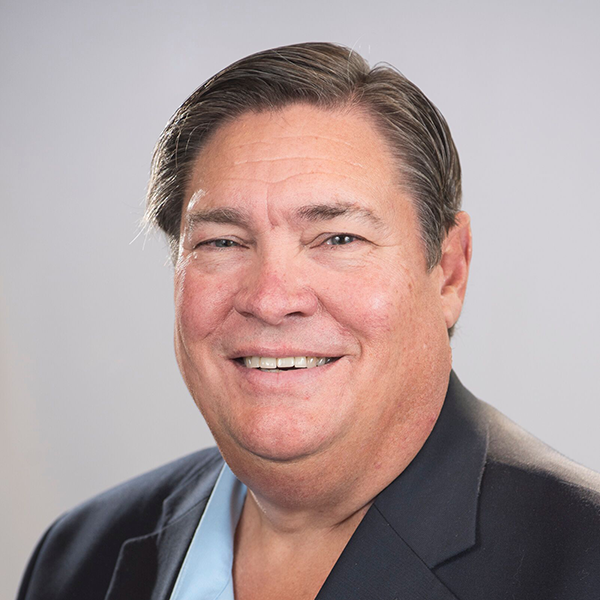
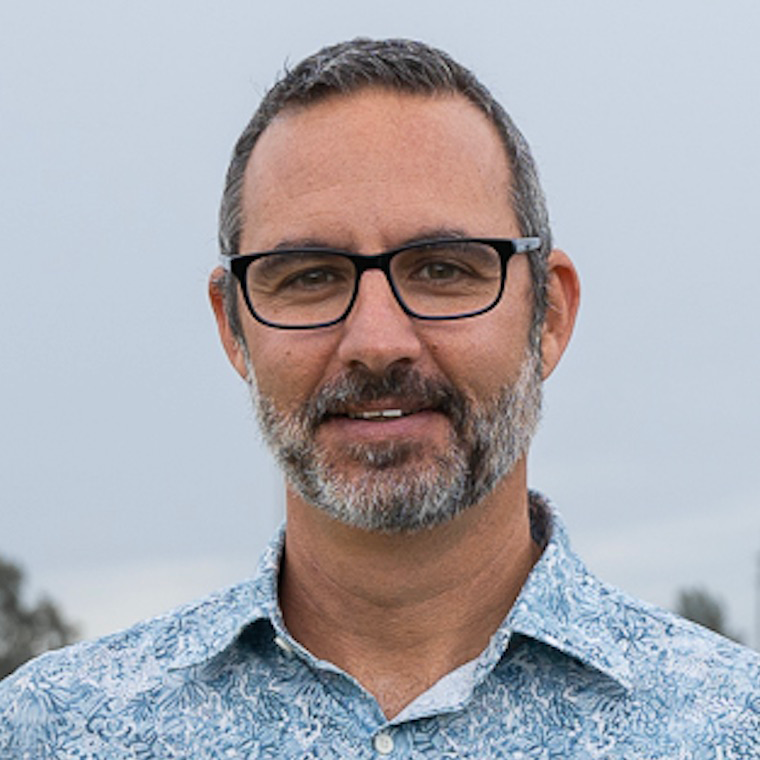
[Mary] Hi there. Welcome to Safety Labs. When I think about hospitals and safety, especially pediatric hospitals, I tend to think of patient safety first, and I think that's common. Maybe it's because pediatric hospitals treat some of our most precious and vulnerable family members, or maybe we buy into the cultural belief that pediatric healthcare workers are invincible superheroes. Today's guest has a unique perspective on patient safety, worker safety, and the status of OHS concerns in the medical field more generally.
Dr. Anne Lyren is the chief medical and strategy officer for the Children's Hospitals' Solutions for Patient Safety, or SPS Network. The SPS Network is a pediatric healthcare safety collective of over one hundred and fifty hospitals across North America. Dr. Lyren spearheads strategic efforts to eliminate healthcare-associated harm for both patients and staff. She's held executive roles at Rainbow Babies and Children's Hospital, including Vice Chair of Quality and Safety and Interim Co-Chair of the Department of Pediatrics. Anne holds degrees from Harvard University, the University of Edinburgh, and Case Western Reserve University. She brings a unique blend of clinical medicine and ethics to her work as a leading international expert in pediatric healthcare safety, practices, and culture. Anne joins us from Cleveland, Ohio. Welcome.
[Anne] Thank you, Mary.
[Mary] I want to get straight into what I mentioned in the intro — the relationship between patient safety and healthcare worker safety. Most people see them as quite separate, but you argue that they interact in a few different ways.
[Anne] Definitely. It's been an interesting journey at Solutions for Patient Safety, or SPS, and our perspective on this issue has changed over time. When we first started, as you can tell from our name, we were inspired by the need to keep children safe who came to our hospitals for care, and we were very aware of the ways in which we did not always succeed in doing that. That was the real motivation for bringing these children's hospitals together at the beginning, and it felt fairly magical, to be honest, because of the power of that mission — no one really wants to hurt a little kid, period, and you especially don't want to hurt a child who's come to you to be healed or to get care. Nobody goes into healthcare to harm anyone, and in particular, people who choose pediatric healthcare have a certain fondness and advocacy for children that really, really motivates what they do.
So we started our network and were chugging along, working on patient safety, and in the background we became aware of information that wasn't hidden to us, but what we hadn't really paid attention to — the relatively severe statistics related to hospital worker safety. This wasn't unique to children's hospitals, but OSHA, for example, in the US, repeatedly states that hospitals are among the least safe places to work, with safety outcomes worse than the construction industry and oil and gas. You sort of hear these things from inside, and they're a little hard to process. However, we began to appreciate that these numbers were in fact representative of real people when we stopped to think about it. In hospitals, fatalities of employees are actually rare — it's not like an oil rig or a coal mine — but there's a tremendous burden of non-fatal injuries that are quite debilitating, and there's also the issue of violence exposure, which has become more magnified in recent years. About six or seven years into the history of our network, we started to appreciate that we wanted to go there, to think about safety in children's hospitals holistically, and wanted everyone to be safe.
Some of that was motivated by those statistics. Some of it was theory — Maslow's hierarchy of needs, for instance: it doesn't really make sense, how can you keep someone else safe if you don't feel safe yourself? And some of it was that a couple of hospitals were actually looking at their data and were willing to share and say, "I'm not really liking what I see in terms of the number of injuries." So we thought, well, we'd already realized some success on the patient safety side working together, so this is going to be a relatively easy slam dunk — we'll jump in with employee safety too, bring the same model we used for patient safety. We got started and we picked a few areas that we felt were the most common ways employees were being harmed in children's hospitals: overexertions, such as push-pull injuries from patient handling; patient behavioral events, a form of workplace violence where patients actually injure employees; and slips, trips, and falls. We put together teams and got to work.
The short story is that, about five years later, we'd made no improvement — nothing. Which was mysterious, because in all the other ten patient safety areas we'd tackled, we'd had pretty quick, notable success. So what was happening? Why was this not working? We're still partly figuring that out, but one of the interesting discoveries is that employee and staff safety in general was not as easy a lift, for reasons that feel uncomfortable to even say out loud — the mission was not as compelling. People were not as motivated to keep themselves and their colleagues safe as they were to keep their patients safe. I think one factor was that strong advocacy role pediatric providers have for children. Children are vulnerable, more vulnerable than adults, and that need to focus on them was so strong. We were able to capitalize on that when we tried to improve patient safety, but that same feeling did not exist when it came to employee safety.
[Mary] Can you talk about the tension between those two things — are there ways in which better patient safety leads to better worker safety?
[Anne] There's actually a fascinating tension between patient safety and employee safety, and I'll use those patient behavioral events as an example. Children sometimes injure their care providers — providers who rush to rescue them, maybe without appropriate ergonomics or equipment, in situations that have become normalized. When we first started this work, we put together a team and there was a physician leader, a psychiatrist who'd been taking care of children with autism. When we were talking about injuries, she pulled up her sleeve and showed me all of these bite marks, healed scarring from being bitten. What was most interesting to me was the almost perverse way it seemed like she was a martyr, that these were examples of how devoted she'd been to her patients. Most people would agree something's off there, but I think it exemplifies an undercurrent — that children will commit acts we are going to forgive, that we're expected to deal with people who are very stressed, very ill, or developmentally not capable of understanding what's happening, that we are advocates, that we are self-sacrificing, that we have a duty to rescue them. All of that kind of flows together and leads to bites all over your arm.
[Mary] The way you describe it, it's almost part of the vocational identity. At the same time, I'd imagine better patient safety does lead to better worker safety in some ways — psychologically, or even in terms of behavioral events. What do you think?
[Anne] Yes, I think you're right. There are a couple of ways better patient safety leads to better employee safety. One is maybe a little more oblique but still very powerful — as you change the culture of a hospital around how we think about human beings being safe, it does trickle into other areas of operations, if you will. Even before we started explicit work on occupational safety, there were some enterprising teams at hospitals borrowing methodology and tools from patient safety for employee safety. And it was interesting, because this was not a hard sell for executive leaders at all — they were very genuinely interested in keeping their employees safe. But when we weren't succeeding in improving employee safety, we thought, what's happening? Is this a leadership issue? We interviewed people from the front line to leadership to understand — was it a will issue, where was the problem? And what was very interesting was that the top leaders were talking the talk, and very genuinely, and the front line would say, "our president, our CEO, our board, they care about us, they care about our safety." It was an entire tangle of misalignment in the middle that made it not work — one thing to talk about it, another to understand how it's structured, where are the goal conflicts, where are the sacrifices, where are the investments, what's getting discussed at executive meetings? So improving patient safety and vertically aligning the organization to support that is also relevant to employee safety.
There's also a direct connection I'll give you an example of. There are children admitted to a children's hospital who have behavioral health problems and nowhere to go — they don't need institutional psychiatric care, or maybe they do but there isn't a bed available, and so they end up in an environment that isn't quite the right setting for them. Sometimes for months. They cope as best they can, but examples of repeated violence are not unusual. And if you work on that unit, you begin to ask yourself, Joe was hurt three days ago, Jennifer was hurt yesterday, and now I'm assigned to this patient — I hear my CEO talking about my safety, but I'm thinking, well... And yet again, we're trying to keep the patient safe. That tension, in some ways, can even be productive — it elevates the conversation about employee safety in the midst of trying to keep patients safe.
[Mary] The tension you're describing sounds like culture — slippery, harder to pin down than a procedure or a checklist. When you've wanted to shift that mindset around worker safety, how did you approach it?
[Anne] We've really evolved. When we first started, we were very focused on standardization — in patient safety, there was a ton of low-hanging fruit there, relatively arbitrary variation in how safety-critical processes were done, and some good evidence that certain approaches were generally better, so we worked to get everyone doing it the same way. A similar thing happened with employee safety — this is how you pick up a patient, this is how you pick up a box. We worked really hard to standardize.
In both cases, though, we appreciated that model was problematic. One reason was that it's disrespectful to work-as-done — there was so much focus on adherence to standards that there was a lack of appreciation for why people adapt, and how adaptation is actually a success strategy in a complex system like a hospital. Adaptation is really the golden nugget for learning, telling us why people do things the way they do. When we were in chaos at the beginning, people who'd figured out their own way to make things work often had, but there were also better and safer ways. Once we got to a reasonable baseline, adaptation from there became very meaningful and gave us opportunities to learn. So in both employee and patient safety, we began to shift our focus from an obsession with standardization to creating a mindset that's really more about learning from the system and learning from adaptation.
Culture for our purposes is really the attitudes people have, the values they ascribe to, the ways they think about interactions and their work, and the way they behave with each other as part of their teams. When we first started the network, we appreciated that process improvement alone wasn't going to do it — we wouldn't get there through standardization alone. So we decided to explicitly address culture — how we talked to each other, the words we used, how leaders reinforced those things, how we handled events when they happened, how we handled disclosure to families, how we engaged families. And a big part of that was leadership. One of the things we did that continues to pay tremendous dividends is we started a board training program — we've now trained close to three thousand children's hospital board members in safety. These are bankers and people from all kinds of backgrounds who volunteer for the mission. Twenty-five or thirty years ago, most of them had no idea that people in children's hospitals were being harmed, either patients or employees. Part of what we did early on was link arms and decide we're going to start talking about this with our board members. Teaching board members how to lead for safety has been an important part of our work, and it helps with leadership transitions, because it's not just about one CEO — there are a board, lots of people who are part of the culture of considering safety.
About four years ago, we really decided to move beyond standardization and just improving reliability to practices. I remember the first time I presented the new concepts to our SPS board, and the first comment was, "that doesn't feel like a very big change." And I thought, no, I've failed to communicate — because it's a massive change to move from a Safety I mindset to much more of a Safety II orientation, bringing in concepts like resilience engineering, human factors engineering, human and organizational performance, organizational psychology, instead of just old-school standardization, process improvement, reliability, audit, and compliance. They eventually got it, but it's hard to see what a gigantic shift it is. Where we are now, we're entrenched in that and really beginning to see some of the fruits of our labor on both the employee safety side and the patient safety side.
On the patient safety side, we did have pretty dramatic improvements in almost everything we chose to work on, and then we hit the asymptote. Under that line is still a child being harmed, and that's not okay, it's still very, very motivating. So we've begun to shift the actual work away from audit and compliance, toward more modern safety concepts and the tools that support those, and we're beginning to see additional gains. I don't think it's the last iteration — we're continuing to make progress, with a lot of energy, because this idea that we're not just going around with our rulers whacking people's wrists because they didn't do it the right way — instead, elevating those frontline providers as the source of truth, as those we need to learn from — that really speaks to a lot of people in our industry.
[Mary] It definitely shifts the conversation. I'm excited to get into more details, but first we're going to hear from the company behind the podcast.
In warehouse, distribution, and retail environments, cutting tools take a beating and flimsy blades won't suffice. Traditional knife designs can also increase the risk of injuries and damaged goods, which is why Klever built the EcoExchange XD. The design features a hidden blade — it protects fingers and merchandise. The blade head is engineered to be fifty percent stronger and last four times longer than similar cutters. There's an integrated tape splitter which saves the blade for cutting. It cuts up to one mile of corrugate, and when it's time, you only have to replace the blade head — you can keep the handle and just get a new head. If you'd like to learn more about which tools will work for your materials, you can request free samples by going to safetylabspodcast.com/samples.
And now, back to our podcast. When you look at your work and the larger context of the medical industry, do you feel like the medical industry is keeping pace in terms of occupational safety with other areas?
[Anne] I don't think we're winning this one. I think we continue to have a will issue, and there are a lot of reasons for that. I'll give you an example — for overexertions, which is a really common one, patient handling being a pretty common cause, when someone has a terrible back injury, say a nurse, she just kind of disappears. She doesn't come to work the next day. It's not visible except to her friends who miss her — the signal is quiet, almost invisible inside the organization. Meanwhile, she is devastated, suffering from her injury. That's a real handicap in terms of building will to address the problem.
I also mentioned the goal conflicts, and the mentality of expecting to be in high-risk situations in service to the work. Workplace violence in particular — if you take the healthcare providers out of it, all the people coming to a hospital are having one of the worst days of their lives, they're not at their best, they're not feeling well. There's so much grace for that, so much normalization of it, that people find themselves in tricky situations. I don't think we've really reconciled that tension in healthcare.
I also think employee safety hasn't been highlighted in the academic work the way it needs to be. Some hospitals in our network recently published an article in the Journal of Pediatric Nursing about the impact of patient behavioral events on staff — and what they found, which won't surprise anyone but is good to codify, is that the impact of a terrible event like that falls not just on the person who experienced it, but secondarily on people who even hear about it. If I hear about an event, I might be afraid to go to work. That may seem intuitive, but having it written down, codified in a peer-reviewed technical way, is really unique in the medical literature.
I also continue to hear stories of instances where decisions are made that subjugate employee safety — not intentionally, but because many different priorities are being balanced. I can think of many examples where patient safety was prioritized and other things suffered, where patient experience was prioritized and other things suffered, where finance or efficiency was prioritized and other things suffered. I'm hard pressed to find examples where employee safety was prioritized and other things suffered because of it. I recently heard a story about a first-year resident in a pediatric emergency department who went in to see a patient and was sprayed with mace, with others rushing in to rescue and being subjected to further assault — and this was in a context where leadership had been advocating with administration that more security measures needed to be put in place, producing literature from emergency medicine societies recommending it, but it was just falling on deaf ears. After the event, there's a person who may not come back to work ever, others who have heard about it and are now frightened. I would feel like a fool if I said we're doing great. We still have a lot of work to do. Occupational safety is behind patient safety in healthcare, and I do wonder if healthcare continues to lag other industries in this realm as well.
[Mary] Some of what you're saying makes me think of the phrase "making the water visible" — one fish says to the other, "how's the water?" and the other says, "what's water?" We're swimming in these beliefs and ideas and not always aware of them. You've called adaptation both a superpower and a kryptonite in healthcare, and I think you've already mentioned approaching it not punitively. Trying to understand what happened, and the decisions a worker made at the time — how can you decide whether an adaptation was successful, or the opposite?
[Anne] That's a great question, and you have to learn from the person. We often choose situations with a bad outcome to learn from, and that's okay, but we also need to understand how everyday work happens, because adaptations are happening there too, and we don't need a bad event to learn about them. The ones that tend to come under the most scrutiny are where we try to make sense of what the context was, what the mindset was, what information was available that caused that person to make that decision at the time.
I heard Bob Edwards speak recently and he told a story about a boss of his who, after something bad happened, said, "why don't you go learn until I don't want to fire someone?" I really like that — keep understanding what happened, because unless we've just hired a bunch of criminals, there's a lot of learning to be done to understand why people do the things they do. We grew up in a world that saw adaptation as deviation — a word that even shares a root with "devious," going the wrong direction. You really have to get past that and see that people are doing these amazing things to successfully deliver healthcare all day, every day, that have nothing to do with a policy, and everything to do with wanting a successful outcome. If you walk in with the mindset that people make the best decision they can with the information they have in the situation they're in, you have so much to learn.
Something interesting happened with COVID. We have what we call bundles — a series of processes to prevent a certain kind of harm — and some were incredibly detailed, with meticulous step-by-step instructions. We had evidence they worked. Then COVID hit, the nursing field was turned upside down, there were many traveling nurses, a lot of transition, and the staff mix became chaotic. There was a lot of complaining that "they don't understand how we do it here." But when the dust started to settle, examples started to bubble up of, "we started doing it a little differently because one of our travel nurses showed us this thing," and it was a different adaptation that actually worked a little better. After the emotion settled from COVID, people could see that there wasn't just one way to do something, and that adaptation was really important. The crazy thing I came to, perhaps a little late, is that if we force people to do it a certain way, we actually lose — because it's in that adaptation that we win. That is how we deliver safe care. That is how we keep employees safe, because they're doing things not written in the policy, not standard operating procedures — and we're not talking about chaos. Once we have reasonable guides for how we want to work together, those adaptations are real opportunities for learning, including learning where we can improve. If someone is constantly adapting around something, we may think they're adapting in an unsafe way, and they may be — but that is exactly the place to invest ourselves as safety professionals, understanding what's happening and why.
[Mary] I feel honor-bound to mention that we've had Bob Edwards on the show, so listeners, if you want to go back, that episode is there. You've mentioned some positive gains, first with standardization but also beyond it. What learning tools have you used that you'd consider successes, and maybe mistakes?
[Anne] We haven't had any colossal mistakes in that realm yet, but I'll walk you through — and it's funny that I use that phrase, because one of the tools we've really appreciated is what we call a walkthrough talk-through, which we have fun calling a WT3. I learned about it through Marcin Nazaruk and his work. The idea is standing with a person who does a piece of work and having them physically walk you through what they do, but also talk you through not only what they do, but what they're thinking about while they do it. We've found this to be an incredibly accessible tool — I just told you pretty much everything you need to know to go out right now and do one. You might want to do a little upfront work creating some psychological safety, but essentially that's it. And not surprisingly, when we encourage people in our network to try it, what they find is that once they can establish that psychological safety with the person they're talking with, that person is delighted to share their experience of doing that important work.
The walkthrough talk-through is very helpful in areas where you're just getting started and really trying to learn what's going on — how does this place run, you can't even quite define the problem yet, you just know there's opportunity in this area and want to learn more. Or when there's some kind of tension, or you know there are issues but you haven't yet built enough will to organize something more sophisticated. We've used it a lot at the beginning of projects to help safety professionals and leaders learn the operational details they need in order to work on a problem. It tends to be focused more on specific processes rather than someone's entire day. That's a very useful tool.
Another thing we worked on hard at the beginning of this revolution I'm describing was our language. We appreciated that we were using language that reinforced exactly the culture we were trying to move away from — words like "deviation," words like "investigation." We took a lot of inspiration from Adam Johns and others, learning often from other industries. Some really cool things have been written about common safety words and alternatives, and so we worked to inspire, and actually challenge, leaders in our network to flip it — don't call it an investigation anymore, call it a learning exercise, what are the other possibilities? That's relatively low-hanging fruit, and we continue to do it.
Another tool we've used is something called a proactive safety huddle — a semi-structured conversation with all the relevant stakeholders in a high-risk situation. It wasn't entirely new in the safety world, and other industries may have something like it, but we weren't adept at it in healthcare. It kind of happened haphazardly or spontaneously, and often pieces were missing. So we brought some organization to it and taught hospitals how to do it, suggesting places they could use it. We've had great examples of using proactive safety huddles in patient safety and have really seen dramatic improvement in short order. A word of caution — we came up with a bare-bones structure for it, keeping it semi-structured because we didn't want to be too rigid about the context, but with some basic elements that pretty much need to be in place. People would resist by saying, "we already proactively huddle," and we'd have to convince them, "no, but you actually never have the doctor there when you do this," or "you don't actually get input from the parent." So there's a little bit of "these parameters matter" to navigate. The proactive safety huddle isn't quite as ready-to-go right away as a walkthrough talk-through, but it doesn't require a lot of resources, doesn't require a capital budget, doesn't require a lot of leadership buy-in — you can test it out and see how it goes.
The next one, more resource-intensive and one your listeners are likely familiar with, is learning teams. Learning teams require more coordination, more investment, and require leaders to support the participation of the people with the knowledge — which is the frontline provider — and that means they're not actually taking care of a patient at that moment, they're participating in a learning team. That requires another level of commitment and resources. But it's so powerful in terms of the ability to learn in a meaningful way. And there's another dimension — if you do a walkthrough talk-through, you show respect to one worker, one worker feels listened to. When you do a proactive safety huddle, you get a couple. When you do a learning team, you have even more. And when you can make changes as a result of any of these, you begin to build what I call the inferno of this revolution — people really begin to believe that administration and leadership are working in partnership with the frontline, that the frontline are the real source of knowledge, and that everyone else's responsibility is to make the job of workers easier and safer to do — to help them do the job they signed up for, more safely and effectively.
The other tool we've used, to a somewhat lesser degree but very powerfully, is simulation. When we know situations are high-risk — a one-off, like "we're about to deliver quintuplets, we don't do this every day, maybe we should walk through how this is going to work" — simulation can be extremely helpful. But it doesn't have to be as unusual as that, it can be more mundane and still very valuable for learning. It does require resources, but one thing we've learned is that it doesn't have to be high-fidelity simulation. You don't need a simulation center and people with PhDs in simulation. I wish we all had those, they're amazing assets — if you have them, use them — but most organizations don't have that luxury. We've had people use a watermelon to simulate a baby, figuring out how they pass it and things like that. It doesn't have to be anything fancy.
We've had over a hundred hospitals using learning teams, after being at this for a couple of years. At our recent meeting, we invited individuals from our network to share their experiences of using these tools and evolving their safety culture, and we had forty or fifty people share. It's great to see it happening at the individual hospital level. What's also been exciting for me is thinking about this at scale — as a collaborative safety junkie, I want to see how we can get a hundred and fifty-seven hospitals learning together. How do we use these tools at scale while being so respectful of individual context? Where are those aims at odds, and where is there opportunity? That's been really interesting to explore.
[Mary] Are there resources you'd recommend to listeners who want to learn more about any of what you've spoken about today?
[Anne] You know, it's interesting, Mary, because I feel like your listeners are probably reading the same resources I'm reading. We have a website — solutionsforpatientsafety.org — with information and resources, but I have to tell you that when you asked me to prepare for this question, I couldn't really do better than what's on my bookshelf. We have a book club in our world, and we're reading Amy Edmondson, Bob Edwards, Todd Conklin — the same books others in this space are reading, and they're helping. I don't have a specific resource beyond that, but one thing I'd say is: whatever industry you're in, go outside of it, learn from other people and other disciplines. If you're a systems engineer, read some organizational psychology. If you're in organizational psychology, read some resilience engineering. Podcasts can be very educational too, in terms of exposing people to different perspectives. And the books themselves — I started to put together a list and thought, well, everyone knows these books, and they're also excellent. I'm even catching myself going back and rereading some of them to remind myself of the thoughtfulness that exists in the safety literature as it stands.
I want to make one more comment about books — I recently did a talk and I like to see safety in everything. As a little project, I asked the people I work most closely with on our team what their favorite children's books were. I went to the public library, checked them all out, and read them — my kids are all grown, so it had been a while. And it was fascinating to me how safety is present in those books, how the concepts we're trying to magnify are right there in Goodnight Moon, Goodnight Gorilla, No, David!, the Pout-Pout Fish — translating those themes into the safety world didn't take much work. So you're kind of right, just read, and you'll see safety everywhere.
[Mary] If listeners want to reach out to you, where can they find you on the web?
[Anne] We have our Solutions for Patient Safety website, and I'm also on LinkedIn — Lyren, L-Y-R-E-N — and I'd love to connect with anyone who's interested.
[Mary] I hope listeners found this discussion as interesting as I did. Thank you, Anne, for joining me today.
[Anne] My pleasure, thank you for having me.
[Mary] And thanks as always to our listeners and the Safety Labs team. Bye for now. This podcast is created by Safety Products Global, the world's leading manufacturer of safety knives. Through our trusted brands, Klever, Slice, and PHC, we empower companies to prevent injuries by providing safer cutting tools for every material and application. Until next time, stay safe.

-.png)