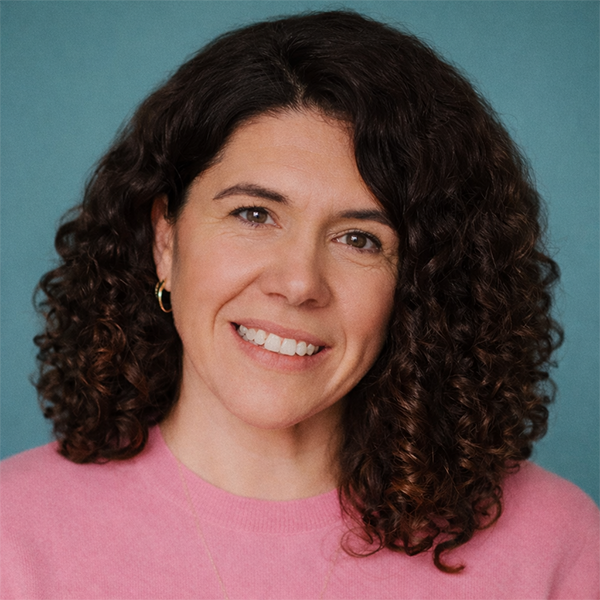
[Mary] Hi there, welcome to Safety Labs. The career paths into occupational health and safety are as varied as the people who work in the field. Today's guest started as a recruiter, finding and placing talented people for health and safety positions. While recruiting, she saw a need for future safety leaders to develop in non-technical ways. Today she'll talk about her transition from recruitment, and how she's seen the industry evolve over the course of her career.
Anna Keen works with health and safety professionals who care deeply about making a difference. Having started her career recruiting OHS professionals across the globe, she spent the last decade focused on their development. She now works with leaders and teams at the forefront of change, across organizations ranging from big tech to large high-risk environments worldwide. Through this work, she's had a front-row seat to how the field is evolving, which continues to shape and inform her approach. Her work centers on the human side of the profession, supporting people to grow their confidence, influence, and impact through non-technical development. Anna joins us from London. Welcome.
[Anna] Thank you, and thank you for having me. I always feel a little — intros always make me feel a little nervous. That's me, yes. None of us are used to hearing our credentials from the outside. Lovely to be here.
[Mary] Can you talk us through your journey from recruiting safety professionals to developing them, and what pushed you toward that kind of work?
[Anna] My interactions with the safety profession actually happened probably in the early 2000s, even before I went to university — my first job was working in a health and safety consultancy, which was really interesting at the time, a lot of people going onto construction sites and telling people what to do. Then I went off to study business and psychology, and fell into the world of recruitment. I always enjoyed interacting with people, and it happened that I brought those two things together and spent many years recruiting safety professionals, mainly in high-risk environments, first out of London and then some time in Australia.
It was actually there, through that work, that I started to become really curious and interested in the evolving skill set. When I first started recruiting — and when I worked in that health and safety consultancy — it was: find someone with a qualification who can tell other people what they're doing, do the paperwork, keep the organization out of court. Over time, the people coming to me were asking for something different: we need people who can engage with the workforce, who can influence them to do things differently, who can not just stop work from happening but actually support it to happen safely. What I was finding was that it was a candidate-rich market, there were a lot of people who had gone into safety, but finding people who could demonstrate that skill set — the ability to be curious, to influence, to engage, to facilitate learning — was really limited. It was becoming more and more of a problem for many of my clients, struggling to find people with that well-rounded experience and skill. And if I'm really honest, no one was doing anything about it.
When I returned to the UK around 2014, 2015, I decided: if you can't see it, build it. I also wanted to get out of recruitment at the time, if I'm being honest. So I started working with a group of leaders to really define what good looked like from the non-technical side — what were the competencies that were critical for someone making an impact in their role? That framework formed the basis of the work I still do today, and we've evolved it. Over that time, I've had the joy and privilege of working with so many people who are genuinely passionate about getting people home safe, who are really curious about how to do that differently. But often they're working in teams or environments where people haven't been told that the role is changing and evolving. So a lot of my work is raising the profile of non-technical development, looking beyond qualifications and certificates, and supporting people and teams to develop — individually or as a group — to deliver change. It's very niche, but very purposeful, and it's really joyful work.
[Mary] How has your view of what "good" looks like evolved since you started? Were there pivotal moments that changed your perspective, or was it more gradual?
[Anna] Reflecting on it now, it probably felt gradual and sudden at the same time. I was interviewing people constantly — when I set up the frameworks back in 2015, we calculated I'd spent roughly seven percent of my time on the planet interviewing safety professionals at that point. I had seen so many people who were so proud of the level of expertise they had, folders of qualifications and certifications — but when I asked them questions like, "tell me about a time you influenced change in your organization," they really struggled. I was getting answers like, "I told them if they didn't do it, they'd go to jail." You sit through those interviews day in, day out, and your client is asking for one thing, and you keep being met with something else.
I think at the time I was quite judgmental of these people — you need to know more, you need to be thinking about your own growth and development. But I've come to realize that people don't know what they don't know, and everything they had been told as a professional was: do your qualifications, get your membership of an association, and you're done. What I started to recognize was that no one was sitting with them and saying, "okay, you've got that part — now there's this whole other world of growth, an infinite game, not a finite one, that you need to step into." And what was really interesting was that when I started reaching out to leaders saying "I'm thinking of doing this thing," people who had never been able to give me the time of day when I was recruiting were suddenly saying, "yes, we need this, it's critical." There was a swell of momentum — leaders, predominantly in the UK at first, recognizing that if they didn't start developing the non-technical aspects of the role, they were actually limiting their ability to get people home safe. That's the most important part of my work: this profession has a responsibility to look at its own development in pursuit of that goal.
[Mary] Lots of people question the term "soft skills," and I'm actually one of them — I think they're core skills. You've also suggested that calling them "skills" is too narrow a viewpoint. How would you describe what's commonly referred to as soft skills?
[Anna] It's definitely been an evolution of my perspective over the years. When I started doing this work, it was very skill-centric — getting people to learn how to listen, ask better questions, understand how to influence, how to present. What I've learned more and more is that the work I actually do with people tends to be a lot deeper than that. It's about helping them understand themselves, understand the lens through which they see the world, and starting to play with that — recognizing that we're asking them to change. We're asking them to do things that maybe aren't what got them to where they are. They've been successful doing one thing, and then we challenge them to do something different, and that's a vulnerable and fearful place. So often the work I'm doing is getting people development-ready — supporting them to look, at an identity level, at a beliefs level, about where their value is, thinking about how they shift and evolve their role, how they interact with difference.
I think that as we become more global, we interact with people who are different from us, and we often meet that with judgment. How do we meet it instead with curiosity and understanding? So this work goes much deeper into emotional intelligence, into that understanding of self, of how we interact with and understand others, into understanding our level of capacity — not everyone is ready for growth, not everyone needs to grow. When we talk about "skills," we make it sound like something that can be learned in a two or three-hour workshop. And part of it can be — if you want to become more curious, part of that will be asking better questions, listening more actively. But deep underneath that is our willingness to let go of being right, to be willing to be vulnerable in asking a question rather than giving an answer. That's why it's so much broader, and unfortunately much more challenging to develop, than a short workshop.
[Mary] Just to clarify — do you work primarily with organizations, or with individual safety professionals who come to you directly?
[Anna] Both, but the majority of my work comes through organizations recognizing and supporting the growth of individuals within the safety function. Quite often it happens when an organization commits to transformation and change around their approach to safety, and recognizes that the enablers or blockers to that change are invariably the functional team. So it's about supporting that team to go through the development that allows them to deliver that change — how do they switch from owning and doing safety on behalf of the organization, to being a business partner, a critical friend, facilitating learning and influencing? How successful the implementation of that strategy is often comes down to the people who sit within the function itself.
[Mary] How do these human capabilities — which, as you say, sit underneath the skills — show up in day-to-day safety work? For example, during an incident investigation?
[Anna] I think it comes down to the role we believe we need to play. Are we looking to find fault and assign blame, versus really seeking to understand? Curiosity is a word anyone who works with me knows I talk about constantly — that deep curiosity of really trying to understand what's happening, what the other person's perspective is, what stories we're telling ourselves. It comes down to our need to hero, to swoop in, fix, and problem-solve, and the urgency to do that. That then leads into us needing to own the work rather than enabling and supporting the business to own the risk. I experience a lot of safety functions that do safety — they do the work of safety — rather than supporting the business to do things safely. That's how it tends to manifest: wanting to be the technical expert, to tell organizations they can or can't do something, to give answers when asked a question. The limitation there is you build a dependency on a function, and it becomes siloed. Whereas when someone comes to you and says, "I'm going to do this thing," the better response is: how can I support you to do that — guiding and enabling them through it. That's the difference.
[Mary] Since you mentioned studying psychology, I'm curious — what type of personality or person tends to be drawn to the safety industry, from what you've seen, and has that changed over the years?
[Anna] Back in the day, we used to color-profile people — insights wheel, that kind of thing. Predominantly what we saw was what we called "red energy" — quite autocratic, controlling, directive, very comfortable speaking their mind — or more of a "blue energy," which was data, process, engineering-driven. What I've come to learn is that the best safety leaders have a little bit of everything. The other areas on that wheel are the really human-centered, the creative areas. And it's not one-size-fits-all — it's much more about awareness: how we need to show up in different contexts, how we understand the context we're in, whether we have different tools in our toolkit.
But many of the people coming into the profession, certainly when I was recruiting twenty years ago, had more of that very hierarchical, autocratic approach — control, rule-following, telling people what they can and can't do. That's evolving, but it's not gone. My concern is that outside of the profession, that's still the perception of what the function is: the bureaucracy, the red tape — which means it continues to attract people who are attracted to exactly that. Many of the people I work with have fascinating jobs — Formula One teams, TV production, construction — couldn't be further removed from that stereotype. They're all about how you create performance and safety together, how you produce great TV content while keeping people safe, pragmatic risk management. It's a continuous challenge the profession will have while that perception remains. Part of my role over the last ten years has been to raise the profile of people doing interesting, different work, and I'd love us to get to a point where that's what people think of.
[Mary] Maybe safety has a branding problem.
[Anna] That was the tagline when we launched the framework back in 2015 — "rebranding safety, one individual at a time." Our marketing team at the time let me roam the streets of London with a microphone asking people what they thought of health and safety. It would be interesting to do that again ten years later. But at the time it was: clipboards, red tape, handbrakes on organizations. We have to be aware of what that does for the talent we attract into the profession.
Great safety leaders are great business professionals. They understand context, they drive change, they facilitate learning. On an organizational level — when the technical elements of safety are strong, but these deeper human capabilities are underdeveloped — what's the consequence? How does that play out?
[Anna] I think it manifests as safety owning safety, or safety being bolted on rather than baked into how a business functions. I was having a session with someone today about really understanding the operational leader's priorities — what's keeping them awake at night, what's getting them out of bed in the morning. When the function doesn't have these broader capabilities, they don't have the real opportunity to raise the importance of safety in decision-making. They don't have the ability to challenge how decisions are made and the trade-offs that are made consistently. So many of my clients are talking about double-digit, ambitious growth plans — how do they achieve that while keeping people safe? What happens when the function doesn't have this broader capability is that safety becomes a thing we deal with reactively when something bad goes wrong, rather than something we create the conditions for. We also see safety as an isolated event rather than part of a wider system. We blame individuals — something goes wrong and it was their fault — rather than asking, how did we set that person up to work? That's the role of the safety professional: starting to challenge leaders' thinking to ask, okay, this happened and that person didn't do that one thing — but how did we create a world, a system, in which that's what they had to do that day? That's why so much of my work with individuals and teams is around the quality of conversations people are having, because that's how you get people to understand the risks being taken and the conditions being created for people to work. Where organizations just look at some data, it's green, we don't need to worry — and then something bad happens. Or where complacency builds because we've had so many days without a reported incident, but no one's actually reporting, and nothing is being learned.
[Mary] I really like the phrase "bolted on, not baked in." That gives a very quick, visual understanding of what you're talking about. We'll get back to our discussion in a minute, but first we're going to hear from the company behind the podcast.
In construction and industrial manufacturing, traditional utility knives can be uncomfortable, unsafe, and wear out quickly. The Slice Folding Utility Knife delivers power, control, and safety. It's got a durable metal handle, quite heavy, built to withstand industrial use, with an ergonomically designed finger loop that provides a secure grip, and two different locked positions so you can get at awkward angles as well. The quick-release lock is secure and convenient. If you'd like to learn more about which tools will work for your materials, you can request free samples by going to safetylabspodcast.com/samples.
And now, back to our discussion. You mentioned that a lot of your work is about getting people "development-ready." How do you approach that, and how do you evaluate where people are to start with?
[Anna] One of the things I've worked hard on over the years is to meet people with genuine curiosity and compassion — earlier in my career, I met people with quite a lot of judgment. Now it's more: why do you do this role, where are you at, what's in it for you to change? So a lot of my work at that level is one-to-one, spending time with people, getting them to think about what they want from their career, what success looks like for them. One of the challenges in the development field is that we attach development to progression, and not everyone wants to progress. A lot of my work on development readiness is with people who don't want to become the next global director of anything — but that doesn't mean they don't need to grow and develop.
So it's about making the space as comfortable and as safe as possible, giving people both clarity and support. For many programs I work with, the organization is saying, "we need you to do this role, your role is evolving and changing — but we're also going to give you the support to get there," whether that's one-to-one coaching, group work. Often we have to bring to people's awareness that what locks them into their comfort zone and keeps them stagnant is fear. They're going to have to try different things, become uncomfortable, do things they've never done before. How do we do that in a way that feels as supported as possible, while also recognizing that they will need to change to deliver the change that's needed? Employment is a mutually beneficial, two-way relationship — the organization will ask something of them, and in return they'll get support and growth to deliver it. But it's no easy feat, and not everyone is ready or wants to. I've come to accept that.
[Mary] I imagine there must be times when a person or team isn't development-ready and also doesn't want to be — even if they say they do. What's that challenge like?
[Anna] The way I've approached it over the years is: if we've been really clear with the expectation, and been supportive and kind in how we support people to make that change, then I truly believe we're interacting with adults, and if they choose not to, that's okay. That's where organizations have to make choices and individuals have to make choices. Not everyone has to want to grow or needs to grow. But for many organizations I work with, transformation and change is happening — so it's about being really clear and kind about the expectation, providing the support, and seeing how someone responds.
Not everyone will respond, and I've had to be really clear with clients that this isn't a silver bullet. I can't come in and suddenly everyone's going to want to change. Some people can't, some people don't want to, some people aren't ready. Sometimes there's a duty of care on my behalf — if people already have so much on their plate, challenging them to grow in that moment isn't kind. So it comes back to curiosity and compassion: saying to people in those moments, you have a choice. What you choose is for you. And if someone chooses that they love doing what they've always done, there are still plenty of places to go and do that. Bringing that transparency to those conversations is usually the kindest way to navigate it.
[Mary] And I imagine on the other side, you've had the experience of someone starting out skeptical — "what can you teach me," "this is a fad" — and then genuinely opening up. What does that look like?
[Anna] It's the utter privilege of my work when that happens. I still remember the first person I ever coached — I'd done some work for a large construction company, the leader said, "now you've helped my team understand their development areas, will you support them?" I was brand new into coaching. I sat down with someone who'd been doing the job for thirty years, and he said, "okay Anna, what are you going to teach me?" And I said, "I'm not here to teach you anything, not a thing at all." He's still to this day probably one of the greatest converts to coaching and development work — because we just don't give people the opportunity, in most scenarios, to actually focus on themselves, their development, their growth.
And I think this is a learning I've had over the years with new leaders going into organizations: they go in and say, "we're going to do things differently, we're going to do it better," and what people hear is, "we've been doing a rubbish job, we've been doing it wrong." You get a defensive reaction. Whereas when you meet people and say, "you've been doing a great job — and we're going to start to do a couple of things differently" — when you make people feel safer, you actually start to see more impact. When we just tell people they have to be better, they have to be different, the only response we're going to get is fear. And that fear comes out as defensiveness, avoidance, silence, or a form response where they just please you, but actually nothing's changing behind the scenes. When someone has that light bulb moment, when they feel like they've worked through something themselves, it gives them such power and energy. To see someone unlock that in themselves — that's why I love what I do. If I can have a small impact on many people, and then they go off and have even more impact, I can hopefully one day retire very happy.
[Mary] If there's a safety leader listening who wants to make their team more development-ready, where should they start — at the individual level, the team level, or looking at organizational conditions?
[Anna] When I start working within an organization or team, I start with the leadership group within the function. Invariably, people come to me and say, "I need my team to develop," and I say, "great, and we will get there — but what does development look like for you as a group, at a leadership level?" One of the challenges is that when we start doing development to people, without being willing to develop ourselves, it limits the progress of the work. So it really starts with: how do you embody growth and development at that leadership level? And that can be such a catalyst for how you then support and enable others in the team.
One of my real passions is supporting people through what I call the "sticky middle" of their career — where you've been really successful doing something, and then you get promoted to leading others to do that thing. We tend to leave people to their own devices at that stage, wish them luck, and it becomes a bit Darwin, survival of the fittest. If we can support people through that transition — because effectively the whole game changes — that's a really critical part. Those tend to be the people leading the majority of people in a team or function, so if you can work with that group, the ripple effect across the organization is huge.
So starting with how development-ready and how clear your leadership team is about what they're working on, how to build a real development culture where everyone's comfortable saying "here's what I'm good at, here's what I'm working on" — and then making sure that next level down is equipped for the biggest developmental leap in most careers: from individual contributor to people leader. There's often very little support for that transition, and I think it's a huge opportunity for organizations to do something about it. We take our best technical experts, put them into leadership roles, don't tell them the job has changed — that it's no longer about doing or knowing, it's about enabling others, about how you show up — and then we wonder why they fail or hate it or make other people ineffective. Having really honest conversations with people at that level about whether they actually want to lead people is a real opportunity. Some people don't get their joy from that.
[Mary] Where does accountability sit in this conversation? And when you're working on it with people, how do you help them distinguish between healthy accountability — owning your impact — and unhelpful blame?
[Anna] One of my favorite frameworks for this is something called the drama triangle. It's a therapeutic model designed around three roles: the victim, where the world happens to us; the villain, the person or thing that does something to us; and the hero, who provides temporary relief. When we're in the drama triangle — and apparently research suggests we spend about ninety percent of our time on the planet unconsciously in this state — we're trapped in being right, in blame, and in fear. So when we hold people to account in that mode, it's language like "calling out," finding fault, proving we're right and they're wrong.
There's a contrasting dynamic called the empowerment dynamic, where there's a creator consciousness — the world happens by us, not to us. When we get into that state, what we're actually doing is applying positive pressure. We can still say to someone, "we need to achieve this" — but we're doing it from a place where the other person feels we're in it with them rather than against them. Where we can challenge someone's thinking, hold the line, but in a way that's well received and understood. That's where positive accountability comes in. As health and safety professionals, we absolutely need to be able to hold the line, especially when consequences are great or someone is about to take an unacceptable risk — but ideally from a place where we've built the relationship and we're landing the message in a way it's more likely to be heard and appreciated rather than repelled or defended.
[Mary] You take responsibility for how you show up, but you can't take full responsibility for what clients do with your guidance. There's a parallel for safety leaders there — they can persuade and influence, but ultimately can't control other people's behavior. How do you help communicate that boundary?
[Anna] It's a confronting thing when you actually realize what you can take responsibility for — your intent, your part, your own growth and development, how you approach something — versus what you can't take responsibility for: what someone else does with it. Especially if you've been brought up in a hero mentality of fixing and taking on too much responsibility. In my work, it comes down to the quality of conversations and being realistic upfront: how are we going to be as clear as possible with the people going through this work, what's the intent, but also being realistic about the result.
And I think this is so important for the safety profession. Safety professionals are not the people taking the risk, not the ones putting people to work. They can only take responsibility for how they show up — which is why everything we've been talking about, the ability to influence and challenge, matters so much. In very few scenarios do safety professionals actually have the formal power to stop something or make a decision. What they can develop is personal power: expert power, and referent power, which comes from being liked, trusted, and respected. Not quite often in most scenarios, we have to influence without authority. The belief system I see as limiting — and I remember it from my early days interacting with safety — was this sense that they could stop work, that they were the ones deciding whether it was safe or not. That's been one of the limitations: they end up blocking rather than enabling. The majority of leaders I interact with would see stopping work as an absolute last resort, where they say, "I need to make you very clear that if we proceed like this, we are taking a risk I'm not comfortable with." That shifts safety to an advisory, support role rather than the owner of power.
[Mary] Are there common misconceptions that keep organizations in the mindset that these capabilities are just a course you can go on?
[Anna] The biggest one is that these things are easy to learn, that you can put people on a course. One of the challenges for the safety profession — and it's often why I get brought in even when organizations have incredible L&D teams internally — is that this evolution of the role really needs to be framed within the context of the profession itself. Quite often when I start interacting with an organization and HR or L&D join the conversation, they're very quick to say, "well, we have a course on presentation skills or influencing." They may put people through that, but are they getting the transformation, the change?
Another misconception is that everyone can develop and grow. Another is the opposite — that no one can. There's the silver-bullet belief: a six-month program, a piece of work, a workshop, one-off and done. And then there's the "if I invest in these people, they'll leave" — so they don't invest. There's a very famous quote: are you better off investing in people and they leave, or not investing in them and they stay? And I always say to people: my job is to develop them, yours is to keep them. Retention isn't always the best thing anyway — sometimes people need to move on to different organizations to get different kinds of experience. An organization needs people for a time, and people need organizations for a time. It doesn't have to be forever.
[Mary] When you look at the safety industry as a whole, where do you think the most work needs to be done, and what gives you the most hope?
[Anna] The most work needs to be done with the generation coming through into leadership right now — supporting them to make that transition. They will be the future of this profession, and they're also what gives me the most hope. I've found the non-technical development conversation really interesting over the last twelve months in particular — there are a lot of people talking about it now, a lot of people investing in it. That conversation has actually been live for about twelve years, but there's a swell of momentum. I think people are really starting to challenge what good looks like, and doing brilliant work, and challenging other professionals — which isn't always well received or well delivered, but there's something about this continuous evolution and improvement of the profession that's gaining more and more momentum. I really hope we can start to role model these incredible people who are doing brilliant work, because that's what will attract more people into this profession. I don't think there's anything more purposeful or interesting in an organization than this role.
[Mary] What's your most practical tip for a listener who's sitting there thinking, "I want to start on that journey, I want to get development-ready and develop more of these human skills and capacities" — where should they start, at the individual level?
[Anna] One thing I'm happy to offer to everyone — and we're about to release it — is the new framework. I've just gone through another round of research with IOSH, and one of the conditions for doing that work this time was that we were going to open-source it. So it's a list of competencies — we have a business partner level and a leadership level — that leaders across the profession globally believe are critical for success. It's a really great starting point.
I'd start with some self-reflection: where am I at, what am I good at, where are my strengths, what do I enjoy doing — and then where are the areas I might want to develop? If you have a team leader you can have that conversation with, or peers who can give you feedback, building that self-awareness and identifying one or two development areas to get curious about is a fantastic start. One of the extraordinary privileges of the world right now is the access to learning — go onto AI, onto YouTube, and you can start to access new ways of thinking without paying anything. But it takes giving some priority to that, because we're very much attached to being busy and doing. What we need is to give time to things that are important but not necessarily urgent, and our development is one of those things. An hour a week to read something, to reflect on something — the practice of reflection is so important. Having some focus about what's going to have the most impact, what you're excited to learn, what you're curious about — that's a great starting point.
[Mary] How can our listeners learn more about the topics in today's discussion?
[Anna] I share a learning list on my website, which I'm happy to provide a link to — an updated list of podcasts, books, and videos covering everything from different thinking in safety to building self-awareness, confidence, and influence. I've also been doing a podcast for the past twelve months called "Auntie Treacle," where people share their work-based challenges and we crowdsource solutions — how do I get heard, how do we navigate that sticky middle, is the paperwork really keeping us safe? Listeners can send in their questions and we crowdsource responses from the community. My website is annakeenconsulting.com, which has blogs, the learning list, and resources including some of the things I've spoken about today, like the drama triangle.
[Mary] Is there anywhere else listeners should look if they want to reach out?
[Anna] I'm on LinkedIn — they can find me there — or at anna@annakeenconsulting.com. I'm always happy to provide advice or help steer people in the right direction. I also facilitate and moderate in the UK one of the global Safety & Health Expo series events — we're in Birmingham in early July — so that's all on my LinkedIn profile as well.
[Mary] Well, that's our show, folks. Thank you for joining me, Anna.
[Anna] It's been a pleasure. Thank you so much for having me.
[Mary] And thanks to our listeners, and of course the Safety Labs team. Bye for now. This podcast is created by Safety Products Global, the world's leading manufacturer of safety knives. Through our trusted brands, Klever, Slice, and PHC, we empower companies to prevent injuries by providing safer cutting tools for every material and application. Until next time, stay safe.