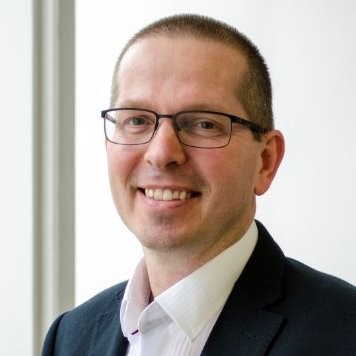
[Mary] Hi there. Welcome to Safety Labs. Today's guest was on our show back in January 2023, where we discussed his book, "Next Generation Safety Leadership: From Compliance to Care." That episode remains our most popular single guest show to this day — if you'd like to check it out, it's entitled "The Key Component of Workplace Safety: Trust." Today, Clive Lloyd has agreed to join us again, to discuss further ideas from his book, the present state of safety, and what small actions can make a big difference in a safety leader's practice.
Clive has worked for many global companies as a human factors technical advisor, assisting them in improving their safety culture and performance. He applies cutting-edge psychological research to safety leadership, to create caring cultures as prerequisites to excellence in safety performance. Clive has worked extensively with senior leaders across multiple sectors and around the world. He's applied his experience in clinical and organizational psychology to safety performance coaching, from the boardroom to the front line. Clive offers expert assistance to leaders creating a culture that ignites and sustains intrinsic motivation in their people. He's a master at coaching executives in the psychology of effective safety leadership and culture change. He joins us from the Gold Coast of Australia. Welcome.
[Clive] Thank you, Mary, it's great to be back. And wow, what lovely news that the previous episode was one of the highest-rated.
[Mary] Fantastic.
[Clive] No pressure now.
[Mary] No, no, that's the trouble — there's only one way to go, right? Let's be optimistic.
[Clive] Yes, of course.
[Mary] The first one is a bit more of a personal question — I'm wondering how long you've been working in safety, because I'd like to know what's surprised you most over the years, what you've learned that you didn't expect to encounter.
[Clive] Great question. I've been working in safety specifically with GIST, my own company, for fifteen years, but before that, for about seven years, I worked with other consultancies looking at similar aspects. What really woke me up back then was, as a psychologist, my background wasn't engineering, policies, or procedures — I was called into organizations after fatalities to do post-fatality counseling. That was my first glimpse into health and safety, a pretty brutal way to come into the field. The more time I spent doing that, I worked a lot with contractors, Mary, and this has stayed with me right through to now, something that hasn't changed much, unfortunately — contractors were often treated very differently. I focused on contractors partly because, I think, four out of every five fatalities I attended involved contractors. There are many reasons for that, but one of the big ones, for me, was that they were treated differently — different colored shirts, often "us and them," if they made an error, they could be fired, sometimes the entire contracting company could lose the job. They were actually much more vulnerable from an employment perspective.
I remember visiting a mine site after a fatality, having spent a couple of weeks with contractors there. As we drove in, there were these big signs outside, "safety is our highest priority," that kind of thing. I asked one of the contractors on the bus what he made of it all, and got a fairly expletive-laden response I won't repeat, but the essential message was, "it's nonsense, that's not how we're treated." I was also doing research at the time, because doing fatality counseling repeatedly is really hard, emotionally difficult work, seeing people at the worst moments of their lives. The safety science I looked into seemed rather ambiguous, but the biggest predictor of safety performance I found, and I'd already noticed it with these groups of contractors, was trust. That's covered extensively in my book, so I won't go too deep here, but where there's a lack of trust, people won't admit mistakes — these contractors, the last thing they were going to do is admit a mistake, because they knew they could be fired the next week. So while wonderful safety messages were going up on signs out front, the lived experience, for contractors and staff alike, was somewhat different. I said it back then, and I still say it now — we can't fix a secret. Where there's low trust, there's high fear, and people won't speak up. That's stuck with me throughout, and shaped the lens I bring to health and safety.
Sadly, going back to your original question, what hasn't changed much is the evidence-based focus, or lack of it. There are a myriad of safety methodologies out there, and as you'd know from LinkedIn, Mary, people get very antagonistic or protective of whichever safety model they favor. I have favorites too, nothing wrong with that — but what I know from the research is that, unless the mistrust of the workforce can be overcome, even the most well-intentioned and sophisticated approaches get treated with cynicism and undermined. That hasn't changed, to a degree. There's still, for my money, not enough attention paid to the very thing that allows a safety methodology to work — too much attention on the methodologies themselves, placed on top of a poor foundation. That's stuck with me for at least the last fifteen years, though I am seeing some changes. That was a very long response, Mary, feel free to cut me in anytime.
[Mary] That's perfectly fine, and it leads into my next question — maybe a bit of a recap from last time, but you talked about a trust model, and I believe you now prefer calling it the "Three Cs" model. Can you describe that, and why it's useful?
[Clive] There are reasons we changed the terminology, essentially to make it more salient and memorable for people. Our work comes from an academic background — when I first started looking at the research, the most widely acknowledged, reliable, and valid measures of trust came from Roger Mayer and colleagues, back in 1996, looking at a three-factor model. One factor was benevolence, essentially demonstrating care for people, another was integrity, which we now refer to a bit more broadly as character, and the third was ability, or competence. We've kept that research base, but now talk about care, character, and competence, which gives us a bit more scope. Essentially, the three Cs make it more salient and easier to grasp in people's minds, so we tend to refer to the three C model of trust. Given it's been around since 1996, we have the ability to benchmark across industries, which is valuable for organizations wanting to see how they compare to similar ones. At a broad level, measuring those three Cs can really help steer an individual leader, or more often a leadership group collectively, toward understanding where their vulnerabilities are — is it that they could demonstrate more care, is it a competence factor, or is it character, which tends to be a bit harder to shift?
[Mary] That's right — character does imply things like integrity, but also things like reliability, transparency, honesty.
[Clive] If our senior leadership team is genuinely lacking in those, that's more challenging, because those are quite deeply seated values. Often, though, it's not that people actually lack character, it's that they're perceived to lack it, based on the actions of a senior leadership team. What I often say is, trust arrives on foot, leaves on horseback. If there's been one decision made by the SLT that the workforce perceives as totally misaligned with company values, or with what's actually going on, even if those leaders genuinely have high levels of integrity and character generally, perception is what matters here. One bad decision, and leaders need to get on top of it very, very quickly, and do this thing called taking ownership, maybe even apologizing. Trust can be repaired reasonably quickly, but only if leaders are prepared to say, "we made the wrong call there."
Care is where people have struggled most, and that's why we focus on the care factor — you'll have seen our Care Factor program. Not that the other two factors aren't important, they all are, but if we look at the research, Natalia Ioannou's research from 2024, care keeps emerging as the strongest predictor of not just safety culture but actual safety performance. That's the bedrock. You can demonstrate integrity or character, demonstrate competence, that the leadership team is a safe pair of hands, but again, it's about perception, and if the workforce or contractors simply believe leaders don't care about them, nothing else really gains traction. That's why we focus on that area particularly.
[Mary] I'd think there's a self-reinforcing cycle here too — sometimes people act without integrity or character, but out of fear, because they mistrust the organization and feel they must act a certain way, and as a result, trust is lowered further — it's a feedback loop.
[Clive] Absolutely, and it tends to flow downward. One of my own big learnings over the last fifteen years, Mary, is that we can't ignore some of the macro influences on safety and culture — the region we live in, geopolitics, shareholder returns, all influencing board decisions. The board's decisions and focus areas influence the senior leadership team, including the health and safety people, and if they then act in ways they believe they have to, because that's what the board wants, that can flow down very quickly. Trust arrives on foot, leaves on horseback, again — if there's a recession, shareholders clamoring for change, layoffs needed, that affects the board's focus, the SLT's focus, and the way that gets communicated down to the workforce can look like a lack of integrity, sometimes a lack of competence, and most certainly is likely to look like a lack of care. One of my big learnings is that I used to focus on the organization in isolation, but having worked globally, through recessions, good times and bad, in regions with different power-distance ratios, I've learned we ignore those macro variables at our peril.
[Mary] I'd like to move on a bit — last time we talked a lot about psychological safety. This time I'm noticing there's a lot more discussion of psychosocial safety. Can you first make the distinction for us, and also give us your sense of how that conversation is progressing in the safety industry, because it does seem like a real conversation is starting.
[Clive] There are lots of conversations, and it's a very big topic we could spend a long time on, so I'll try to condense it. We've focused on psychological safety for pretty much the last fifteen years — it's a cousin of trust, if you like, and people often confuse the two terms, but they're not the same, though strongly related. Psychological safety is much more a team construct than an individual one. When a team has psychological safety, it's really about voice — people feel, maybe not completely comfortable, but reasonably safe admitting a mistake, sharing ideas. Psychosocial safety, a newer conversation in most places, is more about organizations creating the systems and conditions people work within — burnout, workload, and so on, creating systems that protect people in that regard. People do get them mixed up, and of course they overlap to a degree, but psychological safety, for me, is more about voice, the ability to speak up even if not entirely comfortable, knowing it's safe to do so. Psychosocial safety is much more about systems, though it does also involve leadership — bullying and harassment are part of it, setting up systems to identify those things early.
I think psychosocial safety is much more of a conversation right now, at least in Australia, because there are now regulations requiring organizations to put systems, policies, and procedures in place, just like with traditional health and safety. That's been happening over the last two or three years, and many organizations panicked, and are still panicking — what does this mean, who should look after it, is this the health and safety team, people and culture, HR? My thought is, if senior leadership teams believe this is an HR thing, they've probably got a governance issue. This is a whole-of-leadership matter, psychosocial whole-of-leadership, unless senior leadership teams recognize that their decisions impact people's psychosocial safety, HR can't fix everything. I was talking about this recently in a webinar — here in Australia, I don't have data for other places, but HR people are burning out fastest, because the whole psychosocial safety conversation has largely been dumped in their lap, they're the ones having the conversations, trying to put policies and systems in place, and they're burning out. Often the people assigned to care for others are needing the most care themselves right now.
These are very important conversations we're right in the middle of, because what we help organizations with crosses all domains, health and safety, but trust is at the core of psychological safety, and I'd suggest it's also at the core of psychosocial safety. I don't think we can excel at psychosocial safety without that bedrock of trust, so for me it still comes back to that core — get that right first, overcome the mistrust of the workforce, and psychosocial safety becomes an easier target. Without that core of trust, you're just going to be putting out fires a lot of the time.
[Mary] In January, you posted about a then-recent court case, where the Australian Department of Defence was found guilty of psychosocial safety failures. I don't know if this is related, but you also posted that the New South Wales government is deploying inspectors who can issue on-the-spot fines for bullying, harassment, and other psychosocial incidents. You said you had mixed feelings about this — what are they?
[Clive] There are two different cases there. The first, Defence — again, doing the right thing in putting policies and procedures around psychosocial safety in place, but without recognizing that their leadership team actually needed background and training in this. The procedure, the policy, does very little if leaders don't know how to genuinely engage with people, talk things through in what I'd call an adult-adult way, rather than a parent-child way. These senior leaders, in charge of putting all this in place, didn't have that training — don't expect leaders to automatically know how to do this, it's the realm of adult-adult communication, which psychologists are trained in. When we look at how some of this gets done, we think, for goodness' sake — and then people are surprised when others get upset. But I feel for leaders too — we can blame, or we can learn, to quote the HOP principle, and I extend that to leaders too. There's no point blaming leaders for lacking a skill set they were never provided. Unfortunately, their lack of training in administering policies and communicating around them contributed to, very sadly, somebody taking their own life — that's what the court case was about.
The second case, in New South Wales, deploying inspectors — you might remember from my book, language is something I focus on quite a bit, because what we're interested in, and what our programs focus on, is removing things that cause distrust quickly, and putting in place things more likely to build trust and psychological safety. So yes, when I hear "inspectors are being deployed," I feel afraid, and I'm not even there myself. One could argue this is exactly my mixed feeling — on one hand, it's good that psychosocial safety is being taken seriously. But deploying inspectors to enforce it sounds very parent-child to me, and that approach tends to elicit fear, not trust — people going through the motions, nodding along, "yes, we're satisfying this condition," rather than what genuinely works. Inspectors, officers — not a fan of those words. I get the intent, and one could argue I'm being pedantic, but I know words are powerful, language has meaning. While it's great that attention is going to psychosocial safety, deploying this small army, another word, of inspectors, could almost be seen as a psychosocial hazard in itself.
[Mary] We're going to get back to this discussion, but first we're going to hear about some of the tools offered by the company behind the podcast.
In labs, R&D, and manufacturing, precision manipulation requires precision tools. Most precision knives on the market, like scalpels, can rust, don't have the right shape, or are incredibly sharp and dangerous. Slice precision knives — I'm holding some up for you, sorry, audio listeners, you'll just have to imagine some super cool knives — feature a number of different handle and blade options, straight blades, hooked blades, chisels. These cutters offer control and safety, with textured grips and a design that prioritizes balance and stability. Their finger-friendly blades are safe to the touch, oil-free, and chemically inert, and with no-tool blade changes, workers can quickly switch to the blade they need for the task at hand. If you'd like to learn more about which tools will work for your cutting needs, you can request free samples at safetylabspodcast.com/samples.
And now, back to our discussion. You were talking earlier about leadership and perception, and when I think of "leadership as an industry," in quotes, I think it often gets met with eye rolls. I think you hit on one of the reasons why in your book, and even in the story you told earlier, when you differentiate between organizational values and company platitudes. How do workers tell the difference, or decide the difference, since it's in the eye of the beholder, and how can leaders help organizations shift from one to the other?
[Clive] The workforce does notice, they've got pretty good radar. We talk a lot in the book and in our courses about authentic leadership — to quote Carl Sagan, extraordinary claims require extraordinary evidence. Particularly in health and safety, leaders, perhaps feeling duty-bound by company values or what boards expect, come up with largely safety platitudes — something like "safety is our highest priority." I get the positive intent, but extraordinary claims require extraordinary evidence, and given how most businesses actually operate, "safety is our highest priority" is an extraordinary claim. Leaders might even mean it sincerely, but living it, providing evidence of it, is where organizations struggle, and the next time it becomes clear that, clearly on this occasion, safety wasn't the highest priority, the workforce immediately starts rolling their eyes — "here we go, safety's the highest priority." Leaders should move away from platitudes, even well-intended ones, because you probably won't be able to live up to them — become much more authentic in your claims, use language people actually understand. There's so much corporate jargon out there, and the more of it you use, the faster the trust meter retreats, because people tend to believe you less when you're using jargon and platitudes. Why would you need jargon when you could just use regular language? My first move is always to look at the words, the language we use, and just get rid of the nonsense. We're working with people here, we don't need to repeat things we got from a consultant twenty years ago.
The notion of values itself, Mary, I've shifted on over the last twenty years. I used to think company values were very important things. Now I'm at the point where I think most organizations would be better off either not having them at all, or taking a lot more care in selecting them. I was reminded of that recently — a company brought us in to help revamp their company values, they'd had the same ones for years. We went through a process, which involved me sitting in leadership meetings, talking to employees and contractors, following senior leadership meetings, looking at their priorities and how they actually operated. I'll never forget one meeting — I said, "from what I've gathered over the last couple of weeks, one of your core values seems to be shareholder return." They looked at me, "what? We can't have that as a value." I said, "but that's clearly driving your decision-making." "Well, yes, but we can't have that as a value, what would people think?" And there you go — "let's have integrity instead." What I'd suggest to organizations is, if you're going to have core values, have ones you can actually live up to, ones the workforce won't just view as what boards or senior leadership say, or are expected to say. How about consulting with the workforce on what the values could even be? There's so much that stems from espoused values versus in-use values — wherever there's a gap, and there's almost always a gap, the wider that gap, the more potential for cynicism and mistrust. I see part of my role as removing things that reduce trust, and replacing them with things that actively build it. Language itself is huge — there's a subtext when you use jargon, something like "I'm more important than you," "I'm in the in-group," and while your words might mean something caring, you've clearly put yourself above the person you're talking to, which isn't going to work.
[Mary] You described psychological safety, in part, as setting up conditions where it's safe — but I want to get more specific, about sharing bad news with leadership, for example.
[Clive] I don't want to limit psychological safety just to sharing bad news, because it's a lot more than that, though I understand why we'd focus there — it's also about sharing ideas, innovation often comes from a strong sense of psychological safety, ideas, concerns generally. But in health and safety, bad news doesn't age well, we need to hear about things quickly. There are quite a few things leaders can do to build that. Trust arrives on foot, leaves on horseback, so even with progress made, the one occasion someone admits a mistake and gets punished for it sets you back immediately. This whole notion of blame and accountability is a big topic we explore too, maybe beyond this question.
I think the leaders and organizations I'd consider to score well on psychological safety actively seek out concerns or bad news — it's not a one-off, they set up groups that meet regularly, maybe once a month, specifically for that purpose. The first time someone attends a meeting like that, often the first few minutes are just silence, people thinking, "hang on, is this going to work?" That's why it's so important that leaders, whether in those forums or generally, when someone approaches with a concern, absolutely, unambiguously make it clear they're thankful for it. I don't mean "reward" in a behavior-based-safety sense, just so people know, "that's what we want, that's what we're after." By setting up regular forums, people get used to the idea, and once they realize it's safe, and there's something in it for them too — it makes work better, gives a greater sense of purpose, since some concerns might be about exactly that — without a sense of purpose, people are always going to be a bit disengaged, especially in health and safety, we need to know what's happening.
Learning teams have taken hold a bit in the health and safety world — that's essentially what we've been recommending for fifteen years, creating forums where it's safe for people to speak up. What I'd say, though, is give leaders the skills they need to facilitate those sessions well. I was sitting in a session for a company that had invested time and money in understanding learning teams, but hadn't given their frontline leaders the skills to actually facilitate them. It got out of control pretty quickly — I remember the poor facilitator getting flustered, and one concern shared must have struck a nerve, because he just reacted, said "well, that's just rubbish," and that was it, it was all over. Next meeting, who's going to speak up? Trust went backward in that moment, not forward. So it's fine to set up things like learning teams, but you need to ensure leadership teams have the skills to facilitate them well.
Beyond regular forums, leaders admitting mistakes sends a very clear signal — it's not spoken of much, but when leaders are prepared to admit mistakes, that's humility, and it builds trust very quickly. You don't need to gush about it or beat yourself up, just, "you know what, I was off-base on that one." Say "I don't know" more often — leaders often believe they need all the answers, I don't, and after doing this a long time, I actually relish being able to say, "I don't know, but that's really interesting, I'm feeling a need to look into that." That humility connects back to the integrity or character piece — coming up with a crappy answer just because you feel you need to be seen as the leader who knows the most is lacking in integrity, lacking in competence, probably lacking in care too. If I were to summarize all those tips, it really comes down to humility — demonstrating to people, "I want to hear from you, concerns are okay, that's how we learn, that's how we find solutions, and we do that best together."
[Mary] I've heard a term coming up more lately that I hadn't before — just culture. I think it's an adoption of ideas from restorative justice, an approach in civil or criminal cases that doesn't focus on punishment, but looks for other ways to restore balance and address harm. In that setting, it always happens after an incident, and in safety, it often happens after an incident too. I'm wondering if the tenets of just culture can be applied to situations before an incident.
[Clive] That's a fantastic question — I actually put a quick post out on LinkedIn about that a while back. When we look at just culture in health and safety, there are a few approaches — James Reason originated the concept, I believe, and I like Sidney Dekker's take on it, focusing more on a restorative versus retributive approach. In a nutshell, the retributive approach is when an organization reacts and the first thing it does is look at who's to blame, what the punishment should be. Going back to trust, if I knew something, if I was partly implicated, I'm going to shut up rather than speak up — it kills trust immediately. A restorative just culture focuses first and foremost on those impacted by the incident, the primary victims, the secondary victims, family members, teammates — that's where you go first, that's the main focus, and right away you can see the trust pendulum swinging differently. That doesn't mean there's no look at responsibility and accountability, but I like how Dekker frames accountability — quite literally, my ability to give my account. If I feel I can give my account in a safe environment, I'm much more likely to be honest about it, and so are others, and we're much more likely to learn from it. This is totally aligned with the approach we've been taking.
To your question — could we just take that approach before an incident, could that just be how we lead? Absolutely, I believe it could. Some leaders get concerned, "but what about accountability, surely you need blame for accountability." To me, those two terms are often conflated, but they're not the same. We all blame, frankly, it's human nature, and the quicker we react after feeling wronged, the more likely the reaction is to be "blamey." We all do it, I'm not saying we should stop entirely, because you probably can't, but I ask leaders to pause more often, and before reacting, see if we can respond instead. A lot of people don't like the HOP principle "blame fixes nothing," but I think it's a truism — we blame in our personal lives too, those of us with long-term partners have probably blamed them for something, did that fix anything? Not in my experience. Accountability is different — often, when we blame, especially quickly, we tend to scapegoat, often the person whose behaviors were immediately visible, because behaviors are immediately visible, while the decisions that influenced those behaviors aren't as readily available, they take time and require, I'd suggest, a restorative culture where people feel free to give their account. That's where the most learning happens.
A quick add-on — there are great studies in aviation, Mary, where a pilot might historically have been stood down or disciplined for something that happened in the cockpit, and they found that didn't work, very little learning happened, because people didn't feel free to give their account, since they were likely to get in trouble. When they tried a restorative approach as an experiment, making it safe for people to be accountable, they found much more learning happened, and they actually discovered the pilot often wasn't culpable, it was certain contexts and systems. There will still be times when pilots are culpable, with consequences, we're not talking about eliminating that — but let's look at what was my responsibility, and also the context, the systems, the pressures I was under. There's real accountability in that.
[Mary] Speaking of speaking up, you coach leaders on listening in your book — you discuss listening styles, how silence and listening aren't the same, and how listening is in fact a risk management skill. Can you expand on those ideas?
[Clive] The reason we focus on listening is that, of all the communication skills leaders get trained in, it's the poor relation, the one most often ignored — and for me, it's probably the most important. We rarely, especially under stress, actually hear the end of someone's sentence, we're usually forming our response in our heads before they've finished speaking, and we react. The more stressed we feel, the more likely we are to do that. We're moving into skills that psychologists take for granted, and I'm not saying every leader needs to become a psychologist, but one quick tip we always recommend is just building a new habit — pausing. Even when it's not a high-stakes moment, just teaching your people that you'll let them finish speaking, and even after that, a slight pause, sends a very clear message: I'm really being heard, what I just said is really being considered.
We also recommend paraphrasing, to check what you've heard, because we often assume we know what someone meant, and this is rampant in health and safety, I'll give you a couple of examples shortly. Sometimes we take away a different message than what was actually intended. It doesn't take much time — "so what I'm hearing is," then a brief summary, that little check sends the message that you've really listened and understood. I sometimes hear people say, "so what you're saying is..." — no, don't put words in someone's mouth, that's very different from "what I'm hearing is." Take ownership of your own words — I actually get a bit triggered when people say "so what you're saying is," and then it's not what I actually said. Tell me what you heard, that's a very different thing. So that little act of paraphrasing — for a longer conversation, by all means, but at minimum, a little summary at the end: "what I'm taking from this conversation is this, this, and this."
We're not always just listening for meaning, depending on context — sometimes we're listening for emotions. "Gosh, it sounds like, as you're talking about this, you've got some strong feelings," "sounds like you're pretty angry about this." People worry about saying that word, "angry," thinking it'll make someone angrier — but one of the best ways to defuse anger is to name it. Name it to tame it. "Mate, it sounds like you're really pissed off about this, huh?" "Yeah, I am." "Right, let's have a look at this." Acknowledging it doesn't inflame it — pretending they're not angry, or telling them they shouldn't be, does. Nobody's ever calmed down by being told to "just calm down."
[Mary] Exactly, screaming "calm down" has never helped anyone.
[Clive] Listening, summarizing, paraphrasing, the pause — that's active listening, as it's often called, core skills, and in my experience, they just haven't been given the attention they deserve. As I've mentioned a few times, we're in the business of removing things that reduce trust and increasing things that build it. Listening is one of the big ones — it sends such a clear message about trust.
[Mary] I'll flip that and talk about safety walks — what's the importance of getting a safety walk right, and what I really mean is, how do safety managers know if they're asking the right questions?
[Clive] That's another big topic, Mary, I've written about extensively, and I have mixed feelings about safety walks, only because I've seen them done very, very well, in ways I'd recommend, and I've seen them done, somewhat more frequently, in ways that make me think, "just stay in your office, because you're doing more harm than good." Again it comes back to, is this safety walk likely to increase or decrease trust — that's the key barometer for me. Where I've seen them done well, leaders get out there without an agenda, first up — not equipped with a pen and a pad, and especially not a camera, engaging instead in what's known as humble inquiry. Questions that might not even be about health and safety — "what are your thoughts on that new procedure that just went out, how's it working so far?" Genuine humble inquiry — "tell me about this job, what are the ins and outs, if my eight-year-old son was working with you today, what would you want him to be really aware of, what are the main dangers for people like me who don't do this work?" Real humility in that. I'd often like to just drop the word "safety" entirely — just go for a walk, and as you're walking, engage in humble inquiry, ask about the weekend.
Where they're done less well, they usually have KPIs attached. I was working in Texas a couple of years ago, and someone was talking about care, saying, "of course we demonstrate care, we've got KPIs around care." I said, "tell me more." "Safety walks — all our leaders do safety walks, in fact they have to, more than parent language, eight a month," which isn't uncommon. I asked what the safety walks were about, and yes, out they go with pen and pad, looking for bad things to write down, photograph, send to safety. None of the leaders really enjoyed doing them, given how they were structured, so they'd leave it to the end of the month, knock out eight quick ones, satisfy the KPI — but everyone knew they were coming, so things got tidied up beforehand, they weren't seeing things as they really were. What's happening to trust in that moment? It's going backward, not forward. I'm not a fan of KPIs on safety walks. I like leaders getting out in the field for a walk, engaging in humble inquiry, building relationships first, so that if we do see something concerning, we can address it in a very adult-adult way — "can you help me understand the procedure around this," rather than "you're wrong," and snapping a photo. I've literally seen leaders take photos of things they consider hazards without notifying anyone in the work area, sending the photo straight to health and safety to use against them later. What's happening to trust there? Keep in mind, as a general tip, whatever you're planning to do, ask: is this intervention likely to build trust or reduce it? If it's likely to reduce it, forget it, do something different.
[Mary] It's an easy thing to remember, a useful lens for just about anything in the workplace. In terms of practical actions that build trust and move us from compliance to care, I'm curious whether the nature of the industry makes a difference — contrasting a high-risk industry with an office environment, the principles stay the same, I'm sure, but does the practical application change?
[Clive] Not a great deal. In an office setting, where physical injury is much less likely, nevertheless, we were talking earlier about psychosocial safety, and psychosocial risks are just as present there — the same principles of identifying psychosocial hazards apply across the board, and the same leadership approaches carry a lot of commonality. The physical risks, of course, are somewhat different. In high-risk settings, it varies based on the nature of the organization. Construction, mining, especially here in Australia but not only here — some of what I'm talking about is viewed differently in those industries compared to, say, nuclear or aviation. There are what I still call the "macho industries," traditionally male-dominated and a bit old school, where care itself is often seen as soft. I know a lot of frontline leaders and managers in those industries who don't view psychosocial safety fondly, because they believe people should just harden up. There's this notion that sweeps through the traditional macho industries — mining, oil and gas to a degree, construction — where they tend to have very different, older cultures, and asking leaders to move from parent-child to adult-adult is quite an alien concept, with leaders almost fearful that if they don't show strength, they'll be viewed as soft. Those cultural differences make it more challenging to introduce these kinds of interventions and shift culture, but I am seeing quite a bit of progress — it's very different now compared to twenty years ago. That's part of why I have mixed feelings about inspectors for psychosocial safety — it does demonstrate that it's a focus, that people are being held accountable, I just don't love how they're going about it.
Mining, oil and gas, and construction need to be dragged, sometimes kicking and screaming, into the twenty-first century, recognizing that people come to work as adults, not to be spoken to like children by critical parents. That's just not how a workplace should function, and I don't mind saying that absolutely and unambiguously — that's not a workplace I'd want to be in. With a current client, their concern was, "how do we fix people who are unmotivated and disengaged?" My immediate response, before we even get into depth, is, you don't — the people don't need fixing, there's nothing intrinsically wrong with them. Why are they unmotivated? We need to look at how they're led, the systems, the processes, whether they're paid minimum wage, and if that's necessary, how else can the role be made purposeful for them? Those are the things that need fixing, not the people. I think organizations are slowly beginning to see this isn't about fixing workers, it's about fixing policies, procedures, systems, cultures, and leaders — recognizing leaders are people too, operating within systems imposed on them as well, to a degree. It's not about shifting blame from workers to leaders, it's about understanding holistically how the whole thing is set up, and how we can humanize it.
[Mary] Circling back to the first question — over the length of your safety career, are you optimistic about the future? Do you think the right conversations are being had among safety professionals?
[Clive] Yes, overall I am optimistic. One of the great things about my job is meeting a lot of people coming into the field, and many of them arrive with a more humanized mindset about health and safety, and about people generally, so I'm optimistic there. Going back to the macro-level variables, some things haven't changed, and I'm not sure they will — geopolitical and economic concerns, recession concerns, how those influence things. I wrote an article about this recently — increasingly, CEOs are brought on for short-term tenures with a brief to boost shareholder value, and don't think that appointment won't influence culture and psychosocial hazards, it will. I'm not sure that's going to change anytime soon, given the kind of society we live in. What I've learned, though, is that with the right leaders in place, leading teams, frontline leaders especially, they can be great buffers against some of those variables, and at the very least, they can build trust within their teams to speak up and look after each other. Sometimes we need to be more targeted, making sure people with the ability to influence have the skills to do it well, and if there's stuff above us we can't control, or even influence much, we put our focus entirely on what we can control and influence, and do the best we can.
Overall, I am optimistic. I'd like to see a bit less obsessing over safety methodologies — understanding we all have favorites, I'll put my hand up too — it's not about the model. All models can work, all models can fail, and if you don't base whatever safety approach you choose on a foundation of trust, the model won't matter anyway. I see way too much obsessing on LinkedIn about which model is "the right one." A young safety leader said to me recently, "Clive, I've been reading up on HOP, resilience engineering, Safety Differently, Safety II, BBS, can you just give me a quick answer, which is the best one?" Can you imagine being in that situation, faced with this smorgasbord of choices? Going back to my field, clinical psychology, it's the same for us — a smorgasbord of psychological theories and models to apply, but we're taught very early that it doesn't matter, the biggest predictor of successful outcomes is the therapeutic alliance, the trusting alliance. If you've got that, any of the models can be helpful. It's no different in safety — get the trust first.
[Mary] I'm wondering about tools or resources you find particularly useful — I'm sure they're not necessarily about specific models, since there are tons of resources on that already, but is there a conference, a website, a book, something that really gets to the core of what you're trying to say, other than your book, which by its nature already does that.
[Clive] There are quite a few, Mary. For anyone on LinkedIn, and I'm pretty sure that's everyone watching, if you haven't connected with Ben Hutchinson, his website, and his podcast "Safe As," Ben is my go-to for research and evidence-based work. That's another thing I think safety could improve on, being more research-based, looking at the evidence. What Ben does so frequently, I don't know where he finds the time, is break down current and sometimes older research papers, summarizing them for busy people — I've learned so much from his work, his podcast, his posts on LinkedIn. Look up Ben for research. As for books, I'll just say, we have a suggested reading list on our website, under the resources tab, with a lot of suggested books and research articles relevant to what we've discussed. There are a lot of great podcasts and books out there too — I'm a bit of a Todd Conklin fan, and if you're leaning toward more humanistic approaches to safety, Todd Conklin is probably a really good read, and he has a podcast as well.
[Mary] Where can our listeners find your book, and find you on the web?
[Clive] LinkedIn is probably quickest and easiest, just connect with me there, or through our company, GIST, G-Y-S-T, website gist.com.au — you can find me there, and you can connect with us about book lists and resources, or just email. I can put my email out there, can't I?
[Mary] If it's on the worldwide web, then sure.
[Clive] It's on the worldwide web, so it's quite simple — clive@gist.com.au, always up for a chat. But yeah, quickest and easiest is probably through LinkedIn or our webpage.
[Mary] That is today's show. Thanks for joining me once again, Clive.
[Clive] You're very welcome, Mary, always welcome.
[Mary] Thank you to our listeners, and to the Safety Labs team behind the scenes. Bye for now. This podcast is created by Safety Products Global, the world's leading manufacturer of safety knives. Through our trusted brands, Klever, Slice, and PHC, we empower companies to prevent injuries by providing safer cutting tools for every material and application. Until next time, stay safe.