[Mary] Hi there. Welcome to Safety Labs. I often ask my guests about where they think training for the next generation of safety professionals should focus — something like, if you had a magic wand, what would you change about occupational health and safety education?
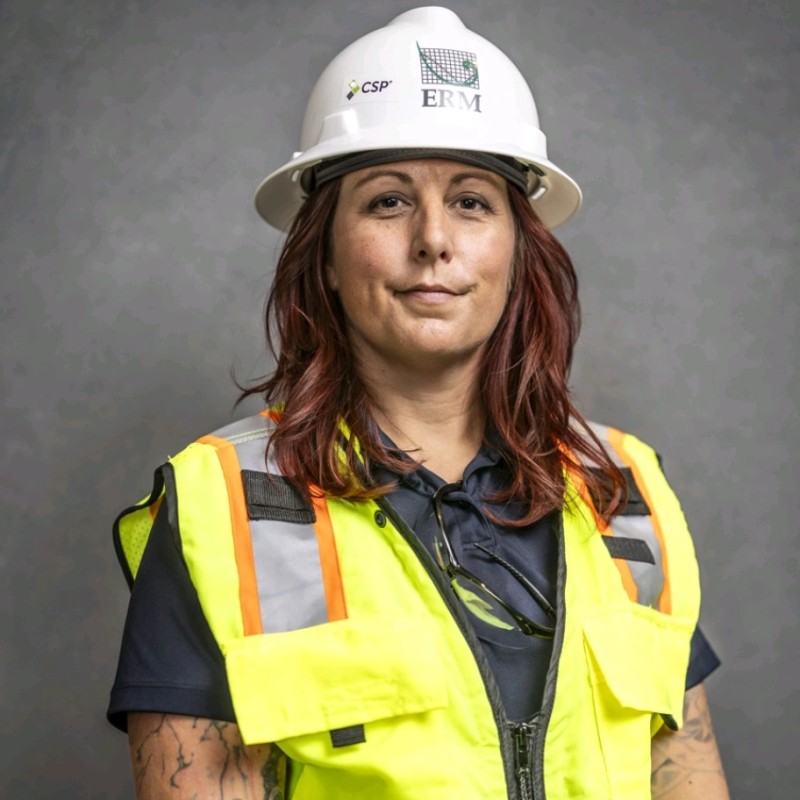
My guest today might not have a magic wand, but she's deeply committed to OHS education. She teaches students about safety — some of whom are planning to be safety practitioners, and some of whom have other plans and need to integrate safety principles into their future careers. Dr. Ashley Gill, CSP, has over 18 years of experience in OHS and holds a doctorate in business administration, focused on organizational behavior and informal safety leadership. Dr. Gill champions culture change through HOP principles. She's facilitated detailed hazard assessments, led systematic incident investigations, developed and audited compliance programs, and implemented OSHA-compliant safety systems across general industry and construction standards. Ashley was awarded the 2022 Safety Professional of the Year by her local ASSP chapter. She's currently a consultant and adjunct instructor at both Tarleton State University's Engineering Technology Department and East Texas A&M University's College of Innovation and Design. Ashley joins us from Fort Worth, Texas. Welcome.
[Ashley] Hello, how are you?
[Mary] Good, good — I'm excited for this topic, I like all things education. To give listeners a bit of an idea, what sort of courses and topics have you taught? Looking at your career at large, what are you focusing on now?
[Ashley] By and large, most of the coursework I've provided over the last two decades of my career has been a lot of OSHA 10-hour, OSHA 30-hour, 40-hour HAZWOPER, 24-hour HAZWOPER — that came from the industries and organizations I was working for. Over the last two or three years, though, since I've shifted to serving as an adjunct professor at some local colleges, I've predominantly focused my efforts on industrial safety, construction safety, hazardous waste management, and pretty much safety management programs holistically.
[Mary] And at the college, I think you teach both young students who haven't really been in the workforce yet, and also seasoned safety professionals who are upgrading, perhaps. How do these two groups compare — not in a negative way, but what advantage does each group have?
[Ashley] I enjoy teaching the ones fresh out who don't really have a lot of real-world experience yet, just because they're so engaged, and they genuinely want to know what's out there and what the best way to do things is. They're very open to feedback, and from a big-picture perspective, they don't really know what's out there for them yet, and they haven't developed a bad experience in safety, or dealt with a bad safety manager — they haven't had that exposure yet. So being able to set their foundational learning around safety is really rewarding for me.
But I'll say the seasoned professionals, the ones going back to school to work on a degree, bring a lot more real-world application to the projects, the conversations, the discussion boards, and their homework, that we don't typically see with students who haven't had any experience in the workforce yet, or maybe have been limited to an internship or a couple of summers. So I get a lot of value out of both groups — I can set the foundation for the new generation coming in, but also learn from grown professionals out in the workforce about what they're doing and what their experience has been to date.
[Mary] Do they tend to be in the same classes, or are they in different streams?
[Ashley] A lot of the safety coursework I deliver runs the gamut. I have folks who are in the work world — last semester was amazing, I actually had servicemen who were overseas doing some work, and we had to juggle when the submission times worked for them. But I also have students who are just there Monday through Friday on campus, going to classes. We see both sides of it in my coursework.
[Mary] I was wondering if there's cross-pollination — if the more experienced people are inspired by the energy of the younger folks, and the younger folks are really interested in hearing about real-world experiences.
[Ashley] I put a lot of focus on open discussion boards, since I don't meet with them face to face in person — that's the best method to allow that cross-pollination to happen. Through those discussion boards, they can read each other's lived experiences and interact with each other's posts, almost like giving something a thumbs up on social media. I think that really helps facilitate learning and growth, irrespective of where they are on their journey in education.
[Mary] Okay. I know you also teach engineers — people who aren't training to be safety professionals, they're on an adjacent path, but you teach them safety. Tell me about that — how does safety intersect with engineering?
[Ashley] The industrial safety class I teach is housed within the Mayfield College of Engineering at Tarleton State University. It's really an introductory course for kids who are going into the workforce as project engineers, chemical engineers, HVAC engineers, all the different things — it gives them a real baseline of health and safety. I think the unique perspective we can bring to those students specifically is that a lot of these engineering kids don't realize there's a whole world of safety out there that still needs engineers. I always give the example of having spent twenty or thirty thousand dollars on fall protection equipment in my industry career, and that took an engineer to come in and help with the measurements and make sure we had the right weight rating on those pieces of equipment. These young people going into the engineering program just don't realize this course can set them up for success down the line. And even if they don't end up in a safety-adjacent career, they still need to factor safety into the designs and work they're doing, because it's always easier to do the legwork on safety before a design is finalized, rather than going back in after something's already been manufactured and built and saying, "We forgot about this."
[Mary] Last time we spoke, you mentioned teaching them the right questions to ask throughout the design process, and trying to anticipate things like workarounds that might happen if the design doesn't account for safety.
[Ashley] Yeah. I always use a real lived example of mine, with machine guarding — something we know is important, and all safety professionals are trained to look for it. What was happening was the engineering group was designing machine guards that were pretty large, well over fifty pounds — not something that would be a single-person lift in the safety world, so it would need equipment or two people to move. But talking to those engineers, I'd ask, "Do you really think somebody is going to go find their buddy to help remove this machine guard, or are they just going to try to muscle it themselves because it's the shorter, easier route?" It was interesting to see the lightbulb go off — they'd say, "Yeah, I don't know that they're going to go find somebody." That sent them back to the drawing board on how to design these machine guards so a single person could safely maneuver them when removing them for maintenance or cleaning.
[Mary] It's expanding their perspective — I'm not an engineer, but I'd think they'd envision the user of whatever they're designing as someone attempting to use it correctly, but not envisioning someone who's also under pressure to produce quickly — time constraints, weather constraints, that sort of thing. Though I guess they probably do study weather.
[Ashley] Absolutely.
[Mary] Last time, and I want to get back to it because you mentioned it a minute ago, you said students don't always realize how robust a career they can have in safety. Can you tell me more about your view on that?
[Ashley] I came up through the ranks pretty untraditionally — I think a lot of safety professionals can say something similar. I don't have a safety degree, I don't have a degree in occupational health and safety, I have business degrees. When I graduated with my undergrad, I had this sense I was going to go into logistics, international sales, or freight forwarding, or something, in my first job out of college. Within a few weeks of being on the job, I witnessed my first work-related injury, and I thought, somebody should have done something here. That internal reflection became, well, maybe I'm that somebody. I took it upon myself at that point to really immerse myself in everything there was about industrial safety, safety management systems, and being able to protect workers and know that we have a robust enough program that we send them home in one piece every single day. So that demonstrates that there's always a career path into safety — some of us just get there in non-traditional ways, if we don't go through a formal bachelor's or master's program in occupational health and safety. But there's so much opportunity in this field right now.
[Mary] I had to ask — you've been doing this for quite a while now — are there more opportunities now, say, for someone starting out who wants to go straight into occupational health and safety? Are there more educational options for them now?
[Ashley] Yes, there's so much opportunity. If an individual is interested in getting into safety, and they haven't had the chance, or maybe they go to a college that doesn't afford them the opportunity to take safety classes, there are a ton of great OSHA-authorized training institutes. I've actually done some of my programming through UTA Arlington. They're out there, and they're more robust and plentiful now than they probably were ten or twenty years ago when I was first getting started. I think TEEX in Mesquite, Texas also has a very similar program. I can't imagine anywhere in the US not having those opportunities available, either in person or virtually — that virtual shift has really happened a lot since the pandemic. Prior to the pandemic, OSHA wasn't really on board with a lot of remote or virtual training, with good reason, I'm sure. But now things have shifted a bit, and more is available to people who can't fit a traditional eight-to-five, Monday-through-Friday coursework schedule, especially people going back to school while maintaining full-time jobs.
[Mary] It's interesting how many organizations felt virtual just couldn't work, and then when it had to work, we made it work — and there's been a lot of benefit from that. Do you ever see — we've been talking about students starting out in health and safety, but when you're teaching engineers or anyone else on a different career path, do you ever see them discover occupational health and safety? How do they respond to OHS if they've never encountered or thought about it before?
[Ashley] I definitely see this a lot, not only with my engineers, the industrial safety folks, but also the construction safety managers going through my class — these are the future managers of construction projects and sites. Seeing them actually think through what safety looks like on a job site or in a project, driven by their assignments in the course, is pretty fulfilling for me. I challenge them often: think through this project you're working on right now — what's going to go wrong, when's it going to go wrong, how's it going to go wrong, and try to put those controls, those mitigation pieces, in place on the front end, so you're not chasing your tail down the line. My construction safety management students do a site-specific health and safety plan as their end-of-year project — they have to think of a fictitious company and design a fictitious project, and walk through all the what-ifs, all the components that would be required or expected if this were an actual real job site they were managing. Great, you're building six stories — what happens if something goes wrong on story six and people have to evacuate? Those are the kinds of conversations that are really helpful, just to get them that realization that things don't go according to plan.
[Mary] No, they definitely don't, on a job site, any given day. I was going to ask — if you're getting kids, some of them must be there because it's a required course in some programs. Do you ever get pushback — do any of them come in with the attitude that if everyone would just follow the rules, they wouldn't have to think about it? Or do you think they're a little more open than that?
[Ashley] I'd say most of this generation, at least that I'm instructing right now, is pretty open. I will say I think some of the historical "safety cop" mentality still exists, and they think that's how things should go. Safety professionals now know we've evolved past the whole blame-and-retrain model — fire somebody before they hit the ground if they're falling, that kind of thinking. I still see some of that creep in, but it's certainly not as common as the conversations I had around this sort of philosophy a decade ago. I think these young adults realize that a genuine conversation with somebody, and making sure we understand the systems in place are robust enough that when somebody makes a mistake, because we know they will, that person is still protected.
[Mary] You've touched on how EHS education or attitudes have changed, and that there are a lot more options now. Has the content of EHS or OHS courses changed? Has it shifted focus? I know there's been a lot of research and discussion in the last five or ten years — has that had any effect?
[Ashley] We're seeing a bit of a shift now, at least in the textbooks my classes operate out of, where we're trying to move away from "the solution isn't always writing somebody up," and recognizing we need to take some of these ethical components into consideration on job sites. It's slowly coming around in the textbooks. I think instructors like myself, and probably many others, have been talking around some of these components for a long time — the stick-and-carrot concept, how are we going to get a little bit further? We're probably going to get further with the carrot. How can we entice folks to buy into the process, the policy, whatever we're trying to do — because it is the safest, but also because we know safety, quality, and environmental components all have to operate cohesively together to be successful at the end of the day.
[Mary] I think that change within a particular industry, like safety, sometimes takes a while to get into the education — people talk about it, try it out, professionals start to change their minds, and only then does it start making its way into curriculum.
[Ashley] Behavior's hard — it's a tricky area, especially considering people come from different backgrounds, different cultures. The US is a melting pot, and you're going to get all kinds of different folks in a construction safety meeting or presentation. You really have to find that foundational baseline of what behaviors you want people to have, and then there's the whole lead-by-example concept with managers on these sites — if you're expecting folks to wear all this PPE on a site, then when you go out there and talk to people, which you should, you should also be wearing that same PPE and walking the talk, essentially. The behavior part is hard. We're also seeing the evolution of a lot of different things in this space — I actually just this year swapped out a component of my course and put in a little bit of AI, robotics, and machine learning. It's there, but not robustly so, as far as the curriculum and materials. I brought in some additional research and components to lean into that, because I know it's coming — a lot of firms are using a lot more technology than we've seen prior to the last few months, it seems like. It just moves so quickly.
[Mary] And because it's so quick, it's hard — you're trying to prepare them for something, but you don't quite know exactly what that something is going to look like.
[Ashley] Right, but at least with AI and robotics, some of the principles we've always seen, like machine guarding, safeguards around equipment, still apply for robotics — you have a robot moving in a space, you're going to put some barricades and things around it, because you don't want somebody in that space while it's moving. So while we don't know what it will continue to evolve into, at least foundationally we have a good grasp of what some of those risks and hazards are, to say, yeah, these controls apply. I feel pretty confident that the tools I'm giving my students give them a good, solid foundation for what this will probably evolve into long term.
[Mary] And I think a lot of education isn't necessarily about predicting every decision you'll have to face in the future — it's teaching you how to think about it. On that path, when new students join, they're generally young and inexperienced — other than the things actually on the curriculum, do you see any trends? Are there people skills or critical thinking skills they often lack and need to learn?
[Ashley] Honestly, yes, absolutely — and I see it in my full-time career as a consultant too, in the safety transformation space I operate in. I think right now, the people expected to execute work on job sites have come up through the ranks really quickly, in safety, operations, environmental, whatever the case may be, and along the way, in the effort to make sure the company has people in place to manage things, we've lost some of those soft skills in moving people up — I see that sometimes lacking in line supervisors, foremen, or supervisors on a project. I really try to focus a lot of my conversations with students on, how do we ask open-ended questions, what does that look like, how do we get people to engage with us, how do we get people to share with us. A lot of it comes back to me telling students, you're going to be most successful if you always go into a conversation with a learning attitude. We don't know everything — any safety professional who says they do is lying. We don't always know all the things. I always remember that the person doing that job out in the world is the subject matter expert on the work as it's being done that day, so we have so much we can learn from them if we just stay quiet and listen.
[Mary] I think too, across all industries, there's a tendency for someone who's "on the tools" — whatever that means, computers, radios, manufacturing — and does really well, to move up into management, but managing people and doing the technical thing are very different.
[Ashley] Very different. I've seen that in other industries too, where it's just, "Okay, now you're managing, but we're not going to give you any management training."
[Mary] Yeah, exactly.
[Ashley] I see it in the real world, in my real job, so I do try to have some of those conversations with students when they're willing to sit down and chat. It's something that's a lot harder to put into a curriculum or a syllabus, to just say, "Here, read this book." It really is a conversation that has to happen — here's how we ask about the work on any given day, here's how we ask what the risks are, here's how we figure out what the controls are. Again, we may not know, but I can assure you the person doing that job does know.
[Mary] I was speaking earlier today with another safety professional, and I mentioned I was going to have this conversation. She said that in her experience, engineers — because I'd mentioned that you teach engineers — engineers in the manufacturing industry don't know much about safety. Does that view sound familiar to you?
[Ashley] Yes, absolutely. I love the course I teach, and I think my students, based on my evals, get a lot out of it. Some of the feedback I get is, "I wish we could do more of this, I wish there was more we could learn," but they're restricted to one semester of coursework, and they don't get any other safety classes unless they go out of their way to get a minor in occupational health and safety, if that's even available to them. So I do feel like some of these engineers may be a little ill-equipped from the start, just because all they have is foundational, maybe barely an OSHA 10, which we expect the average worker to have on some job sites. So there's a bit of a disconnect in getting those individuals up to speed on what safety actually looks like in the real world, no matter how much training I can give them in my curriculum.
[Mary] How do you think most working safety professionals currently view workers in adjacent jobs? So, she mentioned engineers don't know much about safety — what about chemists, contractors, architects? Do you feel like safety professionals are generally frustrated by other people's lack of knowledge, or do they take it in stride?
[Ashley] I personally take it in stride. The world of safety is so robust, there are so many different industries — what applies in a manufacturing facility won't necessarily apply on a construction site, because OSHA has two different sets of regulations, and a completely different set for maritime. There are a lot of different moving pieces, and I think that demonstrates the value organizations get from having an EHS manager, supervisor, or director on staff — because we have a more holistic view of what those programs should be. A very strong safety manager or EHS manager in an organization should be able to facilitate some of those conversations happening among different folks. I've always said, if a safety manager is sitting at their desk all day, every day, they're probably missing out on a lot of the great work they could be doing if they just had conversations with different parts of the organization.
[Mary] I think what you just said is almost a partial answer to my next question, which is, what might help improve the safety bona fides of people in adjacent careers — people who are working but not as safety managers? It sounds like conversations with safety managers is one of them.
[Ashley] Yes, absolutely. I've always believed this, for the last two decades, and now I help consult folks on the same concept — go and spend thirty minutes, or even two hours, depending on what schedules allow, with that chemist, with that foreman. Just walk beside them, talk beside them, engage with the people they're talking to, and use that as an opportunity to sprinkle in some of those important safety components they may or may not know. Even if they do know, it might be a great refresher. But in that atmosphere, it's not competitive, it's not aggressive — it's just two people looking to learn from one another and hopefully make the company a little more successful in the end.
[Mary] I think the motivation to keep people safe isn't suspect, you know what I mean — if you're talking to someone and it's clear, "Hey, my whole job is to keep people safe," I think that's a great way in.
[Ashley] The whole "help me help you" model — what can I do today to help set you up for success, whether in environmental, safety, or quality? Because everybody can rise together if we're having these kinds of conversations.
[Mary] Is there something you'd like to see develop in education — a direction you'd like to see safety education go in terms of curriculum, like more about mental health, or anything where you think, this is good, but we really need to push more in this direction?
[Ashley] You're spot on. I think holistically, most safety programs are still focused on the physical hazards out there in workplaces, and not everybody is comfortable or knowledgeable enough to really understand the whole mental well-being piece, which is equally, if not more, impactful than the physical hazards themselves. I'd love to see, whether in curriculums for OHS classes and programs, or even companies taking some time out of their safety training, addressing some of the things that happen when we're not holistically all in one place and operating on the same wavelength. I think a recent survey — I'd have to double-check the numbers, but ERM, my company, does an annual safety survey every year — found something like 86% of safety professionals are very concerned about the current level of conversation, training, and education around the psychosocial risks that exist in our workplaces.
[Mary] Interesting.
[Ashley] A hundred percent, that is it.
[Mary] Are there any other areas you think we should develop more? We can always do better in everything, of course.
[Ashley] I'd also like to see us put more value on — what's the best way to put this — everybody can look good on paper, with all the right policies and procedures. But when a company has all of those things in place and is still having fatalities, we know something is still wrong, and I don't think a lot of organizations really grasp the culture piece. I'd like to see us, holistically in the safety profession, get a better understanding that culture is culture, at the end of the day. It's a pet peeve of mine when I hear people say things like "the safety culture at this organization" — I'm like, your safety culture is your culture. I'd like to see that evolution toward fully embracing that it's just our culture, and focusing on, hey, if we're still having bad things happen, maybe it's a systems piece, maybe it's not necessarily our people. I think we have a lot of room for improvement in that regard.
[Mary] Okay, I have a question that's a bit cheeky — what's your favorite part of teaching, your favorite part of interacting with the students?
[Ashley] I get to interact with a lot of folks at different stages, not just my students, but I also present at conferences and things like that, so I get those continuing education students too, going for credits. I think the best part of teaching is literally the "aha" moments — "Huh, I hadn't even thought about that, I didn't know that was a thing" — when it comes to what safety looks like in a work environment. The second thing I love is knowing I have such an impact on setting my students up for success, whether by giving them the tools they need for their future endeavors, getting them tied into an internship, or getting them an interview with somebody in my network. Those are things I get so much joy and value out of, and they keep me coming back every single semester.
[Mary] Awesome. I want to pivot a bit — you're on the awards committee for WISE, Women in Safety Excellence. Can you tell me a bit about that organization, what they do, and why it's important to you?
[Ashley] Yeah, absolutely. WISE is a community within the ASSP, the American Society of Safety Professionals. WISE is phenomenal — I felt like I didn't really have much to lean into when I first started my safety career, and I looked around the room and I was the only woman there. So for us to have this group of women is pretty impactful in itself. The work I do on the Awards and Honors Committee is, essentially, we put out an open nomination every single month, and folks can self-submit or submit a nomination for our WISE member of the month. It gives us increased bandwidth to feature some of the amazing women in WISE — and we do have WISE guys as well, who are doing such great work out in the safety community. I love the reach and momentum we get from these events, to help someone trying to move to the next level, or just get more information, but also to celebrate the women in safety doing phenomenal work.
[Mary] If there's a listener out there thinking, "WISE, I haven't heard of them, and I'd like to get in touch," how should they find the organization — through their local ASSP, or?
[Ashley] ASSP, the main website — finding WISE through that main website will connect you to the main, big group of all of WISE. Some local chapters do have a WISE group as part of the local chapter as well, so if you get connected to your local chapter, certainly inquire whether they have a group. Here specifically, in Dallas-Fort Worth, we're just starting the North Texas WISE chapter, which we're really excited about — I think Boston just started theirs too. If you don't have anything local, that big WISE group is still very active — we still get together, have trainings, chat. There's a really active Facebook group and LinkedIn group as well.
[Mary] Great. Normally at this stage I ask people what they think students should learn in safety, and that's kind of been what we've been talking about all along, so my question's a little different. If you were giving advice to a young person — a niece, nephew, something like that — going into engineering or safety, what would you recommend they think about, to get a leg up in their safety career?
[Ashley] That's a great question. My advice would be: make the jump, take the risk. I know travel and moving can be really intimidating for a lot of folks, especially fresh out of school, not really sure, maybe with a partner or family they want to stay close to. But take that risk, take that gamble, and jump on a job that's maybe two weeks on, two weeks off, because there's a chance you're going to get a phenomenal experience doing some really cool work, and probably meet some very cool people along the way who might just be your next boss. That's based on my personal experience.
[Mary] That leads right into my next question — if you could go back in time to the beginning of your safety career, what's one piece of advice you'd give yourself?
[Ashley] I'd say, don't be a safety cop. I don't need to be the smartest person in the room, I don't need to know everything — I just have to have the resources to go and ask the right questions. Very early on, I didn't know enough, I didn't know who to talk to or where to go, so I spent a lot of time as the proverbial safety cop — "Hey, wear your hard hat, or I'm going to write you up," "Hey, you didn't complete this training on time, you're losing your pizza lunch," or whatever the case was. If I could change anything, I'd change that — I don't have to know everything, I just have to know where to go to find the information.
[Mary] True — takes a lot of pressure off.
[Ashley] Exactly.
[Mary] How could our listeners learn more about any of the topics in our discussion today — books, websites, concepts, projects you'd recommend, again not just to young people, but to any safety professionals?
[Ashley] Selfishly, I'd direct everybody to my LinkedIn. I take time every week or two — I'm an avid reader, I read a lot of books, not just on safety but on how to be a better human generally, and I try to tie a lot of those book reviews back to safety, and how we as safety professionals can get a little better at what we do. So jump on my LinkedIn, get connected, see some of the stuff we're doing there, as well as some of what I'm doing with ASSP. There are so many great resources out there right now — a lot of what we talked about today is around HOP, reading anything you can about human error, the soft skills, how do we talk to people, what kind of person am I in my delivery — am I one who's cracking jokes, kitschy, or am I comfortable tugging on somebody's heartstrings a little bit. There are some phenomenal authors out there in this space right now, so I'd absolutely recommend Googling human and organizational performance, the Sidney Dekkers of the world — absolutely phenomenal.
[Mary] You mentioned LinkedIn — if someone wanted to reach out to you specifically, is that the best place?
[Ashley] Yeah, absolutely. All my contact information is on there. I present at a lot of different conferences, so I always direct people there if they want to chat, get connected, or set up some time. I just love connecting with people in our community.
[Mary] Great. Well, that's our show for today. Thank you so much for joining us, Ashley.
[Ashley] Thank you, I appreciate the time.
[Mary] Thanks to our listeners and the Safety Labs team. We're immensely proud of the work we do on the show, and we sincerely hope we're helping listeners improve their safety practice with these discussions. Bye for now. This podcast is created by Safety Products Global, the world's leading manufacturer of safety knives. Through our trusted brands, Klever, Slice, and PHC, we empower companies to prevent injuries by providing safer cutting tools for every material and application. Until next time, stay safe.