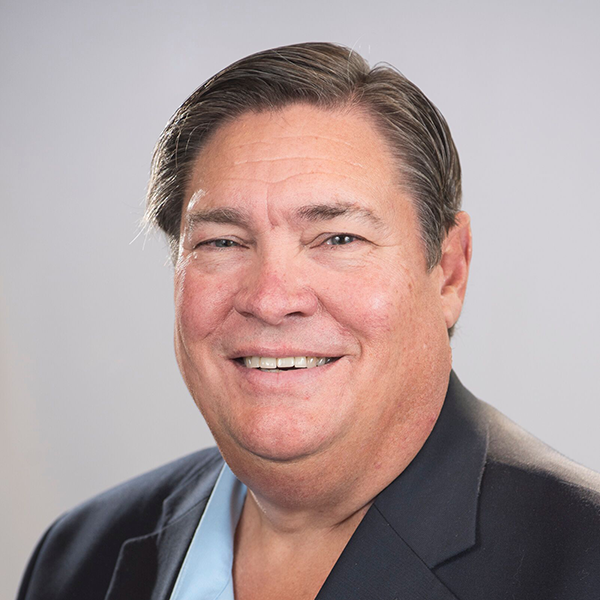
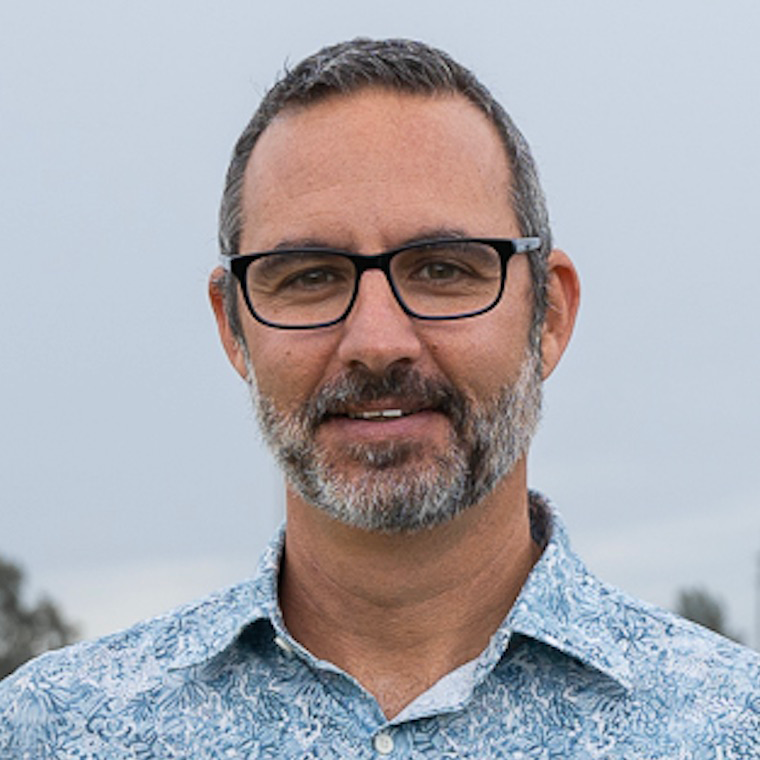
[Mary] Hi there, welcome to Safety Labs. In a previous episode, we met Nippin Anand, who spoke briefly about the social psychology of risk. We decided to delve a little deeper, and speak to the founder of the Social Psychology of Risk about its principles, and about other topics, including the nature of semiotics within risk and safety, and the importance of transdisciplinary approaches.
Dr. Robert Long is an accomplished author, presenter, and educator. He's published 14 books on the social psychology of risk, and publishes extensively online. Rob's 50 years as an employee and consultant include leadership and management across several industries, including building and construction, transport and logistics, oil and gas, corrections, education and training, and public service.
[Mary] Social Psychology of Risk — now, do you say "SPoR," because it's often written that way?
[Robert] Yeah, it's often said SPoR, people say SPoR because—
[Mary] People say SPoR? Okay.
[Robert] Yeah, but we often have to say "social psychology of risk" because people don't know the acronym.
[Mary] Okay, so listeners, when I say SPoR, that's the initials of Social Psychology of Risk. It was founded in 2002, and since then, over 30,000 people across 30 countries have been taught its foundations. Many organizations implement Dr. Long's methodology, and his associates deliver programs across the globe in leadership, culture, learning, and risk. He joins us from Canberra, Australia. Welcome.
[Robert] Thank you.
[Mary] I'd like to start with you giving listeners an introduction to the social psychology of risk — I'm sure it's much bigger than a couple of sentences, but what are the main ideas?
[Robert] A lot of people in risk and safety would know about "psychosocial risk" — psychology directs the social engagement of risk. When you reverse that, "social psychology of risk," sociality directs the psychology of risk. Rather than psychology directing where the focus is, sociology, or social meaning, directs where the meaning is in risk. Social psychology puts social matters first — relationships, culture, working with others, person-centered thinking, social-centered thinking — rather than the psychosocial approach, which is trendy at the moment and looks more at the conditions of work. We don't look so much at the conditions of work, we look at people in the workplace, social relationships in the workplace. That's probably a good summary.
[Mary] You're acknowledging that people are working in a social situation, in a group — it's not just individual psychology, it's social.
[Robert] Right. Social psychology has a very short history — post World War II, the discipline really didn't exist before then. There were some ideas, but really after World War II, a whole bunch of psychologists wanted answers to the questions raised by the war, particularly around the Holocaust, and why people could undertake such incredible actions as the Nazis did. Around the early sixties, social psychology was really established as a discipline. You can trace antecedents back further if you want, but as a formal discipline, it didn't really exist before then.
As a discipline within universities, among the many thousands that exist, social psychology has its own unique approach. For example, listeners may have heard of the Milgram experiments — trying to understand why people are obedient to authority, and why people disobey it — and that this happens according to social context. Change the social context, and you can actually change the behavior, the response, or the thinking behind that behavior. Some may know of the Stanford Prison Experiment, with Zimbardo — again, in its fledgling years in the sixties, looking at why people do what they do when you change the social circumstance. Interestingly, the Stanford Prison Experiment was effectively replicated at Abu Ghraib, where military personnel were found guilty of brutalizing prisoners, and everyone went along with it, accepted it as normal, simply because the social arrangements normalized that behavior.
That's what social psychology really looks at — that context, which precedes all else. Think of how an adjective conditions a noun — you can talk about "dirty petrol" or "clean petrol," and the adjective changes how you think about what follows. You can talk about psychological safety, behavioral safety, regulatory safety, or social psychological safety, and it conditions the way you look at how risk is tackled, according to context. Context takes ultimate importance in how we look at things. For example, if a group of people's social circumstances allowed safety people to bully others simply because they were running a campaign for zero harm or a reduced injury rate, we'd look at the context that created that bullying and condemn it, rather than saying, "isn't it wonderful, we had no injuries." If you're injuring people through bullying, achieving zero injuries makes no difference at all — if you have to harm people to stop harming people, that's a contradiction. So we look at context as being just as important as outcome.
[Mary] Speaking of context, what was your own impetus for starting to work on and develop the social psychology of risk?
[Robert] I've actually thought about what that context was. Like many people in risk and safety, I fell into the domain accidentally. I was in the education and learning sector before this, and had worked other careers before that, including in juvenile and adult corrections, prisons, and so on. At one stage, a friend asked me to come work for his organization in research and development. I came in under the auspices of an education expert — pedagogy, curriculum, learning, that sort of thing. As part of that group, he asked if I could help a business attached to it with research and development, particularly in risk and safety. I'd never dealt with this industry before — that was around 2001. I was dumbfounded — I couldn't believe how backward the industry was, how narrow its curriculum was, how narrow-minded it seemed as I engaged with it.
A whole bunch of things I'd consider foundational to a profession — social work, community work, youth work, clergy, medicine, law, all professions I'd engaged with as an educator, having worked in training institutions and universities — all those things I considered foundational to being a profession just weren't present. I was shocked. Fundamentals like an "ethics 101" course, which you'd take as a first-year law or education student, because how you treat children in schools, or clients in the legal profession, is critical — I came into this safety world, and there was no conversation at all in the curriculum about ethics. That was my shock introduction to the safety industry. And not much has changed in twenty years — there's still no mandated foundational study of ethics in risk and safety.
[Mary] I was going to ask about your assertion that safety isn't a profession per se, because it lacks that foundational ethics grounding. Out of curiosity, what would you call it instead — a practice, a discipline, a field?
[Robert] I call it an industry. It loves to use the word "professional" all the time — it's almost an obsession. You go into other professions, and they don't use language like that — a lawyer doesn't say "I'm a lawyer professional," a teacher doesn't say "I'm a teacher professional," they just say "I'm a lawyer" or "I'm a teacher." But in the safety industry, everyone has to remind you, "I'm a safety professional." That's not how people use language in actual professions — they don't have to prove to everyone that they're a profession. Once you know someone's a schoolteacher or a university lecturer, they don't have to tell you constantly that they're professional, because their professional, ethical conduct should be obvious. In professions like law, medicine, social work, school teaching, there are extraordinary bodies that supervise professional conduct, and you can be barred from practicing through unprofessional conduct. That's one of the benchmarks I'd anchor to before calling something a profession. So I don't call safety a profession, and until it anchors to a much stronger sense of ethics in how it educates and trains people, I think it'll remain something of an amateur show for quite some time.
[Mary] To develop, or anchor to, an ethical foundation, is it imperative that safety practitioners formally study ethics, or do you think there are other paths besides formal postsecondary education?
[Robert] I think it has to be both. I've lectured at universities and written ethics courses for a number of professions — it's often the foundational, first-year way of sorting out whether people really want to be in teaching, law, or social work. One of my daughters is a teacher, the other a nurse, a paramedic — and they don't use the term "I'm a nursing professional," they just say "I'm a nurse, I work in nursing." Interestingly, my daughter who did nursing, in her very first year, was hit hard with what it means to be ethical working in a hospital, or in an ambulance on the side of the road — considered absolutely foundational. Respect for other people's moral condition, for example — if you're on the side of the road and someone's wearing a headdress and is clearly a Sikh, does that change how you care for them? Yes, it does. If you understand their religion is prominent in who they are, in nursing, you seek permission for many things before treating a client, unless an emergency situation means you can't — but most often, you can seek permission. Same in social work, and so on.
I find it interesting that in the risk and safety world, you apparently don't need to seek permission from anyone, because safety overrides things like personal confidentiality. In real professions — legal, social work — confidentiality is absolutely critical, and it overrides things like safety. It's the opposite in the safety industry — safety overrides confidentiality and personal agreement, and we don't need to seek permission before invading someone's personal space or personal autonomy. In real professions, autonomy and beneficence are foundational to conduct — a doctor doesn't just walk up and say "I'm now going to do this to you," they ask, "do you mind undoing your shirt so I can listen to your chest with a stethoscope." Professionals don't override those important ethical and moral values that we all hold in a social contract with each other, and that's appropriate. But I discovered very quickly in risk and safety that safety apparently grants you authority to override personal autonomy, and it doesn't seem to matter how you treat another human being, as long as you achieve zero harm.
[Mary] I discovered that very quickly when I came into safety, and so I wrote a book against the ideology of zero harm, which, unfortunately, has an ideology that leads to the brutalizing of people. The ideology of zero harm actually harms people — psychologically. Would you like to say more about that?
[Robert] I've written two books against the ideology of zero harm — I'm the only author on the globe who's written two books against it. The whole ideology is driven by such a silly idea — that injury rates are evidence of safety. That's a crazy belief. If I come into an organization with no recorded injuries, somehow they're a "safe" organization; if they've had three injuries this week, somehow they're "unsafe." But that's not reality, that's an interpretation of a statistical number. Imagine applying that to a family — I'd have an "unsafe" family, because my children have been injured. I have four children, all adults now, but I remember when I had four teenagers and four young children, being harmed was a near-daily occurrence — falling over, stitches on the knee, a broken arm — and as adolescents and teenagers, things like peer pressure and self-harm came into it too. So apparently I had an unsafe family. That's an interpretation placed on statistics.
When I first came into the safety industry, I couldn't believe the absurdity of that assumption — and that's how you end up with a silly ideology like zero harm, the idea that nobody will be harmed, so you make that a priority, and then run around the organization bullying people because they don't wear the PPE you like, or don't follow rules the way you want, or don't submit, obey, or do what you think they should over time. We're happy to harm other people in the name of zero harm. It's really quite laughable, and it dominates the language of the risk and safety industry — for example, the Global Safety Congress has been guided and dominated by zero harm every year since 2017. Nine years running, you go to the conference, and everything's about zero harm. It's nuts.
[Mary] That's interesting, because I'm not a safety professional, and this show is really my window into the safety world.
[Robert] You can't be a safety professional, because there's no such thing — you see, you said that so quickly and easily, "I'm a safety professional," and that shows the conditioning people get in this industry, joining those two words together. I say, "no, you're not, I need to look at your conduct, your ethical outcomes, your practice, before you can claim that second word." You're a safety advisor, you work in safety, but that doesn't make you a safety professional.
[Mary] So what I should have said is, I am not a safety professional.
[Robert] Okay.
[Mary] I'm not a safety professional either. But my exposure to safety is through the show, and zero harm is really an unpopular idea among most of my guests — most of them dismiss it as foolish, on some level.
[Robert] They play a double game. I know two academics in Australia who, at the last Global Safety Conference in Sydney, had their national association fund and sponsor a session on zero harm. Later, on a podcast, they said zero was "a noble goal" — these are two prominent academics in the field. And yet if you interviewed them personally, asked what they really think of zero harm, they'd say it's a silly idea. Large corporations with a lot of money run this zero ideology, mostly the very large organizations, not so much the medium or lower tiers. The large mining companies, the large building companies, all the big global companies, have this zero ideology baked into their mission. If you want the money, you bow down to zero. We have an association here in Australia, the Australian Institute of Health and Safety — they fully sponsor zero, and they're the major association for safety professionals in Australia. It can't really be debated — it's where they put their money.
[Mary] Part of the reason I asked about defining a profession is that a lot of your work focuses on the importance of language — you've talked about how, used in particular ways within safety, language becomes meaningless. How does that process happen?
[Robert] My first career — I've had seven careers — in 1974, I was an English teacher in high school. My very first degree was in linguistics and language, English literature, the things you'd expect from that kind of subject in high school or college, and I later taught it at university. I find it interesting that in risk and safety, there's a very low consciousness of making linguistic sense. I could take you to DuPont's website and show you their zero harm motto: "Believe the Impossible." One thing about linguistics is that language has to make sense — you can't interpret something to not mean what it says. People in zero harm say, well, they don't really mean zero, they mean "zero plus one," or "reduce injury rates," or something else. If that's the case, don't use the word zero, because language has to have meaning. You find the most absurd language floating around risk and safety — a lot of it dangerous, ignorant, or silly.
I'll give you a good example. There's a group within safety right now, very popular, called Human and Organizational Performance, HOP. They have a slogan, which they call a "principle," but having no expertise in ethics, they don't really know what a principle is. The slogan is "blame fixes nothing." I've never heard such silly language in my life, because the whole purpose of the legal system is to apportion blame, so you can provide compensation to those affected, and hold people responsible for what they've done. Having worked in the jail system for five years, I can tell you every inmate would love that motto — our jails are full of people paying the price for what they've done, because the court system found them to blame for their actions. But no, not in risk and safety — we have this absolute extremist slogan, meaningless, "blame fixes nothing," and everyone laps it up, "let's go to HOP, let's do all this." It's nonsense language, complete nonsense.
I could give you example after example. "Safety is a choice you make" is another favorite — also nonsense, because you don't have the freedom to choose the outcome of what happens to you. Jump in your car, have an accident — did you choose to have that accident? No, because living in the world is complex. But with a silly motto like that, every outcome that isn't "safe" apparently was your choice. People in safety aren't aware of making linguistic sense of their own language — it's everywhere, and I've written hundreds of examples in my books of nonsense language that people lap up, thinking, "isn't this great?" "I'm a safety zero harm advisor" — they advertise jobs that way in Australia. You become a "zero harm advisor," not a "safety advisor." Did you know that? Jump on our employment websites here, you'll see organizations like BMD or Downer EDI advertising not for a safety job, but to "become a zero harm advisor."
[Mary] One thing I think is related to this — you've talked about the difference between what you call "sociotechnic" language versus people-centered language. I have my own ideas about why people gravitate toward the former, but I'm curious about your views on why people tend toward sociotechnic framing.
[Robert] Well, it's not even really "socio." They use the word "sociotechnic," but the truth is, if you read any text in safety using that term, they don't really mean it — it just means "technic." There's a group out of Europe running an incident investigation methodology called FRAM, developed by a PhD researcher in Europe, and they claim a "sociotechnical" method — it's not, it's just technical. That comes from safety's origins as an engineering process. In the United States, the American Society of Safety Engineers changed its name about five years ago to the American Society of Safety Professionals — they swapped "engineering" out and "professional" in. I find that fascinating, because the dominance of engineering remains in the industry, predominantly male, predominantly engineering-minded, predominantly technicist — there are exceptions, of course, but even in Australia, if there's a major tragedy where people die, they don't call in anyone but engineers for the investigation. It's still considered an engineering body, not a broader one. You've got to be careful with that language — when people say "sociotechnical," I ask them to show me where the social reality actually is in their documentation, their publications, their research. It's not there. It's all about analyzing objects and how objects interact with each other, and that's how they think you solve a safety problem.
[Mary] I have further questions on that exact topic, but first, here's a message from the company behind the Safety Labs podcast.
In warehouse, distribution, and retail environments, cutting tools take a beating. When teams are opening boxes and breaking down corrugate all day, they need cutters that are safe, durable, and comfortable to use, without constantly replacing the entire tool. That's where the Klever EcoXL XD delivers. This concealed safety cutter features a thick-set XD replaceable blade head, engineered to be fifty percent stronger and last four times longer than similar cutters — it cuts up to a mile of corrugate before it needs replacing. Klever's SmoothCut technology prevents corrugate from clogging the blade, for faster, smoother cuts. The ergonomic, soft-grip handle helps reduce hand fatigue and repetitive stress injuries, ideal for high-volume cutting tasks. With a concealed, high-quality carbon steel blade, the EcoXL XD reduces cut injuries and helps protect valuable merchandise. An integrated metal tape splitter extends blade life, while the reusable handle and replaceable blade head provide a smarter, more cost-effective solution. Rigorously tested and made in the USA, the Klever EcoXL XD is built for safety, durability, and efficiency, shift after shift. Klever is owned by Safety Products Global, which has the largest range of safety knives on the market. Want to learn more about which tools will work for your materials? To request free samples, go to safetylabspodcast.com/samples.
And now, back to our podcast. I want to go into engineering specifically, because I had a question about that approach — you advocate for a safety and risk approach incorporating the humanities, rather than relying exclusively on engineering and science. My question is, in the everyday work of the safety industry, people are still legally bound to regulatory structures that were developed from an engineering perspective. How do you think they can navigate that tension in practice?
[Robert] There's a great deal of mythology around regulatory and legal, even technological, requirements — because the risk and safety world doesn't know what mythology is, doesn't recognize how it creates its own myths. Most regulations we're given aren't specific, they're broad, they're interpreted, and that's when you end up in court — a court or magistrate determines the outcome through interpretation, often through case law, but it's not something objective and non-arbitrary. The truth is, all regulation is arbitrary and subjective to some degree. Take a common example: the regulation that says you're meant to reduce risk to as low as reasonably practicable — ALARP, A-L-A-R-P. Have you heard of that?
[Mary] I think I've seen it in reading, yeah.
[Robert] It's common. What I consider "low," and what you consider "low," is subjective — the idea that I reduce risk to one level, and you reduce it to another, is the subjectivity baked into the regulation. It's the same with "due diligence" — your idea of due diligence can vary from mine. In the risk and safety world, there's this crazy idea that risk and safety people are somehow objective — I had someone yesterday tell me he was "an objective investigator." I questioned that, because in the humanities and social sciences, we don't believe in the nonsense of objectivity — it doesn't exist. Once you accept that objectivity and subjectivity exist in tension with each other, you realize you can't go out as some objective investigator who somehow finds "the truth" because you have a special gift of not being influenced by social circumstance, context, upbringing, heredity, even gender, which can all create bias in how you investigate. The idea that you're an objective person just policing the regulation objectively is nonsense — more mythology, believed by an industry that thinks objectivity is real, when it isn't. The sooner risk and safety grapples with the fact that you undertake your task as best you can within the subjectivities available to you, including the ethical and moral demands to respect other people and their autonomy, the better. Otherwise, "I'm just following an objective law and administering it objectively" is just more nonsense. The idea that an engineer can come in and give some objective design or rule is nonsense too — "I'm going to stop young people from going into this area, so I'll put a bollard there, wonderful" — now you've just created something for them to climb on. Unless you understand the collective behavior of adolescents, you can't solve adolescent problems by bringing in an engineer — you need someone who understands how adolescents actually behave.
[Mary] As you were speaking, I was thinking even within laws and regulations, laws are interpreted with reference to precedent — they look at past interpretations as benchmarks for present ones.
[Robert] Right, that's case law — we look at a ruling from ten years ago, and lawyers go back to it in court if a similar case comes before them, and it influences the decision depending on the similarities between cases. That's how the legal profession works, and let me tell you, the legal profession knows all about subjectivity — they know the law isn't objective, it's interpreted.
[Mary] Let's talk about symbolism — language is a kind of symbol, or works in symbols. Let's talk about symbolism and the models frequently used to describe risk and safety. You mentioned last time we spoke that you haven't come across any helpful models — can you expand on that?
[Robert] You've got an industry not sensitive to semiotics, not sensitive to linguistics. I'd guarantee almost no one in the risk and safety industry has read the work of Halliday — the global expert on language as semiotic, that's literally the title of his book. Most human beings can't speak a sentence without a metaphor — most of our language is figurative and metaphorical, and that idea, that we communicate symbolically, is completely missing from how risk and safety discusses communication. Metaphorical and figurative language is, of course, interpreted — more subjectivity. I could say something's "hard," you could say something's "soft," but neither of us actually knows precisely how hard or soft — we could debate the difference between a hard-boiled and soft-boiled egg, and we're right back to subjectivity.
It's exactly the same with symbols — all symbols are designed by someone to convey a myth or a purpose. For example, James Reason, a researcher who's practically deified in the risk and safety world as some kind of genius, developed the Swiss cheese model of accident causation — built entirely on this semiotic symbol of lined-up slices of Swiss cheese, with accidents occurring when the holes align. It's one of the worst models ever developed in risk and safety, because no accident is linear, and no accident is caused simply. Even if I ran into the kitchen right now because one of my grandchildren spilled a hot cup of coffee on themselves or the floor, and you went looking for "the cause," you'd find it's complex — it could be the weather, the positioning of the cup, the make of the cup, the shake of their hand, the heat of the kettle, a hundred things — and that's just a very simple event. The idea that accidents are caused in some linear, Swiss-cheese way is a semiotic construction, and semiotics create myths. Myths aren't about falsehoods or fairy tales — myths are constructed symbolic realities, real within themselves. You learn this from religion — try telling someone in a religion their belief is nonsense, and they'll hold up a cross, or a statue, an object that symbolizes their belief. Belief and symbol are connected.
Unfortunately, across the whole risk and safety industry, there's this naive belief, from James Reason, that accidents occur in a linear way, like lining up Swiss cheese — taught in textbooks worldwide, and it's absolute nonsense, that's not how accidents happen. I could give you more — Heinrich's pyramid, the ratios suggesting the number of reportable incidents predicts the ratio leading to a fatality, or the Bradley Curve, which says if you follow these processes, you'll get to zero — part of the same fictitious DuPont material. They've all created these symbols, and I haven't seen one yet that actually explains human reality, how things really happen. Human life is messy, unpredictable, doesn't go the way you expect, even day to day — people get sick, things fall over, things break, and we learn to be resilient around that. It's not simple, like the industry wants us to believe, accidents happening in a linear line, a curve, or a pyramid. I haven't seen a single semiotic in risk and safety I'd give two cents for.
[Mary] Along those lines, I know culture is one of your interests, and one of the hottest-button topics is what people think about the notion of, and I'm doing air quotes here, "safety culture." What are your thoughts on that?
[Robert] Again, you've got an industry with very low or no interest in linguistics, symbolics, or semiotics — the same industry shows very little interest in anthropology. I came into risk and safety from linguistics, anthropology, education — disciplines nothing like engineering, completely removed from it. Coming in from the humanities, I couldn't believe it — I'd entered a foreign world that denied realities the humanities understand, like subjectivity. When you look at the models, or how risk and safety thinks about a range of things, it's incredibly immature. I find it curious — if you train to be a school teacher, you don't learn the Education Act as part of your education degree, you don't have to study it. But coming into risk and safety, people spend all their curriculum time studying the Act and the regulations, but not how to converse or engage with people. Amazing — they don't study learning, linguistics, or ethics. Rather than getting a generalist education, they get a very narrow one, and the moment they're in the workplace, they realize they need communication skills and don't have them, engagement skills and don't have them, listening skills and don't have them. They're not prepared for what the job actually demands. I'd argue most risk and safety education is compulsory miseducation.
[Mary] That's where transdisciplinarity comes in, which is something else you're interested in — I have my own ideas, but I'd like to hear how you see what transdisciplinarity is, and how the safety world could benefit from understanding it.
[Robert] "Trans" means to go across, so transdisciplinary is very different from multidisciplinary. Multidisciplinary — if you're building a hospital, you'd have architects, engineers, builders, plus surgeons, doctors, hospital administrators who know how to build a hospital. Could you imagine building a hospital without consulting doctors and surgeons? Hospitals are built in a multidisciplinary way. Transdisciplinary goes further — you embrace disciplines outside the realm of what you'd consider an orthodox discipline. Take Indigenous, First Nations beliefs as an example — in Australia, we have First Nations people; in the US, you'd say Native American or Indian; in Canada, First Nations. They have a very unique spiritual, religious way of living. When colonials first arrived in Australia, they completely dismissed these people as less than human, so they could slaughter, dominate, and conquer the country. We know now, of course, that's not true — there were intelligent, clever people here who knew how to live on this land, with spiritual beliefs the English never recognized or agreed with, being Anglican, Catholic, or whatever Christian denomination they belonged to.
Unless we engage with ways of knowing that differ from our own, we won't broaden our understanding. A good example of being transdisciplinary — we've only discovered in the last five years, here in Australia, that Indigenous people understand bushfires in a very different way than our scientists do, and they've had that practice for sixty-five thousand years. But we don't listen to them, because we've decided their tradition is "silly," "unintelligent," or "anti-science." So we ignore sixty-five thousand years of collective knowledge because it doesn't match a narrow, scientific worldview. Same goes for engineering, or any discipline. If we don't start listening to disciplines outside our comfort zone, all we'll do is create a silo, keep operating within it, and keep developing symbols and models like the Swiss cheese model, never breaking out of that silo. Unless risk and safety can get out of that silo and engage with linguists, ethicists, social workers, educators, people who don't think like safety people — I don't wake up in the morning thinking, "I've got to keep myself safe today," I don't think like that. But I've met safety people whose first word is "safety" — "hello, good morning, my name is Safety," people who literally call themselves "Safety John" or "Safety Mary," and I think, nobody on the planet thinks like that, except this industry, obsessed with safety.
If you go into a school, yes, they want to keep children safe, but the purpose of a school isn't to keep children safe — the purpose is to teach children risk. You might have a playground with four hundred children running around at top speed, playing ball games, all sorts of risk, with one teacher supervising — that's very unsafe, isn't it? But the purpose of education isn't safety, it's teaching children how to manage risk. That's the transdisciplinary view — as an educator, that's how I think. Someone said to me today, "Rob, something about your safety friends," and I said, I don't have safety friends, I have friends. "Safety" isn't my adjective for describing the world.
[Mary] You've had a long career, first outside safety, then within it — what changes have you observed in occupational safety over the years? Have there been any beneficial changes, understandings that have grown that you think are helpful?
[Robert] I've seen no change in philosophy or worldview in the twenty years I've been involved — none. The same philosophy dominates. Slogans change, marketing changes sometimes, but the fundamental engineering, technicist belief remains. There's been no shift. Even the recent groups claiming a "new view," or "safety differently" — they're not really new, it's the same philosophy, the same methodology, the same worldview — still a technicist worldview, not a human, person-centered worldview. Those values, person-centeredness or personhood, you can't find anywhere in the risk and safety industry, other than in the books I've written. It's not language the industry uses — what makes you a respected person? It's not in safety, we don't talk about it. The purpose of safety is to serve safety, not to serve people. If you're in a profession like teaching, social work, or law, your purpose is to serve people, not some other outcome. Until that's switched around, I haven't seen a change in worldview.
You spoke about culture earlier — I don't see culture the way the safety industry does. The safety industry thinks culture is behaviorism, "what we do round here." Ask any safety person how they'd define culture, and they'll say, "culture's easy to understand, it's what we do round here," equating culture with behaviorism. Ask any anthropologist on the planet, and they'll tell you that's the silliest definition imaginable — that's not how culture works. Until there's movement in a transdisciplinary direction, stepping outside that narrow band to engage with disciplines well beyond the comfort zone of the safety industry, the philosophy won't move. And it hasn't moved in twenty years — the philosophy is the same.
[Mary] What about your understanding of risk itself — have any of your perspectives shifted over the course of your career, since you started working with risk?
[Robert] I believe risk is essential to learning — I often say there's no learning without risk, and no risk without learning. Going back to the beginning of my career, in the early seventies, my very first occupation was as a school teacher, and I've been driven my whole life by education, learning, pedagogy, curriculum. The purpose of raising a family is learning. The purpose of entering a relationship is a risk. I look back on the day I got married, fifty-one years ago, and think, I didn't have a foggy clue what I was getting into.
[Mary] I'm sure no one does.
[Robert] That's exactly my point, it's a risk. At twenty, twenty-five, thirty, you jump into marriage, or whatever you call it, completely blind, and then thirty years later you think, "I'm just starting to learn about marriage, just starting to learn about relationships" — guess what, you've had thirty years of risk. Part of that risk is the relationship might fall apart, and in Australia, the divorce and separation rate is massive, which proves you took a risk and it didn't pay off, and then you go through family court and discover that's a very messy business. But at the time, you jumped in bright-eyed, "I've met the person I'm going to live with for a long time" — and that's not always how it works.
Risk is about learning. I look at people in this industry talking about "risk aversion," "we have to reduce risk" — well, what world of reality are you living in? You cannot eliminate risk, it's part of being a fallible human. Every day you step out of your house, you can't predict what'll happen by three o'clock that afternoon. You can make all the predictions you like, and within half an hour you get a phone call, a grandchild's in hospital, or your circumstances change because your wife forgot something at the shop. People who live resiliently welcome and accept risk — they don't talk about "risk aversion," they embrace it, recognizing it's essential to resilience and learning. I don't warm to language that says we have to reduce risk to nothing — well, live in cotton wool, don't get out of bed in the morning, you can't live like that. We're even discovering now, in Australia, with "helicopter parenting," overprotective parents — if you're an overprotective parent, preoccupied and obsessed with safety, that's actually poor parenting. That's exactly my point.
[Mary] I agree with you, but we're running on time — if you could go back in time to the beginning of your safety career, is there a piece of advice you'd give yourself?
[Robert] Don't study safety. I did a master's degree in safety — I'll never get those three years back. I did it so I could say I had a master's degree in safety, but I didn't really learn anything, I just learned how impoverished the industry was. The best safety people I've ever met are the ones who didn't come out of safety originally — nurses, teachers, other professionals who somehow accidentally ended up in safety, who are much, much better than people groomed into it from the start. So I'd tell myself, I wish I hadn't done that degree. If I had those three years back, I'd probably have done a law degree, to better understand the law — I have a very good friend, Greg Smith, a lawyer working in safety here in Australia, absolutely brilliant, who blows apart most of the myths the risk and safety industry holds about how the law actually works. But I didn't do that, I don't have a law degree, so I work within what I know, the social psychology of risk.
[Mary] Listeners, if you're interested, I did actually interview Greg Smith a few episodes back, so take a look at that.
[Robert] Greg's fantastic, essential listening.
[Mary] How can our listeners learn more about the topics in our discussion today? Obviously there are countless resources, but are there a top few that come to mind that you'd recommend?
[Robert] I've published 18 books, working on my 19th right now — they're all free, online, I don't charge for them. I don't know many who do that, but they're free to download — jump on my website and download one. I've got hundreds of videos too, also free, on the social psychology of risk. In other areas, I'd recommend authors — in fact, I've told people, if the word "safety" is in the title, don't read the book. I often advise safety people to do a diploma in counseling, to learn the fundamentals of understanding other people's lives — when someone in your team comes to you with a safety problem, it's connected to the rest of their life, safety isn't some isolated thing disconnected from relationships. So I often advise, if you can't study a diploma in counseling, at least get a beginner's counseling book and start understanding the autonomy of the people you engage with every day as they navigate the risks in their lives. Start there — there are lots of good beginner books in that area. Another I'd recommend is any book on listening skills — don't buy a "communication" book, that's not what you need, those tend to just be about lecturing. Safety people need to improve their listening skills and counseling skills. I'd recommend books in that area, and I cover some of those topics in my own early books too.
[Mary] If listeners want to find you on the web, should they go to your website?
[Robert] They can, or just search Google for "Dr. Robert Long," and I come up first. That's probably the best way to find me — search "Dr. Robert Long," or "Social Psychology of Risk," and I'll pop up first on Google, or with AI search tools too.
[Mary] Well, that's all the time we have for today. Thank you for joining me, Rob.
[Robert] Great, thanks for inviting me.
[Mary] My thanks to our listeners, and of course to the whole Safety Labs team behind the scenes. Bye for now. This podcast is created by Safety Products Global, the world's leading manufacturer of safety knives. Through our trusted brands, Klever, Slice, and PHC, we empower companies to prevent injuries by providing safer cutting tools for every material and application. Until next time, stay safe.

.jpg)