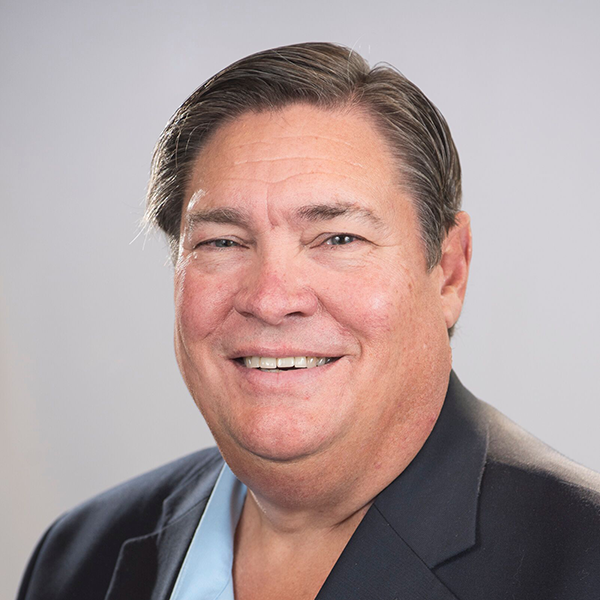
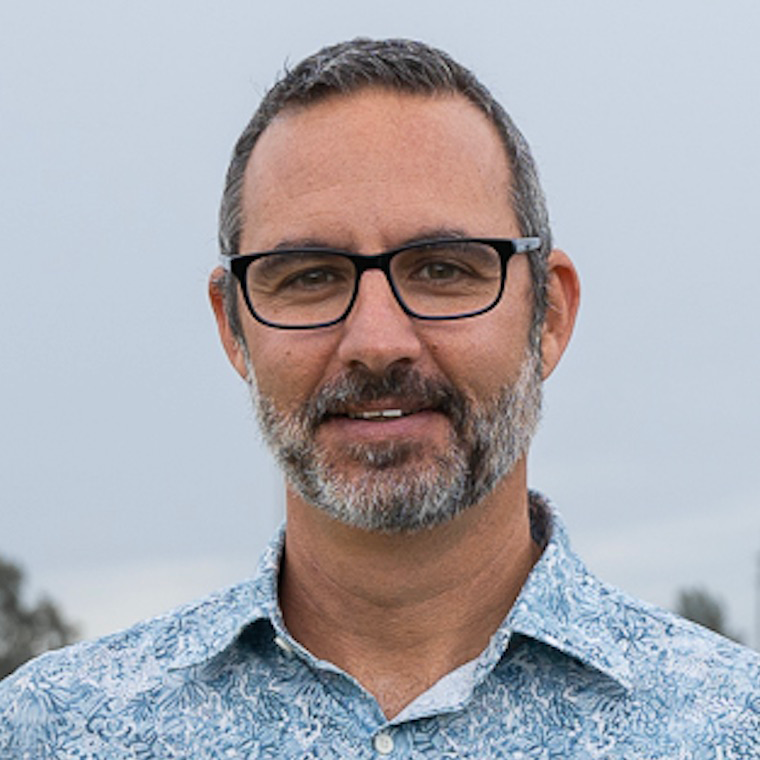
[Mary] Hi there, welcome to Safety Labs. Safety books, theories, and ideas help professionals approach occupational safety from different angles. Many borrow from other disciplines, such as sociology or organizational psychology, which can shed new light on old problems. But no matter what school of safety thought you belong to, a theory is really no good until you operationalize it. Today's guest has extensive experience in doing just that, and along the way has come to her own conclusions about what's helpful, and what's not, when it comes to putting theory into practice.
Zoe Nation is passionate about including those closest to the work to solve safety and performance challenges. She started 25 years ago in human factors, and has worked across rail, oil and gas, logistics, mining, marine, manufacturing, and aviation industries. She also spent 10 years as the lead Human Factors and Human and Organizational Performance Advisor for Chevron Australia. She now works with various organizations, helping improve safety outcomes by applying contemporary theories and the latest research. She focuses on user-centered, practical solutions, and is keen to share what she's learned from her many successes and failures along the way. Zoe joins us from Perth. Welcome.
[Zoe] Thanks, Mary. Thanks for having me. I'm really excited to be here.
[Mary] Good, excellent, me too. Zoe, do you think it's fair to say there's tribalism in safety circles, or is that an exaggeration — maybe "schools of thought" is more accurate?
[Zoe] No, I think that's a fair assessment. I spent, as you mentioned, thank you for the introduction, ten years at Chevron, and I had my head down, I was almost institutionalized in the end, I think — just very busy, doing the work. When I left Chevron, I sort of popped my head up, joined LinkedIn for the first time, and started looking around at what was going on. I'd always read papers and books, but hadn't followed anything or interacted with people on LinkedIn. At first it was amazing — I met some incredible people I'm still in contact with, mentors, contacts, colleagues, a great thing. But the other side I started to learn about very quickly wasn't just the different schools of thought, which I'd always seen in the objective, well-researched work I read — there were also some very strong opinions, emotions, arguments. Of course I'd experienced that within operations too — there are different lines of thinking, different areas of psychology, and people tend to subscribe to certain camps.
So there are definitely schools of thought, but the thing that's come to frustrate me a bit is this feeling that there's one right way of thinking, that someone's more right than the other. I do talk about human and organizational performance a lot, but I'm also super curious about all the other amazing research that's gone into, and continues to go into, other schools of thought and approaches. There's no one way to do things in safety — nobody can claim that one thing works universally. Someone says HOP doesn't work, another person says, well, I've got evidence that it does — and we work across such a diverse, complex set of industries, I think we need more curiosity about what works in that place, with that context, at that time, with those people, and what we can take from approaches that are proven, with evidence behind them and sound research about the human psyche, and apply what makes sense for those people. Long answer to your question — yes, there's definitely tribalism, and it's great to have a debate, I love a debate, I'm often in them — but if you ask the frontline person emptying the bin, building the scaffolding, they do not care. That's what I think is sometimes a distraction, and that's where I get on my soapbox about it.
[Mary] I'm going to ask you to get on the soapbox, because that actually was my next question — you've said frontline workers don't care what safety camp you're in. Do you want to expand on that?
[Zoe] Yeah, of course, you know I do. I think the point is, even just talking about safety as a separate entity from the work they're doing will sometimes generate an eye roll, or disengagement. Put yourself in their shoes — they come to work, they've got a job to do, they're given tools and equipment, sometimes their own, sometimes not, given the time we allocate, the team, the training, the deadlines, the boss, the context, all the factors shaping their work. They're getting on with it, and ninety-nine percent of the time, they're just there to get the job done, and they want to do it well, and enjoy it, generally.
Over time, if you sampled someone at an organization, large or small, over ten years, and asked how many different safety initiatives, programs, campaigns they've been through, they'll laugh and list off a bunch of campaigns, posters, acronyms, slogans, ridiculous things they had to do. To the point where what I find gets the most credibility, the better discussion, the better learning, is just talking to them about work — putting it in words that let us have a proper, robust discussion. Even separating it out and calling it "safety" isn't that helpful — never mind then introducing, "so there's this new thing, HOP." I definitely made that mistake early on — we ran a big campaign, "HOP is coming." Actually it was initially "HP," human performance, then we changed it. "Human performance is the answer, this is going to be great, you're going to love it, they're going to embrace it." And the ideas are great, very easy to sell to a frontline worker — but all the posters, slogans, the safety apparatus around it, got eye rolls. "Here we go again, I remember this, it's just like that other thing, what did you call that last time, is this BBS, is this different?" So it's all well-intentioned, but is it helpful, is it actually achieving what we want?
[Mary] In terms of context, you've mentioned you like to draw from different safety approaches at different times or stages of an organization's development. Can you give a few examples of stages of organizational maturity, and what tools or approaches might be useful at each?
[Zoe] Awesome — yeah, there are lots of different models and arguments about whether this or that is proven, but I do think explaining safety maturity as a concept is helpful. I'll often base it in a historical discussion of how safety in general has evolved. Going back to industrial revolution-type eras, we saw an enormous increase in industrial and heavy work, and an increase in injuries and deaths. What we found is that standardizing the work dropped injuries — if you tell people how to do the job safely, consistently every time, things work better. And it did, it had a huge impact. So standardization, clear expectations, ground rules, proceduralizing work — great. But over time, our procedures can't cover all our work, and we start having adaptations and variability, which is normal, and we go, okay, we continue to change and evolve the work, but the procedures, often paper-based, aren't evolving with them — they're not a dynamic function of the business. So we start losing the ability to learn and adapt, and that's when we want more feedback, want to hear from the workforce, and start talking about things like safety culture — that safety isn't just about the person coming to work, it's also, "how do I show you safety is important here, lay down clear expectations, put some rules around it, and if you don't follow them, there are consequences" — and also incentives, because how do I get a manager who's not doing it day to day to care about safety? I'll incentivize it.
At certain maturity stages, all of those things add value. But if you continue down that journey, eventually people start to say, "we get it, we're just filling in a card or chasing an incentive to gamify our bonus" — humans are very good at finding efficiencies, and it loses its meaning. Then it becomes, we've got really skilled workers now, well-practiced in procedures, and now it's about how do we adapt more easily, get quicker feedback loops, because we have a more mature, autonomous, self-regulating workforce, and managers with strong leadership and safety capability. So you continue along that maturity curve, and different schools of thought or safety approaches are helpful at different stages.
For example — and this is through my own learning — human and organizational performance, or Safety II, or Safety Differently, I think they're all trying to achieve something very similar, in a similar way: giving more voice to the worker, and stopping seeing them as the problem, and seeing them as a solution. How do you empower them, let them solve their own problems, coming from an environment that may have been more hierarchical — "I'm the thinker, you're the doer" — now saying, you know what, they're doing this every day, let's have some humility, ask them, get them to solve the problems. That, for me, is the key part of any of those approaches — seeing the worker as the solution, not the cause of the problem, recognizing they're caught up in the system, basic human factors stuff.
I think that can be applied at any stage. I worked with an organization that had been acquired by a larger, more mature organization, and this smaller group was very early in their safety maturity. How did we know? Strong indicators — we were having incidents, and the general managers were very quick to blame the safety department: "safety department didn't do their job," no desire to review incident investigations, "why would I look at that, that's what I've got the safety guy for." So we started from that point. When I started talking about how rules and procedures are important but we want to allow some adaptation and discretion, they said, "cool, I'll go tell my safety guys to stop writing that procedure, stop developing those safety rules, it's a load of rubbish, I don't need them, I can carry on working how I am." So in that case, I don't think you can skip past some of the stages — we need to set clear expectations, probably still need to incentivize safety for that management group, upskill them, give them time to develop the skills and expectations to move through the maturity stages. Sorry, that's a long answer, but that's how it tends to work in my head.
[Mary] You touched on something I was curious about — do you think there's any correlation between, say, the size of a company, or being a global company, and maturity? Not as simple as saying a company of a certain size has a certain maturity level, but do you think larger or older companies have a bit more maturity, just from more experience, or am I looking for patterns that aren't there?
[Zoe] I by no means can answer that scientifically, but in my limited experience, sadly, I'd say that's not always the case. I've worked with different organizations — brand-newer ones are, in some ways, actually more able to adapt and learn, less set in their ways, a bit more humble, a bit more curious, as a huge generalization. I've also worked with companies around for a long time, well-established, global, with an incredible image — and yes, certain parts might be well-resourced, able to employ the best of the best — but there are so many microcultures across organizations. I might visit head office, and it's a certain way, but how I know whether the safety implementation is actually working is by seeing how it resonates at different sites. You can have the most perfect leadership at the top, and it does start there, but the middle layer, filtering all the way down to the front line, to the language, to the reality on the ground — that's often a really big challenge.
I often see something like — I've forgotten the exact word — not quite ego, more like, they're not interested in learning anymore, they're overconfident, "we've done this, we've been there, we've got the best of the best." That's a very easy way to lose your curiosity and your sense of vulnerability. Any good approach to safety performance, whether HRO or otherwise, is about continuing to look for the gaps, staying curious, self-reflecting. Good leadership is always looking for the next lesson. So I find that sometimes the longer-established, bigger organizations lose that sense of vulnerability more easily. So no, sorry, I don't think it correlates.
[Mary] Interesting. Last time we spoke, you said no one can just go in and "Hopify" an organization, and you've touched on that just now in relation to maturity — that you can't skip steps, for example. Are there other reasons, other pitfalls, of coming into an organization with these kinds of ideas and just going whole hog?
[Zoe] Definitely, and I've learned most of them myself, unfortunately. Just to clarify — I do think you can skip steps, it depends, I just think you have to meet people where they are and really learn the context first. But yes, to answer your question — there are many pitfalls. Safety management is so complex, and we're constantly looking for the silver bullet, the simple answer — and if you combine that with a profession that does struggle, often not through its own fault, with finding its identity, given how it's structured within organizations...
One example, which I've seen happen many times — there's a lot that rings true in some of the branding and literature around human and organizational performance, much of which isn't actually new, it's been rebranded. I remember sitting in an early session, about fifteen years ago, someone sharing, I think in 2011, Todd Conklin's work for the first time. My very good friend and colleague Shaheen and I, some listeners will know who she is, were in that meeting just looking at each other, because we were both human factors people, she has a PhD, I have a human factors master's, and we're going, "this is human factors, this is nothing different at all." Everyone else was so excited in this senior meeting — "this is it, this is going to be how we reimagine safety" — and we were getting frustrated, arguing from our camp, spending plenty of time arguing about it.
But that was an example where we took some of those ideas, and our intention was to say, "we don't have to overhaul everything, you're doing a lot of this already" — but we produced a program, poster campaigns, training, videos, all well-intentioned, and it did have a really positive impact across a large part of that global organization. But our mistake in trying to "Hopify" it was, again, putting something new in terms of terminology, which was received well at management level, but further down, it was, "here we go again." Everyone up top was celebrating it.
The other downfall, the main one I want to touch on, is thinking it's a "safety-owned" thing — which is ironic, because if you talk about human factors, Safety Differently, HOP, one of the main ideas is that people have the answer, so you should ask them. For me, as a human factors practitioner, that's end-user involvement 101 — we've got a problem, who's going to have to live with the solution, so they should help solve it. What I see time and time again is a safety department getting hold of HOP material, HOP ideas, HOP consultants, and going, "we're going to sit in the boardroom and design this amazing program" — and it is amazing — "and then we're going to gift it to you, and you're going to be grateful, and make it work." And you miss the most basic part of human factors, user engagement. It's not theirs. So I now try to encourage companies not to even call it "HOP" — just say, let's talk about how safety's changing, what it's like at the coal face where you're working, which of these things you want to try, what you want to call it, and let them design it. Otherwise you won't get ownership — they're not accountable, they're not owning it, well, it's because you didn't let them.
[Mary] I think there's a temptation to get excited and run away with it — "I've just produced the new cultural vision," so who did you do that with, "the MDs, and I emailed a few frontline workers and they didn't disagree, so we're good to go" — that's not genuine engagement.
[Zoe] That's probably the biggest one — too much ownership, not letting it be owned by the people who should own it.
[Mary] Can you describe, doesn't have to be perfect, the evolution of your own thinking about safety over the years? Are there key moments that stand out, things you've learned that caused a shift in your perspective?
[Zoe] Wow, that's a good question, I've never thought about it before. Going back to academia, coming out from studying, researching, writing your thesis, all that we had to do in the UK, you're thinking, okay, I'm a human factors expert, I'm going to teach people what they should be doing, this is what the guidance and standards say, and they need to do it. For a few years, I was a consultant across different industries, which was amazing, dipping in and out, doing a lot of rail work in the UK at the time — they'd become quite stringent about human factors requirements following some major rail incidents. So it was, "okay, this is the rule, I'll apply it" — that reinforced my belief that human factors guidance and standards were the right way to go.
Then I moved into operations, inside an organization, and that was definitely the biggest pivot for me. I clearly remember sending angry emails when doing design reviews, 3D model reviews — spent hours and hours in 3D models early on, designing some of our plants — and I was, right, I'm going to be authoritative, tell them what's what, they need to come to the party. Not getting a great response — not being welcomed, "you're getting in the way, Zoe," and I'm thinking, this is the right thing to do, this is what the guidance says. So realizing quite quickly the power of building relationships and influence. Not rocket science, but it's not how we're trained — we're trained that there's right and wrong, safe and unsafe, correct and incorrect. You learn quickly that you have to adapt, understand where they're coming from, meet them in the middle — no matter what the guidance says, it's not black and white. So getting comfortable in the gray and the nuance has been one of the biggest shifts, and it still frustrates people, to this day, who want answers. I work with a lot of engineers, originally an engineer myself — "yeah, but what is the answer," they just want an answer, and it's like, sorry, being comfortable in the gray, influencing, listening.
It was a constant, steep learning curve inside an organization. Then leaving and doing different kinds of consulting, working long-term with companies, I get to see in depth how they work, an amazing position to be in. But the most important thing I've learned there is being super curious about their context — why would they care about it? I see a lot of safety professionals get frustrated — "they're not listening, not doing the right thing" — and it's because you haven't found what they care about. Is it their boss, a promotion, working autonomously, their passion, what drives them? You've got to learn what they actually care about first, and then tie what you're trying to do into that, essentially to help sell it.
[Mary] That makes sense. I'm going to pause here — we're going to hear a quick message from the company behind the podcast, and then return to our conversation.
In industrial manufacturing and construction environments, cutting tools have to handle tough materials without compromising worker safety. Traditional exposed-blade knives deliver power, but they also leave room for serious injuries when cuts don't go as planned. The Pacific Handy Cutter Smart Victa raises the standard. This heavy-duty utility knife combines the cutting depth professionals need with built-in intelligence that helps prevent accidents. Its smart blade retraction automatically pulls the blade back the moment it loses contact with the cutting surface, even if the squeeze trigger is still engaged. The Victa features a rugged metal handle built for demanding jobs, along with an ergonomic, glove-friendly squeeze trigger that helps reduce hand fatigue during extended use. With a one-inch, or twenty-seven-millimeter, cutting depth, it powers through triple-walled corrugate and other thick materials with ease. A high-quality carbon steel blade ensures long-lasting performance, and a tool-free blade change keeps downtime to a minimum. Pacific Handy Cutter delivers industrial-grade performance with smarter protection, so teams can cut confidently even in the toughest environments. If you'd like to give it a try, go to safetylabspodcast.com/samples.
And now, back to our chat. I was curious, when you were talking about context — how does a safety professional, and you'd have encountered this as a consultant, know what tool to use, in what context? There's a lot of knowledge behind that, but what would be a tip for that?
[Zoe] The boring, annoying answer is, it depends, obviously. There are a few phases. I always want to know where leadership, the most senior leadership, is at — what's your why? The why drives it all for me. I've had it many times — "you do that human performance thing, can you come help us, we've got drivers not paying attention, we need to get them hyper-focused." I'm like, that's not really what we're talking about here. So it's about being clear on what they're actually trying to achieve, and their motivation — "our peers are doing it, our customers are doing it," whatever it is. Where are they at with their safety beliefs, are they frustrated, has something happened, are they sure there's something better out there, have they seen something cool they want to try? I need to know the why, and that helps me narrow in.
Then I want to understand — and this is where we tend to fall down — I'll be talking to a senior leader or safety person who says, "I already know what we should be doing, we want a bit of education, we want learning teams, we've got to sort our investigations." And it's like, okay, you're probably right, but you're already defining the implementation plan without any consultation. My main difference from how we've traditionally done safety implementation is wanting to spend a bunch of time learning first. We don't always need new data — we've got surveys, maybe focus groups already, data on what hazards people report, where incidents happen, where the work order backlog is, what's not getting done, what's getting stopped. I want to learn first — it's very rare I'll just hand over an off-the-shelf implementation plan.
There's a general format I'd follow — knowing there's a clear why, that's the first qualifier. Then, making sure we're all talking about the same thing, because there's so much confusion, argument, and tribalism in safety — "are you a behavioralist?" No, and I don't think you need to pick a camp, they all have good stuff that overlaps. So a bit of awareness at the top, some language clarification, education. At the same time, I want to go learn — pull in information, get leaders to go out and speak to their people, spend time getting a clear definition of the problem and the gaps — what gets in your way, how easy is it to raise a safety issue, what happens when you do, what feedback do you get, where do you think the most dangerous place to work is, what are you most concerned about, where do you think safety's at in this organization? You get some amazing material — often there are themes that confirm what leadership already suspected, "good, your finger's on the pulse" — but also surprises. "I don't think management understands the reality of our work, I never see our leaders out here unless it's end of month and they're chasing a target." Leaders often hear some home truths, which is confronting, but necessary, because this isn't about fixing the front line, another misconception — it's just as much about leadership, often not intent, but interpretation and perception, and how they're being perceived.
Once that's done, it's kind of choose-your-own-adventure. There are tools around understanding how you currently do your safety activities, and what elements of human factors or contemporary safety you can incorporate — does it make sense to use learning teams for some investigations, or even better, problem-solving or risk assessments? Learning teams aren't the answer, they're one tool. Other tools relate to how you do leadership engagement, how you interact with people, the language you use. Procedure writing is another I love, going back to my human factors roots — how do you write a user-friendly procedure? I've never worked with a company that's like, "we've nailed procedures" — never, please, dial in and leave a message if you have, share it with us, because we've gotten ourselves into a real mess there.
There's lots of good stuff, and it doesn't have to be a huge overhaul — you can learn the basics and start chipping away whenever you've got planned procedure updates. It's also how we run shift starts, daily routines, what they look like, how we measure success, communicate expectations, build leadership capability — and I don't mean running a separate HOP masterclass, I mean looking at all your HR and learning-and-development requirements for leadership progression and embedding it there, checking it doesn't conflict with what you're already saying — are you teaching command and control, and then adding a little module on humble inquiry that doesn't really match? So there are many tools, and that's generally how I work out which ones are appropriate, and build a plan. The last thing I'll say is, experiment, pilot, try. There'll be some sites ready, that get it, leadership hungry for it, already well-respected, with a naturally good leadership style — try that stuff there, try learning teams there, try going out and doing observations where you get the truth about all the day-to-day rule breaches, and they don't balk at it, they welcome it. Try it, then continually improve it — it'll take some time, but it'll last.
[Mary] You interact with different levels — safety managers, frontline workers, and executives, the C-suite. Everyone has a different job and a different perspective. I'll ask the same question about two different roles — what blind spots and pressures have you noticed are more common in safety managers, and then the same question for executive leadership?
[Zoe] Great question. One, for me, is that safety professionals, even at a senior level, sometimes overestimate how much a senior executive wants to get into the weeds on safety, or how much they think about it — rightly or wrongly, it's just one of many things they have to look after, so it gets only a fraction of their mental energy. We can spend hours producing justification tools, Excel spreadsheets, to prove a point, and they'll give it a cursory glance and say, "just tell me what I need to do." I think we often fall into the trap, in safety, of not playing to our audience — making things board-friendly, exec-friendly, not just user-friendly. What do they care about, what do they have time to think about, what's the bottom line? Getting that balance right — I've seen, in a lot of meetings, the safety person walks a fine line between being a trusted partner, and being someone whose presence is required but whose talking makes eyes glaze over. It's all well-intentioned, they're not doing a bad job, it's about knowing your audience and adapting — adapting to the front line, but also adapting up to board level. I've done it, still do it sometimes, I love the material, get too into it — but you've got to hone in on what they care about, their language. I think that's a gap — safety people getting frustrated, "my leader won't fund this, won't do this," when really we need more skills in marketing, in being a salesperson, as well as in influencing, both up and down.
For the exec team, I think the biggest blind spot is thinking you can rely on data alone. We can get so much data, Power BI dashboards, AI tools, and that's great, I love data, want to use it — but it needs to be complemented with context, stories, reality, even shock value, pictures. I love using photos — show a picture of an absolutely ridiculous, non-compliant job, get them to talk about it, watch their reaction, walk them through the context. You can teach them about context, about one of the HOP principles, in ten minutes, just by showing a ridiculous picture and walking them through what they're actually seeing. People need to realize that a lot of folks are scared of execs and will tell them what they want to hear, say yes, won't disagree — psychological safety gets talked about so much, and it's a good thing to talk about, but it's hardly ever actually present with an exec in the room. So really knowing that, and going, my direct reports, I might tell people, "tell me the bad news, how can I get multiple sources of information, how can I see it for myself, see the reality, the bad news, the mess, the struggle?"
[Mary] And maybe, how do I deal with it when it does come, because that sends a message about how you'll deal with the next one.
[Zoe] Exactly — an eye roll, a shrug, the body language — someone takes a risk telling you something you won't like, and your response in that moment makes a huge difference. It's difficult, because people get to that level often by being action-oriented, the fixer, and now you're telling them, slow down, don't fix it, get curious, ask your people what they need to fix it — that's counterintuitive in a lot of ways.
[Mary] I can understand how that would be a different challenge at that level. You mentioned persuasion — you advocate for science and research as a tool for persuasion, and also mentioned stories, but cautioned about data. I think I understand the distinction between data, and science and research, and stories as a separate category — but what's your advice for how to most successfully use science, research, and stories as tools for persuasion?
[Zoe] Such good questions, Mary. I still buy into the idea that safety is a science. I've seen, over the years, so much clutching at straws, grabbing certain words and using them without understanding the actual psychological mechanics behind what they're saying. In leadership training, we dip into why people do what they do, complacency, hindsight bias, time pressure, situational awareness, my favorite — and I constantly see those terms used incorrectly, communicated, written, embedded in procedures incorrectly. There is a scientific part to safety, particularly understanding why people do what they do. I was at a site a couple of years ago, and they'd run a safety campaign on hands, and hand injuries dropped — I asked, what's the science behind that? Have you actually done credible work to prove what you mean? Because in a lot of cases, did injuries actually drop, or did people just stop reporting them? What's the actual explanation? That's unscientific — jumping on a number without applying statistics, without applying some really basic science we have available. Let's do the internal research, look at what great research says about take-fives, leadership walks, investigations, learning, and actually go look at it.
The stories part is also really important — that's where we need safety professionals and experts, that's where the strength should be, but to do that, you have to stay up to date, have a responsibility to keep learning, keep up with the latest research, be interested in it, share it, turn it into bite-sized, appropriate information. Stories, I think, are really valuable for understanding context, and even more for the empathy and humility I want to see in decision-makers high up in an organization. Every person has their own reality, perception, and experience — "scaffolders, they're a law unto themselves, they never listen, you've got to deal with them a certain way" — they're carrying forward some bad experience, biased by it. I want to use stories because we're human, and it's the most human thing to listen, respond, learn, and remember a story — doesn't have to be a grand story, I've got some crazy ones, but also simple ones, an interaction you saw, a good style of leadership, something that worked, something unexpected. It's even more powerful if you let the person themselves tell you.
I had an amazing, very senior manager once, very different from the rest, taught at a different level, a very good communicator. We were trying to do some more contemporary safety and human performance work, and we used to run a very formal lookback on all our serious incidents — formal meeting, everyone from all the business units in the region, all the leads, very serious, "this is not a good call because you've been bad, you've had incidents, you're hurting people." Going around the room, presentations, everyone spending hours getting their slides ready because it's the regional VP. He had the good fortune to realize that's not how you learn — nobody was learning anything, it was safety theater, I love that term. So he said, enough of this, if we're trying to be a learning organization, this isn't a learning forum, we're changing the name, it's going to be a learning session, no slides, my only request is you bring someone who does the actual work we're talking about, whether it's the event or the work itself — could be a supervisor, could be the operator, bring them in. He said, but to do that, we've got to make this a more comfortable environment, less formal, you can't scare these people.
It was incredible — actual real conversations, unscripted questions, testing knowledge, genuinely uncomfortable for a lot of the execs in the room, because they didn't normally have a forum where they were interacting and being watched interacting. That let him learn, coach his leadership, get a real pulse-check on reality. Culturally, attendees walked away — they'd dial in absolutely dreading it, "oh god, can't someone else go" — and it wasn't that bad, "he's all right, he asked some pretty good questions, that wasn't as bad as I thought, he's an all right bloke." That builds more trust at the leadership level. It was incredible, and so simple — ridiculous that we get ourselves into these complicated situations.
[Mary] I have a couple of questions I ask most guests. If you had a magic wand, where would you focus training for the next generation of safety professionals, or how would you change it?
[Zoe] Anyone who works with me gets pretty sick of me banging on about end-user engagement. I'd ensure we provide real clarity, and actual tools and skills for end-user involvement and engagement, something we did a lot of in human factors training — focus groups, learning teams, unstructured interviews, structured and unstructured methods depending on context, that let you quickly gather information from a small group, or run huge, validated studies you can do real statistical analysis on. I don't think that's focused on enough in our qualifications and training — we tend to produce people who are told they're the experts, that it's their job to lay down the law. We do want them to know the standards and what's required, but I also want them to know their limitations, and who their customer is.
[Mary] If you could go back in time to the beginning of your safety career, however you define that, what's one piece of advice you'd give yourself?
[Zoe] If I could go back, I'd have lots of advice, "stop doing that, what are you doing." Lots to say to me yesterday too. But if I had to pick one, similar to what I mentioned before — not feeling like you have to be the expert, and recognizing the real value you add in the room is being the curious person asking questions. There was maybe a slight insecurity — maybe just me as a young graduate — but I think there's a slight insecurity in the safety profession generally, that we have to add value, justify our cost, why we exist in the organization, which leads us to constantly be telling and showing expertise. If I'd been more comfortable realizing our skill set, our value, is actually in asking questions, being curious, constantly learning, but applying that science and guidance to say, "this is your problem, let me understand it from your perspective, I think we have a way we can solve it together" — you don't have to know all the answers, don't have to be an expert by telling. There's nuance in asking and learning.
[Mary] I agree that asking the right questions is far more important, and likely, in a way, easier than telling the right answers — because how do you even know they're right?
[Zoe] Exactly — that's the thing with safety, there isn't one right answer. On this day, with that team, it's different from what it was before. It's tricky.
[Mary] How can our listeners learn more about the topics we've talked about today — are there particular resources, books, websites, frameworks, anything you've found particularly helpful?
[Zoe] With my human factors background, I was brought up on Reason, and some of Dekker's work, "Behind Human Error" — I love that book, it does a great job of pulling out those questions further. I love what people like Conklin, Bob Edwards, and Andrea Baker write and put out — for me, it translates the science of human factors into something more business-friendly, makes sense, is translatable — something we didn't do well as a human factors profession, we didn't influence and translate well. I also think there's a lot to learn from Schein, and humble inquiry ideas. I'd also encourage people to look up Ben Hutchinson, I've learned a lot from him, he's doing podcasts now too. There's also a group of quiet achievers inside organizations, just getting the work done — find those people, that's a resource too.
One of the missions I've had over the years — we ran a Global Safety Innovation conference a couple of years ago, and we've got another one, GSI, coming up in early 2027, in February, in Australia. One of our missions is to get those people working inside organizations talking — yes, we'll have some amazing experts, I love Matthew Hallowell's work at the moment, Drew Rae, big fan, hopefully they'll be there, haven't asked them yet — but we also want lots of people from organizations talking about small wins, how they're tackling a problem, how a worker's job got easier or harder. Sorry, very long answer again, Mary. Reach out on LinkedIn — my favorite thing to do is connect people. I can tell you my view, but I'll also probably know someone else in a similar role, at another company, with a similar challenge — why not have a chat, you'll probably have solved part of it and they'll solve the other part. I like setting up those kinds of blind dates, I think they're really fun.
[Mary] For someone interested in the conference, where should they look — is there a particular place it'll be announced?
[Zoe] Globalsafetyinnovation.com is the website, and it'll be posted on LinkedIn too, or just reach out to me directly on LinkedIn and ask anything — if you want to present, or attend, just reach out.
[Mary] Well, that's our show for today. Thank you, Zoe, for joining me.
[Zoe] Thank you so much — I was pretty stoked to be asked, given the guests you have, I listen to all your episodes, you get the best guests and ask really great questions, so thank you.
[Mary] Thank you, and thanks also to our listeners and the Safety Labs team. If you want to join the conversation, find us on the Safety Labs LinkedIn page. Bye for now. This podcast is created by Safety Products Global, the world's leading manufacturer of safety knives. Through our trusted brands, Klever, Slice, and PHC, we empower companies to prevent injuries by providing safer cutting tools for every material and application. Until next time, stay safe.