[Mary] Hi there. Welcome to Safety Labs. Today we're going to discuss the New View of Safety. What are its principles? In what context did it develop? Is it really new, or is it a revisioning of older ideas? And of course, most importantly, can implementing New View ideas improve safety outcomes?
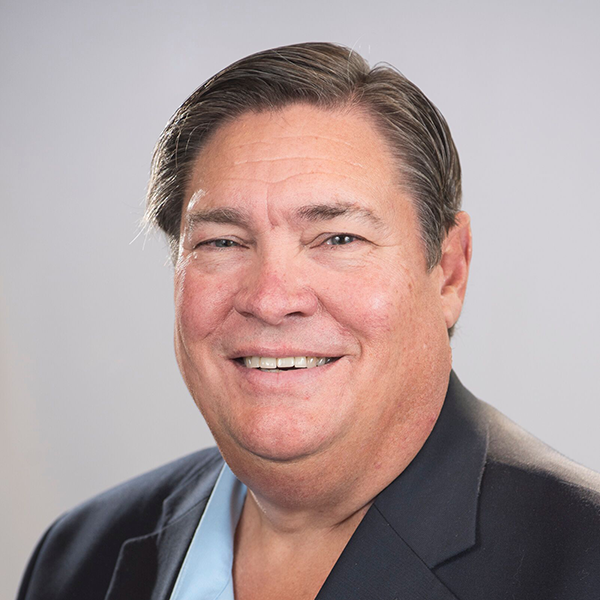
Our guest today, Mike Fears, spent almost 30 years learning, teaching, and researching at universities, colleges, and institutes. He's worked in Calgary, Ottawa, and Moscow. He considers himself a recovering academic, with more than 20 years of experience in occupational health and safety across multiple industries, including education, healthcare, heavy industry, oil and gas, and construction. Mike currently works with a large engineering firm, volunteers on a special committee for the Board of Canadian Registered Safety Professionals, and is a regular speaker at national and international conferences. He's been working with New View concepts since 2012. Mike joins us from Calgary, Alberta. Welcome.
[Mike] Thank you.
[Mary] Let's start at the beginning — how and why did what we call the New View of safety develop? What was the prevailing thinking in the safety industry at that time?
[Mike] There are a couple of different streams to the thinking. It basically came from a renewed focus on incident prevention, typically from what we call high reliability organizations, HROs — organizations where a safety failure would result in a critical or significant incident. Think airlines, oil and gas, offshore operations, that sort of thing. Part of the rationale was that something about the failures they were seeing in those systems was likely due to what they called a "Safety I" kind of view — our models weren't really fitting the new reality of workplace complexity.
There's another element to it, though, more from a human factors, psychological standpoint. Safety has this pendulum swing — we either focus heavily on systems, or heavily on the human side of work, and we swing between the two. A lot of the New View is very heavily focused on human factors, but still has that systems component. If you look at the current authors big on New View, people like Todd Conklin or Sidney Dekker, they're very psychologically, human-factors focused. Many others, like Weick, and certainly the high reliability authors, are very system-focused. It's an interesting dynamic — in some respects it's a really good synthesis of the two approaches rather than complete opposites, but because of that, there's also internal tension, because the engineering, high-reliability people have such a strong system focus that it almost seems, for lack of a better term, inhuman in some of what they propose, as opposed to the human factors side, which says systems are the problem, let my people go, let them do their thing. It's a weird situation, but it really comes from a sense that what we'd done in the past wasn't working — and I hear this a lot — why aren't our injury rates going down, why do we see these spikes from time to time? It opens the door to the idea that what we've done to date isn't working, or isn't working to improve things, so we need a new way of looking at it.
[Mary] You wrote an article in 2024, in the journal Injury Prevention, titled "The Promise and the Problems with the New View of Safety." In our chat, we'll go through the ideas you expressed there, but first I'm curious what prompted you to write it — what was your impetus for the article?
[Mike] It was a journey. I originally encountered New View concepts in a pretty odd way, and they'd been percolating in my head for a while. Then Energy Safety Canada ran a seminar on the New View of safety, and I thought it was a great opportunity to get more in-depth. I went in thinking, this is fantastic, this is new thinking — I'm an academic by background, so people pulled up big books, quoted journal articles, and I thought, great. Then I started buying all the books, which aren't cheap, and digging through them, and began to realize not all that glitters is gold. I'd think, okay, I've heard some of this before, and then read something and go, that doesn't quite make sense, because I know that's not how it works in real life. I began to realize, yes, it's great to have this new paradigm, this new way of looking at things, but there are also some issues.
What I was mainly concerned about was seeing a very different kind of approach within the safety world around the New View — on one hand, "Safety I is bad, Safety II is everything," and on the other, "it's nice in theory, but in practice..." There's real tension there, especially among friends still working in the industry, who've had real struggles living in a "Safety II" environment when, in reality, "Safety I" expectations were still in place. So I thought, let's look at it from a critical thinking perspective — what's working, what isn't, where does the logic go in the assertions, pick it apart, and see what works, what doesn't, and what people should be cautious about.
[Mary] Let's go through some of the main principles of New View. As we go, let me know if I'm missing anything, and feel free to correct me if I'm misstating your understanding. The first principle is the idea that error is normal. What does New View say about people and systems in terms of error?
[Mike] I'll be generalizing, of course. The general take is that errors happen all the time, and people get work done, often quite well, despite so-called errors. As a principle, "error is normal" sounds fantastic — I thought, yes, of course, we need to recognize that. As an investigator, that's been a struggle I've always had, especially dealing with management saying, "well, this guy didn't do this," and I'd say, but look at what he's working with. So having the idea that error and deviations from the norm are kind of the standard way things work makes sense. There's a famous diagram, work-as-imagined versus work-as-done, and we treat work-as-done as "error." The general New View argument is that work-as-imagined should more closely match how work is actually done, and there should be a connection between the two.
That's a good place to start, I think it's something we really need to understand — human beings aren't machines, they work in a particular context that can dramatically change what they do from day to day. Having said that, my biggest challenge with the concept, well, there are a few, but the main one is, what is error? You get multiple definitions in the New View literature — in one of Todd Conklin's books, within the space of about three pages, he gives three different definitions, essentially revolving around it being unplanned or unintended. But if I look at work-as-imagined versus work-as-done, sometimes that "work as done" is definitely planned and delivered — intended, even though they know they're violating a rule or procedure, taking shortcuts, pencil-whipping documents, saying they did something when they didn't. Those are also errors, but by Conklin's definition, they're not. So how do you treat them?
And what makes something an error — is it because there was a negative consequence, so therefore it's an error, versus no negative consequence, so we're fine? I think that's one of the issues. In my own experience, I've seen major incidents occur after years of an organization going without that particular kind of incident — ten, eleven years without it happening again, and they think everything's fine. But during that time, work-as-imagined and work-as-done were two totally different things. Due to contextual factors, which we'll get to, everything seemed fine because there wasn't another big incident — then there is one, and everyone starts pointing fingers. But the error was very contextual, very much set up, and these errors were happening all the time — deliberate violations of written policies and procedures, because that's how things had to get done. In one case I can think of, a few people's lives were irreversibly changed — nobody was killed, thank God — but the error was taking place, and management knew it was taking place, but accepted it because that's how work got done. That ties into another principle, context, which we'll get to. But it's a huge problem.
I actually had lunch recently with a retired engineer, and when I mentioned the principles, error and the next one about blame, he laughed and told me he'd had to let go two engineers from a large oil and gas operation, because they were deliberately engaging in error-prone activity, not reporting it, and so on — and they tried to shield themselves with "error is normal," "okay, yeah, we made a mistake, you can't blame us, that goes against your own principles." These were engineers, not exactly naive about it. It creates an interesting dynamic.
[Mary] It sounds like both intention and consequence are aspects that need to be considered if you're trying to define error — and we treat error very differently in practice, depending on the consequence.
[Mike] Yeah, and it's funny, because if companies require a fifteen-page investigation report every time someone gets a paper cut, which I've lived through, that creates problems — people don't want to report paper cuts. But at the same time, you fall into a different mode of mentality. How companies treat error, I think, is really important, and it's embedded in the different principles. One challenge I find with the error idea is the assumption that the workers doing the jobs are the experts, that they know better than a procedure or policy — there are some issues with that, which gets into the next principle.
[Mary] Just for the audience, the next principle is that workers should decide how work gets done.
[Mike] Right, and it fits under "blame fixes nothing" too — if you have an error, blaming people doesn't help. My very first encounter with New View was a vice president coming to me with a report from a large consulting agency in Australia, saying, "I just read this, it's fantastic, you should read it, we're going to get rid of all our safe work practices." I looked at him and said, "well, when's the party? Because we're going to shut down — none of our clients will let us on site, ISNetworld and ComplyWorks are going to say sayonara." He was confused, and I explained, we're legally obligated to have these things. He was a little surprised. I looked briefly at the document — didn't read it cover to cover, but the idea that, just let my people go, let the workers be the experts, sounds great on the face of it, but we have legal obligations, obligations to clients, and frankly, even in really good, tight organizations, the larger they are, the more likely you have a high-performing supervisor bucking the trend and doing things their own way.
It sounds great, and that's what got me into New View in the first place, but then I thought, wait a second, I've got an incident I need to deal with and a regulator's asking for my confined space procedure, or working-at-heights procedure, training certificates, field-level risk assessments — I can't just get rid of that paperwork, it's the context I'm in. Would I love to reduce some of it? Definitely. My favorite confined space program was essentially just a confined space permit, which contained everything you needed for planning, instead of a fifteen- or twenty-page document repeating what's already on the form. I do get that workers know their stuff, but work habits creep in, new technology and things change. Another thing New View authors talk about is how much more complex workplaces are now — and ironically, one suggestion to manage that complexity is more systems, more supervision, which runs counter to the idea of less paperwork, let the workers just do their job. It's a weird conflict.
[Mary] I have a question, maybe I've misunderstood — the next principle I had noted was that complex systems are problematic, therefore reduce paperwork, focus on relationships, and free workers by simplifying systems. Did I misunderstand, or is that one of the arguments they make?
[Mike] That is one of the arguments. It's the odd thing — when they dig down into how complex systems are, they say we need to reduce the complexity. A good example is field-level risk assessments. Taking a course from a professor in Australia, he told me, look at the clutter, reduce complexity, get rid of your field-level risk assessment. I said, I can't, I have to have it, and explained how legislation works in Canada — he didn't realize we have legislative requirements per province rather than one national program, didn't know what ISNetworld or ComplyWorks were, didn't understand review and verification systems. He lived in a world completely unknown to what we do, and vice versa. So one argument is, systems are too complex — a thirty-page confined space program document, who's going to read that?
That's reality, I get it. But on the flip side, it really is complex, so we need better oversight — there's this internal contradiction that I find really unresolved in New View discussions. It tends to focus on one element — "the guys had a problem with working at heights, but the working-at-heights checklist is four pages long, complicated, they're pencil-whipping it and missing things, so reduce it" — okay, great, but I still need to check this box with a client, a regulator, ISNetworld. That puts limits on how far I can actually go in reducing things.
[Mary] It sounds like a question of context, regulatory context, and maybe nuance too. The person who said "let's throw away the procedures" — do you think he was taking it too far, not allowing for any nuance?
[Mike] Yes, and I think it originates from Sidney Dekker's "Safety Anarchy" — and if you've ever read Dekker, he's very dense academic reading, so a lot of people don't really read him closely or understand exactly what he's saying. In Safety Anarchy, I think he was frustrated with the slow pace of changing safety thinking, and proposed, essentially, cut, cut, cut. I think people take it a bit too far — like that white paper my VP was waving in my face — and I hear that all the time. That's one of the challenges — when you look at all the different maxims in New View, they're very simplistic, and in some cases very absolute, like "blame fixes nothing." Okay, sometimes it does.
[Mary] We'll come back to that one.
[Mike] Yeah, so it's a lack of nuance, and I think there's value in really sitting back and thinking about the entire context. Yes, the paperwork is a problem, I get it — safety's become way too bureaucratic, in my opinion, and I'm a systems guy, that's what I do, and I see it. It's painful sometimes to produce documents I know won't necessarily be read or understood. Having said that, there are ways around it, and that's where we need to think about nuance and alternatives. The alternative to a thirty-page confined space document, what I call it, is putting a summary page on top — within my group we call them cheat sheets — a one-pager that tells whoever's doing confined space work the basics they need to know, key takeaways at the top, what needs to happen, sectional training, PPE, other documents — so if they've already gone through the full document and training before, that one-pager is a quick scan: "okay, I remember this, I need to know that, flip to the section that tells me what I need." We find that works really well for getting people to actually engage with the documents — they know they're not expected to read a thirty-page document where maybe thirty percent applies to what they're doing that day. It doesn't work for everything, but we see a significant uptick in compliance whenever we use it.
[Mary] Zooming out again from the specific principles — do you think New View concepts, which have been around a while now, are gently, or maybe not so subtly, making their way into more orthodox safety practice?
[Mike] Tell me what you mean by "elements" there — okay. One of the principles in New View is that leadership response matters, and we see a lot of adoption of New View principles at the leadership, senior management level — "yes, this is great" — and then when the rubber hits the road, it's a totally different story, it's "Safety I" — "what do you mean the guy didn't fill out his FLRA, suspend him, fire him." I see that a lot. The entire safety conference held by Energy Safety Canada revolves around New View concepts, and has for years, so it's become part of orthodoxy, as far as safety thinking has ever really had an orthodoxy — I don't think safety thinking, per se, really had one before. This New View literature is kind of the first real attempt at theoretical, practical testing we've actually had. Before this, it was a combination of systems thinking and human factors thinking — Dan Petersen is probably the best example, with two books from the seventies, one about safety systems, the other about the human side of safety, recognizing those as the two elements, but there wasn't the kind of "safety science" we see attempted today, trying to test what works and what doesn't.
So it has become part of orthodoxy in that sense. When it comes to boots on the ground, dealing with a construction crew on a high-rise or a transportation company, I don't think it's become orthodoxy in practice, for sure.
[Mary] So there's a tension between theory and practice, as in many fields.
[Mike] Yes, exactly.
[Mary] We'll discuss more New View ideas in a moment, but first, here's a message from the company behind the podcast.
In warehouse, distribution, and retail environments, cutting tools have to do more than just be safe — they have to last. When teams are breaking down double corrugate and thick packaging all day long, flimsy cutters slow work, strain hands, and wear out fast. Traditional knives may get the job done, but they also increase the risk of injuries and damaged goods. That's where the Klever EcoXL XD stands out. This concealed safety cutter — the blade is recessed inside — is built for the toughest cutting tasks. Its thick-set XD blade head is engineered to be fifty percent stronger and last four times longer than similar cutters, cutting up to a mile of corrugate before replacement. Klever's proprietary SmoothCut technology prevents corrugate from clogging the blade, delivering faster, smoother cuts. The longer, ergonomic handle provides increased reach and multiple grip options, making vertical and curved cuts through double corrugate easier and more comfortable. A concealed, high-quality carbon steel blade helps reduce cut injuries and protect product, while an integrated metal tape splitter on the end preserves blade life. And there's an ESG win too — the handle is made from 100% recycled plastic. The EcoXL XD is rigorously tested and proudly made in the USA. Klever makes cutting safer, stronger, and smarter where it matters most. Klever is owned by Safety Products Global, which has the largest range of safety knives on the market. Want to learn more about which tools will work for your materials? To request free samples, go to safetylabspodcast.com/samples.
And now, back to our discussion. It's interesting that you mention this tension between theory and practice — it sounds like there's a parallel tension between leadership and the boots on the ground. I saw a presentation in Vancouver a couple of years ago where someone talked about safety culture, and said he liked doing safety culture work because it's easy — it doesn't really exist, it's all organizational culture — but he'd still take people's money to do it. He talked about finding exactly what the issues were in a particular culture, and it turned out to be a middle management issue — as soon as senior management heard that, it was, "okay, thanks," and nothing changed, because senior management relies on those middle managers to get the work done, generate income, and they weren't going to change something that would impact that.
[Mike] Right, senior management can be all behind something, but there can be quite a gap between the CEO and the guy driving the truck — and if the supervisor who authorizes his vacation time and schedules his shifts is telling him to do X, Y, or Z, that's what he's going to do. I think that's where a lot of that disconnect comes from.
[Mary] Here's another principle — safety is a capacity, not an outcome. This is about organizational resilience and managing error or deviance from the norm, however you define it. How does this view make sense, and how doesn't it?
[Mike] It makes sense especially coming from the high reliability organization side, very system-focused — this is where it sometimes sounds inhuman. The idea of safety as capacity looks at safety not just from an injury or illness standpoint, but also from production, loss of product or equipment — defining safety as the capacity to rebound from error or incidents, how quickly an organization can get back to normal functioning after an incident. That's great, that's business continuity, a key thing organizations need to be concerned about — but humans don't have that same kind of resilient capacity if they start losing body parts, or worse.
To me it grates a bit, because having dealt with people who've suffered amputations in the workplace, the fact that the plant got up and running with only six hours of lost time, but somebody lost their fingers — I'm sorry, but from a safety professional standpoint, I find that a weird way to categorize safety.
[Mary] That's not much comfort to the family — "well, my husband lost his legs, but at least the organization is back up and running quickly."
[Mike] Exactly, and it's funny, because I was very deep in the HRO literature back in the 2010s, and I appreciated that the work I was doing at the time fit that framework well, very systems-heavy, a lot of process safety management. But I always said that's the systems side, not the human interface side, which I think is really critical. The last time somebody suggested we use "safety is capacity" at our company, I said, okay, go tell the workers that as long as we're back up and running quickly, it's all good.
[Mary] It seems like resilience is important, no question, but I think what you're questioning, or joking about, is whether that alone defines safety.
[Mike] And I don't think it can — in fact, it runs counter to why most people are even in the safety world.
[Mary] True. You sent me a presentation, and one line in it I'd like you to explain: "error may be normal, but not all error is 'normal,'" in quotation marks.
[Mike] I'll give you an example. An organization I worked with had a remote, twenty-four-hour facility, high hazard, two people on shift at night. Because it was high hazard, among other reasons, they weren't allowed laptops, tablets, or phones — management wanted them monitoring the systems. A young man on that job was bored out of his mind, sitting in front of a control panel, noticed a small gap in the panel with a blinking LED light visible inside, took out his pocket knife, and stuck it into the gap for whatever reason — shorted out the panel, and a bunch of problems resulted.
Is that normal behavior? You can explain it many ways — he was bored, it's a remote area of Canada, the available labor pool isn't great, so you don't always get the exact fit you want for the job, he was disengaged, and frankly, we knew people would get bored and made no effort to keep them engaged.
[Mary] So if you knew they'd get bored, does that mean it could have been anticipated?
[Mike] On paper, yes — though I'd never have specifically thought someone would take a pocket knife and stick it into a panel.
[Mary] You wouldn't necessarily think, "that's specifically what we need to guard against."
[Mike] Right. This is where it gets tricky — I've worked with people who've deliberately done things to endanger themselves and others, thinking "I'm willing to take that risk," and I've heard that even from safety professionals, which shocks me, but it happens. I worked for one outfit where I was told a particular manager was a great safety champion. When I got there, it was the exact opposite — I couldn't understand it, asked my boss, who explained the manager had had a near-miss, almost been killed in an accident, and people assumed that made him safety-conscious. Turns out some people who've been in that situation become almost convinced they're bulletproof — "I survived, so whatever." I used to tell my students that the safety world is sometimes the "anti-Darwin" — we have so many systems in place that dumb behavior doesn't always result in negative consequences. Then you've got other people who've become highly safety-sensitive, whose risk tolerance has changed dramatically the other direction.
So I see bad behavior, risk-taking, all sorts of things, and in New View terms, these are all just "errors," but some errors just aren't "normal." We do have mental illness in the workplace, which occasionally results in safety incidents — I've worked with people who were fine, and then three weeks later were addicted to meth or something, and bizarre behaviors started. So I find the idea that all error is normal just doesn't quite fly, in my thinking.
[Mary] Humans are maybe a little too complex — risk-taking can be a trauma response, but it's only one of many potential trauma responses.
[Mike] Exactly, yeah.
[Mary] On that note, let's get into blame, since it's a big topic. The idea is "blame fixes nothing," and you say this can overstate the prevalence of the blame game in current practice. How big a problem is blame, to start?
[Mike] I think it's still a huge problem — I don't want to discount that — but I do think it overstates it a bit. I've worked in organizations always looking for a scapegoat, and I've worked in organizations where nothing matters, nobody ever gets in trouble for anything — both are jarring, in different ways. In the first kind, you get people caught in the grind who aren't actually responsible, typically frontline workers, not the supervisors who are often actually behind the issue. I've seen several examples. The blame game, especially when it lands lower in the hierarchy, lets senior management feel they're doing the right thing. I use a little meme in presentations sometimes — "to err is human, to shift blame shows leadership potential" — and unfortunately that's what I see a lot of, so there's a real problem there.
Having said that, I do think the New View literature overstates the blame side — their statements can be quite extreme, like "you can't use root cause analysis because it's all blame," or "workers always get blamed," which isn't necessarily true. The nuance is a bit missing. And blame is a natural human reaction to begin with — the point of an investigation, dealing with an incident properly, is to short-circuit that instinct long enough for, as Daniel Kahneman would put it, "System 2," the rational, considered part of the brain, to kick in, rather than "something bad happened, he was involved, he must be punished," which is an instinctual human thing. So I think it overstates the problem a bit, and I think in some cases blame is appropriate — there are cases where people literally won't follow rules, or do dangerous things to themselves or others, and that needs to be addressed. I'd rather see accountability fall more on supervisors and managers than workers, but the idea that it "fixes nothing" — I think it fixes some things. Homer Simpsons exist, as I tell my students — he's a cartoon character, but those people exist in workplaces, just hang around long enough and you'll see them.
[Mary] I've also heard the related saying — in an investigation, you can either blame or learn, but you can't do both. Do you think that's true?
[Mike] No, you can do both. I've seen several instances where blame, or really, accountability, is properly assigned — I wouldn't use the word "blame," I think that's a negative framing, accountability is the key, not blame. When you try to hold somebody accountable in the New View universe, the framing is often "well, you're blaming him" — no, he or she had a job to do X, and didn't do X. There's nuance, though — pencil-whipping an FLRA is very different from telling staff to work at heights without fall protection. One is maybe a finger-wag, the other needs real accountability. I think the missing element is that the New View reaction is often, "they're just blaming everybody, we should be learning, use learning teams" — but in reality, a number of incidents happen because people deliberately do the wrong thing, sometimes knowing it's wrong.
[Mary] You suggest a refinement — quoting you — "blame is not a corrective action." That seems like an important nuance.
[Mike] Right, there used to be an old saying in "Safety I": you can't blame the worker until you train the worker. So, "well, I trained him, he still screwed up, so I'm going to fire him" — which is crazy. I remember in my TapRooT training, an instructor said something that stuck with me — training is not a corrective action. If your corrective action for an incident is just "the person wasn't trained," you've found the wrong corrective action, because the real question is, how did that person end up doing a job they should have been trained for in the first place? That's a management system failure. Same thing with blame — it's not a corrective action, it shouldn't be — accountability is what you want. I've heard, "we fired the guy, it's all good," but how did the Homer Simpson end up running your oil and gas plant in the first place? That's where you actually learn. Maybe you do hold someone accountable, maybe you terminate or discipline somebody, but then, how do we make sure this doesn't happen again — which is the whole point of the investigation. I think we've watched too much CSI or Law & Order, and think investigations are about finding the bad guy, and it's not like that at all.
[Mary] Those cultural influences probably have more impact than we often realize.
[Mike] Far more than we realize.
[Mary] On that note, the next principle is "context drives behavior" — not about watching CSI, though there is some cultural context there. What does New View get right and wrong about this idea?
[Mike] If there's anything anybody should really pay attention to in the New View of safety, it's this concept. Context absolutely drives behavior — it's one of those assumptions that underlies both the systems and human factors thinking, especially human factors, but it keeps falling off our radar. As an investigator, I see this all the time, sitting in an after-action review or incident review, saying, "yes, Bob or Jill did this, but here's what was going on, here are the various things happening," and sometimes I get glazed-over looks from VPs who thought it was simple. Very often it's not. The context in which work happens, incidents happen, how communications are received and understood, is absolutely critical, and we need to spend more time on it. I think New View is right on the money there — in fact, one of my next presentations is specifically about context in investigations, how to pull that context out.
That said, I think New View stumbles a bit, because in the literature, even a paper I read recently that opened with context, talking about how context affects the workplace through leadership styles, all the context discussed is the shop floor or worksite — the interaction between people within that little bubble. That's where it falls apart. I investigated a minor near-miss during COVID — there was a union-management conflict, a vaccine mandate threatening termination, people who'd lost relatives, it was a nightmare, plus a long chain of events where the actual incident's roots went back months before that day. Add in everything from COVID, and everybody's heads were in completely different places, totally changing the context.
When we produced our final report, the bosses were confused, because I said, you don't have a proper change management program, that was at the core of it — and they said, "but this guy didn't do his thing." Right, because this whole thing unraveled over months, plus all the COVID chaos, and you don't have a system in place to act as even a speed bump or check on that. If I'd looked only at some of the New View literature and some of the academics they cite, they'd say, "talk to me about the relationship between the union and management," or "the supervisor and the manager" — important context, sure, but not all the context. The more I thought about it, the more I realized they've got part of it, but not quite all of it. I've seen companies change how they do business because of a rising competitor, start taking shortcuts because profitability isn't there for shareholders, or, on the flip side, tighten up dramatically after a big incident elsewhere shocks the industry. A lot of that sits outside the organization itself, let alone the worksite — market pressures, management incentives, all driving behavior, not just the supervisor-employee relationship.
[Mary] The next one I'm a bit puzzled by, maybe you can help — "learning and improving are vital." My first, uncharitable response was, "well, duh." Has anyone ever not believed that, or has it just not been at the forefront enough that it needed to be said?
[Mike] You're right that it needs more forefront attention, in the sense that New View frames it this way because they don't believe "Safety I" was actually learning. It comes from the observation that incident rates aren't going down, we see the same spikes, the same incidents over and over, organizations clearly aren't learning, seeing the same corrective actions repeated. So yes, when I read it, "duh, of course, everybody knows this" — but it's phrased as a high-level maxim that, when you dig into the underlying literature, really argues that how we've done investigations hasn't worked, so we should drop root cause analysis and adopt a new structure — learning teams, essentially an old roundtable problem-solving approach, rebranded for safety.
Two huge issues with learning teams, though. First, root cause analysis is written into legislation in most jurisdictions — you have to do it. I haven't had a major incident, or even medium-risk incident, with a client where they haven't asked for root cause analysis — it's part of workers' comp board requirements, our core audits, our compliance system, baked into the cake, and that's not changing. Second, learning teams as an alternative don't meet what I consider the requirements of a proper investigation — they're about gathering people in a room to brainstorm or share what people on the ground think should or shouldn't be done, the problems they have. There's a learning teams video on the Energy Safety Canada website — I was curious to see one applied from a safety standpoint, hadn't seen one directly yet — it's a great video, but it doesn't actually address any safety issues, it's all operational.
[Mary] So it's not necessarily either-or — learning teams have their own purpose, and investigations are separate.
[Mike] Right, and the challenge with learning teams is they're much more resource-intensive — you're bringing in a lot of people, and if done properly, it takes a lot of time, and it's largely unstructured. You're not sure what outputs you'll get, whereas with an investigation, I need structure, I need to know what my outputs will be. Learning teams can work as an add-on, at more of a field or workshop level, like an after-action review — "we had this incident, what do you think, what can we improve" — that's a good use. The only person I've heard of who actually implemented it within part of an organization could only do it after getting full buy-in from his immediate managers, and was never able to export it to the broader organization — it just died on the vine, because of the resource intensity and time.
[Mary] I'd add that people, and here I mean management, but people in general, have trouble trusting things without structure.
[Mike] They do — "what is it? It's just a discussion. What's going to come out of it? I don't know." That's just not how we're taught to think. "How has it worked elsewhere before? How do you know this'll work here?" I get that all the time.
[Mary] That brings us to the last one we have time for — management response matters. The original maxim says "leadership response matters."
[Mike] Right, and we discussed this earlier — leadership can hold one view, but management, middle management, are the people who actually make things happen, turn the wheels — that's really key. I think New View, when it focuses on "leadership," gets it a bit wrong, depending on your definition, but if you look at management specifically, it makes much more sense. Whenever I start a new job, I'm always told, "go get to know the guys in the field" — fine, that doesn't take long, because I get it, I worked construction and other jobs full-time while in school, I've got the broken bones and injuries to prove it. I rarely have an issue with people in the field around what they need to do for safety, other than hating the paperwork, which is universal. My problems are almost always centered on direct supervision, the next level of management — "I don't want to send the guy for training, I need him in the field" — and then we find out someone's working at heights without proper training or gear, because "I don't have time," "it's cost," it's that context thing again, how work actually gets managed.
[Mary] I think that's really critical — nobody goes to work wanting to lose their thumb that day.
[Mike] Nobody thinks that, exactly, "duh, of course" — but if we allow people to take shortcuts that run a much higher risk of that happening, and especially if a worker thinks, "I have to do X, Y, Z, or my supervisor will be angry," that's the problem.
[Mary] What I've been thinking is there's an inherent tension in any organization, particularly a business — they need to make money to exist, and need to do so safely. If you were one hundred percent safe, there'd be zero production. If you were one hundred percent production, there'd be zero safety. So maybe senior management is where that tension actually lives, juggling those two things.
[Mike] That's the reality. Mike Rowe says "safety third," behind profits and production, and it's hard to argue with that.
[Mary] We're running down on time, but a couple more questions. How has your perspective on safety changed over the course of your career — quick yes-or-no, has it changed?
[Mike] Yes — quite a bit. I'm a generalist for the most part, I've had my fingers in a lot of things, except hygiene, thank God I always had a hygienist for that. I'm constantly learning — if it's not technology, I get thrust into a role learning about things I never thought were on my plate. Right now I'm heavily into AI, and how to simplify safety bureaucracy with it — if you'd told me six months ago I'd be doing that, I'd have laughed. It's an ever-changing, evolving field, which is why I think the New View literature is a plus in that respect — it gets people thinking and talking. I'd like them to think a bit more, but that's the academic in me.
[Mary] What's one piece of advice or action you'd recommend to listeners to improve their safety practice?
[Mike] The one thing we always hear is that safety is about people, relationships, and so on. I know a lot of people I've worked with who are very good with that, but usually, not always, fairly weak on the technical side of safety. I think the focus on the people component has come at the cost of the technical side. There's that old phrase, "they don't care what you know until they know that you care" — true, until somebody gets severely injured, and then it becomes a real problem if you're not technically, legally, operationally solid, because you're really there as the expert, the person who gets everyone from A to B with all their fingers and toes intact. I had a couple of people come to me, fairly new in the field, asking what they could do to advance — I said, the first and really the only thing I'd say is, be competent. They were shocked. I think that's something we're seeing now, especially with junior people — often very good interpersonal skills, willing to learn, but if I ask somebody to go through the legislation in Ontario and find me what I need to know for health and safety committees, they'll just Google it or ask AI. I'm seeing a lot more of that, and I think raw technical competence is something people need to get back to.
[Mary] How can our listeners learn more about any of the topics in our discussion today — conferences, books, websites you'd recommend?
[Mike] I've got my personal website, recoveringacademic.ca, and you can find me on LinkedIn, Mike Fears, probably search under Calgary. I've got a couple of blog posts on LinkedIn and on my website, with links to other books and publications people can access. I definitely think people should be reading Conklin, Dekker, and others like that to understand what's going on, even if I disagree with them — it's important to know it, to have the discussion.
[Mary] Well, that's our show for today. Thank you, Mike, for joining me.
[Mike] Thank you for having me.
[Mary] And thanks to our listeners — please support us by rating, reviewing, subscribing, or sharing the show, and of course, thanks to the whole Safety Labs team behind the scenes. Bye for now. This podcast is created by Safety Products Global, the world's leading manufacturer of safety knives. Through our trusted brands, Klever, Slice, and PHC, we empower companies to prevent injuries by providing safer cutting tools for every material and application. Until next time, stay safe.

.jpeg)