[Mary] Hi there. Welcome to Safety Labs. Have you ever heard of Niklas Luhmann? Nor had I, until recently. He's not well known outside Germany, and today's guest believes that's a shame, because Luhmann's pioneering work in sociology has insightful contributions to make in many different disciplines, including workplace safety. We'll be discussing our guest's book, which applies Luhmann's ideas to the complex realm of occupational safety.
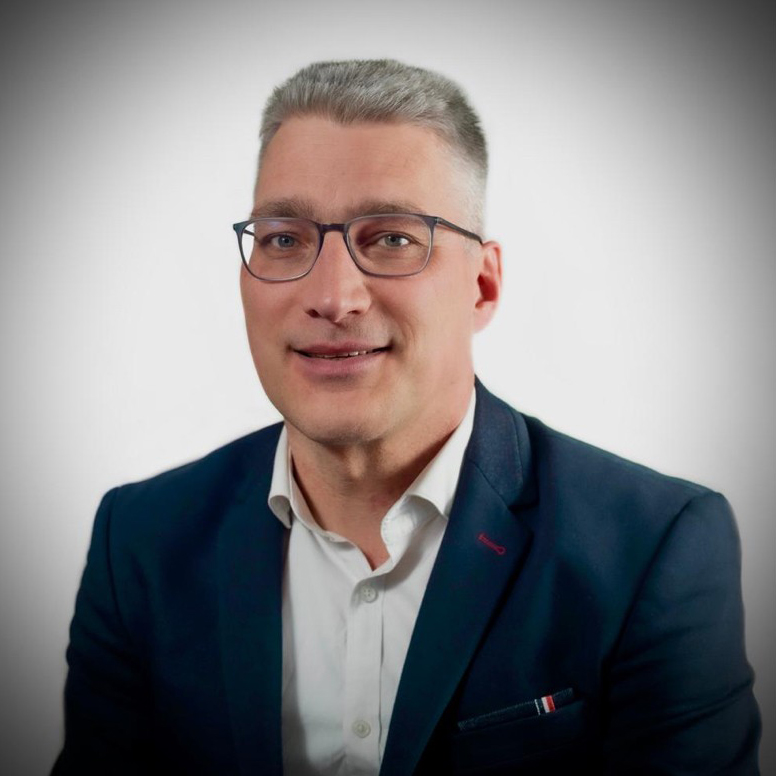
Today's guest, Martijn Flinterman, is a sociologist specializing in how organizations deal with safety and the sociology of risk. His advisory work is primarily for the management of Rijkswaterstaat Major Projects and Maintenance, a public agency responsible for the design, construction, management, and maintenance of the Netherlands' primary infrastructure facilities. Martijn contributes to safety literature as an author, reviewer, and active sociological researcher. A lifelong learner, innovative thinker, and dedicated professional with a unique perspective, Martijn contributes fresh viewpoints to teams, challenging norms and driving impactful decisions. He's the author of the book we'll discuss today, "Managing Safety in Complexity: Making Working Safely Possible Between Systems That Speak Different Codes." He joins us from the Netherlands. Welcome.
[Martijn] Thank you. Thanks for having me.
[Mary] This is a dense book, and I have so many questions — I'm just going to dive right in. Who was Niklas Luhmann?
[Martijn] Excellent question. I'm excited to talk about Niklas Luhmann, because he's a very large figure in German sociology, and I felt it was a shame that he wasn't better known across the world. First of all, sociology — what is it about? It's about why do we do this, why do we actually do what we do. It's not about me personally, it's about us. That's a question Niklas Luhmann was looking at his whole life. He wanted to produce a theory of whole society, and it took him thirty years — he was happy with it when he finished in 1998.
He was a very gifted individual — at the age of nine, he already went to the gymnasium, which is what they call it in Germany, but it's actually the highest level of high school, an academic-stream high school. He was nine years old when he went there, extremely bright. Because he started so young, by the age of fifteen he was already drafted into the army, because he lived through the Second World War, and every boy in his exam year had to go to the war, including Niklas. He really hated the Nazi regime, I should say — it was full of pathos, marching, salutes, all the things he hated having to do. Why do I tell this? Because it's important to understand — we can look at Germany in a black-and-white way, but this was an extremely sensitive person who was extremely reluctant to participate in the war, but had to. What's worse, he lost a good friend, a school friend — the boy he sat next to in school — who died when they were in battle together. From that point on, he said he could only think in contingencies. What did he mean? Things can always be different. We can think of accidents too — accidents are normal, for Luhmann. It's normal that accidents happen once in a while, and we shouldn't be too quick to attribute responsibility for them. That's something I'll talk about later.
A little more on Luhmann: after the Second World War, he went to study law, and then into the civil service, where he had to deal with all these files, categories, and procedures. He saw that these files, categories, and procedures actually create reality for people in organizations — the stuff they work with, the categories and procedures they use, determine how they see safety as well. At that time he wasn't dealing with safety yet, but in 1991 he wrote a book about risk and safety. It's important to know what kind of person Niklas Luhmann was — he was an observer of meaning, not a moral preacher at all. He stayed away from morality as far as he could. He observed how people give meaning to what they do — that's the thread in my book, that we have to look at how people make sense of their work in safety management.
What he did was describe society from difference. He wasn't satisfied at all with looking just at unity, because he said, in a world where things go wrong, if we just look at people having to be uniform, doing the same things, that won't be possible — we have to look at difference, at what makes people unique and what makes society function the way it does. He had a lifelong suspicion of grand unities and moral discourse. He said society is communication, it's all about communication — you can shout from the sidelines, but the message has to fit the code that people speak. People are part of so many different systems — they can be part of the legal system, of politics, of organizations — and we have to be extremely careful about how we translate messages into the codes that people and systems speak.
One interesting fact about Luhmann is the way he worked. At his house he had filing cabinets with ninety thousand pieces of paper in them, which he produced himself — that was his way of writing books. He said the book-writing was done by the filing cabinet, he didn't do anything — which was nonsense, of course, he did write the books — but everything he thought, everything he read, went onto a slip of paper and into a filing cabinet, coded so he could combine them into a new book.
[Mary] Is this the Zettelkasten method?
[Martijn] Zettelkasten, yes — I didn't realize he was the one who invented that.
[Mary] I know a little bit about it.
[Martijn] Good for you that you know of it, because it's very interesting how he worked. The Zettelkasten has now been digitized by the University of Bielefeld, so you can look online and see all the slips of paper he produced. He used them to write five hundred publications. So that's, in short, who he was.
[Mary] So many questions there. All right — you're talking about differences, so let's go into paradox. What's the role of paradox in understanding his work and applying it to health and safety?
[Martijn] In safety management, we have a lot of contradictions, and we don't eliminate them, we have to work with them. For example, more control — if we use more control on people, it can create new risks. We can get these super systems, surveillance systems for people, so we can see how they work and whether they're working safely or not — but these systems tend to produce byproducts, and people don't feel valued at all if they feel they've been spied on all the time. That's one of the contradictions in our work — we try to do something, we work with people, but almost everything we do has unintended consequences.
That's something sociology looks at a lot — not just Luhmann, but other people too, like Robert Merton, who also looked at the unintended consequences of measures. Technological systems often generate unforeseen vulnerabilities. Now we have AI, and we already know AI produces a lot of vulnerabilities and unintended consequences. My friend Carsten Busch shared a document, and in it there was a reference to a paper I'd never heard of — it turned out to be made up by AI. We see this all the time, and it means there's more work to be done for people to correct AI, which is of course also used in ways that aren't productive at all. So it's interesting to look at these kinds of vulnerabilities. When we increase control through automation, protection, or precision, we create new failure modes or dependencies that are harder to see or manage — we should really be aware of that. When we look at procedures, they bring legitimacy, but they also suppress reflection. Systems need these tensions — between trust and distrust, order and flexibility — in order to function. The paradoxes are inherent, not something to be avoided, but something to be aware of.
What's important — if you look at another person, William Edwards Deming, he's known for "plan, do, check, act," but that's not what he wrote. He wrote "plan, do, study, act" — afterward, people corrupted his method, as Deming himself said. It's about studying those paradoxes, really looking at what happens in your system, instead of saying, "okay, checked, it works the way I think it should, we can move on."
[Mary] That brings me right into the idea of the paradox of learning from exceptions. You're saying if the system is working well, and we just move on, we're not learning — but if we look at exceptions, there's some value there.
[Martijn] Yeah, yeah. When you read Luhmann, he wrote that bad cases make bad laws — there's a paradox in learning from exceptions. Disasters always trigger tighter controls, longer approval chains, heavier documentation. It feels like the system is learning, but the resulting rigidity can create new risks — systems become less adaptable. That's always a pity, and we have to really look at where the system's observation fails. Exceptions reveal where the system's observation fails. Luhmann didn't ask what failed or who failed — he asked, what had to be true for this to seem normal until it wasn't?
[Mary] Can you give an example of something that would illustrate that?
[Martijn] A quick example — the way we work on highways, road work during traffic. It could be that, because of an incident, suddenly people say, why did we let this happen all this time, why did people think this was normal? If we go back further in time, it was normal not to wear seatbelts, normal not to wear safety harnesses to climb up a scaffold. We get these improvements over time. Luhmann always asked, what had to be true for this to seem normal until it wasn't?
[Mary] In the book, you describe two points of view — accident theory and the improbable normal theory. Can you explain what those mean?
[Martijn] Accident theory is the one that assumes systems are normally safe, and accidents are deviations. We have a perfectly fine system, it's working the way it should, and an accident happens — that's a deviation from normal practice, probably someone messed up, so to speak. That's accident theory. The improbable normal theory, which Luhmann subscribed to, says that safe functioning is improbable and must be explained. Luhmann would ask, how is safety even possible amid uncertainty? What has to already be in place to make this work in this factory? It works fine — how come? He was really interested in finding out how people work together, what happened in that factory for it to work that way. It's a move from analyzing failure to understanding success — which is also what we see later in Hollnagel's Safety-II. You want to look at successes more than just failures.
[Mary] That's a basic tenet of newer thinking, though I guess it's not necessarily new. What do you mean when you talk about engaging with complexity in HSE?
[Martijn] Safety emerges from changing, interconnected systems, and we have to adapt, negotiate, and communicate. Systems like law, economy, and operations often talk past each other, and we have to make sure they speak with each other, sometimes translating our message into the code they understand. In the book I have an example of a government agency that always says safety is not something we compete with, it must be present all the time. That's a moral stance, but it can be problematic, because safety also costs money — working more safely than doing nothing, or doing some minimal measures, costs money. For private companies especially, it's important to ask, how much does it cost to work safely on this project, and we have to account for that. That's what I mean by these constantly changing, interconnected systems — nothing stays the same, everything's in flux, and we have to talk with each other. What are the new rules and regulations? What's the current market situation? We really have to talk about this, so we can adapt. We have these long-term contracts, for instance, where we have to work together with companies to involve them in safe work, and make sure they can do what they promised many years ago. That's one example.
[Mary] So rather than saying, this is so complicated, there's a regulatory system, a legal system, social norms — rather than shying away from that, you're engaging with it, admitting this is just the way it is. I suppose that leads to a constant reevaluation, which sounds exhausting. What's the practical way to engage with that?
[Martijn] We have to keep the channels open between companies, clients, and regulators — maybe not every week, but we have to really talk with these people, talk together to see how to move forward. One of Luhmann's students always talks about having ethical committees, working groups, all these kinds of venues to talk and experiment with certain problems and new risk management methods, to really do this together. In the Netherlands we also have a governance code between clients and contractors, where they try to improve their methods together, every time talking about the new risks that are seen and how we can address them together.
[Mary] It sounds like setting up the structures to allow that communication to happen.
[Martijn] Yeah, it's mostly that the communication channels are open, that you have a structure you can refer back to — this is what we intended, this is how we started, and now we're at point X, how did we move on, how did we adapt and negotiate how to move forward?
[Mary] I want to go back a little — you mentioned categories briefly, and we're talking about meaning, how people make meaning. What's the inherent danger of categories? In the book you give the example of the category "safe" versus "not safe."
[Martijn] Every distinction brings blindness. We all do this — as people, but also organizations, every social system draws distinctions between us and them, between this system and its environment. We also do this when we work on a topic like safety — when we declare something safe, we stop looking, we simply assume it is safe. I've actually seen this happen — a long time ago at work we had this quiz where people could say whether something was safe or unsafe, and I was a bit troubled by it, because you could discuss a lot about whether the pictures you saw were actually safe or unsafe.
We label something a minor incident — what do we categorize as a minor incident? In the book I have an example of a tripping hazard, people tripping over a cable. At one time it was logged as a minor incident, nobody hurt, and people in the head office shrugged it off — "minor incident, who cares, we can move on." Two weeks later, the next incident was put into the system, with a bigger toll — somebody broke an arm or something — and that triggered an investigation of the cable, which was then properly secured so nobody could trip over it anymore. But how did we come to define it that way in the first place, how did we come to see it as nothing to be stressed about? That's something Luhmann would urge us to look at — really examine the categories you use, especially when you decide you don't have to worry about something anymore.
Risk, whenever you put a control in place, doesn't disappear — the risk is still there, but there's a control, and that control can fail. We have to really look at how we categorize these risks. Luhmann also asked, do we categorize a risk as an external danger, or as something caused by our own decisions? That's a very important point, because a lot of the time we say it's something external — some guy refused to look before he crossed the intersection, it's his failure. But actually, when you go to that location, you might see it's not his fault, because he couldn't see — it's a design issue. That's really important for safety. In the book I also have an example of a bridge — a car fell into the water because it was trapped between two barriers as the bridge went up, and the operator couldn't see the spot where the car was at that moment. At first, the lawyer said it was terrible, this person should lose his job. But you have to look at the exact location to see what this person could actually see — and he wasn't really at fault. A lot of these things are design issues, and we have to be better at our designs, so people don't get into serious trouble and become what Sidney Dekker calls the second victim — there's a first victim, and the second victim is the person who caused the accident, in the investigator's terms.
A lack of incidents doesn't necessarily mean there's nothing to look at — there could still be design issues worth improving to prevent potential incidents. You always have to ask, are we happy with this system at the moment? You can look at the number of incidents and say, well, once in a while an incident isn't so bad — some organizations do that — but you have to really seriously study these incidents to see where you can improve the situation, how you can allow more capacity for the operator.
[Mary] I think part of that — other guests have talked about this — is talking to people about their normal work, because they're likely to spot risks that a safety manager, who can't be everywhere at all times, might miss. There's also a risk of managing the wrong risks. What's an example of that, and why does it happen, do you think, or did Luhmann think?
[Martijn] What we often see is that organizations manage what's visible, or what's institutionally comfortable. An easy example: we can all see whether everyone at the construction site is wearing a hard hat. But is that really the issue here, or do we have to worry about different things? Luhmann had a term, alibi risks — substitute risks that restore a sense of control. An example: we might divert highway traffic to protect road workers, but we have to be careful not to divert it in an unsafe way for people in nearby small villages — children cycling to school, elderly people crossing the road. We really have to think this through. This happens a lot, but when you're in a system that only worries about the highway, it's very difficult to also look at the small towns. That's another example of where we draw the distinction between our system and its environment.
[Mary] I'm wondering — actually, let's find out if I understand, because I'm wondering about a term coined by Drew Rae and his colleagues, "probative blindness." Does that come into play here?
[Martijn] Yeah, I think Drew's favorite examples were audits, inspections — all these processes that look like investigations, but actually confirm existing beliefs. An example in the book is Deepwater Horizon, from a report by Andrew Hopkins, the safety researcher from Australia. He found that hundreds of checks were passed, but disaster struck anyway, because the system confused checking with really seeing — performing control instead of questioning assumptions. That's exactly what Luhmann always asks: do I observe my own observation? Do I know what I'm looking at, or am I just putting a checkmark behind this item? And if I'm looking at this, by definition, what am I not looking at?
[Mary] What's the blind spot, in my view, because I choose to look at this subject now. Okay — I'd like to shift a bit into Luhmann's view of power. Power is commonly understood, not just in safety, as control. He talked about power as possibility rather than control. Can you elaborate on that?
[Martijn] It's a really tough piece he wrote called "Macht," about power, but his idea was that power is a generalized communication medium — Luhmann-speak for "it influences communication." Power stabilizes expectations in the system, and structures what can be said and acted upon. We can see in systems that when powerful people speak, people listen — not because they feel coerced, but because they want to do what the person says, because they believe in the purpose of the organization, or want to work for that person. So power enhances communication, it's something that helps. It's important to distinguish between power and coercion — Luhmann said power is not domination over other people, it's mainly that someone you want to work for, whose message comes across, takes care of things in a way that people want to perform the work the way that person wants it performed. If that's absent — if people say, "I don't care what he says, I'm not going to do it anyway" — then there's no power.
[Mary] That makes me think of two things — leadership versus coercion. If someone is exhibiting leadership, people will want to listen to them.
[Martijn] Yeah, exactly. And power is also something the listener gives to the speaker, in a sense.
[Mary] Right.
[Martijn] Exactly — and that's also part of the communication model I have a drawing of in the book. Luhmann said communication is only finished when something is done with the message the way it was intended — so in safety, it means real authority comes from legitimacy and resonance, not from command.
[Mary] On the flip side of that — trust is part of legitimacy and true authority. Tell me about constructive distrust — what is it, and how might it be helpful?
[Martijn] I thought this was one of the great ideas in Luhmann's work. We hear so much about trust in management books — trust is all-important, we need psychological safety, people have to trust who they work for — and there's a grain of truth in it, but Luhmann said it can become too much. Trust can become negligent too — people think, "we trust our coworkers, so we don't have to check when they perform a risky task, it's fine, we trust them" — and then they wonder, how did they have an accident, I always trusted this person — and it can flip directly into distrust. That's not Luhmann's way. He said we have to always be constructively a bit distrusting — actually, maybe "skeptical" is a better word. We have to be a little skeptical about what happens — okay, my colleague said he checked this equipment, did he really? I can check for myself if it's okay. That's constructive distrust — you don't distrust the person because he's a bad person, you say, "okay, we should check if it's okay." Double-checking isn't bad at all — it's always good to do, provided you have the time. That's where capacity comes in — you need some slack to actually perform these checks.
We need to be constructively distrustful. Distrust isn't failure, it's a form of vigilance — it introduces alternative perspectives and builds some slack into the system, it slows down premature consensus. In the book I have an example of an unofficial red team in a refinery that challenged assumptions and uncovered hidden faults — the friction they produced was very functional, not defiance, but genuinely useful for keeping the system performing well.
[Mary] Trust taken too far is an abdication of personal responsibility, or critical thinking. So yes, you can trust your safety leadership, but you should still think for yourself to some degree. There was something else that really caught my eye in the book — you talk about regret rewriting narratives and distorting systems. How does regret rewrite narratives and distort safety systems?
[Martijn] Luhmann had the term post-decisional regret. After accidents, organizations often rewrite their past to protect the present, he said. Regret helps the system appear responsive while defending its self-image. We see that a lot, don't we — after big accidents, investigation boards pop up, ask questions, write reports — but at the same time, a scapegoat is often sought and found and has to leave the organization, while the system stays intact, because the system doesn't have to change if someone leaves. That's part of this interesting phenomenon — the organization says, "we regret what we've done," they say mea culpa to the public and the regulator, "we have acted, we've sent this person home, it won't happen again." That's obviously maybe a caricature, but it happens in real cases — I've seen it in my own organization, and it isn't pretty.
You want to help your management really improve and do the right things, and maybe you prepare things in advance — you say, this system, we know it's not functioning as safely as we'd hope, but it takes a lot of money to redesign — and when an accident comes around, of course you do all you can to prevent it from happening, but when it does happen, you can present to the board, "now is maybe the time to do the redesign we asked for before, but couldn't get because of budget constraints." I've thought about this a lot — at Rijkswaterstaat we have a saying, "Dear Lord, give us our daily bread, and in ten years' time, maybe a watershed" — because you have to keep this risk of water management in the public eye, we have to protect our country against flooding. It's a joke, of course, but there's some truth in it — that if we get a flood, we can at least say, this is the reason we exist, flood risk management, and we need more money to build better flood defenses, which we'd asked for before, but there wasn't any public budget available. That's an example of post-decisional regret, rewriting the past to protect the present.
I think this happens a lot — committees form within the organization, write a report, say it shouldn't have happened, it did anyway, and we did this to improve it. There's supposed to be a stop rule, but there isn't really — people stop whenever they feel comfortable with what they find, and most of the time that's something the institution can be satisfied about, "that's a cause we can live with." Maybe you have to look deeper, but the organization says, leave it at that, that's okay. There's a lot of ethics in safety management — we really have to think hard about it, and go to other organizations, regulators, and talk about how safe is safe enough. If we want to make it even safer, which we probably want, how can we do this together — what do we need from contractors, what do we need from the regulator, from politics? That's hard work.
[Mary] And there are always limited resources, and humans are notoriously uncomfortable with uncertainty. I wanted to talk about the harmony bias, which you define as the tendency of well-functioning systems to filter out discomfort, dissent, or redundancy in the name of cohesion. How does this often play out in safety systems?
[Martijn] The harmony bias is, I think, stated as the tendency to value cohesion over critical reflection. We say, it's awkward to ask these questions, so maybe we should just move on and take it for what it is. When everything seems fine in a team, questions feel disruptive — and it can actually be unsafe for a person to ask questions. In Holland we have the term "klokkenluider," I think it's "whistleblower" in English, and it doesn't end well for most whistleblowers — they get promoted away, sent away, or whatever. It's really tough. With safety, I think silence is often a risk, and too much trust is also performative, as we discussed — it can be a signal of loyalty rather than responsibility. We really have to reframe constructive distrust as a contribution rather than something to push back against.
[Mary] I have so many more questions, but given that uncertainty is a fact of life in the workplace, how practically does one go about designing for uncertainty, or as you phrase it in the book, not-knowing?
[Martijn] You can't eliminate all uncertainty, but you can organize it. That means you can build temporal slack for reflection, you can practice reflexivity — observe how you define what you find relevant and what you don't. You can replace "perfect knowledge," in inverted commas, with confidence in adaptive processes. I've borrowed a saying, I think from Todd Conklin, but changed it a little: safety isn't the absence of failure, it's the presence of attention. We should really be attentive to what we look at, where we draw the line, what distinctions we use, cut people some slack for really studying the system, for looking at what law and regulations are involved, how companies feel about it — if you're a client, go talk with them in some client arena. There's so much you can do. It really all starts with taking time to reflect on your own work and the way you do it — the categories you use, the forms you use, the methods you use. We haven't discussed methods yet, but I have some in the book — FRAM and STPA and CAST, from Nancy Leveson and Erik Hollnagel. They're good methods for really performing what Luhmann called second-order observation — looking at the way you observe your risks.
[Mary] I was going to ask where you'd recommend safety professionals start, but let's talk about FRAM and CAST, because that's a practical implementation.
[Martijn] Yes — let me check my notes. FRAM is Hollnagel's method, the Functional Resonance Analysis Method. I don't personally do FRAM studies myself, but I've had them done by contractors, and I was really positive about the results, because they really look at the variation in the system. We always have these variations — at Rijkswaterstaat we do a lot of road work at night, a lot of road work when it's freezing out. These kinds of variations are so important to manage. FRAM really gives you the tools to look at the work in all its facets — all types of weather, the inputs you have, the tools you have, the capacity you have or don't have. It really opens our eyes to what people have to do, and the way they sometimes already struggle in the work. I think it's a really good method, also from a humanistic standpoint, to look at how we can help people do their work even better.
So, Nancy Leveson has CAST — maybe you could interview Simon Wright at some point, he's a consultant with a lot of experience using CAST and STPA, and he has some really nice examples. I remember one about a mishap involving Harrison Ford in his plane — fortunately not a crash — and it's always very nice to hear him talk about what really happened that night, instead of just laughing about a celebrity mishap. He really shows how hard it was to do what he did, and how easy it actually was to do the wrong thing, the unsafe thing. Those are the two methods I have the most experience seeing performed, and they've been positive for the people involved, also in showing higher-ups, the management, what conditions people actually have to work in, and how we can make it better.
[Mary] The book is very dense, with a lot of good ideas. If there's someone listening thinking, I'm interested in this — obviously, reading the book will give them more depth and context — but otherwise, how would you recommend they start implementing some of these ideas? Maybe an easier, smaller way to change their practice a little?
[Martijn] I think it all starts with observation — observation of your own work. It works better if you do that in a team, because you can say to yourself, "I will observe my own work and see what can be improved" — but where do you find the time, and how do you really hold yourself accountable for it? There's so much to do, so it's often better to do this in a team, so other people can look at the way you do things and share feedback with you, and also look at how you do things together as a team — what distinctions do we draw in our categorization system, whatever system you use — safe, unsafe, compliant, non-compliant — and what do these distinctions hide? We did this in our team, and you can learn quite a lot from it.
Then comes the hard work of changing your system, which isn't always easy, because these systems are already on the market, they are the way they are, and they're really hard to change — but you can learn something in your own process. If you know you're using distinctions that hide something, you can make an agreement to use them differently, or put a red mark on them and say, "okay, this is our distinction now, maybe we should look at it again in the future, because it's a little complex what's happening here, and this distinction doesn't fit this situation." That's a first step — creating space in your organization for dissent and reflection, so people can really think about how they do the work and speak up about it, knowing it's okay, because it's constructive distrust, not distrust of their colleagues.
Thirdly, we can cultivate humble confidence — confidence to act decisively while knowing your understanding is always partial. You can take action and say, "okay, we're going to do this now, but note this is the knowledge we have at this moment, and we're working on better knowledge, but we don't have time to get it right now." I have some experience in crisis management, and then you don't have time to look at every detail — you just have to act in the safest way you can, but make a note for yourself: we acted on this assumption, and after today, we'll test that assumption, and write it down if it turns out to be the way we thought. Those are some tips for applying Luhmann's science at work.
[Mary] If you were magically given the power, where would you focus training for the next generation of safety professionals? Where do you think there's a lack of training, or what do you think is very important?
[Martijn] Lack of training — I think we already have a lot of training, at least in my own profession, but we could shift a little from control toward what I call reflexive capability — developing more systems thinking. We can help people gain some sociological literacy around what this system is that we're looking at, how it makes sense of itself, what parties are involved. We can give people skills in observing paradoxes and observing the narratives that circulate in the organization, and help them become comfortable with ambiguity and interdisciplinary dialogue. It's important to use the knowledge of our colleagues in human factors, and the knowledge of engineers, to help us make better designs — by the way, I like the design of your knives, the Slice knives, at the company. That's the thing we should really look at — improving interdisciplinary dialogue, so that safety isn't a silo, but is really integrated into the organization, talking with engineering, with human factors people, with psychologists, with people who go to people's homes and talk with them about how they feel about their environment, living next to the highways we build. There's a lot of work to do, but we can really help these people see the whole system.
[Mary] Excellent. If you could go back in time to the beginning of your safety career, is there a piece of advice you'd give yourself?
[Martijn] Maybe, don't try to engineer certainty — don't go for zero harm. Of course, do the best you can to improve the system, but always be careful of the byproducts that come around. I learned a hard lesson only a couple of years into my career — I had to perform a risk analysis, and I sent a contractor onto the highway to look at our overpasses and take pictures of some details. He came back and showed me the photos, and I was really afraid when I saw them, because I realized I'd let this good man get into a lot of trouble — he'd parked his car right at the edge of the highway to take these pictures. I really had to go back to basics with this guy and talk to him about how to do this properly, and I hadn't, the first time. That was at the start of my career, and I thought, my goodness, this guy could have had a big accident. That was a really big lesson for me — to take these people with us, talk with them about the risks they're getting into doing the work we send them to do, and really think it through before sending somebody into danger.
[Mary] Yes, unintended consequences. Obviously there's reading the book, "Managing Safety in Complexity" — how can our listeners learn more about other topics in our discussion? Has Luhmann been translated into English? He must have been.
[Martijn] Yes. I'll say that in my book there are some references to find more about Luhmann's work. There are some books I'd definitely not recommend to general readers, because they're really dense and difficult — but he has an "Introduction to Systems Theory," which is a really good one if you want to know about his theory and what it's all about. It covers all parts of the theory, but it's at least a little easier than a lot of his monographs about risk, the media, or the law — you can get lost in his work, and sometimes you have to read a sentence five or six times before you understand what he's saying. I think "Introduction to Systems Theory" is a good way in, because it's also a series of lectures he gave for a general audience, so people can really get into it and get a bit behind this person and his grand theory.
There are also new people inspired by Luhmann — one of my favorite writers is Stefan Kühl. He has a website where almost all of his books are available to download for free, in some format, which I think is a very generous thing to do. He writes for a general audience too, and really translates Luhmann's ideas for the twenty-first century.
[Mary] Excellent. If our listeners want to find you on the web, where should they look?
[Martijn] I'm physically based in the Netherlands, and people who visit can drop me a line. I'm on LinkedIn — you can find me there, M.H. Flinterman. There's only one Martijn Flinterman in the world, so it's not hard to find me — Martijn is spelled with "ij." I write a lot of articles on LinkedIn as well, and I have my own website too — the link is also on my LinkedIn, so you can find it there.
[Mary] We'll include those in the descriptions as well. Well, folks, that's all the complexity we can handle for today, unfortunately. Thank you, Martijn, for joining me.
[Martijn] Thanks for having me.
[Mary] If you're enjoying the podcast, please consider sharing it with someone who might also enjoy it — remember, sharing is caring. My thanks to the Safety Labs team for all the hard work behind the scenes. That's it, folks. Bye for now. This podcast is created by Safety Products Global, the world's leading manufacturer of safety knives. Through our trusted brands, Klever, Slice, and PHC, we empower companies to prevent injuries by providing safer cutting tools for every material and application. Until next time, stay safe.