[Mary] Hi there, welcome to Safety Labs. Safety professionals have a lot of great resources available to them — academic research papers, a ton of books, and a robust discussion, both at conferences and online, about new ideas and how to approach safety from different angles. In fact, there are so many ideas that it can be overwhelming — there's a risk of getting stuck between learning new approaches and creating tangible change.
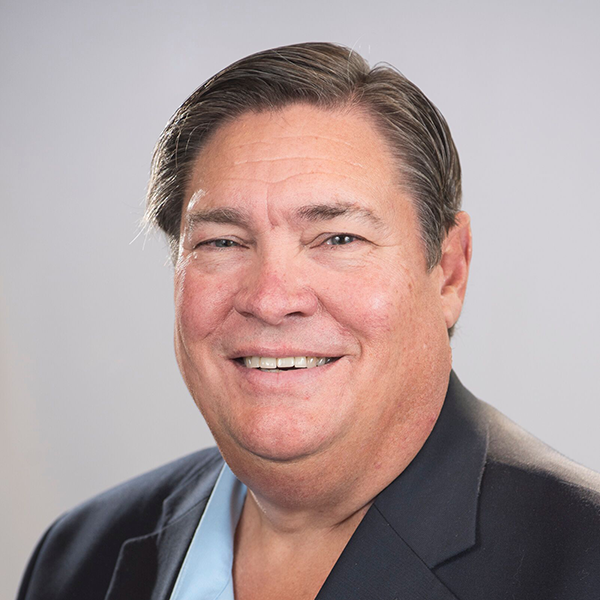
Today's guest went from inspiration to action, sometimes with very little budget. We're going to discuss his experience bridging the gap between learning new theoretical approaches and implementing them. Shawn Connick is the founder of Construct Strategies, a consulting practice dedicated to helping organizations confront their most serious safety risks through human and operational performance, high-energy hazard control, and operational learning. Shawn brings over 30 years of construction and energy leadership, 20 in safety, and 15 on the HOP journey, including senior roles supporting complex utility and infrastructure projects across North America. Shawn's work bridges the gap between executives and field crews, creating environments where workers can speak honestly about risk, and where leaders learn from the realities of work. He specializes in learning teams, risk assessments, and building sustainable systems that protect people while improving operational performance. Shawn joins us from Star, Idaho. Welcome.
[Shawn] Welcome, thank you for having me.
[Mary] When we spoke last time, you mentioned what a revelation it was for you, years ago, to first encounter the work of Todd Conklin and Sidney Dekker — that they gave you language to describe concepts you'd been observing and thinking about. But immediately following that, you had the realization that you had to figure out how to operationalize these ideas, and quickly. Can you set the scene, and tell us about that time in your career, that realization, and what you did next?
[Shawn] Sure. I started my career on the environmental consulting side, then moved into project management and construction, and from there, at that company, moved into safety. As I got into safety, I had good operational experience and understood how the business worked well, but I was learning safety — very traditional safety — from a mentor who came from that old-school approach. It just didn't resonate. It came across as condescending — many of the things we were asking people to do, like publicly apologizing, or stand-downs, didn't seem to have any long-term impact, and it felt uncomfortable. I was also learning about behavior-based safety at the time, which had some interesting ideas, but in practice it really seemed to struggle.
As I was learning this traditional safety approach, like a lot of things in life, by coincidence — I can't remember exactly how it happened — somebody handed me Sidney Dekker's "Field Guide to Understanding Human Error." As I read it, it started to give me language for what I was seeing, laying out some of the psychology, some of the organizational thinking behind it. Sidney's fantastic — antagonistic, an interesting writer, an interesting personality — but he's an academic, and this was early on, not too long after he'd written that book, so the question becomes, what do you actually do with that information? It's tough to take that book and act on it. Around the same time, before Todd Conklin had written his first book, I saw him speak at a small user conference, and again, he used language that made sense to me. Todd made the connection, I think, between the hypothetical, the academic, and the more practical — that was his experience.
So I really just started to read, try to understand, and go see these folks — this was very early in what we now call HOP — just trying to understand it myself and slowly put it into action. At the time, when I talked to my senior executives about this, the first question I got was, "is anybody else doing this? Is anybody else in construction doing this?" I couldn't find anybody. I talked to Todd Conklin at one point, and he said he wasn't really aware of anyone either. So it was really pushing the edge, pushing operational leadership into an area they hadn't thought about or been comfortable with before. It wasn't until I got a new leader who really started to take a look at this and said, "I'm really worried about something happening, I don't think we're doing enough."
[Mary] At the time, you had a relatively limited budget for making changes. How did that limitation affect how you decided to move forward, once the organization was ready to implement?
[Shawn] What I really wanted to focus on was trying to change the whole organization, not just safety — really getting buy-in from ownership and operational leadership. So I was very strategic about it. We were a mid-sized company, relatively moderate budget — generous, but moderate — so when I could bring people in for training, I focused on getting leadership and as many people in the upper ranks involved as possible, to build buy-in and understanding. We did study action teams, essentially a lean book club, reading some of these books together. I had a safety team of about eight people at the time, not very large. One of the folks I worked with suggested Sidney Dekker's "Safety Anarchist," so we read that together to explore the ideas — taking the book, breaking it into four or five parts, and getting on a call every two or three weeks to work through it. That gave us real opportunity to discuss these ideas.
For a lot of folks, this was a huge change from what they'd done before. Looking back, it took about eighteen months of those conversations, just within the safety department, where I had a lot of control, before there was much outside interest in what I was doing on these granular things. It's really about trying to change the day-to-day practice of what you do as a safety person. If you start to really read and understand the philosophy behind these things, you can look at a lot of the activities we do as safety professionals, particularly post-incident — investigations, how we look at things — and see they're often not particularly effective, probably not in risk management, and certainly not in operational learning.
[Mary] Let's talk about learning teams — I think you implemented those fairly quickly, maybe after this incubation period within the safety department. How did you get leadership on board with using learning teams? How did you explain it to them?
[Shawn] I'd explain it using Todd Conklin's books — Bob Edwards hadn't published his book yet at that point. I got some traction by finding the right person, maybe somebody a bit newer to leadership, overseeing safety, who felt, "I see what we're doing, and I'm not comfortable that we're learning from these things at a high enough level as an organization." We'd sit in these incident reviews, using a modified TapRooT process, which I found valuable at the time, but you'd come up with findings like "management commitment," "didn't follow instructions," "improper procedure" — over and over and over. It feels a bit like Groundhog Day, just happening repeatedly.
As we started teaching executives about operational learning and learning teams specifically, you have to talk about the environment people are in, how they communicate — having peers in the room, having senior management in the room with a field worker, and what that does to the relationship, to openness in conversation. All of the learning team philosophy, processes, and tools you use in a learning team can also be extrapolated back into the learning process of normal investigations, and you can teach executives that. What I started doing, in addition to formal learning teams, was applying this mindset particularly to minor and moderate injuries, near misses, where the pressure is lower — you just start talking and acting differently. Over time, I think operational leadership saw they were getting better information about what was actually happening in the field, even though it's often uncomfortable, because it's not what you expect to hear. But they found real value in a business leader actually knowing what's going on in the organization, because we just don't have much of a feedback loop in construction, traditionally.
[Mary] You chose learning teams as a first step, and you called them low-hanging fruit. Why are they low-hanging fruit — what makes them easy as a starting point for change?
[Shawn] I don't know that learning teams themselves are low-hanging fruit — I think it's the topics you choose when you first start them. Often, folks starting learning teams want to pick this big topic, trying to solve all the world's problems in the very first learning team. What I mean by low-hanging fruit is, one of the first learning teams we did was headed toward a project, a particular task — installing concrete formwork for a high-rise, where you repeat the process fifty times. We brought in foremen to talk about these forming systems — they all had tremendous experience building concrete high-rises in downtown Los Angeles. Heading into the project, we talked to them about their experience with various formwork systems, manufacturers, what's efficient, what kind of building we're building, and how that interacts. That's low-hanging fruit, because you don't have the emotional weight that comes with a post-safety-incident review, where somebody's potentially been hurt — that raises emotions.
So when I say low-hanging fruit, I mean the easier topics — maybe a minor injury, or near misses, which are wonderful, because that's your golden opportunity to learn about process before anybody's actually been hurt. That's the low-hanging fruit — situations where the expectation coming out of the learning team isn't so high. That's where I've seen a lot of problems: people want to do a learning team on this big topic, and when you try to tell them, "let's scope this down a bit," there's resistance to that. Start with scoping small.
[Mary] You also mentioned that learning teams, while a great tool, are not a silver bullet. Can you expand on the idea that they're not a catch-all, that they won't work for every situation?
[Shawn] I think there's a few things there. It can be such a big improvement on the information you get, compared to a traditional investigation, that people think, "wow, I can fix everything." But we have limited resources — you can only work on so many problems with so many resources at one time. So it can be overwhelming, the amount of information or change you get, and you have to sort through it. A lot of the problems we run into aren't necessarily that we didn't have the information, but that we're not making the changes we'd previously said we'd make — it just comes back up in another form. You have to deal with that separately: how do we actually make changes within the organization? Learning teams won't fix that — they just correct or improve the information you get. You still need a robust process to act on it. If you don't, it'll seem like the learning team was a silver bullet that didn't do anything.
There are a lot of consultants selling "hot HOP" these days, and I'm not always sure how much operational experience they have — sometimes it's sold as this great thing, without people thinking through the steps it takes to get there. It took me a good eighteen months working on senior leadership before we could do these on a regular basis, with people's feelings not being hurt, with good information coming through, and people feeling differently about that information — we just lacked a bit of sensitivity initially. It's good information once you stop asking who was involved, what the project was, and just get interested in what you're going to learn.
It often gets left to safety in organizations — one I worked for recently was essentially owned by the safety department, so it becomes "another safety thing." In my first rollout, for about the first year, people were waiting for me to replace the program the following year — they're really waiting for that, because that's what's traditionally happened in safety, you have your new program every year. So sometimes it takes almost two years before people believe it's not going away, that it's not the flavor of the year. It's all these complex things, rather than just rolling it out and saying learning teams will fix everything — it's part of a broader cultural change.
[Mary] Now that you've had years of experience, how would you describe your relationship with learning teams? Are you implementing them the same way as when you started, or has your approach changed over time?
[Shawn] Yes, it's changed. When I first started, I was very worried about whether people would talk to me, open up — how honest would they be? But if you follow the process — Bob Edwards and Andrea Baker's book does a great job laying out the practical aspects — and you follow those, get people in a comfortable room, start that conversational model, write things on the board, it works. I found that easier than I originally thought.
What's really changed is the report-out to operational leadership. When I first started, I didn't have a scoping document — it was more conversational, more casual, and then we'd do the learning team. Over the past four years, I've learned that really having a better scope, with the operational folks who want the learning team, alongside senior safety folks, writing down a problem statement of what they want to solve, was really important. That took a lot of time to teach people — not a huge amount of time, but it takes some practice to write a good one, because often people have problem statements like, "please go in and do a learning team and tell me how to make these people safe," or "tell me how to get them to follow the rules." That's not a problem statement — you need something more granular, like "I need to learn about how they perform this task." It's not about the problem statement being the fix, it's about wanting to learn about the problem. That was the big transition — getting people to want to learn about the problem, rather than focusing on the fix.
[Mary] That reminds me of an SNL character I have in my head who, no matter how complex the problem, just yells "fix it!" I think we traditionally do that — what's the classic management line I heard early in my career: "don't come to me with a problem unless you have a fix." That's not an open door, is it?
[Shawn] Right — they're literally asking you to fix a problem you may know nothing about, and I think that's traditional safety. We've been asked to fix problems, and I know I've felt very emotionally connected, when something bad happens, to the idea that I'm part of the failure. Now I understand that I'm part of the system, probably not the very specific failure, and that gives me a better view, a chance to step back. I was taught in traditional safety, particularly post-incident, to get really granular — look closely at specifics, hand placements, the last few activities before an incident occurred. Todd said this early on — that's the least interesting part of the incident. The energy's already been released, somebody's been hurt, something's happened. It takes a while to actually understand and believe that, and see that it isn't the most interesting thing.
So you step back to a five-thousand or ten-thousand-foot view, and start to see how the organization is actually working. We talk about people making bad choices — when you step back, you start asking, did they have good choices? What were the choices? Were the choices clear, did we make clear what kind of choices we were giving them? It gives you a better understanding of what's going on in the organization. A safety professional is important for looking at very specific things sometimes, but often we don't step back quickly enough to ask what the bigger picture is — we get focused on a risk-management journey, thinking we're collecting information that will help with regulators or litigation. In my experience, most of that just isn't true. I worked in California for many years, had some experience with litigation as a general contractor — most of our documentation, you never really know if it's good or bad, a good attorney can make it look either way. So focus on learning — that's the most important thing.
[Mary] Is there anything you think safety professionals commonly get wrong about learning teams?
[Shawn] What I'm seeing in the past few years is people starting to call all sorts of things learning teams — using maybe a Five Whys method, making a few adaptations, and calling it a learning team. People take their old processes, make minor adjustments, sometimes none at all, and call them learning teams. In the organizations I've worked in, I've said, just for a basis of understanding, so we're all speaking a similar language, let's use Todd, Bob, and Andrea's process as a foundation — that's not to say there aren't other ways to do it, but I think it helps, when you're in an organization or talking with other groups, to keep the definition close to what they've laid out, because I think it works, and I haven't found anything better, just small tweaks here and there. I've run into people who want to just record it and put it through ChatGPT, calling all that "learning teams" too. The learning team process and its informal nature — writing things on the board, having conversations — it's all very intentional. It's not about being the most efficient, it's about making connection with people, learning their stories, getting quality information. It's not about doing it as quickly as possible. That's where I'm seeing some problems.
[Mary] We touched a bit on dealing with leadership earlier, and I want to come back to an idea you mentioned last time we spoke — safety fluency, and developing safety fluency in an organization. How would you describe safety fluency?
[Shawn] Safety fluency, I think, is being able to not just support the ideas. A lot of the time you'll hear people say, "yeah, they support us" — that's not fluency. Fluency is being able to have a conversation with somebody about HOP, or about safety, about the principles — you don't have to be an expert, but you can have a conversation and know what the person's talking about. I've seen it rolled out in organizations as a very traditional online safety class, one and done, with no level of fluency or follow-up. People don't really know how to apply any of it, because for many it's a new language, and applying a new language can be difficult.
[Mary] Language is a perfect metaphor — if you watch a webinar on how to speak German, it doesn't mean you speak German.
[Shawn] Exactly — there's a lot more to it, assuming you didn't speak it before. Early in my safety career, I wasn't as careful with my language, paying attention to what my words meant or what reaction they might elicit. I wasn't conscious of it then; now I am, I think about it — far from perfect, but I can self-analyze. Edgar Schein's "Humble Inquiry" is a fantastic book for getting you to self-reflect on how you communicate — am I having this conversation to learn, or to prove my point? You can learn and improve a lot of these skills. I don't think you can change who you fundamentally are, but there are tools and skills you can learn to improve, all tied into HOP, and into how you do safety day to day, and how you interact with executives — having empathy for those executives too, trying to understand their day-to-day pressures, maybe pressures from their own clients as well.
[Mary] Are there predictable or common stages of maturation when it comes to organizations and their safety practice?
[Shawn] It really is the language. When folks within a safety organization — let's talk about the safety professionals as a group — when they start to have common language, common language about forward-leaning new ideas, that's when you really start to see it. And then if they can share that common language with the operations folks at their level — a field safety person dealing with a superintendent and foreman — they can create that common language together. Most safety folks know there are a lot of bad things happening that we don't record, little things happening all the time. If you can use that language and these concepts in your communication, that really helps the maturation process.
The best thing I've seen in maturation — because it's hard to see in numbers — is really the language people begin to use, and using it regularly, which is part of what concerns me a bit about learning teams, because they're not something you do frequently to start with. If you're not using the language and skills behind them regularly, you're not ready to deal with bigger topics. So it's that maturation in how you talk about things normally. One small but noticeable thing I've seen is when people stop trying to figure out "what was the story of how somebody got hurt" — because it's not that interesting, once you learn that if you talk to five people who were there, you'll get five different stories. They all saw and heard different things. You can minimize the time spent trying to nail down "the story" — the story isn't that important, it's what we learn from the event and can improve that matters. We as humans like to hear the story, we want to know the dirt, that's what we read in the newspaper — but in this context, it can be a lot of wasted effort, trying to develop lessons learned while really trying to tell a story everyone agrees to. When you start to leave that behind, you can see the maturation, because it's just not that important, not a good use of effort.
[Mary] So maturation and fluency are kind of the same thing. Let's say you go into an organization, as a consultant, that has less safety fluency than you'd like — how do you start building that fluency?
[Shawn] I think the easiest thing is through articles, podcasts, or books, pushed by some leadership element. I did the study action teams, the book clubs. I've also seen things done where you listen to a podcast, maybe twenty minutes, and as part of a staff meeting, you devote fifteen minutes to discussing the concepts. You've done two things there — devoted the time, which is very helpful, but leadership is also signaling there's an expectation that you spend that time learning these concepts, rather than just taking one class and being done. No successful cultural change happens with one class, one book — it takes a continuous process, ongoing conversation. That's the big shift I see needed in safety — for years it's been, you take our class, and you're done, maybe a first-day orientation, but not a continuing discussion of something different, more of a "program for the year." I think how safety professionals work is changing a lot — and sometimes that's the area where I find the most resistance, even from my own peers.
[Mary] What can safety learn from looking at non-safety events, particularly operational events?
[Shawn] Operational events may tell you, further upstream, what a problem actually is — they may identify problems in the system before somebody gets hurt. Once you start doing these learning teams, you're not just learning about safety, you're learning about the work, which encompasses production, quality, and safety together — the conversation isn't broken into three parts, it's a fluid conversation. Looking at it as one chunk of work, and learning about that, is what's really helpful — we improve operations, safety, and quality together. I've never had a learning team where we didn't learn something about all of that, every single time, because it's part of the natural story of work, and they all affect each other.
[Mary] What are your thoughts on the importance of sustainability and scalability for different safety initiatives? You mentioned earlier the expectation of a "flavor of the year."
[Shawn] In the first chunk of my career, I was along with everybody else in the flavor-of-the-year cycle — you look at your history, maybe the past year or three years, maybe a series of incidents, and that dictates the flavor of the year, whether it's driving training, stretch-and-flex, whatever — they may or may not continue, and if they continue, they may not continue with much robustness. It's really about trying to keep the process going, continually talking about it.
[Mary] I suppose, in terms of sustainability, talking narrowly about a single incident isn't the same as the sustainability of incorporating new ways of thinking and processes — those can continue for decades.
[Shawn] They're different, but similar in important ways. Scalability and sustainability apply to any program we introduce — what's the effort required from the people involved, what's the financial cost, what value does it provide? If it doesn't have value, it usually doesn't sustain. If you're a small organization, or have small projects versus big ones, can you scale up? If you're in a multinational organization, how do you scale down across different cultures? You have to look at all of that — that's the bigger picture. But I also see it post-incident, when we come up with these fixes, these solutions, and you start reading into them and wonder, can we really do that? Will we actually still be doing that in a year? If you're around long enough, a year or two later you'll find, "gosh, we don't even do that anymore" — you go back to an old document because you have to make changes and realize, "we stopped doing that two years ago." So through the school of hard knocks, I try to evaluate anything I do, whether it's HOP or any other program, by asking: can you scale this up, and is it sustainable for you? Because if it isn't, is it worth the effort, or should you relook at something else and adjust?
[Mary] Do you have advice for safety professionals trying to essentially bootstrap safety programs with quite limited resources?
[Shawn] You have to read, listen to podcasts, spend time on your own learning about these things. I get frustrated on occasion with peers who aren't aware of new ideas, haven't read a leading-edge safety book in years, don't listen to any podcasts, aren't reading National Safety Council or ASSP material, aren't keeping up with what's coming out. This is a really rich time right now for new ideas — Dr. Matthew Hallowell at CSRA is doing some really interesting things. I don't necessarily agree with everything everybody's doing, but there's a lot of creative information out there, and I think it's more important for a safety professional to stay on top of what's happening than to always be thinking of yourself as just a cop on the beat, walking the job. You have to split your field time with staying current in the safety world. There are a lot of different organizations and companies — as I've gotten older, I've realized that when I used to think, years earlier, "those people are different, that company is different," they're really not so different. We're all working with people, we all have people challenges. There are task differences and industry differences — construction has different challenges than, say, a fixed facility — but you're still dealing with people and processes.
[Mary] When it comes to the next generation of safety professionals — there are quite a few academic programs now to train people for this career — where would you focus the training?
[Shawn] That's a tough question. I've hired interns and folks out of college as much as I could over the years. I believe in the profession, but I'm often frustrated that what they're learning doesn't go into the deeper philosophies — Taylorism, behavior-based safety, HOP, human performance, all these philosophies that have been around a long time. They tend to learn more about regulatory structure, which is important, but I don't think it's as important as understanding the philosophies. If you're getting a safety degree, I'd try to find programs that delve deeper into philosophy — that talk about Dekker, about Taylorism, about James Reason, giving you background in the psychology and organizational thinking. In my experience, the best background combines organizational thinking and psychology with safety training. And you can self-teach a lot of this too — if you're a safety professional who already has a degree, maybe not directly related, and you're not going to go back for another one, you can still educate yourself. There's so much good material out there, really good conferences — it's a great time to be looking into these things.
[Mary] I'd say that's true beyond safety too — there's never been a time with more information available to us. You have to sift to find the good information, but that's part of the learning too, deciding what works and what doesn't.
[Shawn] For example, you can take incident report information and put it into ChatGPT and ask, is this factual, what's actually being learned here, is the writing reflecting genuine learning — as a kind of double-check on yourself. Are you really learning? I wrote this report, how does it compare against these principles, am I in sync with them? It's interesting how you can use tools like that to reflect on your own language, and your peers' language too.
[Mary] That's really good. Here's a tougher question — if you could go back in time to the beginning of your safety career, what's one piece of advice you'd give yourself?
[Shawn] Be patient. Have more patience. Don't get as angry at the situation — try to step back and look at the pressures everybody's under, including myself as a young safety person. Give myself a little more grace, and others a little more grace too. People out there are working hard — the longer I've done this, the fewer people I've seen who show up intending to do a bad job. They're trying to do their job under a lot of difficult circumstances. So give them grace, give yourself grace, and be patient, and listen.
[Mary] I agree — I think a lot of us learn patience as we get older, regardless. But it's also a sign of passion, right — if you're frustrated, it means you care, which isn't a bad thing.
[Shawn] I've been asked, how did you keep doing this for so many years — it was five or six years before I got any traction at my first company. I just couldn't be satisfied with the status quo, I knew it could be better, and I was willing to step on a few toes occasionally to keep pushing. I'm a little bit of a pain in the ass that way, sometimes.
[Mary] How can our listeners learn more about any of the topics in our discussion today? You've mentioned a few books — are there other books, websites, or organizations you'd recommend?
[Shawn] I've got a few fundamental things I recommend, books I think are essential. Sidney Dekker's "Field Guide to Understanding Human Error" — there are a couple of editions, it's more of an academic read, not something you'd want to listen to as an audiobook, I've been told, but it's so valuable, and he's written many since, I've kept up with some. That's a fundamental book. Todd Conklin's work, his human performance principles — excellent, a short read, also a must. And Bob Edwards and Andrea Baker's book on learning teams. If you read those three books, you'll have a really decent understanding of what we're talking about.
Beyond that, a lot of folks doing a lot of driving or traveling — Todd Conklin's "Pre-Accident Investigation" podcast is wonderful, Andrea Baker's podcast is wonderful too, I listen to both regularly. There are many others out there, those aren't the only ones — listen to things, read things, sign up with CSRA, some of the bigger organizations, and keep reading articles and books regularly. I ebb and flow like everybody else, sometimes I read more than others. There are some non-safety things that tie in really well too — "Freakonomics" is a great podcast, talks about economic behavior and human behavior, which ties into the HOP world in an interesting way. There's lots out there — keep learning.
[Mary] Where can our listeners find you on the web?
[Shawn] Shawn Connick — LinkedIn is probably the best way to reach me, you can link to my website from there, reach out, and we can connect.
[Mary] Well, we've come to the end of another great episode. Thanks so much for chatting with me, Shawn.
[Shawn] Thank you.
[Mary] And listeners, thank you for listening, and thank you to the Safety Labs team for everything you do. Bye for now. This podcast is created by Safety Products Global, the world's leading manufacturer of safety knives. Through our trusted brands, Klever, Slice, and PHC, we empower companies to prevent injuries by providing safer cutting tools for every material and application. Until next time, stay safe.