[Mary] Hi there. Welcome to Safety Labs. National regulatory bodies have a difficult role to play. They're the enforcement arm of national health and safety standards, and often not the most popular kid at the playground. Businesses, even those that claim to value safety, may accuse them of overreach and interference. Workers may see them as creating rules that are either too restrictive or not protective enough. But I don't think anyone would argue that they're not a critical piece of modern occupational health and safety.
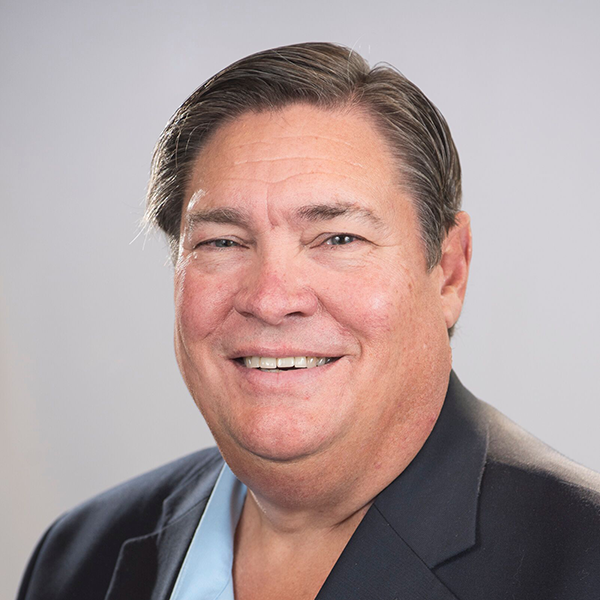
Today's guest is a former Assistant Secretary of Labor for Occupational Safety and Health in the United States. He'll of course be speaking about his experience at OSHA in the US, but I'm planning a broad discussion with themes applicable to occupational safety in any country — global listeners, stick around. Doug Parker served as the US Assistant Secretary of Labor for Occupational Safety and Health during the Biden administration. Before leading OSHA, he was Chief of California's Division of Occupational Safety and Health, and previously served in the Obama administration as Deputy Assistant Secretary for Policy at the Mine Safety and Health Administration. That's quite a mouthful. Parker was first exposed to workplace safety issues as a labor law attorney representing unions, and later directed a legal aid organization dedicated to worker safety and rights. He's currently a consultant and a fellow at Harvard Law School's Center for Labor and a Just Economy. Doug joins us from Washington, DC. Welcome.
[Doug] Thank you so much, Mary. Great to be here.
[Mary] I'd like to start broadly, because I suspect one of the most common misconceptions about OSHA, and parallel bodies in other countries, is that they're only about enforcement. What other activities and roles does OSHA play?
[Doug] Thank you for the question. It's important to understand that OSHA has a broad mandate under its statute. While enforcement is certainly a critical component, it also has statutory mandates to work with Health and Human Services to advance the science and technology of health and safety. It has an important regulatory function — to ensure regulations aren't just there for enforcement, but provide direction for employers on how to meet minimum standards. It provides a huge amount of guidance and interpretation, giving employers direction on how to comply, particularly in areas that don't have specific regulations — best practices across various areas of health and safety. There's an important role in consultation and compliance assistance, to ensure that employers, particularly smaller businesses that need assistance, have those resources available.
I think one of the biggest gaps is really getting that information out there, and making sure small employers trust OSHA enough to reach out without fearing some enforcement consequence attached. OSHA keeps a very strict wall between its enforcement activities and its so-called compliance assistance or consultation activities, so there's an educational process in making sure employers are aware of that. And then there's an element that's been emphasized or de-emphasized over time, but is really critical — apprising workers of their rights, making sure workers understand health and safety issues and are playing an active role, as the OSH Act intended, as part of what's sometimes described as a three-legged stool — government, management, and labor — and ensuring a workplace has strong health and safety protections and a strong health and safety culture.
[Mary] You touched on some of the difficulty of letting people know about these roles, which leads nicely into my next question. National bodies function based on relationships. When OSHA tries to engage in dialogue with organizations or industry associations, what kinds of barriers come up? You've mentioned one already, that fear of enforcement being closely linked.
[Doug] It takes a lot of work, and a lot of leadership demonstration, to ensure stakeholders understand that OSHA isn't just there to gather evidence or find fault, but is there to be part of an active dialogue and play a leading role in advancing health and safety that goes beyond compliance. One example that comes to mind is from early in our term — an effort to gather information from employers about various best practices, I believe it was about leading indicators and the use of health and safety management systems, a particular program element we were looking for feedback on. It was very difficult to get employers to volunteer information, or to respond to our request, where we were trying to gather best practices into a single catalog available for other employers to use.
I think it was an example of people simply not being able to think of OSHA outside its box of enforcement, its box as "government," and being afraid to provide information that might somehow become a liability for them. That was a lesson I learned as the leader of OSHA, and I really tried hard to engage with associations, with health and safety organizations, particularly employer-oriented associations with a health and safety element that weren't primarily focused on health and safety — building trade associations and so forth — really emphasizing that we are serious about enforcement, but that doesn't mean we don't also want to play an important role as leaders in health and safety, including recognizing employers when they're making positive steps, but also understanding these are complex issues we're trying to solve, there are no silver bullets, and we can't have simplistic rewards for employers that are just performative. It's a much more iterative process, and that requires OSHA to be a partner, a member of the conversation, on how to advance health and safety beyond just enforcement. I think we made progress, but it's an ongoing process for government.
[Mary] I can imagine, just as you said, there are no silver bullets for health and safety management systems — I imagine there are no silver bullets for building these relationships either. I'm curious how, and how much, OSHA interacts with each of the following groups: industry associations, company executives, unions, and individual workers. Where's the focus in terms of developing relationships?
[Doug] It's somewhat tiered, depending on the part of OSHA you're talking about. At the headquarters level, like a lot of things in Washington, it tends to be very association-oriented, and also talking to unions at the international or national headquarters level. The advantage is there's a lot of power, a lot of authority, in the room with association leaders and union leaders — but there are also a lot of filters, vertical filters. Information coming up from the shop floor level is going through a lot of filters as it rises, both from the OSHA perspective, what we hear from our own people as it moves through management, what the unions are hearing, and what the associations are hearing. It can be a game of telephone, sometimes acting on a set of assumptions that are generally accurate but don't always tell the whole picture, because you haven't done the digging yet.
That's the case at the national level, and it was very important, from my perspective, to make sure you don't just take those conversations at face value, that you're doing the digging to measure them against other sounding boards — getting out into the field and talking to individuals. At the other extreme, you've got the inspector level — the compliance officer might never meet someone from an association, unless asked to give a talk at a local chapter, but they talk to individual employers and workers regularly during inspections, or consultation activity if that's their role. At the regional level, you get a mix of both. The upshot is, you have to recognize that information is imperfect, and have processes in place to constantly get feedback to make sure what you're hearing is consistent with what's happening on the ground — doing listening sessions, going into the field, talking to worker centers, not just unions but groups representing non-unionized workers, often supported by local community groups that serve as a forum for them to speak to leaders.
On the employer side, talking to individual employers and executives is critically important, because at the association level, health and safety issues often get filtered through other prisms, and can become more politicized than they need to be. What happens most often is things fall into tired, old formulas for what our various roles are — if you're trying to break out of the "same old government," "just enforcement," "they don't listen to us" mold, you have to find ways to break through that. Talking directly to employers and listening to them is a great way to do that.
[Mary] You may have partially answered my next question, but when you were there, how did OSHA invite conversations — were there activities that worked particularly well, or particularly poorly, for cultivating good communication with industries or organizations?
[Doug] One thing we were particularly proud of was holding the first Workers' Forum in the Department of Labor on health and safety. It's not unusual, over the years, for there to be significant summits of different stakeholder groups at the Department of Labor, but there'd never been one that focused on bringing individual rank-and-file workers in to talk about the issues they face on the job. It wasn't just a listening session with me and senior OSHA leadership, though that was certainly part of it, but also brought some of our regional and district leadership in to listen to workers' concerns. Workers came from all over the country, from all walks of life and professions, to talk about the issues they face. There was some union representation, but these were mainly rank-and-file workers, who may or may not have been represented by unions. The range was amazing — from nurses to people who clean airplanes, to laundry workers, machinists, even strippers were there, talking about issues in their workplaces. It was about as diverse a group as you could imagine, and it was very powerful to give them a platform to talk to national leadership about their issues, and for people to hear, in a long-format conversation, their broader concerns about the workplace.
[Mary] It's different looking someone in the eye and listening to their story than reading bullet points that have worked their way through the filters.
[Doug] Absolutely. In terms of things that didn't work as well — I don't know that it was a failure, but we were very interested in how to develop programs to incentivize health and safety management systems. We framed it as a new look at our voluntary protection program, but the main focus was how to incentivize these systems and what OSHA could do to promote them. It was a successful set of conversations, but, to go back to a theme, there was a real difference between conversations at the national level and conversations at the regional level, in smaller groups. Some of that may be the psychology of speaking to an audience, but the national-level conversations tended to be more careful, more scripted, more contained than the dialogue we had in the field. Again, that's a lesson about the importance of finding ways, as government, to break down barriers to honest conversation, and to really show people you're listening, giving them a forum to speak without feeling like they'll end up in the paper for saying something people might take issue with.
[Mary] I imagine reconciling all the different points of view was a subject of a lot of internal discussion. You mentioned listening sessions — can you walk me through how those typically worked, and the goals behind them?
[Doug] I have to give a lot of credit to both the Office of Standards and Guidance and the Office of Cooperative and State Programs, who led this effort. It was a very curated process, with a set of questions laid out for people to answer, and information given ahead of time. Of course it's the government, so you have to give notice of these meetings, they're public, it's not like rulemaking, but you still have to follow certain processes to ensure transparency, which we embraced, because that's what we were looking for.
We laid out the issues — we wanted to embrace health and safety management, look at health and safety culture and promoting it within workplaces at all levels, and we were looking for ways to take the model of voluntary protection, or use it as an example, and ask how we could expand it to include employers still very much on their safety journey. By way of background, the Voluntary Protection Program in the US rewards very high-performing health and safety programs at specific worksites with recognition — they're removed from the possibility of certain types of programmed inspections by OSHA. They can still be inspected if there's a complaint or an injury, but they're not subject to random surprise inspections as a result of being in the program. As a result, it's a very labor-intensive process for OSHA, which makes it difficult to scale. So we were looking at alternative approaches to incentivize employers to put these systems in place — looking for information about the business case, why it makes sense operationally, trying to understand, from a behavioral approach, how to bring more employers into the fold without requiring them to reach the mountaintop just to be part of a program that meets them where they are.
Those were the types of questions we put out — many broader than that, because we weren't wedded to a particular approach, we wanted to open it up to all ideas. We reached out through open meetings, and also held some focus group meetings to delve into particular aspects of safety culture, worker participation, and other things in smaller groups. It was a pretty comprehensive approach.
[Mary] We've spent a lot of time talking about how OSHA is much more than enforcement, but I do have an enforcement question, because, as you said earlier, you want people to know about all these other programs and roles, but you do take enforcement seriously. It's a tricky balance — too much enforcement and people lie or hide things to avoid punishment, too little and people aren't protected. This is more of a blue-sky theoretical question — where do you think, ideally, an enforcement body should aim on that spectrum?
[Doug] In order to have that balance, you have to have a certain level of abundance — there has to be a minimum amount of capacity for both enforcement and other activities before you can even start talking about what the ideal balance is. So for someone leading an organization like OSHA, it's really a different analysis: what are the gaps that only government can fill? There are lots of resources out there providing employers with guidance — they can hire people, look to free resources, look to OSHA — but only OSHA can do enforcement. There's no private posse riding in to conduct private enforcement. That's the prism you have to look through. That's not to say OSHA should just be enforcement because it's the only one who can do it, but it does affect the question.
When people complain about OSHA's role — there's only one part of that formula where OSHA has exclusive authority, and that's enforcement. While the majority of employers are certainly trying to do the right thing, sadly there are plenty of folks who aren't listening to this or similar podcasts, who aren't acting responsibly, and are appropriate candidates for enforcement activity to protect workers. Having said that, I think it's still really important for OSHA to be more than just an enforcement body, because the other side is, it has a tremendous platform — a huge opportunity to reach employers that nobody else can replicate. That reach of message is also exclusive to a government agency, something a professional association just can't replicate.
So rather than striking a balance, I'd say agencies need to think about their role in terms of where the gaps are that only they can fill. Enforcement is certainly one. Reaching out to small businesses and businesses without a lot of resources is another, because that just isn't going to happen if it requires hiring a safety consultant — we're talking about assistance developing baseline tools that aren't behind a paywall, and somebody's got to do that, and that's often going to be government, even doing on-site consultations — I used to go along on those occasionally when I was in California, and loved meeting people that way. But it's also that pulpit, sometimes a bully pulpit, sometimes just a tremendous opportunity to speak up about improving culture, providing a much more positive message about advancing health and safety and health and safety management systems. Because if an agency isn't showing leadership in the field, people who are leaders in the field will start to think of it as less and less relevant, and that's ultimately harmful for a government agency — even if its mission and what leaders in the field are trying to do on a more advanced level are somewhat misaligned, because the enforcement agency is more focused on the floor, and the professionals are more focused on getting to the next level. That's a reality, but it's a gap we don't want to let get too wide, because it affects the agency's relevance within the field, and that's bad.
[Mary] I hadn't thought about relevance, but it would be, or should be, a huge focus for any government entity working on this.
[Doug] Absolutely. People need to understand the field, and it's a real challenge when it comes to developing employees — you hire professionals, and they don't just want to do enforcement, they're passionate about it, but they also want to stay current in their field, which yields a lot of benefits, and it's a challenge in government.
[Mary] You have an interesting background — you didn't start in safety, you were an attorney representing labor unions. Based on that experience, and now your experience at OSHA, what do you think employers often get wrong about workers' motivations?
[Doug] Interesting question. I'll say the most important thing employers get wrong is thinking employees care about the employer's own intentions. They put too much emphasis on their intention, especially around fear of retaliation, and speaking up on the job about safety issues. An employer might say that people aren't going to be retaliated against, that workers should speak up about hazards, that people shouldn't be afraid of punishment for raising a safety concern or blowing a whistle. But it's not enough to say that occasionally, because workers don't care about your intentions. The risk calculus in a worker's mind, when thinking about speaking up, is "I could lose my job if I don't get this right." That might come as a shock to many employers who genuinely want to do the right thing and would never even think of punishing or firing a worker for something like that — but the worker has a totally different risk calculation in deciding whether to speak up.
It's very important that this isn't just rhetoric — that employers demonstrate it, make it clear that speaking up is an expectation, rather than just a right. A right is something someone is free to exercise or not, and that's important, important for legal reasons to think of it that way — but in the workplace, from a safety perspective, it's much more important to think of it as an expectation, that people speak up, that there are positive rewards, and that you're creating a culture where people don't think twice about it, because it's embedded, rather than an individualistic decision. You want to take that risk calculus out of the decision to speak up. I think that's something employers often get wrong — they don't fully appreciate what's on the line for a worker speaking up, or they view the worker's risk calculus through the prism of their own intentions, when nobody cares about your intentions. They care about making sure they can put food on the table, that they're not risking their employer's scorn, or being alienated from their own coworkers for speaking up about something.
[Mary] It sounds like they need to be aware of the power differential, and how their actions — saying one thing and doing another — can have an outsized effect on someone in a more vulnerable position. Workers also come to a job with past experiences, so you might be a great employer, but that doesn't mean every worker knows that immediately — they have to see it in action.
[Doug] That's right. You have to demonstrate it regularly, and emphasize it again and again, because people in management can often think of this in very personal terms — "I'm a good person, so I don't have to worry about emphasizing this, people ought to just see that." But you have to take yourself out of the equation, think about it from another person's perspective, to really appreciate the need to be proactive in your leadership on health and safety.
[Mary] People can't read your intentions, they can only see how you act. When we last spoke, you said that if organizations focus on their health and safety systems, compliance kind of takes care of itself. Can you expand on that?
[Doug] Sure — I'm not suggesting people will automatically absorb every rule and regulation they need to follow, like exactly how high you need fall protection — there are specific rules you need to follow. But in terms of what employers often express concern about, when they complain about the enforcement model as opposed to a more proactive, dynamic, systems-based approach to health and safety, they worry that adopting health and safety management systems or more holistic approaches will come at the expense of compliance, resulting in fines because they're not focused on the letter of the law. My response has been, you can do both — but if you're really concerned about penalty amounts, and those mainly come into play when things go seriously wrong, if you have a strong health and safety management system, you're going to be resolving hazards in a way that keeps you out of serious trouble with the agency. You're demonstrating good faith, a proactive approach. You might occasionally get dinged for a more pedestrian violation, a recordkeeping issue or something, but by focusing on the big picture, on a culture of health and safety, you're going to see benefits that far outweigh any small financial penalty from those less serious violations.
[Mary] If regulatory bodies are in the business of changing behavior within organizations — feel free to question that assumption — what kind of leverage do they realistically have to do that?
[Doug] I do think the most powerful tool is the power of the pulpit that government has. An agency focused on doing the right thing, treating people fairly, committed to strong enforcement, committed to helping people who are proactive and reaching out for help, and listening to stakeholders, taking their concerns seriously in the rulemaking process, making that as much of a dialogue as possible rather than just decreeing things — that's an agency that's set itself up to speak with authority and trust to its stakeholders. There are a lot of people who'd say they didn't agree with my approach, or my views on labor issues, but they knew where I was coming from, and they knew they could sit down and talk with me, that I would listen. That's as important a compliment to me as hearing from people who liked me because we were like-minded. It's critical to take that approach in government — if you want to be successful, you have to be able to listen to people and be willing to have your views challenged. If an agency takes that approach and builds trust, it can really make a difference in helping people develop the health and safety culture we'd like to see.
At the end of my term, even though the Voluntary Protection Association and I had differing views on some things, I think we had a lot of mutual respect, and they ultimately changed their mission statement, based partly on the work we did together, to be more outreach-oriented, not just focused on their own members — more, as I used to say, evangelical — really trying to convert others to the cause of health and safety programs and management systems. I think that was the result of building trust through listening and dialogue.
[Mary] It sounds like behavior change can be a goal or an aim, but without the foundation of trust and respect, it's not going to go anywhere.
[Doug] I think that's right. Another example is our rulemaking on heat — yes, developing a rule is the vehicle for these conversations, but we had a huge number of pre-rulemaking dialogues, lots of discussions with associations. We went from, ten or fifteen years ago in the US, there being really no serious interest in regulating heat, to more or less a consensus that there's a need for some kind of standard to protect workers from heat illness. There may be differences of opinion on how to approach it, but that consensus changed because of a lot of dedicated people at the grassroots level who were out there talking about it, and our role was really to listen to them — by listening, we were able to channel that grassroots concern into a movement within government that gave it real amplification.
[Mary] I'm going to ask two opposing questions. First — what's your magic-wand, blue-sky, no-limits wish for regulatory bodies like OSHA? Do you feel like, in general, they need more or less of something, or need to adjust their focus? If resources and access weren't barriers, and you had a genie on your side, what would you change?
[Doug] If I had a genie, I'd probably start with — I have a frustration with enforcement that's probably different from what a lot of people in the field have, though it's kind of a cousin to their concerns — which is, our greatest frustration is with the lower-road employers who do things wrong again and again, get fined over and over, don't pay, and then someone dies, and then another person dies, and we may ultimately bring criminal charges, or maybe they disappear and reemerge as a new company. And the ask is always, well, why didn't OSHA do more? So if I had a magic wand, I'd give far more authority, in the US, to stop employers engaged in that kind of egregious, repeated behavior. You'd be shocked at the kinds of things some employers will do, putting their workers at risk — people outside the field would be shocked, anyway.
I'd go even further — I would trade some of the enforcement issues that employers find so annoying, if there were some kind of trade-off available, in order to bring the full power of government to bear on stopping employers who get it wrong again and again and put workers at risk, to get them out of business. I'd be willing to make other trade-offs in that imaginary genie world to get there.
The other thing would be to speed up rulemaking, because it's such a long process, frustrating for everybody — at least in the US it's a very long process, further burdened by congressional requirements, Office of Management and Budget requirements, and the product of litigation challenging rules over the years. It's created a very burdensome process. We did some things to make it faster, I think, but ultimately it's not good for anyone. I know some employer groups are glad it takes too long, because they don't want to see more regulation — but it also impedes the ability to adjust regulations to keep up with the times. When people complain about regulations becoming outdated — guess what, OSHA has a long list of outdated regulations, because there's an ecosystem created through an adversarial court process that's given us this burdensome system, and I don't think that's what Congress intended when it gave OSHA rulemaking authority. I understand the risk of overreach, and that's certainly got to be a concern for an agency, but I think the current formula is one where everybody starts to lose faith in government, and that's just not good.
[Mary] Now, the opposite of blue-sky thinking — practically speaking, what do you wish safety professionals, since that's our audience, knew that would make them more effective at engaging with OSHA, and getting the full potential benefit of that relationship?
[Doug] Interesting question — I'll try to hone in on it. It would have something to do with how they triangulate between OSHA and their own executive leadership. How could OSHA be a tool in improving safety professionals' communication with senior leadership of their organizations? I don't think the issue is engaging with safety professionals per se — I think the challenge, for both OSHA and safety professionals, is, generalizing here, how do you implement lasting change? How could OSHA activity be leverage, or an opportunity, for a safety professional to have more pull within their own organization to create change? This gets back to the incentive program I mentioned earlier — how could an OSHA interaction create opportunities to land, not just a fine and abatement of a particular hazard, but a more lasting, comprehensive change in the workplace — abatement resulting in an actual health and safety management system being put in place, for example.
I don't know that I have a specific answer, but with a little more thought, it would land somewhere around how to help that safety professional create change. I think it might require OSHA to move a little in that direction first. If I could borrow half my magic wand from the first question and combine it with this one, it'd be about bridging that gap, helping the safety professional create more change within their organization.
[Mary] You were with OSHA for just over three years — what surprised you, or challenged your assumptions, even something not very specific, just things about OSHA or regulation generally that you maybe weren't expecting?
[Doug] OSHA has many more subparts than other organizations I've been part of — I was always learning new acronyms for offices I didn't know existed, working on important issues I hadn't come across before. But the biggest surprise had to do with the organization of the agency as a whole — it has an organizational structure you really have to work hard to keep from siloing, because of its regional structure, which in some ways duplicates, and in some ways is distinct from, the national headquarters, which has its own series of offices. There are opportunities both for inconsistency, for communication that isn't ideal, and for it to all work really well. It wasn't like other organizations I'd worked in, where the structure seemed a little more linear in how things went up and down the chain of command. At OSHA, you have ten regions doing a lot of things similar to efforts at national headquarters, so there was a learning curve in thinking about how to get everyone working together — not that they weren't, but when you had a new initiative, making sure all the right pieces were clicked in was a bigger task than I was expecting.
[Mary] Facilitating a different type of structure, or facilitating communication.
[Doug] Yeah — by the end of my time, I was just doing all-hands meetings, which was kind of me practicing more of what I preached, doing more general leadership than management tinkering on these things, and that seemed to get the message to everyone.
[Mary] You may have just answered this, but maybe not — if you could go back to the beginning of what you'd consider your safety career, whatever point that was, what's one piece of advice you'd give yourself?
[Doug] One piece of advice — and I think this is more general, not necessarily specific to health and safety, because I wasn't a traditionally trained health and safety professional, I came at this more obliquely, as an attorney — I was sometimes a bit too deferential to so-called experts about how to handle things. There are a few times I wish I could go back and tell myself to trust my instincts, be assertive about what I thought was right, and be more challenging in understanding their perspective on things. But that's really only a handful of times — I think most of the time I felt pretty good about balancing humility about not understanding some of the technical aspects initially, against really challenging folks to think from a different perspective, a worker perspective, a legal perspective, an enforcement perspective. So I think it generally worked out, but there are a few examples where I wish I'd been more assertive.
[Mary] There's probably a few examples everyone could think of — but that's hindsight, we often don't know until later. How can our listeners learn more about any of the topics in our discussion today — probably websites more than books, where they can learn more about OSHA, or any of the questions we've asked and answered?
[Doug] Sure. There are a lot of resources on the OSHA website, OSHA.gov, with information on OSHA, its organization, its structure — it's somewhat daunting, you can really go down a lot of rabbit holes there, there's a huge amount of information. Some areas I think are particularly useful — there are pages on health and safety management systems under the Office of Standards and Guidance, and some good resources on mental health, for example, that we put together while I was there. There's a lot of information on training modules that have been created over time.
I also think there are some really good resources on some state OSHA pages — Cal/OSHA has an excellent website with a lot of resources, as do some other agencies. California is interesting because it has an Injury and Illness Prevention Program standard, which requires employers to have a program, so they have good tools and templates for the basics of developing a health and safety management program. Some of it's California-centric, but it can be pretty useful for anyone going through hazard analysis and developing something in writing.
[Mary] I'd imagine that's useful even beyond national boundaries — it's free information.
[Doug] Absolutely. Internationally, if you're focused on workers, there's an organization called Hesperian that has some very good publications on workers' rights and general worker safety information, explained from a more global perspective. Good people there I worked with when I was in California, and some of their materials are translated into other languages too.
[Mary] Where can our listeners find you on the web?
[Doug] Probably best through LinkedIn — I get a fair number of messages there, and I'm pretty easy to find. If anyone wants to reach out directly, my email's pretty simple, it's doug parker 1 @ gmail . com, and anyone's welcome to reach out with further questions about anything we talked about.
[Mary] Well, folks, the regulatory body of time is telling me the show has come to a close. Thanks so much for sharing your perspective, Doug — I don't think we've ever had someone from inside a regulatory body before, so this was really valuable.
[Doug] Happy to do it, and I want to thank you for the opportunity. I've been binge-listening to the podcast since we first talked, and gotten some really valuable information — I've certainly been learning things too from some of your past guests, so thank you.
[Mary] And thank you, listeners. If you've got ideas to share about your vision for safety oversight, please find us on LinkedIn under Safety Labs by Safety Products Global. Thanks to the podcast team — I'm just the tip of the iceberg, folks, there's a lot of good people working behind the scenes that make this show the success that it is. Bye for now. This podcast is created by Safety Products Global, the world's leading manufacturer of safety knives. Through our trusted brands, Klever, Slice, and PHC, we empower companies to prevent injuries by providing safer cutting tools for every material and application. Until next time, stay safe.