[Mary] Hi there. Welcome to Safety Labs. Our guest today is no stranger to longtime podcast listeners — last time we spoke, in April of 2023, we talked about learning from normal work. Since then, some things in the world have changed significantly, and some not at all. In terms of new things, I'm talking about what some are calling the AI revolution. In terms of old things, I'm referring to human-centered approaches to safety — humans are, after all, still at the center of everything we do. Today we'll talk about our guest's experience operationalizing HOP approaches using AI tools, in an ethical and human-centered way.
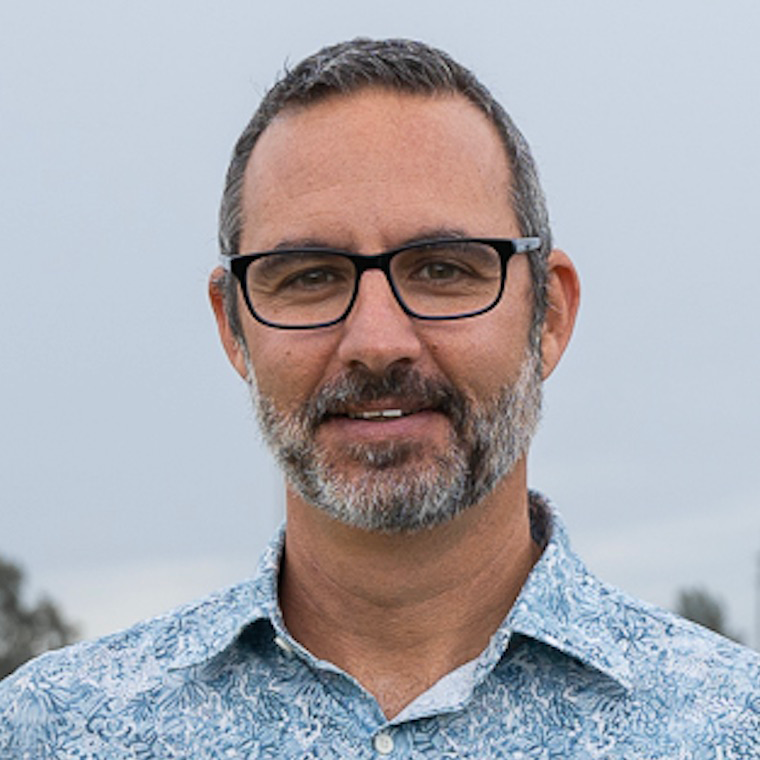
Brent Sutton works in the commercial, government, and education sectors to address health and safety risks and improve organizational learning. He has over 20 years of experience in various OHS roles, and is currently the architect of several alternative sentencing projects. He's a safety coach, helping organizations see workers as a solution, guiding teams in integrating worker engagement and participation into existing health and safety systems to improve operations. He's the lead author of three Amazon best-selling safety books, all exploring different aspects of learning teams. Brent joins us from Auckland. Welcome.
[Brent] Welcome, Mary, thanks for having me back.
[Mary] Let's start with your definition or description of HOP — both for those who haven't heard of it, though it's pretty prevalent, and to explain your perception of its value in the safety world.
[Brent] From my perspective, human and organizational performance, or common elements, HOP, is really about understanding how humans operate within systems, and how organizations create the environment or conditions for that work to go well, rather than focusing on why work doesn't go well.
[Mary] That's what we discussed last time, learning from normal — that was the last podcast. How do you think HOP's positioning in the safety industry has — I won't say "changed" — but over the past five years, have safety professionals broadly changed how they look at HOP?
[Brent] Like everything, people explore HOP for a number of reasons. There are those chasing what I call the shiniest toy. There are those who've realized their current approach has plateaued, and they're looking to do safety differently, to push into that next component. And then, for many, many people, they've begun to understand the value of actually learning. This year is, I believe, the hundredth year of continuous improvement — since the work of people like Deming, and others, like Shewhart. At the end of the day, the idea that there's always going to be a gap between work-as-imagined and work-as-done is always going to exist, and more people are now leaning into that rather than treating those two things as bad — leaning in and asking, how can we learn as an organization, and more importantly, how can we improve by leaning into that? That's a big trend right now, certainly in the work I do.
[Mary] HOP doesn't replace existing systems.
[Brent] No, it's more of an approach that integrates into existing systems. It's five principles, and I'm always fascinated by how wound up people get about it, because it really is just five basic principles.
[Mary] Is there anything you believed strongly about HOP when you were first introduced to it that you'd now revise, or add some nuance to?
[Brent] There has to be — if there's not, I haven't learned anything. I think there are two things. What's stayed strong is the focus on frontline people, the whole worker engagement component — that hasn't changed, in fact I've seen it get stronger. I've seen the value of how, while workers don't necessarily buy into the HOP principles per se, using these operational learning tools actually extends their knowledge and understanding, how they see risk — that's the most exciting part of it to me. What I have learned is that learning teams are absolutely amazing for understanding deeper systemic issues in organizations, but they're not a great tool for generalized learning, because, like everything else, they require people to come together, they require the organization to provide resources. Where I was using learning teams then versus now has changed quite a bit — their value is very much at that deeper end. Some of the other tools we use, like the Four Ds and the Four Ls, are really great for frontline conversations.
No surprise, Mary, that when I looked at this through a safety lens, organizations are actually using HOP primarily for operational purposes — I shouldn't be surprised by that. The uptake among people doing continuous improvement, lean, quality, or food safety has been just as impressive as on the safety side.
[Mary] That makes sense to me, because they're primed in a way for that sort of continuous improvement learning — that's my theory, throwing it out there with zero actual knowledge of the situation.
[Brent] They're certainly not having the same safety science debate happening in the safety market. Is that maturity? Who knows — but it's fascinating how different the two sides are. Organizations doing this kind of work are used to "gemba walks," the notion that leadership goes to the front line to learn from it — "gemba" in Japanese means "go to the place" to learn. They're using some of the HOP operational learning tools because they provide deeper context through storytelling that traditional gemba tools didn't. The engagement piece is the same.
[Mary] Of the criticisms you hear about HOP, mostly in the safety field, which do you think are most fair, or at least understandable?
[Brent] I think this notion that HOP is somehow opposed to safety science. HOP itself is based on safety science, it's five principles — how you operationalize it may or may not be based on safety science. If I go back to the origins of HOP, HPI, NHP, they're still using traditional tools today that other organizations use, like process safety. All they've done by applying the HOP principles is build on process safety. At the moment there's a sense in some circles of, "buy our religion, buy our robes, because this is the best out there" — and the reality is, it's just five principles. Whatever you do, as long as you look back and ask, are we applying these five principles, that's what matters.
A classic one — you hear that HOP is about "no blame." That's not factual. HOP basically says blame doesn't change anything — how does blaming someone change the system? People confuse the difference between accountability, being held to account, being responsible, and being culpable. If a person knowingly does something wrong, knowing the consequence of doing it knowingly wrong, that's reckless.
[Mary] And they're culpable in that situation.
[Brent] Absolutely. HOP has never said "no blame," just as HOP has never said zero harm is bad — all of that is context-based. What it's really saying is, we need to build better systems, because things are always changing, and the people at the front line are the ones who know the most about how work is actually done. They're the ones who know best whether controls work or don't. If you just leaned in and listened to them, you could learn something.
[Mary] Last time we spoke, not on the podcast but chatting before the show, you mentioned you'd rather focus on operationalizing HOP than debating it in philosophical terms — you said the mainstream wants tools, not philosophy. Can you expand on that?
[Brent] As programs or products become mainstream, the needs of that audience are completely different from the early adopters. Early adopters, by their nature, are drawn in by the philosophy, by the promise or potential — but the mainstream isn't. The mainstream is looking at how to apply this to do better, to improve, and they're looking for tools to support that. They're least interested in the history — because they've come to it after someone's already told them it helped them do something. That's how the mainstream operates, a very different view. As HOP's extended its market, the need to operationalize it has become more important, and that's where we've always played — we're less involved in the leadership end, more involved at the front end, helping workers learn, helping work groups learn, and ultimately helping the organization learn. Because, shockingly, what workers learn and what the organization learns are completely different things.
[Mary] We'll get back to our discussion in a minute, but first we're going to hear from the company behind the podcast, specifically about one of the most popular tools in their Slice brand.
In construction and industrial manufacturing, traditional utility knives can be uncomfortable, unsafe, and sometimes wear out quickly. The Slice Folding Utility Knife delivers power, control, and safety. Let me open it up so you can see — it's got a durable metal handle, quite heavy, built to withstand industrial use, an ergonomic design with a finger loop that gives a more secure grip, and it offers two locked positions — this is the standard locked position, and for awkward angles, you can use it bent like this. There's a quick-release lock here — press this little button, secure and convenient. If you'd like to learn more about which tools will work for your materials, you can request free samples at safetylabspodcast.com/samples.
And now, back to our discussion.
[Brent] Just a quick story actually, about what you just did, Mary — last time I got sent a whole lot of free samples, which were amazing, and I was doing a piece of work with a client, and one of the stories that came up was that they'd banned knives for opening boxes because of all the cuts happening. Yet cuts were still happening, even though they'd banned knives. How could cuts happen if knives were already banned? So I sent them some of the product I'd been given — amazing outcome. I'm sharing this not to promote the product, but because of the story behind it. What we discovered was that workers were bringing in their own tools, because they still needed something to actually open the boxes. So we gave them a product with a retractable blade that doesn't cut skin, and their experience changed.
[Mary] I just want to clarify one thing for legal reasons — it can cut skin, but it's safe to the touch, it's engineered — it's certainly not the same. I'm touching the edge here, but I'd never do that with a standard utility knife.
[Brent] Just the design, the ergonomics of it, the placement of the hand relative to the cutting edge, completely changed the work design.
[Mary] Excellent. Well, there we go, a real-life experience.
[Brent] Good to hear, and we love stories — I'll be asking you for more as we continue.
[Mary] Right now I'm taking a bit of a turn into AI. People love it, people hate it, there's not much in between. I imagine you get some hesitancy from people — how do you make the case to a client organization for using AI within safety programs? What are the common objections, and how do you respond to them?
[Brent] It's a two-letter word that can mean so much. For listeners — the first twenty years of my career was in information technology, my first qualification was actually as a systems analyst, and one of my last roles, in 2001, was working with a large American organization on machine learning, which is essentially AI. So for me, it hasn't really changed — the thing that's dramatically changed is people's ability to access AI. What do I always hear? The classic things, when dealing with data, privacy concerns, classic cybersecurity issues, and the classic ones around hallucination and misinformation, which I find fascinating, because as humans, when we share bad news, don't we pad it out, present it in a way that's palatable? Most of us do. One couldn't call that a lie, maybe a white lie, but it's about presenting data in a way that's helpful — so why would AI be any different? You need to tell AI what's helpful, train it to do that. I find that all the things people criticize about AI are the same things humans do, or it's this expectation that AI has to be better than humans — but AI isn't human, it's just a large language model. Then there's the argument it'll take people's jobs. I'd look at that two ways — if your job was writing policy, AI's going to be pretty good at taking that content and writing the policy far faster than a human. The real value of AI, particularly what we're seeing, is its ability to look at lots of stories, lots of conversations, and make sense of them, look for those weak signals — because humans, by nature, are biased. Even on this podcast, there'll be listeners only taking what they want to hear, classic bias. Biases aren't inherently bad, many are subconscious by nature — and what we can do with AI is tell it what bias we want it to apply, which is the value, because it learns better over time.
[Mary] In the context of human and organizational performance, what does ethical and human-centered AI look like in practice? I'm asking for a story.
[Brent] The first thing — it's not there for surveillance, not for monitoring. It's there to give us insights. I could be engaging with a bunch of workers, and they share their stories with me. In those stories, there could be things that, if you read the raw transcript, would make the organization very uncomfortable. The role of AI is to produce that story from an organizational learning point of view, not as a literal transcript of what each person said. If I were a leader wanting to blame, I could read that transcript and say, that person wasn't following the rule, that person was bypassing something — that's weaponizing AI as a surveillance tool. I'm already seeing that unfold with AI-empowered cameras, or AI on forklifts — an exclusion zone, and AI telling you how many times it was breached. That's surveillance.
[Mary] That's a smarter, more frightening version of a standard safety manager with a clipboard being the safety police, really.
[Brent] Absolutely, it's just AI now. And I've been involved in enough of those projects to also know AI generates quite a few false positives. What's more interesting is knowing the presence or absence of breaches might be valuable — but it's even more valuable to engage with the workers, hear their stories about why the exclusion zone doesn't work. A combination of trending insights from AI and engagement with humans for context — now we're talking benefit, now we're talking value.
[Mary] You mentioned recording conversations with AI — can you lay out how that fits into a safety manager's work?
[Brent] A good example — we use some devices, we don't sell them, that are a form of AI note-taker, sitting on the back of a phone, and their job is just to listen, very good at capturing a wide range, fifteen, twenty meters of conversation. We'd have a leader go out with one of these devices, and their role is to be curious — using one of our Four Ds cards, asking workers, when you're doing this task, share a story where it doesn't make sense, frustrates you, or where you find it risky or challenging, or harder or more demanding, or where it's changing or surprising. Workers will share that story. If the leader had a notebook and had to write down what they're hearing, would they actually write down what was literally said, or what they heard?
[Mary] They'd write down what they heard, because they have to summarize, you can't keep up with a pen.
[Brent] Correct, and what they're writing down is typically void of emotion, because any emotional context comes from the listener judging it, not from what the worker is actually saying. I can take these conversations, apply an AI lens across them, and identify insights, identify negative sentiment, positive sentiment, all of that. Then I can present that data back to the group of workers and the leader to have deeper conversations — that's where AI is powerful.
[Mary] And at scale.
[Brent] And at scale. We recently did a project where the organization wanted leaders to ask better questions — that old story about skill building. We used these devices to analyze all the leader conversations, and rather than singling out individual leaders, fed back to them the types of questions that drew the best responses, instead of just telling them.
[Mary] So the leaders could see the response.
[Brent] Yes — again, don't blame leaders, this is a story. Just because they're not asking the best questions at a given time doesn't mean they don't have the capability, they're short on time, short on lots of things. We use AI for two things — first, helping leaders see what types of questions get the best responses, and second, showing leaders not just what's wrong in the work, but what's right in the work. Has anyone considered that we're actually psychologically harming leaders by only focusing on the bad? I don't know, but we ask, how do leaders respond to bad news — well, why not also share the good news within the stories too?
[Mary] It gives a more accurate picture.
[Brent] Absolutely. We ran that experiment with a large banking institution, capturing, I think, about three to four thousand forty conversations across their network, and presented that data back to them, both where workers believed the system was supporting work going well, and where they believed it was hindering work going well. That balance was amazing, they really appreciated it.
[Mary] We touched on blame before, and how it can be misunderstood in discussions of what HOP means. What would you say to someone worried AI will be used at scale to blame and punish workers, rather than understand and improve work?
[Brent] That comes down to intent. If your intention is to gather information to hold people to account, AI will just do that at scale, compared to having a bunch of people out there finding the same problems manually. The thing about humans — I'm writing this into my new book — we're really good at weaponizing systems. As much as we do things for the betterment, it's also easy for us to turn that around — it's just what we do.
[Mary] Bringing that ethical, human-centered lens — how do you respectfully share AI-generated insights with workers without it feeling like you're presenting data about them, rather than offering them something useful? Have you encountered that challenge?
[Brent] That challenge does exist. The way we address it is, when providing insights, we always include some takeaways from the conversation that have been redacted to not identify people, and redacted of any harmful language. It's ironic — there's a difference between what we say and how we say it. If someone's using salty language in a conversation, that's actually really vital to understanding the context, but when presenting it back, we don't need to repeat that language — what we can do is show the context of it, which keeps it real, rather than simply saying, "we've identified this problem and people have strong feelings about it."
[Mary] That sort of thing.
[Brent] Absolutely, that's the power of it. What's really interesting is that giving workers that feedback loop actually closes the loop — often they're waiting for the organization to close it, and you could be waiting a lifetime. We call them self-improving teams — the AI supporting that closed loop helps people learn, and the feedback itself is a reflective practice too. As workers hear other conversations, there's learning happening, and they may have missed some components — the feedback loop helps them see things they missed, but also build on things they picked up. It's a great learning tool.
[Mary] Can you share a story of how AI helped reveal something about work that humans weren't seeing, or couldn't see at scale?
[Brent] Absolutely. There's one we've actually published as part of an alternative sentencing project, dealing with a waste organization at a landfill. There were sporadic reports of aggression between the people operating on the landfill and the truck drivers bringing loads in to discharge. As we ran through the project, those stories got amplified — because the organization was struggling to listen well, people were only raising the issue when it got really bad. But once workers understood the organization was actually listening, we got a huge volume of stories.
[Mary] So people spoke up more?
[Brent] Absolutely. The organization had said, "it doesn't happen often," but workers were telling us it was actually happening eight to ten times a day. As workers were better able to articulate the nature of the work, AI gave us really good insights, which led to some small changes, not big changes. The irony was, through the stories shared, we discovered that all the trucks would wait in a staging area, where truck drivers could see what was happening in the landfill area. In this country, we discourage truck drivers from reversing, because it's dangerous — but on a landfill, you have to reverse. So people aren't great at reversing anymore, and truck drivers were watching other drivers not reverse properly, getting on their radios, abusing each other. You've got the guy on the landfill trying to direct the truck, the driver getting abuse from another driver, the landfill guy getting abuse too — can you see the cycle? It all escalates. All we did was shift the staging zone out of the line of sight.
[Mary] Are you ever worried, when they talk about hallucinations, about an insight being incorrect? I have an idea of how you might work around that, but I'll ask anyway.
[Brent] The insight comes from the frequency of the pattern, not from a one-off. When we're looking at data, we're looking at how these — Hollnagel calls them weak signals — how they cluster. While these stories are about what a person believes and feels at that time, when those things cluster, there has to be an element of fact to it. And because they cluster, that's the opportunity for the human — remember, humans have to remain at the center of decision-making — that's the opportunity for the safety person, now that they've seen a pattern, to go out and have a deeper conversation.
[Mary] Has your perspective on AI changed over time? There hasn't been that much time, but in a sense it has, since, as you said, none of this is actually new, it's just more accessible these days.
[Brent] Yes, and the tools are more accessible. To be clear, ninety-nine percent of all our work has always been done with Microsoft Copilot — we've never said it's the best tool, because this stuff changes so rapidly that tools keep leapfrogging each other. I love when I see people calling themselves AI experts — I don't know how you can be an expert in something that's always changing, which is why we don't call ourselves experts, more like advocates for how to learn from operations. From day one we stuck with Microsoft, not because it's the best, but because that's what corporates use, and Microsoft's implementation of their large language models is secure. That has its downsides — you need to train the tool. Imagine the agent is like a toddler — you need to write tighter instructions, but also give it content to learn from. I could have the exact same agent running on two different organizations, and initially get two very different responses. That's what we've learned — if you're going to build something to help people, you need to be able to train it.
[Mary] If someone says, "we're interested in using AI, but we want to make sure it's ethical and human-centered," what practical advice would you give — it's a bit abstract to me — what makes it ethical and human-centered, are there principles or questions to ask yourself?
[Brent] On our website, we've put some of those principles up — they're very aligned with the HOP principles, but you could use the HOP principles directly: are we using AI to learn, or to blame? That's the ethical side. The human-centered side is that we're there to understand the work and the conditions of the work — we're not there to understand human behavior. The anti-human-centered version is trying to catch people out.
[Mary] Which is a weaponization, as you've said.
[Brent] It is, a classic weaponization. We already do that right now with CCTV, Mary — AI can just do it at scale. I was thinking, with exclusion zones used for surveillance, there's also a human-centered way of using the same data — "we've noticed eighty percent of exclusion zone breaches happen between three and four PM, what's going on," rather than, "your team is terrible, you're always doing this."
[Mary] Here's the interesting thing — you used some really interesting language, "breaches." That assumes the exclusion zone has high efficacy, that it's been designed well.
[Brent] We'd approach it differently — we'd say, we've discovered that between these times, the ability of the exclusion zone to support safe work hasn't been as high as expected, and we want to learn about that, about how to make it more capable of supporting work going well, because that's its entire job, to support safe work, safe design.
[Mary] And that pattern lets you go and ask who's on shift at that time, talk to them, see what's going on, or compare to a different shift to see what's different.
[Brent] Yes, and I've had an organization actually use CCTV footage to have a conversation — they said, "we've seen this change happen, we're doing a bit of review to make sure the exclusion zones still support work going well, here's some footage, we really want your input on what didn't make sense this time, what was challenging, what was demanding" — extracting the stories out of it. The video was really useful in helping workers recall.
[Mary] Yes.
[Brent] I thought that was a really powerful way to use it — however, if you didn't open the conversation by saying "we're here to learn," and just showed someone that video, it shows actions without context, and that person could feel blamed. One of the important ways to keep it human-centered is contextualizing the use of it, why you're using it, how, and centering it in learning.
[Mary] Absolutely.
[Brent] Imagine starting with the system in the center, humans around it — we're understanding how that exclusion zone is used every day, when it supports work, when it hinders it, we need that rich context, and we use video to provide examples so people can reflect and dig a little deeper. Or, I could print it off, put it on a poster, and say "wanted" — like a shoplifting photo in a shop. That's purely blame.
[Mary] If a listener could take one actionable step toward operationalizing HOP, with or without AI tools, what would the most important first step be? Let's ask it both ways — without any tools, what would the most important step be?
[Brent] Just being curious — asking people about work, what happens every day. That's what being curious means, and we all have the capability for it. Curiosity starts with the work, not the person — typically, open questions that encourage people to share a story, not give an answer.
[Mary] If someone was already trying to operationalize HOP and wanted to start implementing AI tools, where would you have them start?
[Brent] An example — we don't sell or support it, but one of these AI note-taking devices is called Plaud, P-L-A-U-D, sold on Amazon and a few other places. We actually provide some free tools in the Plaud community for safety that anyone who owns the device can download for free, capture conversations, and the device will do the analysis for them.
[Mary] And that's a trained LLM?
[Brent] Yes, a trained agent — it knows about hallucination, it's been trained and used thousands and thousands of times. Total expenditure might be around a hundred and sixty, a hundred and seventy US dollars for the device, and the agent itself is free. What's the worst that could happen?
[Mary] You're going to learn.
[Brent] Right — the agent will listen to the conversation, the questions being asked, process it, and produce it in a particular structured way. What I love about AI note-takers is that your conversations no longer need to be structured beforehand — they can wander into all sorts of areas, and the agent will produce the structure you want afterward. Doing a JSA, or some kind of pre-start process, you have to follow a checklist — that's all changed now. You can have these broader conversations. I might be on a construction site, talking about some tasks, and people jump back to say, "we can't use that equipment without this," or "we can't do this without that" — all that pre-start material we use is based on being linear, but conversations and work aren't linear. AI can take all those random, branching conversations, like a mind map, and give it structure.
[Mary] In terms of what we discussed today — HOP, operationalizing it, AI tools, keeping things human-centered even while using technology — where would you focus training for the next generation of safety professionals?
[Brent] All the stuff we've talked about today is a soft skill, not a technical one — how do we help people build those soft skills? An example — I was with an organization last week who thought AI was some kind of coding, that you needed a science degree. I told them the products we offer actually give you the content directly, you see the agent, you see all the properties laid out, because the objective is that you take it, apply it, get curious, and tweak it over time. When they looked at the agent, they said, "the agent is like a story" — there's no real coding as such, you have headings, subheadings, but at the end of the day, it's just telling a story. They were perplexed, because how it had been pitched to them was, "you need an expert, you need this, you need that."
[Mary] So definitely not the technical skills — maybe more contextualizing the technology within the philosophy side?
[Brent] Absolutely, more the philosophy side. For people coming into the field — very few people go to university to become a safety person — it's about them being able to challenge, being more curious, not just accepting things. I'm fortunate enough to lecture on the diploma in safety in a couple of specialist areas, and I'm not teaching them a model, I'm trying to get them to understand systems, how humans perform within systems, that all models are useful, but all models have a bias, and there's no one model — I call it "there's no one ring that rules them all" — which is what I think some are trying to claim in the safety sciences right now, and you've had a few of those guests on your show, you've seen that feel, like there's one approach that's the answer.
[Mary] There is no one approach.
[Brent] No, there isn't.
[Mary] You mentioned your website, and a framework about keeping things human-centered — are there other books or websites you'd recommend to listeners?
[Brent] Ohio State University is doing a lot of work in this space — Professor David Woods, who, with Hollnagel, is essentially behind resilience engineering, is doing a lot of work around the human-centered side of AI. There's some really good research happening there. I'm not really seeing many actual books right now, because the moment you publish one, it's out of date, and regulations are changing daily, governments move slowly while technology moves quickly.
[Mary] Even academic papers.
[Brent] There was a paper, I think out of Griffith University, that took eighteen months to publish — by the time it came out, the models it discussed had evolved fifteen times. The issues it raised were no longer issues. I probably use half a dozen really good, research-based AI tools, and I've just stopped asking myself "what's new," because they keep evolving, there's always something. Like with my Tesla, I've now got an upgraded version of Grok that gives me insights about Elon's day, whether I ask for it or not, or I might ask it for a joke, and it'll laugh along with me the rest of the drive, because it's learned I want humor. That didn't exist three months ago. I was with a group of engineers the other week discussing machinery safety — they were talking about, "if people would only do better," the usual engineer talk, "don't get humans to break machines" — and we got into e-stop design, a really complex problem for them. I pulled all the design standards into my tool — in this case, a product called NotebookLM from Google — and asked it to produce a poster about e-stop design. We kept talking, I came back a few minutes later, it was ready, put it up on the board, and the engineers just stood there, like they'd seen the Second Coming, because it had synthesized all this information from the actual standards, not the web, the standards, and presented it in a way they could engage with and use to talk to workers.
[Mary] Things are always changing — where does one go for discussion about this kind of thing?
[Brent] At the moment, we're devoid of that, that's the problem, and ninety percent of what's on LinkedIn isn't great, because it's someone pitching something.
[Mary] There's always a possibility someone's selling something in that space.
[Brent] We're actually looking right now at whether we can create some kind of interest group focused on applying AI to learn from operations, but it needs to be devoid of product, genuinely about how we apply AI, what we can learn from it. I'm doing a project at the moment looking to capture what's called tacit knowledge — particularly in North America, a huge percentage of the workforce is going to retire, and there's information in those people's heads that's never been written down. When they leave, it goes with them. There's a phenomenon called the "green wave" — concern that harm rates are going to climb, because the people coming in have only been trained on what the system says, when the system was always brittle, just not obviously so, because an experienced human was filling the gap. That human won't be there anymore, so the system is going to snap, because it's brittle, and harm is going to happen. We're looking at how to use AI to capture stories from workers about tacit knowledge, and how to strengthen the system for training. The way we do that is by getting them to explore how they do their job as if they were training their own son or daughter, because we want that emotional context, not the linear stuff — we want the emotional bit that says, "when you use this machine, you've got to feel it on the left side, if it vibrates harder than the right side, you need to lubricate it."
[Mary] For listeners interested in getting in touch with you, or any interest groups or working groups — where can they find you on the web, and where can they find your books?
[Brent] They can reach out to me on LinkedIn. Our website is hopcopilot.com, our site for the AI side of things, and we offer a range of free products, meaning free to use and explore, so you can get a taste for what it is. All the books are on Amazon, particularly our HOP Beginner Guide series — we're about to release Volume Seven, called "Asking Better Questions" or "Seeking Better Stories," about the whole distinction between asking a question and getting a story. There are stories in there about where AI has been applied to look at scale across stories — we've got an organization right now where we capture, I think, between three and five thousand forty conversations a month.
[Mary] That's a lot.
[Brent] You can only do that with AI, there's no other way, it's just not possible. What they're learning is fascinating, because they're not looking at individual stories, they're looking at where things cluster. People can go to the website and register, try some of the tools — one of our free tools that works in Microsoft Copilot takes an event summary, an accident report, whatever it is, and produces a nice one-page learning summary, applying just culture principles automatically, stripping out any blame language. It's just to demonstrate that you can take something that, on paper, might look very "blamey," and how AI can take that context and produce it in a learning way, without losing any of the effect — but the person reading it can see themselves in the story, rather than reading a report and thinking, "well, that person got it wrong," or feeling bad as a result. Just a couple simple examples of how to create that kind of change.
[Mary] Well, folks, that is our show for today. I hope it inspires your safety practice and discussion with your safety colleagues. Thank you for joining us, Brent.
[Brent] Thank you, Mary.
[Mary] My thanks to the Safety Labs team. I'd like to remind listeners, you can find us on LinkedIn for more discussion about this episode and others — just search for Safety Labs by Safety Products Global. Bye for now. This podcast is created by Safety Products Global, the world's leading manufacturer of safety knives. Through our trusted brands, Klever, Slice, and PHC, we empower companies to prevent injuries by providing safer cutting tools for every material and application. Until next time, stay safe.