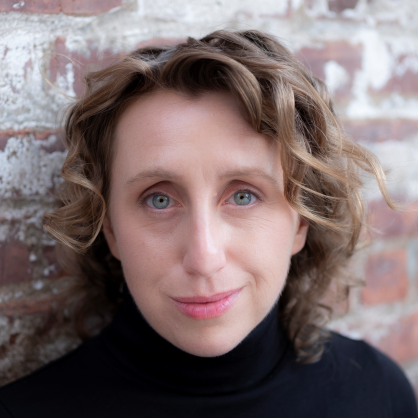
[Mary] Hi there. Welcome to Safety Labs. The study of an accident or disaster often leads to examining the safety systems within which the event took place. These systems are comprised of protocols, equipment, and communications put in place with the best of intentions. But as mice and men have discovered, intentions sometimes have unintended consequences. Today we'll be discussing the issues raised in our guest's seminar, Understanding Disasters, an introduction to the history of technology as a link between history, engineering, social sciences, philosophy, religion, and the arts.
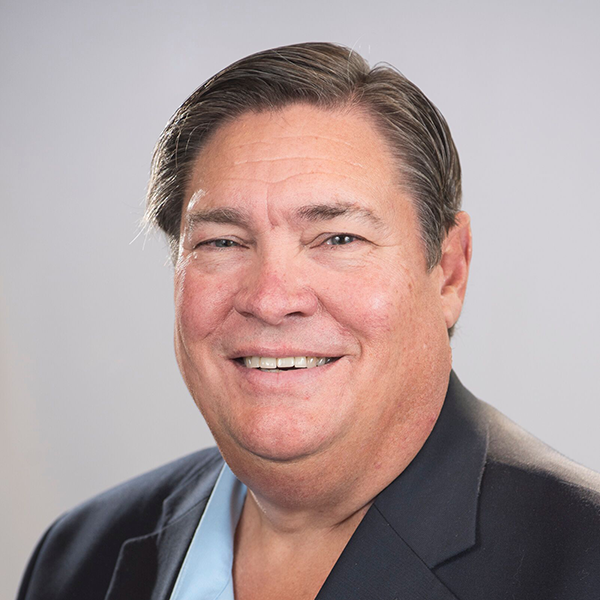
Edward Tenner is the author of books such as "The Efficiency Paradox," "Our Own Devices," "Why Things Bite Back," and most recently, "Why the Hindenburg Had a Smoking Lounge: Essays in Unintended Consequences." He's a lecturer, writer, speaker, and consultant, with specialties as diverse as interface design, risk, resilience, bioethics, and media history. Over the past 30 years, his scholarship has been associated with institutions such as Princeton, the University of Pennsylvania, Rutgers University, and the Smithsonian Institution. He's currently a lecturer with the Princeton First-Year Lecture Seminar Program. Edward joins us from Princeton. Welcome.
[Edward] Thank you very much.
[Mary] I think as humans, we all want to understand why things go wrong, but I'm curious what sparked your interest in going further, into examining the issue and developing this seminar.
[Edward] The seminar started in 2012, when I was invited to give a keynote at the Henry Ford Museum in Dearborn, Michigan, on the hundredth anniversary of the Titanic, in connection with an exhibition of Titanic artifacts and a screening of the 3D version of James Cameron's film. In preparation, I decided not just to review or sample everything — there have been hundreds, even thousands, of books and articles — but to look at what people were saying before the Titanic was launched, how people thought about safety before that class of ships existed. What I found was really surprising. They were very much concerned with safety — there wasn't a climate of hubris or pride, but they were focused on other problems. The biggest one was fog, because there had been collisions with icebergs, but the real hazard, as people saw it then, was one ship colliding with another in the fog — which happened years later with the Andrea Doria, in 1956, under very similar conditions, incidentally.
The more I looked, the more I saw how preoccupied people were with fog. There was a book published in the late 1890s about the wreck of a fictional ship called the Titan, and people later called it prophetic, but what they overlooked is that the Titan was wrecked in fog — fog was also associated with most of the other celebrated disasters of the time. So from the point of view of the captain, the White Star Line, and the passengers, it was clear that on a clear night, they didn't have the most characteristic feature of past disasters present. What I also discovered was that with another ship, the Republic, a few years earlier, the limited number of lifeboats proved sufficient to save nearly everyone aboard after it was struck by another ship in the fog, and the Marconi telegraph summoned aid from other vessels. So looking back, what struck me was that the people running the White Star Line and the Titanic were at the top of their fields — and I later discovered how many great disasters were really created by highly elite, competent people who had overlooked something.
[Mary] I'd like to step back a little and set the stage with the description you've given of your seminar. You call it an introduction to the history of technology as a link between history, engineering, social sciences, philosophy, religion, and the arts, run, in your words, "in the spirit of cooperative investigation of issues in different times and places that reflect how American and other cultures have dealt with risk, and especially why so many disasters have resulted from errors of judgment by highly competent people." You look at six different disasters in the seminar — one was the Titanic, which you've touched on. I'd like to go through each disaster and ask a similar set of questions about context, what people learned, and how the event changed future disaster preparedness, if I may.
[Edward] I'd say the most interesting, or surprising, other disaster we discuss is one not nearly as well known, although it was the most severe aviation accident in history — the Tenerife collision of two 747s on the runway. That's especially interesting because the pilot responsible was the star of the KLM fleet — an instructor who taught safety to other pilots, featured in KLM advertising, like a poster boy for the risks of being elite. What was especially interesting was that his reaction to the delay, caused by fog, on Tenerife, and his decision to take off, was influenced by a law the Dutch government had passed to prevent disasters caused by overworked pilots. The idea was that if he spent too much time in the air, he faced criminal penalties, jail time, and at the very least, losing his license. So he was in a kind of panicked mood, and disregarded signals that should have made him stop and think. There were many other factors — one of the things I bring out in the case of Tenerife is the Swiss cheese model, formulated by a scholar named James Reason — a series of small things, each not fatal on its own, but when they line up in the wrong way, prove disastrous. If one thing had gone differently, maybe one out of eight or nine different parameters, the disaster wouldn't have happened. But what struck me was simply the great distinction of the pilot responsible, and how legislation itself can be counterproductive.
[Mary] Let's talk a bit more about expertise — is expertise itself a form of liability, a risk in itself? How did that play out in this case?
[Edward] Expertise is great most of the time. Where it runs a risk is when the expert has a successful playbook that's worked again and again, but hasn't been tracking many changes, some subtle, that have been altering the equation. This is true in so many different cases — true, for example, in police investigations. One paper students wrote was about the Yorkshire Ripper case in England, where very experienced, distinguished investigators made a lot of fatal assumptions based on their experience and prejudices, which were also very much part of their standard, successful operating procedure. They interviewed the real perpetrator at least eight times, and passed over him because he seemed like a regular bloke, hanging out with his mates, who just didn't look like a serial killer. Then a hoaxer sent a letter, or series of letters, claiming to be the Ripper, and instead of verifying whether the sender actually knew non-public details, they thought, "now we have a clue, now we can pursue this." The hoaxer also sent a tape, which they took to a dialect expert, who told them it was a Geordie accent — so they were now looking for someone from the north of England, while the actual perpetrator was a local. In their zeal to use the evidence they had rather than examine it critically, they totally missed the point, and quite a few women died needlessly as a result. And yet these were some of the most respected investigators — they generated so much paper in the investigation that it nearly collapsed the floor of the police headquarters.
[Mary] The other thing I wanted to tease out is the idea of context — every culture, at every point in time, has underlying assumptions. Here it was the character of the person being interviewed; with the Titanic, they were looking in one direction rather than another, metaphorically speaking. How does contemporary context play a role, and is it escapable — is there any way to think outside it, given we're all steeped in it?
[Edward] That's a question that's come up in our discussions — what's hindsight, exactly? The Germans have a wonderful phrase, "Besserwisser" — people who think, "now we know better, these people were so foolish." One purpose of historical study is to question the idea that we're smarter than our ancestors, or our older contemporaries, and that we could never have made that mistake — we probably couldn't have made that exact one, but we're probably making other mistakes right now. For example, one case we study is the Biden administration's handling of COVID — there's a book about that by two Princeton political science professors, who are going to be guest speakers in next year's seminar, if it proceeds. What they argue is that the administration was so narrowly focused on one model of dealing with pandemics that they overlooked the economic and educational costs of prolonged school closures, for example, and also the rise of social media, which made controlling the message, especially controlling influencers, much harder than it had been in the days of the Salk vaccine.
It's not that there weren't critical voices in the media then — Walter Winchell, for example, broadcast a false rumor that the government was stockpiling thousands of little coffins for children who'd be killed by the vaccine, and that resulted in 150,000 parents pulling their children out of the trial. So it did have consequences. But the point is, with a limited number of mainstream media outlets at the time, you could control the messaging fairly easily. What they should have done, in the COVID case, was really use social media themselves, run a campaign with experts, pitched to reassure people and promote the establishment view — which I happen to agree with. So it isn't that you necessarily lose faith in the establishment, but if the establishment has too much faith in itself, and the government says "this is science, everything else is nonsense, anti-science, should be banned," that has a paradoxical effect, due to something called reactance — if you press people the wrong way, they rebel by becoming even more strident in opposition. That has to be factored into any strategy for scientific communication. I was struck by how many people who were nowhere near MAGA have become genuinely critical of the administration's pandemic handling, especially after the first few months, when there was more of a national consensus.
[Mary] I'm going to come back and talk about the other disasters you mentioned, but I do have to take a quick break first.
Workers in shipping and receiving are under a lot of pressure. Time is money, and safety isn't always top of mind — plus, we all make mistakes. When it comes to standard utility knives, those mistakes can be painful and costly, taking a worker out of production and impacting their quality of life. So why not take the exposed blade out of the equation? The Klever EcoExchange XD does just that. Designed for quick use, the EcoExchange XD features SmoothCut technology, a design that helps you cut smoothly and quickly, again and again. Its recessed blade and blade guard help keep fingers away from the blade edge. Its hook design is perfect for grabbing and slicing pallet banding and shrink wrap, and once that's gone, you can pull it through corrugate smoothly, ergonomically, and without any material clogging the blade. The blade head is engineered to be 50% stronger than similar blades, and cuts through a mile of corrugated before it needs replacing. As a bonus, the EcoExchange XD helps meet company ESG goals — it's made from 100% recycled plastic, and the handle is reusable, so when the time comes, you only need to replace the blade head. The EcoExchange XD is rigorously tested and proudly made in the USA. Want to give it a try? Get free samples by going to safetylabspodcast.com/samples. For quality you can count on, get Klever.
Okay, let's get back to our discussion. We've talked about the Titanic and the context they were working in, and we've talked about the 747s in terms of expertise and unintended consequences of legislation. Is there anything from those two that occupational health and safety professionals, tasked with creating systems, could learn from? How should they focus their perspective when developing these systems?
[Edward] Those may not be the best examples for that specific question. One that comes to mind right away is the elevator lockouts in the World Trade Center, another unit of the seminar. There was a problem of people trapped in elevators in very tall buildings trying to pry the doors open to escape between floors, which could be very dangerous. To prevent that, a mechanism was installed that kept the doors closed until first responders could come and rescue them, and that worked very well in general. Tragically, at the time of the World Trade Center attacks, many people died because they were trapped in elevators and couldn't open the doors, because of those devices. That's a case where a safety technology could bite back.
Another case, from a surprising source, occurs in reports Franz Kafka filed when he was a safety inspector. A lot of people are unaware that Kafka's career began as an inspector for an occupational insurance fund run by, or subsidized by, the Austro-Hungarian government, in Bohemia. He visited sawmills, and found that blade guards installed to protect workers' fingers became clogged with wood chips, and there were terrible injuries when workers tried to clear the chips without disengaging the machine first. His reports, by the way — I started out in German history, so I read them in the original — are really some of the most beautifully written bureaucratic reports I've ever read, even though the subjects were horrendous. That's part of why, when Czech nationalists took over what became Czechoslovakia after the First World War, he was one of the very few German-speaking executives they wanted to keep. I suspect, though I don't actually know, that the reason workers didn't want to disengage the machines was commercial — they didn't want to slow down production. I mention this because that tension between commercial requirements and safety shows up repeatedly — it happened with the Titanic, where they removed some lifeboats partly for the view, and I think the Challenger is another example.
[Mary] Schedule pressure is a huge factor.
[Edward] Schedule pressure accounted for the custom of captains on the North Atlantic running their ships at close to full speed, even in fog, under dangerous conditions, and this came out in the British hearings on Titanic. There were two sets of hearings, and part of the seminar contrasts them — the American hearings were full of high indignation that the White Star Line had messed up, that people had been negligent, while the British ones had an element of whitewashing, but also brought out a lot of interesting detail. One was the testimony of captain after captain that the custom was to keep as close to schedule as possible, even in fog and adverse conditions, for important economic reasons — the transatlantic trade ran on a very tight schedule, maybe three ships rotating, guaranteeing passengers an arrival time, and passengers would be very unhappy if it slipped. So passengers were tacitly agreeing to take on that risk too — that's one of the big themes of the seminar, which I call "communities of expectations." Everybody was kind of on board with it. To my knowledge, nobody was saying, "hey, these ships don't have enough lifeboats" — I found nothing like that searching electronically through pre-Titanic discussions of safety.
The Andrea Doria was another perfect case — the captain, Captain Calamai, was also extremely respected, and was later blamed, but was under real pressure because of the high overhead costs of longshoremen if he arrived late. Suppose Captain Smith, on the Titanic, had said, "safety first, we're reducing speed, even heaving to for a while, to make sure we don't hit an iceberg" — what would people have said on a late arrival in New York? "Thank God Captain Smith saved us from the worst shipwreck of all time," or, "this old guy was so cautious I had to spend another night in a hotel and missed the party I was planning"? We look back now and feel indignant — that comes out in films about the Titanic — but in the context of practice, and the pressure both companies and passengers exerted, it becomes understandable. After the Titanic, one result is that people became much less likely to complain about a company citing safety as a reason for delay or cancellation. Before the Titanic, I don't think that was the case.
[Mary] And I think their tremendous marketing about the "unsinkable" liner probably played into that too.
[Edward] What I believe about the origin of that phrase — and I gave a TEDx talk that may still be online, called "Thinking About the Unsinkable," about the Titanic — is that "unsinkable" probably derives from an unfortunate public relations moment, when the New York representative of the White Star Line, upon hearing the initial reports that the ship had gone down, said, "that's impossible, the Titanic is unsinkable." I think it was that specific remark, although others had said similar things before, that settled into the public mind.
[Mary] That's interesting — it's another hindsight thing. My impression had been that this was their marketing beforehand, and what you're saying is that it may have settled into our collective memory differently than people tend to think. I was thinking, as you were talking, about the "Hero on the Hudson," Captain Sullenberger.
[Edward] Yes.
[Mary] He succeeded, so he's a hero. Had he not succeeded, I imagine the story would be different — certainly for anyone injured or killed, but I imagine the public's esteem of him would be different too. I think there was actually quite a bit of debate about the legacy of the decisions he made. Maybe that could be a unit too, the disasters that almost happened, or heroic things that could have gone disastrously.
[Edward] That's an extremely interesting point. I haven't studied that in detail, simply because Sully is so often elevated to the pinnacle of skill, an example of why you can't just replace pilots with autopilots. Without saying anything negative about him, I do think it may be a case of hindsight too.
[Mary] What do you think we're learning, overall? Let me read out the list of disasters covered in the seminar — the Titanic, the 747 collision, the Challenger, the World Trade Center, COVID, and the LA fires. Each happened at very different times. Is there a through-line of adapting, understanding, or learning from these, even though they're not the same type of disaster? How do you think we're learning, and how?
[Edward] We've always learned in specific domains. With each disaster, new safety technologies and precautions emerge. The Iroquois Theatre fire, one of the great Chicago theater fires in the early twentieth century, gave us the panic bar — invented in response to hundreds of deaths from people trampling each other, not knowing which way a door opened. You'll see panic bars everywhere now. Without the Iroquois fire, there probably would still be panic bars eventually, but the company Von Duprin — a name made up from the founders' surnames — pioneered that genre of safety hardware. So you'll often find that some important safety technology arises as a direct response to a disaster — that's one theme of the seminar.
But there's another theme besides the Swiss cheese model, which one expert called the "gray rhino." The gray rhino is inspired by the way someone might approach a dangerous animal to get a better photograph — coming closer and closer, knowing there's a risk the beast will charge, but still thinking, "I've got some way to go" — and then there's a fatal charge. In safety, the gray rhino refers to something known to be unsafe, where there are moves to remedy it, plans, proposed budgets, but action keeps getting deferred. For example — not a disaster in any but a reputational sense — the Louvre robbery. There were reports of deficiencies in Louvre security for years and years, and the Macron government announced a nine-hundred-million-euro plan to upgrade everything, new reception areas, a special gallery for the Mona Lisa, and so on — but meanwhile, the burglars weren't waiting for that. The surveillance system, too — there was apparently a camera pointed in the right direction, but the guards monitoring the cameras were distracted, or there simply weren't enough of them. Gray rhinos are situations where people recognize a need but feel it can be deferred, and the gray rhino might be the most dangerous type in our time, because we do recognize it, yet think we have more time than we actually do.
This may also have been a factor in the Lisbon tram tragedy, still being investigated — there may have been reports of problems with what was really an old system that had been patched up over the years; supposedly the cable was inspected, though I haven't seen the final report. Gray rhinos are probably the most dangerous category for us, because they're based on recognizing a safety need, while also assuming we can pass the cost on to whoever holds the job next, meanwhile staying within budget.
[Mary] I think sometimes, even in my personal life, if I make a thorough plan, I feel like I've already done the thing. I wonder if that's similar, writ large — "we know there's a plan, that's great," but a plan is just a stack of paper until it's actually implemented. It's interesting, the human psychology of "well, we've got a plan." I'm sure in all these disasters, there were plans — not for the murderer, obviously, but plans to address safety deficiencies. There were gray rhinos everywhere, is what I'm saying.
[Edward] Yes, I've heard of gray rhinos.
[Mary] One way you've described the seminar is as "problem-centered humanities and time-traveling anthropology." There are two threads I want to pull from that — one is the time-traveling part. We talk about the Titanic, the furthest away on this list, and the LA fires, the most recent. How does time help us, or hinder us, in understanding what went wrong in disasters?
[Edward] Time has a double effect, really. In one way, because we have such distance from an event like the Titanic, we can be more anthropological about it — these people are different from us in many ways, our ancestors — and we can look back and say, well, some things are admirable, other things were foolish. It's much harder to talk about ourselves, contemporary events, and look at the gaps in our own understanding. The LA fires, for example, were a classic gray rhino situation — fire experts knew all about the chronic fire risk in that environment, if you read environmental histories of the West, that's a classic theme — and people in the area also realized it, but life was just so pleasant that they didn't want to take drastic steps, like modifying the vegetation around their homes.
There was a geographer with a wonderful idea about how the very features that make landscapes attractive also make them dangerous — the tectonics of California are also responsible for the earthquakes, Florida's wonderful beaches also make it more vulnerable to hurricanes and rising waters. Human culture has a tendency to flock to the most dangerous areas, and recent studies show that, despite all these high-profile fires, people still want to move into the so-called wildland-urban interface — they want to be out in the country, with urban amenities, connected to the power grid, which means power lines that can start fires. We can recognize these things, but it's harder when we're participants in it.
[Mary] Do you think there's a way we just coast on hope — the idea that, well, we want to be optimistic these things won't happen? Do we fool ourselves that way?
[Edward] You could put it another way — that a certain amount of self-deception is necessary for existence in today's world. If you look at the number of people with access to a nuclear button who might be sociopaths, and the risk of thermonuclear war, you could really go out of your mind contemplating it. A certain amount of denial is necessary for human existence.
[Mary] The other thread I wanted to pull on is the intersection between technical studies and the humanities. Part of the stated goal of your seminar is to, in your words, "show engineering and science students how the humanities and social sciences can help planning and decision-making in technical and executive professions." Can you expand on that within the context of safety as one of those technical and executive professions?
[Edward] In the case of safety, one of the best student papers analyzed Fukushima, looking at the mentality of managers and how their passion for optimization led to a series of disastrous decisions. That isn't strictly occupational safety, but it shows how thinking about safety can be difficult even in a culture like Japan, supposedly so great at preparing for disasters and equipping people well — and it really is, in many ways. Japanese firefighting, for instance, is especially adapted for densely populated areas, and Japanese firefighters have remarkably impressive gymnastic abilities. And yet, according to the student's research, at the level of electric power generation and nuclear power, there was regulatory capture — the government was going very easy on TEPCO, the utility operating the Fukushima plants. So even in a culture supposedly so expert at recovering from and building to avoid disasters, when there are time or financial pressures on government, they seem just as susceptible to the gray rhino effect as any other culture.
[Mary] Is there, I'm not sure "cure" is the right word, a way to get around the gray rhino effect?
[Edward] In a way — but to get around it, you have to be able to persuade people to make difficult, expensive decisions before most would agree they're really necessary. People believe these things should be done eventually, just in the next budget cycle, somebody else's budget. If there's an outcome to studying this, I think it's giving students examples of how this kind of thinking led to disasters — a set of examples, and especially a set of concepts. I was inspired in developing the seminar by a friend and colleague from when we were both in the same fellowship program at Harvard. I asked him what his field was, and he said, "I don't have a field, I study problems." He was, and is, an applied mathematician who's applied mathematical techniques to everything from world population to primate communication. I decided that was also a good model for the humanities — humanities should be problem-centered, and humanists should look for tools just about everywhere, for a holistic understanding of what they're studying. So in studying the Titanic, for example, we also study the poetry and music that followed it, and the role of its memory — I've been fascinated reading about how the Titanic industry in Belfast, including the Belfast Titanic Museum, has driven a civic renaissance, and probably brings in more income every year than the inflation-adjusted cost of building the Titanic itself.
[Mary] Very interesting and strange.
[Edward] Well, that's history — reality is interesting, and reality is strange.
[Mary] This is true. Going back to the idea of expertise — in all these cases, there are experts having to make decisions in a crisis. I'm sure they know what regular protocol is, but sometimes the situation isn't covered by regular protocol, or, as you've said, there are competing influences at play. What are the ethical issues inherent in crisis decision-making?
[Edward] The most famous example is the infamous trolley problem — should you take one life to spare more lives? You can see this kind of thinking in some of these disasters. Some people have said Captain Smith, or the officer in charge at the time, should have aimed the Titanic squarely at the iceberg, since the ship then wouldn't have sunk — hundreds of people in the bow would have been killed, but hundreds more, or thousands, might have been saved. But that kind of thinking ignores that reality isn't a neat thought experiment, it's probabilistic. If the captain had done that and all those people had died, nobody would say, "thank God he averted the deaths of a thousand more people." It's rather like a situation I encountered being interviewed on a program once, about the greater statistical safety of self-driving cars. I said, you can talk about statistics all you want, but if your beloved grandmother is run over by an autonomous vehicle, would you tell her family, "don't be so selfish, don't you realize the lives of two-point-four statistical grandmothers were saved"? The utilitarian calculus turns out, to me, to be really flawed.
[Mary] When safety professionals are designing systems, procedures, and protocols to manage workplace safety, what should they know, or be aware of, or thinking about when it comes to crisis decision-making, acknowledging that it's different from regular, logical flowchart-style thinking?
[Edward] To me, the most important thing is rehearsing all contingencies — having people prepared, through simulations or other means, to respond calmly and decisively to a crisis when it occurs, because no safety device can be perfect. One of the great successes of civil aviation is the systematic testing of people, their training, and their ability to respond to emergencies. One paper in the seminar was informed by a family member of the student who was a professional pilot, and one thing I learned is that on every flight, there are typically two or three disturbances or concerns, despite autopilot, that pilots have to respond to — but the safety record is as impressive as it is because the training has been so good.
On the other hand, in the case she wrote about, Air France 447, there was a gap in the training — a specific situation where the captain, on a long transatlantic flight, might be asleep, with two junior officers in charge, as pilot and co-pilot, who hadn't been trained in that specific configuration to communicate clearly with each other. That lack of training for that specific case ultimately doomed the plane — there were other factors too, but after that incident, they did revise the training. It's really important to exercise imagination — in the Air France case, they should have recognized, "this is a different social configuration, we need to make sure people can communicate clearly and don't end up in a tug-of-war over what to do."
[Mary] Speaking of your students' research — you had to do a fair amount of research yourself before presenting on these topics, but then you're interacting with students throughout the seminar. How has that changed your perspective on any of the material? Has anything surprised you, or shifted your thinking?
[Edward] I've gotten a lot of insight from the students. The most satisfying thing, though, has been encouraging them to choose a final paper topic that genuinely matters to them, and guiding their research, pointing out things early drafts might miss. I did my best to work with students continuously, and part of that bargain was that they wouldn't use AI beyond what's already embedded in the Princeton databases — as I told them, if you had to pay individually for all the resources available through Princeton's libraries, it would cost more than tuition. It's important for students to learn how to use those resources properly. There's a lot of research showing that students who rely heavily on AI become less able to do original work, because they haven't learned to do things the hard way. Part of our "community of expectations" is that they do things the hard way, and I invest as much time as possible helping them do that.
[Mary] If you had to boil down today's topics, and I know we've ranged pretty widely, into one actionable step you'd recommend to safety professionals listening — what do you think is the most important takeaway?
[Edward] The most important takeaway, to me, is that there's probably something on the horizon — trends, what disaster studies call "weak signals," things slowly creeping up on us. Beyond what people are already doing, I think the most important thing is asking yourself: is there some unusual combination of factors, as there was with the Titanic — unusual iceberg patterns, unusual atmospheric effects — some unlikely combination that could still pose a hazard? It's a bit like saying, use your binoculars to look for gray rhinos on the horizon.
[Mary] This is a more personal question. If you could go back in time to the beginning of your career, or maybe not the very beginning, but the beginning of your professional interest in understanding disasters, is there a piece of advice you'd give yourself?
[Edward] I can't really say there's any advice, because I got into this through a totally unforeseeable sequence of successes and failures — success in getting a great fellowship, then failure to write the kind of dissertation that I'd hoped for, though I did earn my degree, failure to write the kind of dissertation that could get me a job in a competitive market. But that failure, in turn, exposed me to a lot of scientific research — first helping one of my graduate teachers, William McNeill, with his best-selling book "Plagues and Peoples," about epidemics and history, then helping the political scientist Theodore Marmor with a paper on Canadian and American healthcare policy. Those, in turn, helped me get a job at Princeton University Press as a science editor, where I met scientists and engineers and learned about these concepts. It would be impossible to design a curriculum like that intentionally for somebody else — it would be crazy. But to me it's proof that there's a benevolent potential in failure, and in how reality is organized. I couldn't say I should have done anything differently — painful as it was at times, I don't regret anything, because it was necessary to prepare me to teach this seminar, which, decades later, feels like something I was always meant to be doing.
[Mary] That's interesting — I think that's a fairly accurate description of life, an unintended, unforeseen series of successes and failures that lead you down a path you'd never have predicted.
[Edward] Exactly, yes, exactly.
[Mary] How could our listeners learn more about the topics in our discussion? We've mentioned your books — are there other resources, books, websites, or organizations you'd particularly recommend?
[Edward] There are two writers I'd especially recommend, because they're not overly technical, very readable. One is Henry Petroski, my late friend and colleague, who wrote a whole series of books on the importance of failure and how engineers learn from it — you'll find them in any online bookstore. The one I especially recommend is called "Engineers of Dreams," about the history of bridge engineering, which I reviewed years ago. One thing he brings out, based on a study of North Sea oil platform disasters, is the cycle of development and forgetting in safety technology — engineers develop a new design, scale it up over twenty or thirty years, and then a disaster happens, and they go back to the drawing board with a new design, develop and develop it, and it also eventually reaches a breaking point. People should be aware there's a cycle of failure, and should be especially conscious that if something hasn't happened in fifteen years, that's an especially dangerous time. We bring that out in the studies of Apollo 1, Challenger, and Columbia — after each, people vow "never again," and then nothing happens for fifteen to twenty years, and then it happens again. People should be aware of those cycles.
The other is Charles Perrow's book, "Normal Accidents," a sociological study of what he calls tight coupling — I won't go into the technical definitions, but essentially how some systems are inherently disaster-prone, sometimes necessarily so. He believed nuclear power should be ruled out, though he was writing before climate concerns became as urgent as they are now — if he were alive today, he might put shipping into that same category, which he also discusses. One of the most interesting concepts he introduces is radar-assisted collisions — that the use of radar, if people aren't careful, can actually lead to more disasters. This was probably the case with the Andrea Doria, where the navigator of the Stockholm, which collided with it, was using a radar scope with two scales, and was reading the wrong one, so he thought the Andrea Doria was three times farther away than it really was. That's another kind of risk inherent in safety technology — mode error, like an alarm clock with two settings sharing the same readout, one for the time, one for the wake-up alarm — if you're not careful, you can mix them up and miss your wake-up time. Very different in stakes from another, truly tragic case, technicians operating radiotherapy equipment with the wrong settings, where patients died as a result — the machines had to be redesigned afterward. These are all classic cases of how progress sometimes happens through disastrous learning. Some of those outcomes would have been avoidable if people had used more imagination, and been aware of phenomena like mode error, which was the case with that radiotherapy equipment.
[Mary] That sounds fascinating — I'll put it on my ever-growing pile of books I want to but haven't read. Where can our listeners find you on the web?
[Edward] I have a website, EdwardTenner.com, where I link to what I've written. You can also find me at the Milken Institute Review online — I've written more recently for the Milken Review, especially on technology, than for any other publication, so if you want a sample of my writing, particularly pieces that have appeared since "Why the Hindenburg Had a Smoking Lounge" went to press, you'll find them there. The most recent one, currently in press, is about whether we're getting dumber — it's about James Flynn and his research on the history of IQ. That should be out within the next week or so.
[Mary] Interesting — we'll link to that in the show notes as well. That's our time for today. Thank you so much, Edward, for joining me.
[Edward] Well, thank you, Mary. It's been great to be able to talk with you.
[Mary] Thanks to our listeners and the Safety Labs team for all your support. Bye for now. This podcast is created by Safety Products Global, the world's leading manufacturer of safety knives. Through our trusted brands, Klever, Slice, and PHC, we empower companies to prevent injuries by providing safer cutting tools for every material and application. Until next time, stay safe.