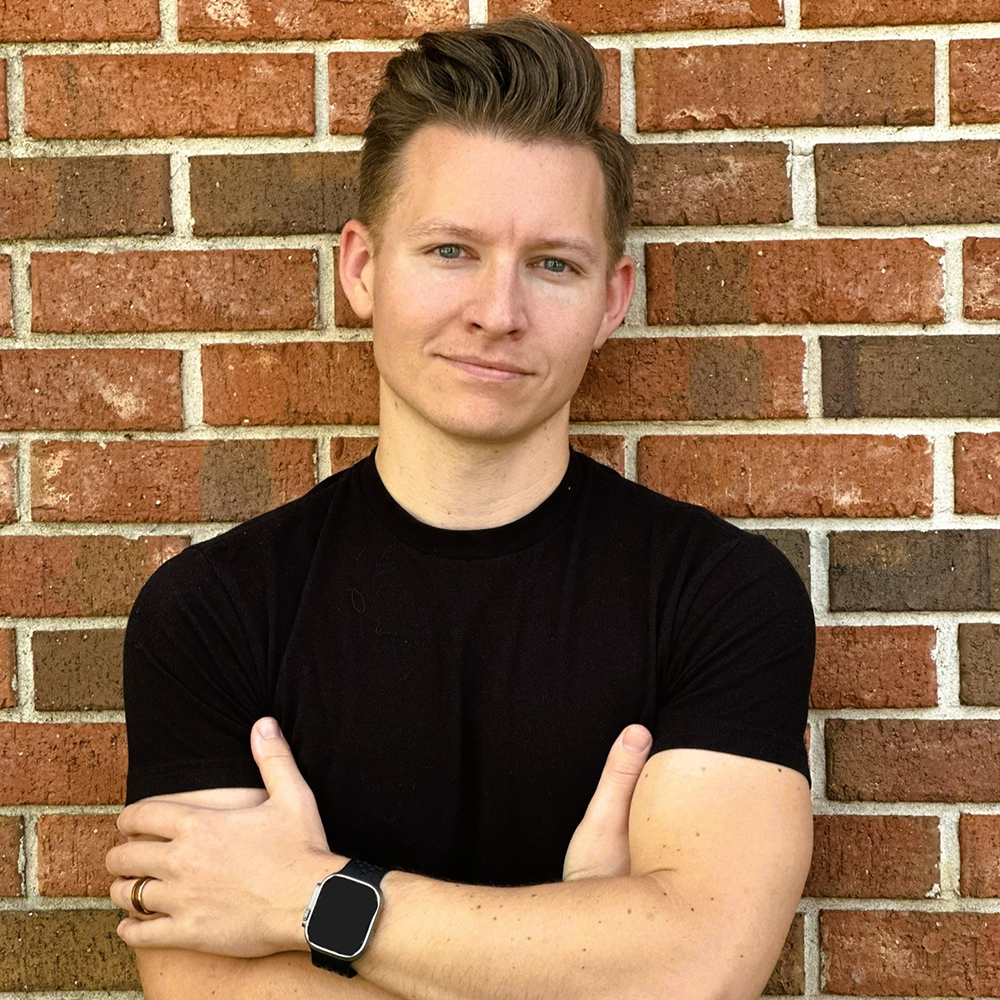
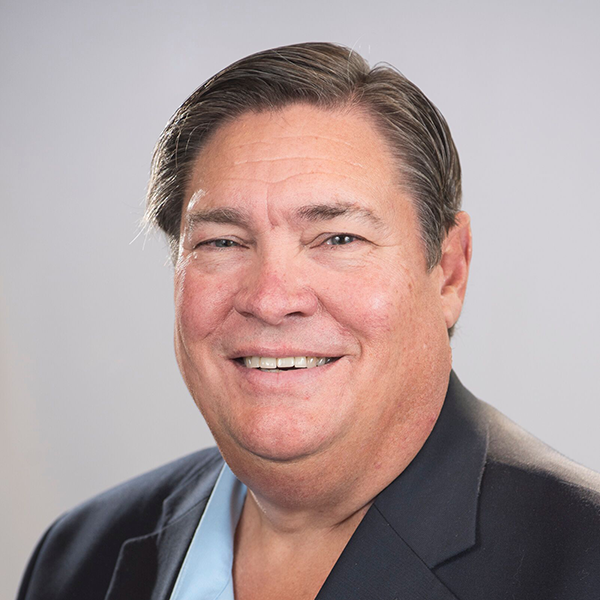
[Mary] Hi there. Welcome to Safety Labs. The safety industry relies on research from other fields and generates plenty of research of its own. But is that research helpful? Specifically, does it make a difference in the practices of safety professionals?
Today's guest thinks that the information's journey from researcher to practitioner could improve in a number of ways. I'll ask him how, in what ways this information journey isn't working, and more importantly, what we can do to make it better. Dr. Matt Law is a researcher, business strategist, award-winning author, and global speaker. He hosts Prove It to Me, a podcast that reviews total worker health, occupational health and safety, nutrition, and lifestyle research in an effort to provide practitioners with a grounded perspective on published research, its impact on practice, and actionable takeaways. Matt's a certified safety professional, a registered environmental health specialist, and holds a Doctor of Public Health degree from Walden University. His experience includes managing programs and initiatives in public health, construction, biotech, manufacturing, and military applications. Matt joins us from Florida. Welcome.
[Matt] Thanks, Mary. Glad to be here. Before we get started, I do have a quick disclaimer: the views and opinions I express in this podcast are my own and don't represent the opinions or strategies of any of my employers. I'm not here in my capacity as a representative of any of my employers.
[Mary] Good to know. Okay, so let's get into it. You caught our producer's attention with a LinkedIn post you wrote a few months ago, about the top five reasons why research sucks. This wasn't a standard social media rant — you had specific reasons, and I'd like to walk through them, as well as ask a few more general questions about safety research. So, can you give us a lay of the land in terms of safety research in the US? Or, if you have a global perspective, that's great — whatever you feel comfortable with. But how much research goes on? How is it funded? Where is it published? I know that was three questions all at once.
[Matt] Sure. Well, I can give an overall perspective here. Thankfully, there is a lot of research being done in the total worker health space, but especially in occupational health and safety, across the globe. When I was working on my doctoral research, I researched the risk perceptions of foreign-born construction workers in Central Florida. To do this, I had to do a literature review and find out what other research had been done in this area. It turns out there's actually been a lot of work done — not just identifying risk perceptions of workers, but the vulnerabilities of foreign-born workers here in the US are the same if you go to the UK, China, Italy, or other first-world countries. A lot of them have foreign-born workers coming in who take higher-risk jobs, especially in construction. So that's not an issue that's original to the US.
Thankfully, there is a lot of research going on across all sorts of subjects — risk perceptions, behaviors, human and organizational performance. All of these things are being explored, and the degree of that exploration varies across studies. Some are very limited and confined to specific things; others are more comprehensive. There's good and bad research out there, just like with any other field. A lot of my recent work, especially with the Prove It to Me podcast, has been going through these studies and understanding what's really happening — what can we take from that research and put into practice, what's good and bad about it, and what else we need to do.
[Mary] That's a perfect segue into my next question. One of the points you made in the post was that there's too much bad research. In this context, can you define what constitutes "bad"?
[Matt] Yeah, there are any number of things that can make a research study bad. One good place to start, if you're looking at any specific study, is to find the limitations section. Red flag number one would be if there are no limitations listed — there are always limitations to research. There's no way any one study can look at an issue from every angle. Maybe you've got a convenience sample, so it's not a fully experimental study, or maybe the sample size isn't large enough for accurate statistical analysis, or maybe it's a qualitative study — qualitative studies are super important, but they have their own limitations. So if a study doesn't list limitations, that's a red flag.
Another one to look at is funding. Funding comes from all sorts of places — thankfully there are a lot of grant-giving institutions willing to fund safety research, some academic institutions fund research on their own, there are nonprofits, and there are also for-profit organizations that fund research. One time I ran into a study — I actually covered this on my podcast — on the health benefits of maple syrup.
[Mary] As a Canadian, I feel that deeply.
[Matt] It was a really interesting study, fairly well constructed, and it seemed there was a statistically significant difference in the health benefits from maple syrup. But this study was done in Quebec, Canada — the largest maple-syrup-producing province, in the largest maple-syrup-producing country in the world — and it was funded by the Maple Syrup Producers of Quebec. That's a red flag. Of course the Maple Syrup Producers of Quebec would want a good study on the health benefits of maple syrup.
[Mary] You always have to look out for Big Maple Syrup.
[Matt] Right. But it's true — if it's for-profit, or there's a vested interest, can you ever really fully trust the results?
[Mary] How do you feel about that?
[Matt] It's a good question. I think you can, in some instances. This research would never happen unless those for-profit entities had a vested interest and funded the studies to make the research possible. When that happens, controls can be put into place. With the maple syrup study, for example, researchers reported that the funders had no hand in the actual study — they only provided the funds. So that's a control you can put in place: let them give you money, but don't let them do any of the actual work, and that helps ensure the integrity of the research. Again, there are just different red flags to look out for.
[Mary] Why do you think there's so much bad research? Although I realize there's an assumption built into that question — that there is "too much" or "so much." So maybe address whether that assumption is correct, and then the question.
[Matt] Every research study has limitations. The point isn't that every study out there is bad — most of them have some merit. The important thing is that we, as practitioners or learners, are able to look at these studies critically and understand how much value each one brings to the table. Some studies are going to be better than others; I'm not going to say every single one is bad. There are definitely ones that, if you look critically, you'll see issues — and sometimes you need an understanding of what good research should look like to be able to evaluate whether a study is bad.
So if you're looking at any particular study, go into it with an open mind. Don't go in pre-judging whether it's going to be good or bad — try to eliminate your own bias. But look at it critically: did they come up with good, comprehensive research questions? How large was the sample size? What type of statistical analyses did they use, and are they appropriate for the study? Not everybody's going to have that insight, but it's something to look at. And of course, who funded it, and what are the limitations? Look at it critically, and understand that because of those limitations, not every study out there is going to bring a lot of value to practice right away.
[Mary] You mentioned qualitative and quantitative research. I'm curious whether you have thoughts on the usefulness of qualitative versus quantitative. I'm sure it's not either-or, but what's the balance — what are the pros of each?
[Matt] This is probably a pretty long conversation, but I'll try to keep it simple. There's value to both qualitative and quantitative research. I myself am a quantitative researcher, but I've had to do qualitative research too. Quantitative research is all numbers and statistical analysis — we're able to mathematically calculate whether there's a relationship between two or more factors. With qualitative research, it's more exploratory — we're asking open-ended questions, getting stories from individuals, and often looking at smaller sample sizes. With a quantitative study, I could have thousands of participants, thousands of data points. With qualitative, I might only have a dozen or two dozen participants. But it's not about the quantity of information, it's about the quality of information we get from those studies.
A lot of times, if we have a concept that's never been studied, and we don't know where relationships might exist, we have to start with qualitative research — get those stories and perspectives, and try to form concepts, frameworks, and identify themes. Once we have those, we can figure out ways to quantitatively measure them. It's almost a chicken-and-egg thing, but you need the qualitative research to explore an unexplored concept before you can do the quantitative research. And then you've also got more comprehensive studies that use mixed methods, combining both.
[Mary] I hadn't thought of it that way — having the qualitative work ensure you have context and are asking the right questions before going into a larger statistical study. Another point you made in that post was, quote, "We always need more research" — which I think had to do with the design and conclusions of a lot of research. Can you explain what you meant by that?
[Matt] Yeah, this is probably another thing to look for in a study. If you read a study and it doesn't say more research should be done in this area, that's actually not a good sign. Every good research study ends with "we need more research in this area" because of the limitations. This is frustrating for practitioners a lot of the time — we look at it and think, well, this study isn't totally conclusive. But no study out there is going to be totally conclusive. It takes multiple iterations of any type of research to finally prove causation. Most of the time we're just proving whether there's a correlation between concepts — a link, a relationship. These two things might be related, but we're not totally sure until we've done this many, many more times.
So yes, most good studies are going to end with "we need more research," and yes, that's frustrating because we want to put those things into practice. The best thing I can tell you is that, as practitioners, we have to be able to look at that research and say, "Okay, there might be a link there — maybe there's a way I can try this, put it into practice, and see if it actually works for me." Then you can critically evaluate whether the research is conclusive or not. The danger, though, is that academic researchers tend to silo themselves and get stuck feeding the research cycle without feeding practice, because we're always asking for more research. To some degree, maybe there's a bit of imposter syndrome on our part as researchers — because of the limitations in my study, maybe I don't feel it's super valuable yet. But the reality is, if I can communicate that to practice in some way, somebody is going to find value in it and be able to make that link. So yes, we'll always need more research, but that doesn't mean we can't start trying things and putting them into practice.
[Mary] And it sounds like researchers have to be a little cautious about getting tunnel vision — not stopping to take a breath and recheck, perhaps after every study or at certain milestones, how practical the information is going to be for safety professionals. Is that fair?
[Matt] Yeah, I'd say that's fair. One of the biggest things here — and I know this is probably on the docket for us to talk about — is that there are these silos between research and practice, and a lot of times it's difficult to get communication between the two. That's really what we need to overcome. Just because we continually need more research doesn't mean we don't also continually need more practice. We have to be able to bridge that gap to some degree.
[Mary] We'll definitely be coming back to that — actually at the end, because I want to spend a fair bit of time on that point. But a few other points you made: one was that graduate work makes people jaded about research. Did you mean practitioners, researchers, or both?
[Matt] I think a little of both, probably more so on the practitioner side. The academic training landscape has totally changed, especially in occupational safety and health. Today, more people are going to school for safety — twenty or thirty years ago, that wasn't the case. We had folks coming into safety from other occupations, not necessarily academically trained for the job. Now more people are pursuing it from the get-go. As part of that academic training, especially at the master's or graduate level, you're doing a lot of research — at least literature reviews to supplement your papers or theses. A lot of us can get pretty burnt out on that type of work. It takes effort to fully and critically evaluate any given published research study. If we didn't like that work when we were in school, we probably won't like it when we need to do it for our jobs. So it's easy for a lot of us to get jaded by all that graduate-level work. But I think what needs to be communicated more during academic training is that you're going to continually have to do this kind of work if you want to bring research into practice — which is what was actually communicated to me when I was working on my doctoral degree.
[Mary] So people aren't thinking, "Okay, this is just another hoop I have to jump through to get my degree, and then I can forget it."
[Matt] Right, because there are a lot of those. You're stepping into this level of training — this is now part of your life. It's not just something you're doing to get a grade and a degree; this is what you're going to have to do to be a good practitioner.
[Mary] Okay, so I'm going to put the last two points together — they're not the same, but they're related. The first was "statistics are hard," and the next was "we suck at communicating research to practitioners." So let's start with: what role do statistics play in that information blockage?
[Matt] First of all, I have to say statistics are extremely important. When I did my graduate work for my master's degree, I took statistics — and I didn't really get it. I never truly understood it. Thankfully, I didn't need a full understanding to get my graduate degree. That changed when I got my doctoral degree — I needed to understand statistics. I ended up taking what I consider the absolute worst statistics class I've ever taken, with no help from the instructor, so I had to teach myself. Once I did, something clicked along the way with how these statistical calculations actually translate into a meaningful output — being able to say, "Okay, now I can see there's a relationship between these two factors," and see how that translates to practice.
So we need those statistics. The challenge is that, just like any other realm of mathematics, statistics isn't going to click with everybody. Not everyone is going to fully understand the formulas or be able to do the calculations — and you don't have to, to either do research or apply research to practice. But the challenge for researchers is that those of us who are good at statistics sometimes have a hard time translating that into something everyone else can understand, because there's a lot of jargon — specific terms that we and other statisticians get, but that the average person who's never taken a statistics class won't. It's difficult for us to translate that, and I think the onus is really on us. If we're the ones who understand statistics, we have to be the ones to translate it, and do it better. If you go on YouTube and try to learn statistics, or try to learn how to use SPSS — that's the statistical analysis software I use — you'll find probably twenty-five videos you don't understand and maybe one that you do. That's at least the learning experience I had. Those of us who understand it really have trouble translating it for some reason, and there are a couple of people who are really good at it. So I think that's something we researchers have to practice. And if you do have an aptitude as a practitioner for some type of statistics, I'd encourage you to look into it and see if you can learn something from that.
But this really does go into the overall conversation that we just aren't good at communicating research to practitioners. There are a lot of different gaps that happen there. Number one, when we publish research, it ends up in academic databases that are only accessible to researchers or academics — they sit behind a paywall. Not everybody's going to pay to get into an academic database, and they're already jaded from the graduate work, remember, so they don't want to read the articles. There are some other publications out there that are more open-source and easier to access. For example, ASSP members have access to the Professional Safety Journal, which has peer-reviewed articles in it. The Board of Certified Safety Professionals has their SHIFT journal now, which is free to access for anybody — though that's also a pretty young journal, so there's not a ton of research in there yet, but what's there is really good right now. So there are different publishing avenues that researchers are moving toward that are a bit more open access.
The other part of this is that, in traditional journals, if you want your article to be open access for anybody — without having to pay for it — you, the researcher, have to pay for it, and a lot of times it's thousands of dollars. So barrier after barrier after barrier — we're just not doing well at communicating research to practice. The other challenge we run into is at conferences. We can present this stuff at conferences, but again, we have to get better at translating and presenting actionable items. I don't know how many conference sessions I've sat through that have produced some really, really good ideas that are really, really sexy, but have absolutely nothing in there that's actionable. I can't do anything with it as a practitioner. So we have to get better at teaching: when we do that research, we have to be able to translate it into something that says, "I'm going to present this to you today. This is my big idea. These are the relationships I found. This is what I think you might be able to take from it." It doesn't matter if it actually happens or not — I want it to, but it's about presenting something the audience can take and put into practice right now, that creates some action when we teach in those settings.
And then there are a lot of different mediums for us, in this new digital age, to communicate research. It's not just journals or conferences anymore — we have social media, we have TikTok, I've recently gotten somewhat okay at TikTok, and we have podcasts. These are great mediums that a lot of people are engaging with now, and as long as we can translate that research into something practical and easy to understand for the practitioner, we should continue to use those mediums. I think academic institutions should encourage their researchers to use those mediums to communicate research — it's just going to make everybody look better, and make that research-to-practice connection much, much easier.
[Mary] I want to back up a little bit. You were talking about the onus being on the researcher, which makes perfect sense to me. But — and maybe this is on the researcher too — I was thinking about statistics when you were talking, and I remember in math thinking, I don't care about the formula, just tell me the implication. I want to understand the implication — if you use this formula, you can discover this, right? I had no interest in actually doing the steps. It seems to me like that's the sort of literacy level that would be helpful for practitioners in understanding statistical analysis. Maybe that's your next conference talk.
[Matt] I'll give an example here. One of the statistical calculations I like to use, especially in quantitative research, is regression. I like to use linear regression to find the correlation between two variables, because you get a lot of different figures from that. This is one where I had to dig and dig to figure out how to translate those outputs into something meaningful. One of the most important things from that is that I can see, yes, there's a statistically significant relationship between two variables, but I can also see something called variance — and I'm not going to go into the nitty-gritty details, but I'm happy to walk somebody through it at some point. This variance calculation is extremely important, because I can see that a relationship is statistically significant, but maybe the variance is only 5%, meaning whatever this factor is doing is only affecting 5% of the output — there's 95% of other factors affecting it too. That's extremely important, and it's why it's good for us to be able to translate statistical analysis in a meaningful way. When I put it in that perspective, the layperson can understand: okay, there might be a causation thing here, but I need to go look at all of these other factors that might actually be causing this to happen.
[Mary] So yeah, we've got to get better at translating these things. I think that's tough in every industry — that's why technical writers exist, because people who understand the technical aspects of something need to be able to explain it in easier terms. You've mentioned some things you'd recommend. Is there anything else — if you were to give a call to action, first to practitioners and then to researchers — what do you think would be the number one way they could approach this to get through some of these barriers?
[Matt] My number one call to action for practitioners is curiosity. Be curious — and this goes for just about everything, but especially for research. If you're presented with a headline that says "study finds," and it's something that maybe doesn't align with what you thought to be true, don't just dismiss it — be curious about it. Or maybe it's something that absolutely confirms what you already believed — don't just immediately accept it either. Be curious, and go critically evaluate where that information is coming from, to understand if it's really true, or if there are limitations. It's just about having a critical view and being curious about the information that's out there. A lot of good research is being done, but everything has limitations, and not everything is able to be immediately put into practice. So critically evaluate things before you either accept or dismiss the validity of those findings.
My call to action for researchers is to continue finding new ways to communicate your research. Keep doing your research — don't let imposter syndrome creep in and tell you, "Well, these findings were so limited," or "maybe I didn't find the relationship I thought was there." That doesn't mean it doesn't need to be communicated. If there's not a relationship, that's just as important as finding that there was one, and practitioners need to know that, so they know what they can and can't do with that information. We can't get stuck in our own bubbles, just presenting research to other researchers — we have to get it into practitioners' hands in some form or fashion. It might seem basic, but get your findings down to a third-grade reading level. We want everybody to be able to understand this stuff and put it into practice. Don't let it just sit behind a paywall — get it on social media, get it on podcasts, get it on TikTok, get it wherever it needs to be, to make sure folks can put it into practice.
There's one other thing I'd add for practitioners: engage researchers. If you're working on something in your workplace and you don't know if it's going to work, and you don't know how to measure whether it will, engage a researcher. They're hungry for research — they want to find new things to measure and study. I guarantee you, somebody at some academic institution will say, "Yes, I would love to work with your organization and help you measure these things and see if this actually works." And then we'll publish it together.
[Mary] I imagine that researchers can have a reputation for being in an elite ivory tower, or operating in a silo, that sort of thing — but I'd imagine they actually get really excited if there's an opportunity to work with a real case study.
[Matt] Yeah, there are so many of us limited to a lab setting. I forget which subject I was studying recently, but the biggest limitation was that it had never been studied outside an experimental laboratory setting. They wanted the opportunity to measure it in the real world, and just hadn't been able to find it yet. So yeah, we're always looking for that real-world application.
[Mary] Awesome. Well, I have a few questions that I ask everyone at the end of the podcast. The first is: if you had a magic wand, where would you focus training for tomorrow's, or the next generation of, safety professionals? Obviously training is a wide topic, but is there a focus area you think is underrepresented, or that just needs to be really driven home for people?
[Matt] Here's one. I think one subject safety professionals really need to understand is the behavior piece. I don't know exactly when it came out — I know it's been a few decades — but there's this concept of behavior-based safety. Yes, we have other concepts now — human and organizational performance, serious injuries and fatalities, that type of approach — but that doesn't mean behavior-based safety is dead. It's very much still alive; it's just that, for the most part, we never really did it correctly. I think one of the most important things for us to learn is that all of these different concepts have merit. Safety I and Safety II both have merit. BBS, HOP, and SIF — they all have something to bring to the table. It's about going in again with an open mind, being able to look at the parts of each that are going to work for my organization and my application, and figuring out what I need to measure to make sure those things are working. So maybe it's about having an open mind, looking at all these things critically, and pulling out the parts that make sense for you.
[Mary] Great. If you could go back in time to the beginning of your safety career, is there any advice you'd give yourself?
[Matt] I had the benefit of starting out in a setting that wasn't fantastic for longevity in my career — obviously, I didn't stay there that long — but it was a really good setting to learn all the things that should and shouldn't be done in a safety program. I really don't have any regrets about that; it was a good learning experience. If I were to tell myself one thing, it would be to focus on the experience, not the dollars. I needed the dollars at the time, to live, to eat — but at the same time, that experience was super valuable. If I'd thought about it a little more, without the monetary context, I would have said, continue to get more experience like this and expand on it — what else can I learn, what else can I experience, that I can bring to the table and use to help somebody else later in my career.
[Mary] That's great. Some people say, "I wouldn't tell myself anything, because I wouldn't listen to myself."
[Matt] Well, I don't know if I would listen to myself, but I would try.
[Mary] I guess that's a totally separate question.
[Matt] Yeah, there are a lot of people who don't listen to me. I'm probably one of them, and I still try.
[Mary] How can our listeners learn more about the topics in our discussion today? Are there any books, websites, or publications you'd recommend, besides the podcast?
[Matt] I can always recommend some things. When it comes to the statistical analysis stuff, I don't know of any really good publications I could recommend to someone who just doesn't want to learn statistics. But I do highly recommend listening to the podcast — it's Prove It to Me. "Real research, real data, and obs" — that's the tagline of the podcast. I often bring on guests who are talking about their own research, or research they've been able to put into practice. In the off times when I don't have a guest, I run through different studies in occupational health, safety, nutrition, lifestyle — different things that are interesting — and I evaluate whether they're good or bad. I do my best to take all of these technical terms and put them into something that's understandable for anybody. And maybe you don't get anything from that specific study, but you'll at least see how I evaluated it, so you can better critically evaluate research in the long run. There's also my website, drmattlaw.com — my entire portfolio is on there, as well as links to the podcast and other things. Any questions that come up about these topics, I'm happy to provide resources to help.
[Mary] That leads me to my last question — other than what you've already mentioned, where can our listeners find you on the web, if they want to reach out by email or LinkedIn?
[Matt] You can email contact @ drmattlaw . com, or you can find me on LinkedIn — I'm definitely on there, just under Matt Law. If you Google "Matt Law Safety," I'll come up. I tried this the other day — it does work.
[Mary] Great. Well, that is our podcast for today. Thank you to our listeners, and thank you, Matt, for joining me.
[Matt] Yeah, thanks for having me. Glad to be here.
[Mary] As always, thanks to the Safety Labs team working behind the scenes to bring you these wise and wonderful guests. Bye for now. This podcast is created by Safety Products Global, the world's leading manufacturer of safety knives. Through our trusted brands, Klever, Slice, and PHC, we empower companies to prevent injuries by providing safer cutting tools for every material and application. Until next time, stay safe.