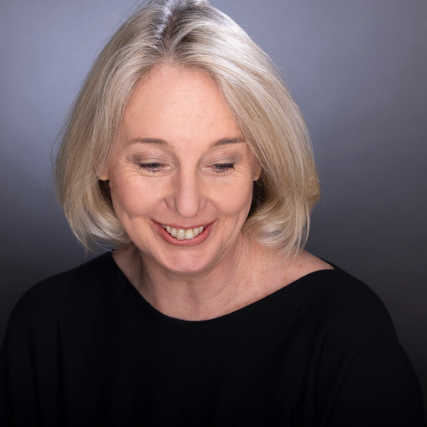
[Mary] Hi there. Welcome to Safety Labs. Sometimes what's needed to understand an event is to ask the right questions. Today's guest has written a book she wishes she'd never had to write, analyzing the Grenfell Tower fire, along with examples of many other major accidents. She asks two important questions about them: why don't we learn, and what would it take to enable systemic change?
A consultant in high-hazard industries, Gill Kernick's work highlights safety as a driver of broader organizational change, with a focus on preventing major accidents. She believes the voices and tacit knowledge of the front line are a strategic cornerstone. Gill lived on the twenty-first floor of Grenfell Tower from 2011 to 2014. On the 14th of June, 2017, she watched it burn. Seven of her former close neighbors died, in addition to sixty-five other people. She promised to make their lives count, and works to incorporate thinking from high-hazard industries to ensure that we learn. Gill hosts a blog, The Grenfell Inquirer, to encourage authentic debate and learning. In 2020, she was voted one of the top 25 most influential people in health and safety in the UK. Today we'll be discussing the second edition of her book, "Catastrophe and Systemic Change: Learning from the Grenfell Tower Fire and Other Disasters." Gill joins us from London. Welcome.
[Gill] Thanks, Mary.
[Mary] Grenfell was nearly nine years ago, so for some perhaps younger listeners who don't remember, or weren't aware, can you give us a high-level view of the Grenfell Tower fire?
[Gill] There was a small kitchen fire, about the size of a wastepaper basket — I should give some more context. It was a very, very hot day, it was Ramadan, so people were out, or having big meals, windows were open — imagine this vibrant community in the middle of Ramadan, in the middle of summer in the UK, not exactly "middle," but summer in the UK. A beautiful day, beautiful evening. Then there was a small fire in a kitchen on the fourth floor, thought to have been caused by an electrical fault in a fridge freezer. It got into the external facade — they believe it traveled across the ceiling — and there were multiple failures, including a lack of any cavity barriers at the windows, so it spread directly into the external facade, made of flammable cladding and insulation, and spread very rapidly. I forget the exact times, but I believe within twenty minutes it had gone from the fourth floor to the twenty-first floor.
There were a lot of internal control failures too — the door closers didn't work, so the lobbies quickly became, well, not literally impenetrable, but the experience for residents was that they couldn't get up because of how smoke-logged everything was. Firefighters left doors open while fighting fires, so the stairs eventually became smoke-logged too — conditions changed throughout the fire. Importantly, the advice given by the fire brigade controllers was to "stay put," for a significant period of time — really, the whole building was on fire, and for over an hour and a half, people were told to stay put. I lived on the second floor from the top, and most people who died were toward the top of the tower, either because they lived there, or because they'd gone up hoping to be rescued from the roof, or other reasons. People were told to stay put, and then, when it was too late, many were told to leave — but by that point, it was too late.
[Mary] As I was reading the book, I was really struck by the sheer number of opportunities that were missed to prevent, contain, or mitigate the fatalities — afterward I could name nine things off the top of my head that were wrong turns. Is that particular to Grenfell, or is that common in these big, complex incidents?
[Gill] I think we know, and I certainly knew, from working in high-hazard industries, that there's never a single source of failure — there are always multiple causes. But I certainly hadn't expected, and was horrified by, the number of failures in Grenfell. In my experience, with most failures, it's hard to find a single party or control that was actually effectively in place. In terms of systemic failure, it's really unbelievable, the number of people and organizations that failed, leading to controls not being in place, both before the event — a refurbishment that turned a safe building into an unsafe one — and in the response, as we've discussed. I knew it would be bad, coming from a high-hazard background, I knew there wouldn't be a single source of failure, but I never expected it to be so extensive.
[Mary] I don't want to dwell too much on the details, but for listeners, here are a few things that happened: previous fires that were ignored, reports as far back as 1986 warning about the danger of similar overcladding systems — overcladding being the refurbishment material added to the outside — materials certification and testing failures, oversight failures during the refurbishment, installation choices, ignoring resident complaints about poor fire safety, poor communication at the incident command site, the "bridgehead," staffing not at the right scale, an unclear chain of command, the "stay put" command you mentioned, operators receiving and giving unclear instructions, and no plan for a mass of unhoused people. I list that just to give people a sense — it's quite shocking, really. When we look at all these wrong turns, there were many opportunities for improvement. Official inquiries tend to get into the weeds and approach change after an incident like this in a piecemeal fashion, but you argue that approach is misguided. Can you explain why?
[Gill] I distinguish between what I call piecemeal and systemic change. I'm not arguing piecemeal change isn't important — it's just not going to lead to learning at the level we need. For example, one of the failures was the lack of self-closers on doors, so there's now a big campaign, at enormous expense across the country, to make sure fire doors are compliant — in some cases buildings have reinstalled them three times because of such a lack of competence across the industry, which is itself another of the big failures. That's a piecemeal intervention that will absolutely make people safer. But it doesn't deal with the failure to listen to residents' voices, the power imbalances that stop us from doing that, or the contextual biases and attitudes that exist in the industry. My argument is, if we're really going to learn from incidents, yes, we should take piecemeal interventions that respond to technical issues — but unless we get into the gnarlier, more complex, non-technical issues, like power, equity, fairness, we'll never prevent accidents, never really learn. Those are very difficult issues to explore and change, across industries or organizations.
[Mary] In relation to that gnarly, complex side, you talk about the concept of "making the water visible" as a central challenge we face. Can you explain what you mean by that phrase?
[Gill] There's this beautiful metaphor — two fish swimming along, and one says to the other, "how's the water?" and the response is, "what's water?" There's a phenomenal paper I read, really influential, called "The Water of Systems Change," which is where that phrase comes from. If we're going to engage in systemic change, we first have to see the water we're swimming in, so we can look at what actually needs to change. I don't think we spend enough time, especially on the non-technical issues, digging into things like power, equity, and their impact on accidents or safety. So the first thing, and really what the book does, is make the water visible.
[Mary] The guiding questions of the book are, why don't we learn, and what would it take to enable systemic change. My question is, why are these the right questions to ask, and how did you arrive at them — was it obvious, or was there a process you went through to nail down the right questions?
[Gill] There was a long process, and it's hard for me to fully reconstruct, because the process itself was so complex. I think you see an accident, and as is typical in responses, the media and experts immediately go, "this is the issue, and this is how we solve it" — we immediately go into this problem-solution-expertise mindset. That was the first thing I noticed. The other thing happening at the time was the beginning of COVID, and all the issues coming out around Grenfell were analogous to what was happening with COVID — the failure to listen, the failure to tap into the tacit knowledge of communities, or listen to frontline voices in healthcare. So there was this analogous thing happening as I wrote the book and learned more about Grenfell. I realized that if we're going to learn, we first have to understand why we don't, because history tells us we're not going to — if you look at incident after incident, the same themes recur, not listening to frontline voices, over-reliance on process and procedure, tick-box checking, and so on, and on. But we don't learn. So if we're going to, we first have to understand why we don't, and only then ask a different question — what could or should we do that might lead to systemic change?
[Mary] There were quite a few — I made notes in the margins, things like incompetence, laziness, greed, pride, lying, and a few I can't say on air. It was pretty maddening to read, but as you say, it's not uncommon, it's part of being human, I suppose, maybe.
[Gill] Maybe not — well, we will get to that, actually.
[Mary] Hopefully not.
[Gill] Hopefully not, but we'll get to that, don't worry. You state that top-down management systems aren't really designed to deal with complexity, and you give examples of the Swiss cheese model, the bowtie model — not that they're bad, but they miss the mark a bit for an event like Grenfell. Why is that?
[Gill] I think they're genuinely useful models, because they help us understand it's not a single source of failure. The issue is they're presented in a linear way, which is acknowledged as one of their weaknesses, because things aren't linear. If you look at Grenfell, it didn't happen in a linear fashion — it wasn't one control after another failing, it was multiple failures simultaneously, not in a linear way. That's the issue with those models. From a top-down perspective, in complex environments, mostly the solution isn't known — when you're dealing with complexity, in the proper meaning of the word, you're in an emergence space, versus a cause-and-effect, knowable space. The power of expertise in that space is very limited, which is where the voice of the frontline becomes really important, whether residents or frontline workers, because that tacit knowledge is critical. You need multiple stakeholders, experimentation, trying things to see what works. Top-down command and control doesn't work at all in complex domains, because the nature of emergence, things being dictated by dynamics where cause and effect aren't known or knowable, just doesn't make sense for that kind of control.
[Mary] I'm a bit of a geek about complexity, I like complexity.
[Gill] I am too.
[Mary] You introduced a framework I'd never seen before — I'll try to pronounce it correctly, I think it's "Cynefin"?
[Gill] The Cynefin framework, yes.
[Mary] Could you describe that, and how it might be useful in this kind of situation?
[Gill] I find the Cynefin framework — invented by someone called Dave Snowden, a complexity scientist, one of the smartest people I know, I've had the privilege of doing a couple of workshops with him — really impacted my thinking, and I've known about it for over a decade now. What it does — it's not quadrants exactly, but you have simple domains, where cause and effect are tightly correlated. Then you have complicated domains, the world of good practice — if I do A, B is likely to happen — and in those domains, what you want is to look among a number of alternatives and choose the right one, because you're in a predictable, knowable world. Then you move into complexity, where cause and effect are not known and not knowable — this is where that notion of emergence comes in, and how you operate there is very different — it's about experimentation, learning, listening, creating the conditions for what you want to happen, and learning, because you don't know — you try X, and learn what might happen, then try something else, and see. It's a very different way of operating and thinking.
Finally there's a chaotic domain — for example, right after a response or in an emergency, everything's just chaotic — the world right now is probably quite chaotic, honestly — and in that domain, you genuinely don't know what's going to happen, so being quite directive is actually helpful. There's a fifth domain too, which I won't get into, it's a bit complex, but I can include a link to more details in the resources.
[Mary] It really helps define the problem in a way I found eye-opening. Now, what's the Grenfell framework — there are four elements I'd like you to describe.
[Gill] When I was trying to make sense of what happened — actually before I was asked to write the book, when I was just trying to make sense of it myself, this inquiry into the systemic side — I was looking at what the elements of that are, and again I was quite influenced by "The Water of Systems Change" paper, looking at how we make the water visible. It's a framework with essentially four quadrants. We start with the foundational and behavioral — the obvious ones, the things we always look at — what structures, policies, procedures are in place, and what do we do, behaviorally, to prevent and respond to accidents. Mostly, how we respond to incidents, or really anything, is to focus on those obvious domains — something's gone wrong, what policy or procedure are we going to put in place, what behavior charter are we going to write. We operate in those domains.
But there are two other domains, which I call the obscure — there's the relational domain, how we interact, and the contextual domain, how we think. The relational domain covers things I've already mentioned, power, voice, those kinds of things, and contextual covers equity, fairness, bias, you could put culture in there too. My view, in terms of making the water visible, is that we need to look at all of those domains to understand the full picture.
[Mary] We're going to dig into those in a moment, but before we continue, I'm going to share one of the tools in the Klever brand, which is owned by Safety Products Global, the company behind the podcast.
In a traditional warehouse setting, cutting tools need to last, and flimsy blades won't suffice. Traditional blade design increases the risk of injuries and damaged goods. One solution is the Klever EcoExchange XD — it's got a concealed blade in here, which reduces the chance of injuries and product damage. The blade head is engineered to be fifty percent stronger than similar cutters. The blade itself cuts up to a mile of corrugate before it needs to be replaced, and when it does, you can simply replace the head rather than the entire tool. It's also got a couple of tape splitters that help save the blade a bit of cutting. If you'd like to learn more about which tools will work for your materials, you can request free samples — go to safetylabspodcast.com/samples.
And now, back to our show. I wanted to talk a bit about the first two domains. You mention that we tend to think "regulations equal compliance equals safety" — but that's a myth. Can you explain?
[Gill] In the book, I explore what I call myths, and that one is "regulations guarantee safe outcomes." It's a little tongue-in-cheek, because I'm not sure everyone consciously believes it, but if we look at how we actually act, we do act according to that myth. People often say to me, "well, we've learned from Grenfell, we've got new regulations," as though there aren't fundamental flaws in the regulatory system itself. I'm not saying regulations aren't important — actually, that's one thing that's changed a lot since I wrote the first edition, I have much more appreciation now for the importance of regulation and guidance — but we have to understand the system itself is very vulnerable, and at Grenfell there were systemic failures of the regulatory system itself. My main point is, new regulations don't guarantee safe outcomes, and regulatory systems are increasingly vulnerable, because we're in an increasingly complex world with changing risks, and regulation always lags. Lithium batteries, for example — many countries, including the UK, still haven't regulated for that, and we know that's an increased risk. Climate change is leading to more risk too. If we look at the vulnerability of regulatory systems, combined with the changing nature of risk, we really need to understand that regulations alone can never be the solution, and just complying will never be enough, particularly for complex projects — and a building is a complex project, most projects probably are, given the changing nature of risk.
[Mary] In terms of regulatory vulnerabilities, you encourage something you call "mindful compliance." I've heard of malicious compliance, but never mindful compliance — can you explain what you mean?
[Gill] Mindful compliance isn't saying don't comply, or ignore regulations — it's saying, mindfully comply. My thinking has shifted on this over the last year — part of it is being really critically clear about the intent behind the regulations, and making sure you're complying with the intent, rather than just tick-boxing the guidance. That's critically important. But also, in some cases the regulations themselves might be flawed, so you need to think carefully, in the risk context you're operating in, whether complying with these regulations is actually mitigating all those risks, rather than assuming, "I've complied with the regulation, so everything's fine," which I think is often how people approach it. In the UK, for example, the regulations are around life safety, not building safety, so you have to ask, do you want to protect the building, or just make sure people don't die — which again goes back to understanding the intent of the regulations at a very deep level. I now know some people who operate that way, and I have massive admiration for people who really stay clear about the intent behind regulations and look at risk and regulation in a very mindful way.
[Mary] That makes me think of, don't outsource your thinking to the regulations. That's one area of accountability — I want to talk about understanding accountability in a complex situation like this. You mentioned there's a difference between a blame narrative and an accountability narrative. Can you explain that?
[Gill] Blame looks for who's wrong, and it tends to be quite personal — it almost lets the rest of us off the hook. If something goes wrong and I can say, "Mary, you're to blame," I don't have to look at anything else. Whereas if we're asking what Mary was accountable for, and what failed in the delivery of that accountability, we might learn there are flaws in the guidance, or competence issues, or that the way something was executed reflected a lack of competence. It's not personal anymore, it becomes a more academic conversation about what was in place for you to fulfill your accountability, and what failed along the way. When we look at accountability that way, I'm not off the hook either, because there will be things I wasn't accountable for, or possibly wasn't being accountable for. It takes us into a much more learning-oriented space than blame.
[Mary] And as you're saying that, I'm thinking of "outsourcing responsibility" — blame is, in a sense, outsourcing responsibility, whereas accountability looks at all of it.
[Gill] Can I add something to that? One of the things we're seeing post-Grenfell — we're nine years on now, and there has been a lot of change, but not the systemic or cultural change that was hoped for. Part of my argument is that people don't feel accountable for what happened at Grenfell, which is almost understandable, since most people in the industry now weren't involved, especially younger people coming in. But accountability is a gift we can give ourselves — I'm going to hold myself accountable, or "responsible" is probably a better word, because I helped create the conditions inside of which Grenfell happened. There's a level of ownership we can bring as an industry that equates to accountability and learning, whereas blame is just, "well, it wasn't me, it was somebody else, I'll keep doing what I'm doing," and we never change.
[Mary] You also mention the interplay between competence and the ability to manage ambiguity, which caught my eye, because I think it's very true. Can you explain that relationship?
[Gill] One of the things revealed by the inquiry was a real lack of competence in the industry, so firstly, you have to build that base-level competence. But I also think, until we're able to deal with ambiguity — you need base-level competence in understanding standards and the basis of your profession, which, shockingly, weren't in place prior to Grenfell, and in many cases still aren't, post-Grenfell, because improving an industry's competence takes time — but we also need a level of competence in dealing with ambiguity. It's not just, "okay, I can tick these boxes," we need to be able to deal with ambiguous situations. One of the inquiry's expert witnesses, José Torero, gave a fabulous talk about Grenfell and the notion that what really happened was a lack of competence at dealing with that level of ambiguity — I'm probably misquoting him, but I can give people a link to that resource. It was a really inspirational talk for me, and taught me a lot about competence.
[Mary] It occurs to me, the more ambiguity, the more competence is required. You made a distinction, when talking about systemic change, that I don't think I've heard before — helping people who are trying to use a system, versus changing the system. Why is that distinction important — say a bit more about that, because I think it speaks to leadership, when something's wrong, people say, "let's change the system," but it rarely occurs to them to instead say, "let's start with helping the people who are trying to use the system." I guess it speaks to frontline tacit knowledge.
[Gill] I have a big issue with how we don't tap the tacit knowledge of the front line. We develop systems, processes, and so on, often in ivory towers, away from the people most impacted, or who actually have to deliver. Then, when things don't work, we go back to, "let's change the system." I remember an example — I was doing consulting work up in Aberdeen, leading a workshop, and a frontline worker said to me, "we have, I don't know, a ten-page procedure for how to climb a ladder, and half a page for some high-risk activity." That's absolute gold dust from the front line. We tend to try to use systems to control, rather than ask what the people who actually need these systems or processes require to do their job effectively, and often the answer is less, rather than more.
[Mary] Systems are often doing what they're designed to do — sometimes we think a system is broken, but we're not actually asking the question of what it's designed to do.
[Gill] One view of systems is that systems are always doing what they're designed to do — that the system is functioning perfectly, in a sense. From that view, what you do is look at the outcome and ask, is this what we actually intended? Rather than thinking, "the system is great," or "we just need to tinker with it" — actually, no, systems always produce what they're designed to produce, you just have to look at the outcome and ask, is that what we designed it to produce? If not, it's not really broken in the way we assume — that's a really insightful way of looking at systems.
[Mary] I always think of social media when I think of that concept — people talk about it as divisive and so on, but it's actually designed for engagement, and what engages us? Strong opinions, strong emotions.
[Gill] Exactly — and to take a whole mass of our time, leading to dopamine hits when we get likes, and so on. That might not have been the original intent, which might have been "create connection," but if you look at the design by the outcome it produces, well, it produces some not great outcomes, and certainly not solely connection between humans.
[Mary] You wrote in the book about "post-normal scientists" — here's a quote: "post-normal scientists argue for the need to accept different ways of knowing." I'd never heard the term before, and was wondering what a post-normal scientist is and what it has to do with different ways of knowing.
[Gill] I'm not an expert in post-normal science — I'll send links to some great resources. But my takeaway from my reading is that post-normal scientists think about the future, but in a very different way, looking at the limits of traditional science — where you have this notion of the expert who knows and tells. This term, "different ways of knowing," which I absolutely loved, incorporates — we've talked a lot about different voices, the voice of the frontline, but other voices too, the voice of community, the voice of the end user, the voice of disabled people, unequal or inequitable groups — it takes us into the domain of diversity and inclusion, which I don't think we think enough about in these contexts. We need all of these different ways of knowing, not just traditional expert knowledge — stories too, if you go back to ancient cultures and the power of storytelling as a method of learning, how do we tap into that and those other ways of knowing.
[Mary] You talk about how we need to understand deeply held narratives, assumptions, beliefs — I'd say culture — in order to create systemic change. How do we do that?
[Gill] That's the big question, isn't it, Mary, which the book doesn't fully answer — it does look at how we might create systemic change, but when we talk about culture, my argument is that we need to create safe spaces for conversation. If we're going to alter these things, we need space to talk about them, inclusive of all views — not just, "okay, we've created a space," but genuinely inclusive. I think in the world today, it's so difficult to speak up, because it's such a complex world, and who are we going to upset? We have people with very diverse opinions and ways of thinking that do impact safety. Unless we can create spaces to explore those things constructively, not leading to "my view's right, yours is wrong," we won't shift things. Importantly, you have to understand other people's points of view, which we're not good at — have compassion, try to understand, especially people you don't agree with. I think we have a tendency to believe our own narratives, of course, but also to believe our narrative is, or should be, true for everyone else too. That's a cognitive bias we all deal with.
[Mary] I'll read another quote — "we need to learn to question good news and embrace bad news." Can you explain what you mean, and why it's important, since it's the opposite of what we normally do?
[Gill] I think it's Andrew Hopkins who came up with the term "greening dashboards." I've seen this a lot in my consulting career — we create KPIs, dashboards, measurement systems, and if you're at the top of an organization, you see these nice two-page reports that can never capture the complexity of what people are actually dealing with. Further down the organization, at different levels of management, people perceive that what's wanted is good-looking dashboards, so there's this term, "greening the dashboard" — we're not lying, exactly, but we massage the narrative so things look good to the people the dashboards are designed for at the top. This concept is about challenging that — if things look green, we should really question that, because what's the bad news that's not being said? Things are complex, difficult, messy, and what executives should actually welcome and encourage is understanding the gnarly mess, rather than nice green dashboards that let them assume everything's fine, only to be surprised three months later when a project falls apart. That happens because you haven't created the space for people to say what the genuine issues are — and if you know the issues, you can support people in solving them.
[Mary] I read somewhere there's a saying in the military that once you make it past a certain rank, you'll never eat poorly again, and no one will ever tell you the truth again.
[Gill] Exactly — it's about being cognizant of that shadow side of leadership. You can actually use dashboards, if you question the green and embrace the red, to break through that a bit. I've seen companies do that, executives working that way, and it can be really effective, if done in the right, encouraging, supportive way.
[Mary] Exactly — if you encourage the bad news, people won't be so scared, and you support people with what they're dealing with, rather than blaming them for having a challenge — "thanks so much for sharing that, what can we do to support resolving it, whether that's resources, expertise, whatever it is." So here's the question I said I'd get to — fear of ambiguity, vulnerability, power loss, these are all pretty baked into human nature, or at least human experience. Given that, do you think we're capable of change? Are you optimistic that we can?
[Gill] I have this thing about hope, and I'd say the same about change — I think hope and change, right now, are a little bit like acts of resistance, even if we don't fully believe in them. The alternative to not believing we can change is giving up, which isn't something I'm willing to do. We've seen, over time, the enormous capacity of humans, what they can do — and I think we're in a very complex, difficult time globally, but I also believe in the power of the human spirit. In my daily life, I ask, what can I do every day that moves things toward goodness, within my sphere of control or influence — I know not everyone likes that phrase, but I do. So we'll see — it's sometimes difficult to hold onto the belief that we can change, but I think we need to fundamentally shift how we think and operate. I think the old ways of doing things, and you can see this at a micro level with Grenfell, but also globally, are really reaching the end of their — I don't know the right word — potential usefulness, and we're sort of clinging onto them, clinging onto power, control. I think anything we can do to allow something else to emerge, based on deep human connection and value, opens the possibility for something different to emerge.
[Mary] Bound up in that, to me, is the question of whether we want to learn and want to change — and I don't think there's a yes-or-no answer for all of humanity, I think it's more complex than that, but it's worth asking.
[Gill] One of the things I think about, and have seen the impact of, is leaning into that impact on people, bringing compassion, that human connection. I recently — remember, this is nine years after Grenfell — chaired an industry event where one of the Grenfell survivors, whose brother was one of my neighbors, he died in the fire, Hanan Wahabi, came to talk to industry. The feedback from that was so profound, in terms of getting people back to the why of change, versus everything having become about regulations, and how difficult they are to implement, all true, but it was this profound, beautiful moment of, on a human-to-human level, why this matters so much. I think if we don't do that, and increasingly stay within our little silos and groups — I do believe compassion matters, I don't believe we want other humans to suffer. I think some of the decisions made, some of them dishonest — I'm thinking here of the people who manufacture materials — would be harder to make if you were looking someone in the eye who'd been impacted by your decision.
[Mary] The changes you advocate for go far beyond the safety profession — most of our listeners are safety professionals, but the changes you're looking at include construction companies, governments, materials manufacturers, housing organizations. How do we influence people whose primary job isn't safety to factor safety into their decisions? Maybe you've actually just answered that.
[Gill] In part, yes. Part of the challenge with the safety profession is an overfocus on policies and procedures — going back to the Grenfell framework for change, focusing on policies, procedures, and behaviors, and not necessarily relationships, connection, power. Sometimes "safety culture" gets mentioned, but it's often done in quite a process-driven way. My view is that the safety profession is in a bit of an existential crisis about what its role actually is, and I'd advocate for a much more ambitious role — creating equity, rebalancing power, shifting how the world thinks, welcoming new ways of knowing. I'd advocate for something much more inspirational, life-altering — and I don't mean just saving lives, I mean literally altering life. I think the profession, if it shifted how it thinks about itself, could be much more influential across multiple domains. There's the element of human connection, but also an existential question for the profession — what do we exist for?
[Mary] That's something we discuss on the podcast all the time — what is our role, what do we exist for, because traditionally it's been very cut-and-dried, very command-and-control. For decades now, actually, it's not brand new, people have noticed this doesn't work.
[Gill] I'd also argue — I saw a LinkedIn post today that made me think of this — there's really a need for diversity in the profession. This is nothing against white men, I admire a huge number of white male safety professionals, but the lack of diversity among experts in the field is staggering. I see post after post after post, white male, white male, white male, leading the field, and I think that's really problematic — again, not against any of those individuals, I know many personally and respect and have learned a huge amount from their work — but we need diversity in the profession to make change.
[Mary] We only know what we know — that's not our fault, but people with different experiences know different things.
[Gill] Exactly, exactly.
[Mary] You initially released this book in 2021, but have just released a second edition. At the time of the first edition, the official inquiry hadn't yet concluded — it now has, so you obviously had more information to draw on this time around. I'm curious whether your view of Grenfell and its lessons have changed since the first edition.
[Gill] Surprisingly, my conclusions didn't change that much. The book is a very different book, in one sense — when I wrote the first edition, the first phase of the inquiry, about what happened on the night of the fire, was out, but not the "why" — so it was much more speculative. I'm glad you mentioned at the beginning that you were cross — that's part of my intent, that people get outraged reading it, I was outraged writing it, it was a very difficult book to write. But now it's just much more definitive, because we know what happened.
[Mary] And in terms of the actual lessons?
[Gill] The first thing is, it's more definitive — but in terms of the actual conclusions, the myths, why we don't learn, how we could enable systemic change, those have only had slight tweaks, one of them changed, but they remained surprisingly similar overall. So the conclusions are similar, but the content is very different — if anything, it adds more weight to the conclusions, which, as I said, were more speculative before.
[Mary] You've mentioned a few things, and we'll add links in the description — but how can listeners learn more about some of the topics in our discussion, and is there anything you haven't mentioned?
[Gill] There's obviously the book, and some other really interesting resources I'll send through. First, all of the inquiry findings are freely available — it's a massive report, but you can read the executive summary, and all the evidence is available in the National Archives. I can send a link to that, which was the primary source for updating the second edition. There's also something really beautiful — a play called "Grenfell: In the Words of Survivors," put on by the National Theatre, which you can download and watch — it tells the story in the words, and through the lens, of the survivors, which is massively impactful, going back to the impact on people. It's a very, very moving play. Those would be the two main things, plus a couple we've mentioned throughout — I'll send links to the Cynefin framework, the José Torero talk, and some resources on post-normal science.
[Mary] You talk about different ways of knowing — we tend to think of the arts as separate, but talking about the play, the arts let us engage with, or enter, our own emotional state, which has a lot of impact on our motivations. Where can listeners find you on the web if they'd like to reach out?
[Gill] The best place is LinkedIn — I'm Gill Kernick, Gill with a G, G-I-L-L K-E-R-N-I-C-K. Search for me there, and you can message me through LinkedIn. I do have a blog, but I mostly use LinkedIn these days, so that's the best way.
[Mary] Well, that's our show for today. Thank you so much, Gill, for joining me.
[Gill] Thank you so much for inviting me, Mary.
[Mary] My thanks to the listeners, and to the Safety Labs team. Bye for now. This podcast is created by Safety Products Global, the world's leading manufacturer of safety knives. Through our trusted brands, Klever, Slice, and PHC, we empower companies to prevent injuries by providing safer cutting tools for every material and application. Until next time, stay safe.