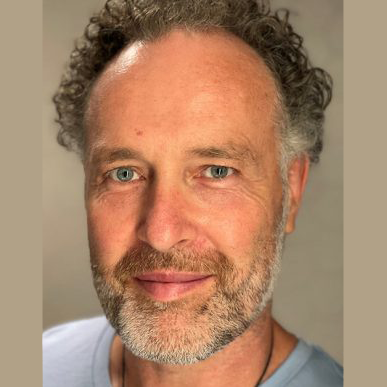
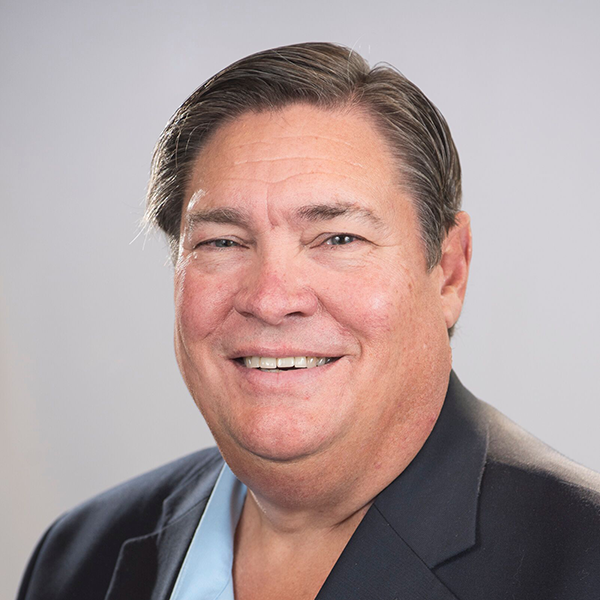
[Mary] Hi there. Welcome to Safety Labs. Safety managers work hard to identify and reduce risks, train new workers on safer ways to do their job, develop policy, and learn from incidents. What many safety managers have a lot of, and I'm thinking particularly of our listeners here, is enthusiasm to improve the safety of workers and their lives generally. What some safety managers don't have a lot of is support or understanding from the executive level of their organization — which might mean safety is siloed, or simply doesn't have the budget to deliver as well as it could.
Today's guest works with business leaders to support and educate them about worker health and safety. He knows how to speak executive, and will share his insight into how leaders view organizational safety. François Barton has been chief executive of the Business Leaders' Health and Safety Forum since 2015. Prior to joining the Forum, François established and ran WorkSafe New Zealand's national program team, which has delivered major safety campaigns in construction, agriculture, forestry, and manufacturing. He previously held roles at MBIE and at the Department of Labour, where he was part of the team that originally established the Business Leaders' Health and Safety Forum in 2010. François joins us from Wellington, New Zealand. Welcome.
[François] Nice to be here, Mary.
[Mary] Can you give me a little background — how did you end up leading, were you one of the founders of the Forum, how did that come about for you?
[François] There may be a few occupational health and safety puns along the way here, so I'll get the first one out of the way early — I fell into it by accident. Before I joined the Department of Labour in New Zealand, where the health and safety regulator was housed, I'd worked at the Ministry of the Environment, around sustainable industry, working with the tourism portfolio — for anyone familiar with New Zealand, clean, green imagery is a really critical part of our tourism offering. So our work was partnering with the tourism industry around getting sustainable, environmentally sound business practice and profitability to correlate.
When I stepped into the then Department of Labour around health and safety, it very quickly felt to me like health and safety was a sort of human, social sustainability part of the same approach — how could we use our commitment to people's health and safety in a way that delivers against the sustainability bottom line, around business. But I was in a policy role, and as the old saying goes, when the only tool you've got is a hammer, every problem becomes a nail — I found myself very quickly appreciating the role of the hammer, around good regulation, legislative expectations, and enforcement. But it didn't naturally speak to me, I was new to it. So the role of leadership, the role of culture, and performance became really interesting to me. I had some space within the Department of Labour at the time to start looking at, well, what's the state of leadership in New Zealand around health and safety? It was really sitting at a delegated, fourth-management-tier level of leadership — it wasn't really an issue at the top table, and there were very few legislative drivers requiring it to go there.
I sort of stole the line off Kevin Costner — me and a few colleagues within the organization said, well, shall we build it and see if they come? So me and a bunch of colleagues from the Department of Labour, our national worker compensation insurance organization, ACC, and some friends in industry, we just started slowly having some conversations. That was the origin of this idea — does leadership count? Yes. Have we got enough of it? No. Hey, senior leaders, are you willing to play a role? It was a question we posited, rather than a thing we demanded, and I was pleasantly surprised that there was a real appreciation — actually, this is important, and it does belong at the top table, but we're not quite sure how. That was the origin, back in 2009, 2010. So while I was in a policy role within the department at the time, my relationship with the Forum is one where I do feel I'm a co-founder, alongside a bunch of other colleagues and friends in industry and government.
[Mary] You mentioned last time we spoke that you've heard from CEOs and safety managers alike that they have a passion for safety, and you have feelings about that phrase — can you explain those, and why you think it could be problematic?
[François] I often say I'm not French, I'm not a safety expert, and I'm not passionate about safety — one of those is supposed to be funny, another is trying to clarify what I don't have, and the third is trying to be a little provocative, because honestly, twenty years in, I probably am passionate about safety. The challenge I have with passion is that what passion can do is fuel you, give you energy, let you crawl over broken glass in its name — we have "crimes of passion," "fits of passion." Think about the words we co-locate with passion — they're amazing, but they're red. For me, what that means is judgment is often sacrificed when passion takes over. So when I'm talking with health and safety professionals, versus when I'm talking with chief executives, if they start, continue, and finish with passion as the red thread of their safety work, what I sometimes worry about is the judgment, and the focus on the material things we know actually make a difference. So I often suggest I'm not passionate about safety, I care about it more than that.
We need a range, because the thing is, I might be passionate about it, but anyone who's been cornered by a friend, colleague, or relative at the end of a boozy Christmas lunch, with a passionate belief about a sports team, a political party, or a verse from the Bible, take your pick — if you're not on the same page as them, it doesn't really resonate. They can talk to you five times as loud and twice as long, and you're not going to be any further down the path. A huge element of leadership across organizations, when we get to the core of what we actually mean by health and safety, is that it's not one thing, it's lots of things — it sits in a complex, dynamic context, which is why I love it so much. And everyone you need to talk to, who has a role to play — we'll probably come back to this idea of clarity of role — has a different door to knock on to be relevant to their role. If you hit it with passion, and passion only, honestly, I just see a lot of people get turned off — "here comes the safety guy or girl, and they care about it a whole lot, let's give them a place to get it out of their system while we get on with the important work of running the organization." For CEOs, it's like, passion's great, but your role is more balanced and important than that — focus, be balanced, let's get material about this.
[Mary] I think that might bring us into another conversation, sooner or later. A really material element of leadership, as distinct from management, is the importance of context over content — that was literally my next question. You shared a phrase with me last time we spoke, I'm not sure if you heard it from a CEO or where, that "leadership is context and management is content." Could you elaborate on what you mean by that?
[François] I was in a small group of senior safety executives and a New Zealand chief executive, the former chief executive of Z Energy, which brought together all of Shell's downstream oil assets, a New Zealand startup — a guy called Mike Bennett, a very impressive chief executive. That was his expression. By the way, these aren't binary, the idea isn't that leadership is context, management is content, and one is better than the other, completely distinct. If we think of it as a continuum — understanding what else is going on, what drivers, issues, and challenges people around the table have, what issues the organization is confronting, or what context we want to create, very much sits in the leadership space. Management is about how we then move what's in the boxes to where we need them to be. That's really, really important to do — otherwise you can have the most beautiful read of the context and ambition, but if you can't actually execute and make things happen, it's a nice idea, but you don't get where you need to be.
What really resonated with me about this — leadership is context, management is content — is it made me reflect, at that point I'd done probably ten years in the regulator and in this space, on how much weighting do safety conversations give to what's in the box, the content of safety, versus the context within which safety gets made real, or emerges from? There's no science to this, but my intuition and experience was — I'd be curious whether this chimes with your listeners — it's about ninety-ten, content over context, every day of the week. We spend a lot of conversations talking about the content of safety, the systems, the management, the processes, all that stuff, and it's not unimportant. But if you haven't knocked on the right door and read the context I'm operating in, and you hit that conversation with passion, and your priority, while important, doesn't align with the other five things I've got going on — how are you going to reach me by continuing to push what's in the box, rather than putting the box down and being really curious about what's going on in the context I'm operating in?
When that was shared with me, how I look to engage with groups changed overnight, from worrying about what I was going to say — I used to write these long screeds of longhand notes, because, as you'll see, I like the spoken word, and if I'm not disciplined I can go on and on — to spending eighty percent of my time asking, who am I talking to, what are their issues and agendas, what's going on around them, to really contextualize. Because I had no shortage of things to say, but how do I put them into a context where what's in the box is actually understood? I found that transformational. I think there's a really good shared challenge for those of us closer to the functional side of safety — we might be passionate, it might be our number one priority, but the likelihood of it being everyone else's isn't, by a long shot. That doesn't make them bad people, their context is just different from ours, so how do we understand that?
[Mary] In the intro, I said you "speak executive," which is a bit cheeky, but I think that's exactly what you're getting at — speaking to someone in another role is really about understanding their priorities, and trying to place your message within that. Not exactly changing your message, but contextualizing it in a way that will feel important to them, so that they'll actually listen. Is that what you're getting at?
[François] Yes, exactly — there's a really nice nuance you're pulling out there. One of the things Mike shared with me in that conversation was, as chief executive of this business since its founding, he said, "I know a lot about this business, what I'm not lacking is knowledge of content. But if I'm speaking to a group of investors versus my staff during a reorganization, or I'm talking to a group of regulators, the context is different." He said he spends time wondering what's going on behind the people he's talking to, and what that requires of him — do they need confidence, vulnerability, a level of urgency, or calmness? None of that is about inauthenticity, it's not painting on a smile, it's being really attentive. Very often in a safety space, particularly with senior teams, you might sense you need to create a level of tension and discomfort — if you're sensing overconfidence from your executive team or board, you need to turn up and bring some tension into the room. Or, on the other hand, things are actually going pretty well, but they're worried about a string of lost-time injuries climbing and want you to jump on that at the expense of managing some really critical risks — you need to come in calm and authoritative. Maybe a slightly lazy example, but in both cases, you want to get on with the important work that ensures resources, energy, and people's effort go in the right direction. If you've got a board or executives in two very different contexts, one way of being is going to speak to them more usefully than another, in terms of getting what you need from them — either space to get on with it, or engagement to get resourcing. There's a lot of nuance there, and it's hugely stimulating, it's never the same twice. I think once you start to develop that, it's a really stimulating set of skills and capabilities to build, beyond just straight health and safety management, especially when you've got the anvil of a regulatory regime underneath it that can be used to bash people. It's an additional tool in the kit beyond the hammer and the anvil — speaking a different language, executive, if you will, is a skill in itself, understanding the context and the subtext of how you're speaking, not just what you're saying.
[Mary] In order for safety professionals to have better conversations with executives, you mentioned the complexity CEOs deal with is breadth, not depth. What should a safety professional keep in mind — it sounds facile to say "tips and tricks," but what would you like safety managers to know about starting or having effective conversations with CEOs that you suspect a lot of them don't already know?
[François] I want to acknowledge, people may have gathered from your very generous intro, I'm not a technical health and safety person, nor French, as I've clarified. I sometimes cheekily say I'm unencumbered and unburdened by technical capability, which I'd frame as a strength, but I want to acknowledge I often speak from a position of all care and no responsibility — I know a number of people watching this podcast are sitting in serious, challenging environments to do what they do. So anything I share isn't "you need to listen to me," just things my roles have exposed me to, that I've seen work.
I think appreciating the contextual piece lets you hold in your head, while going to talk to an executive or a board, whether you need their support for something, want to bring something to their attention so they can provide energy or resources, or just want to keep them in the loop — whatever it is, you're going in with that intent. By being curious about the context, it lets you knock on the right door, in the right modality — what do they need to hear in order to be able to hear what comes next? Sometimes that door can close pretty quickly when you turn up with all the content you want to talk about. Having recently spent time in the US, the Netherlands, and the UK, as well as with friends and colleagues in Australia, I think there's a similar brand challenge for health and safety professionals everywhere — there are a lot of preconceptions about what people think they're about, and it's not always accurate. So starting with questions, eliciting "what's going on, what's top of mind for you right now," lets you understand their organizational context, and that's helpful — sometimes you can do that in advance, sometimes even in the room itself.
The other reason I think it's such a critical prerequisite for an effective health and safety leader, at whatever level, is that safety doesn't exist in isolation. Safety isn't "done" — I know I'm bringing coals to Newcastle here on this podcast, but safety is an emergent quality, it sits in the weave of work. Your chief executive, and the various executives you speak to, are all owners of, or authorities over, one of the levers that creates the environment for work to be safe or not, productive or not. The ability to put it into context, when engaging across the organization, means they can clearly see you're curious about their world, and how you can help, rather than them having to come into a world of health and safety acronyms and language that can be quite intimidating — particularly with that legal compliance anvil sitting alongside it, which can make conversations quite tense.
I'd add one more thing, and this'll sound facile, but I'm unapologetically taking ownership of it. For the last three or four years, after about ten years in this role, I've reverted to asking a really simple question at the start of conversations with boards, executives, frontline workers, even red meat processing workers — literally the same question at different levels: when I say health and safety, what do you think? And I pause. I've done that in a room of three hundred people, given everyone two minutes in pairs, and I've done it around a board table of a New Zealand stock-exchange-listed company, and with executive teams. Because I ask what they think, not what it "is," there's no wrong answer — I'm not coming in as the expert telling them things, which I suspect is the default expectation when a safety person walks in, "strap in, we're going to be told some stuff."
What's almost universally the case is there's real diversity in what people think of when I say "health and safety." Some are outcome things — death or injury, or a wonderful return home at the end of the day, or a supportive culture. Some are input or process things — road cones, checklists, blame, accountability, handbrakes, too much cotton wool, red tape. The reason I ask that question and let the conversation flow is it lets me say, "hey, all I said was 'health and safety,' and you gave me eight, ten, fifteen different things." That tells us we all assume we know what we're talking about when we say health and safety, because we've all turned up to talk or listen — yet if you think it's a compliance handbrake, and someone else thinks it's a sign of good culture, you two are never going to be on the same page about what we're doing. And if I think it's about critical risk management, no one's wrong, exactly, but contextualizing, taking time to ask a seemingly obvious question, lets you test what people actually think you're there to talk about — and that's particularly useful with, say, one of the grumpy, gray-bearded folks around the table who's had a guts-full of this conversation, feels it's all gone too far. When the first part of the conversation is asking what they think, not judging it, and offering an alternative way of thinking about it, that's often almost a novel experience for senior people. I learn a lot about what they actually think, and that gives me permission to say, "well, what if we thought about it like this?" — an invitation to put something else on the table, "you've asked my opinion, do you want to hear mine?" That creates a bit more space for people to be open to a different perspective. This isn't a day-to-day conversation people are having, but my view is people all assume they're in violent agreement about what health and safety is, when actually there are fifty-eight thousand different permutations of what everyone thinks we're going to talk about. Where I challenge senior leaders, and where I see real opportunity for health and safety functional leads, is — the privilege of leadership is, we get to frame the language. How do we bring it together? Certainly not by telling people. We do it by first getting a sense of where we're at, and then building a space in the middle.
[Mary] I want to ask more about that in a minute, but before we move on, it's time to hear from the company behind the podcast, Safety Products Global.
We've all had the experience of cutting something, and it didn't go quite as planned. In manufacturing and construction, this happens all the time, and it's a laceration risk. The Pacific Handy Cutter Smart Victa, which I'm holding up for my audio listeners, is a heavy-duty knife with the same cutting depth and power as standard knives. It can handle triple-walled corrugate, but it also has built-in intelligence — the smart blade retraction automatically pulls the blade back the moment it loses contact with the cutting surface, even if the squeeze trigger is still engaged. Its ergonomic, glove-friendly squeeze trigger helps reduce hand fatigue, and tool-free blade change keeps downtime to a minimum. If you want to learn more about which tools will work for your materials, you can request free samples by going to safetylabspodcast.com/samples.
And now, back to our show. Just before the break, you were talking about the privilege of leadership, which makes me think of contextualizing and framing things. Last time we spoke, you talked about mindset — mindset drives what we talk about and what we do. What kinds of mindsets have you seen are particularly helpful, or particularly unhelpful, in the conversations you've had around safety?
[François] That "I say safety, you think what?" question is a very simple, accessible, scalable way of just peeking behind the door at how people are thinking about things. I think there are about fifteen hundred million definitions of leadership floating around, but the one I find has good evidence and works is that our mindsets drive our language, and our language drives our practice. We often don't reflect on or interrogate mindset enough — it can be seen as navel-gazing, a bit ethereal, but it's so material. That "I say safety, you think what?" conversation elicits, "I said two words that are evidently common, and you've all got completely different views on them, do you understand that?" If I think safety is a sign of good culture, I'll talk about engagement, and my actions will involve a lot of frontline engagement with people doing the work. If I think health and safety is compliance, I won't necessarily say so, but I'll talk about audits, have we ticked something off, and I'll make sure I'm checking that constantly. Neither of those is wrong, but you want mindset, language, and practice aligned, and you can see how those examples don't quite line up.
Being able to elicit that from people has always afforded me a level of permission to say, okay, yes, safety is a legal obligation, that's a legitimate mindset, and it is the absence of harm, also true, we don't want to see people harmed, so the absence of harm is a good thing. But one's about compliance, one's about statistics. Looking at examples I've seen in New Zealand, and having had the privilege of talking to people like Todd Conklin in the US, Rob Fisher and his human and organizational performance team, and really good operators in the UK, people like Graham Skinner at OEUK and others, the mindsets present where good things are happening, consciously or unconsciously, include an appreciation that safety is actually a positive outcome of good work. Safety's not a thing, it's an outcome, and it's a good thing — "how many people did we kill" doesn't quite resonate for me, but "safety as a positive outcome of work going well" does, and I'll come back to why that's powerful.
The other present, correlated mindset is about the presence, not the absence, of capacity in your organization, so that when people fail — not "if" — they can fail safely. In New Zealand that's become a conversation anchored around critical risk management — the mindset is, what are the things we proactively make happen, so that when people fail, the result of that failure isn't something terribly serious or a fatality? How those two mindsets show up — safety as a positive outcome of work going well, which is borrowed from Safety II, Safety Differently, and human and organizational performance — provides a really clear signal that you want to be genuinely interested in the work. As a senior leader, the more I understand about what work actually looks like around here, not what I want it to be, not what's written in SOPs, job descriptions, work schedules, or sales targets, but what actually happens out there, tells me whether we've set the table well for our people to do good, reliable, safe, quality, productive work. I name those five things deliberately, because there's a whole bunch of other positive outcomes of work happening too.
If I'm an executive, where my complexity is breadth, not depth, and you're telling me, "you mean safety is an aligned concept that relates to other good things in the organization" — again, I'm telling people on this call something they probably already know, but I think for a broad number of executives, that's still a bit of an earth-shattering realization when you can demonstrate it concretely. That mindset shift means executives get a view of what real work looks like, and there are interesting practices that can plug you into learning from the front line, which we might get into. But from an organizational resourcing perspective, if safety is an outcome of good work, the safety manager isn't the only framer of good work — all of a sudden your CFO is a really critical player, not because safety is "everyone's responsibility" in some vague sense, but because CFOs decide where money gets spent and what gets invested in. The CPO brings HR to the table — how do we recruit, develop, train, what does organizational justice look like, what does our organizational design look like? That definition suddenly gives those roles meaningful relevance — not "safety is this," but "safety is this," and I think that's an incredibly powerful mindset you can keep leveraging for a lifetime as a senior leader.
[Mary] That gets at part of my next question, which might sound obvious — why does it matter that we're trying to connect with the C-suite? I think the answer is, what are the levers that only the CEO and executive team can pull for safety — levers that, no matter how great a safety professional you are, you simply cannot pull yourself. I guess that's the motivation behind making those connections.
[François] Totally, and this isn't a universal truth, but one of the things I've loved about a decade of working with senior teams — we're a not-for-profit, so I'm not doing this in a consultancy way, I don't sell any further services, I'm often in the connect-and-engage space — is that, broadly speaking, they're really capable people. It doesn't take a lot to shift the mindset and give people the "okay, right" moment. This shift, about seeing safety as a compliance thing that's "done," versus a positive outcome of work, doesn't take smart people much to grasp, and to see how it can help. I think we overassume that smart people can join the dots if we haven't helped them. But if ninety percent of their experience is a safety person, lawyer, expert, or consultant turning up with a content conversation, not a context conversation, never asking "what's my starting belief" or "what else is going on in the organization," you can see why they wouldn't connect those dots themselves. I've seen organizations where passion was the overriding lever, and CFOs and CPOs would say, "why are you asking me to do your job? Why do we have a health and safety manager if you're asking this to be my job too? We've got someone whose job this is, just as I'm in charge of finance, you're in charge of safety." But if we've got a mindset that's genuinely evidence-based and true, that safety is an outcome of good work, we're just helping them see what that actually means.
There's a lovely video case study on our website, which we'll talk about at the end, about a major transmission grid operator in New Zealand having issues with its contracting workforce around tower painting — those big steel towers everyone in the world recognizes, which need to be abrasively blasted and coated with paint to protect them from corrosion. No matter how much safety direction came from the client to these contractors, and the road to hell was paved with good intentions here, there was no problem with the intention or quality of what they were saying — when they tried to use the safety tool more, safety performance actually got worse, counterintuitively. The literal embodiment of good intention, with each individual issue handled appropriately in isolation, was that these tower painters were wearing five layers of protective equipment weighing twenty kilograms — I don't know the equivalent in pounds, but twenty kilos is a lot — before then carrying up a heavy sandblasting lance and a bucket of toxic paint, climbing sixty meters up, in the middle of winter or summer.
When that organization, which was implicitly tuned into this idea of outcomes of work, shifted the question to their workforce from "how do we make you safer" to "tell us what we're like to work for," the answer, and I won't give the full Kiwi phrasing, which was pretty direct and blunt, was essentially: "you're nice people, but you're missing the mark — it takes two years to train a tower painter, and you give us a three-month contract. We've got specialist heavy equipment that has to go off-road into isolated areas on narrow farm tracks, we have to invest in specialist transport, and you give us a three-month contract. What's more, those contracts get turned on and off. Do you know what you're like to work for? You're not bankable. That's the problem." Because Transpower, the client, is a smart, mature, reputable organization, they didn't shoot the messenger — they listened. The CFO and COO said, "we're not giving you more money, and we're not changing our standards, but how about we move to three-to-eighteen-month contracts, longer contracts?"
Within twelve months of that decision, injury rates declined, productivity, in terms of square meters of towers maintained, increased, price stayed the same, and innovation grew. One of the contractors partnered with an outdoor clothing specialist, using high-tech Kevlar and other modern materials, and developed a single-layer, three-point-six-kilogram set of overalls that performed to the same safety standard as the twenty-kilogram, five-layer system. It's now an industry standard, and became an export product for the company that designed it — not because anyone asked for it, but because the context for good work to occur was created, and the health and safety manager wasn't part of that decision at all, because they couldn't have been, it was a contracting tenure and commercial decision.
I share that story almost weekly, because it demonstrates that understanding the context, which they thought was, "you're not understanding the safety," "no, we do, you're not understanding our environment" — and it wasn't just "give us more money," it was "give us more certainty." That's not always the answer, but in that context, it was, and the outcomes were productivity, innovation, safety, and reduced reputational and social risk, since these assets run through private land. That was eight years ago when I first heard that story, and the innovation has continued, contributing to reductions in work-related ill health and a whole lot of other good outcomes. The beauty of changing the context, not just the individual control, is like teaching someone to fish versus giving them a fish — you shift the environment, and you get these rising-tide benefits. That's a concrete example, nothing made up in it — that was real. I don't think at the start they were using my mindset language, but it's so self-evident, in hindsight, that's what was going on.
What that does is let senior people not feel lectured to, or morally blackmailed into saying what they think they should say, which is "safety is our number one priority and I'm passionate about it." It lets them understand, "okay, if the lever is a commercial one, and I'm in a CFO role, I'm relevant here, I get that," and they get the benefit on the other end too. So it's about hanging better examples and stories on our organizational paint, finding situations where we can highlight the relevance of various players. That's why safety at the top table is important — not just because senior leaders are important, but because there's only one table in any organization with full mandate to pull all those levers, and it's the top one. We have to help them understand why, not by lecturing or threatening them with the law, but by showing there's a range of things going on here as a team.
For me, that's the piece — if you want to shift people's minds, you've got to give them something. Rob Fisher, from Fisher Improvement Technologies in North Carolina, shared this with me, and it sits very true with how I see the world: if you want to shift someone's perspective, you've got to start with where they're at, and from there, you can give them something better to take them forward. Testing the context, that's where they're at, and then offering, "how about this," another alternative frame. Sometimes when we're unsure, it's easy to fall back on, "well, the law says you have to," or "here's volumes and volumes of industry best practice, we need to do this for peer-group reasons." Those things are necessary, and true, but woefully insufficient — unless you're constantly pushing and reinforcing them, I don't think it endures or sustains.
[Mary] When you were saying that, I thought, if you tell someone, "I need to change your mind to this," the subtext is, "I don't care what you think now, what you think right now isn't important, you're not important, I'm important, and you need to come over to my side." Whereas starting with where they are acknowledges that they're there for a reason, that their point of view is valid, and you'd like to build on that and add alternatives. Just for clarity, though — if we've just had three fatalities over the last six months, and I'm the chief executive of that organization, still holding onto my view, and you're coming in to bring serious tension to the conversation because the regulator's already been there, and we're likely to be prosecuted, and you as an officer might be in real trouble yourself, that's a different context than one where we're broadly okay, we know we can do better.
[François] You're so right, though — sometimes their perspective might not be valid, and three fatalities in six months would suggest some real issues with how they're viewing things. But your premise is bang on point.
[Mary] Your Forum brings together chief executives across industries. What can CEOs learn from each other about safety that they can't, or don't easily, learn from their own internal teams, or from consultants? What's the power of having them speak to each other?
[François] The little call-to-action, or intervention model, that sits in my mind is the idea that the Forum's work is connecting leaders to share and learn — that's the premise, connecting people with purpose, sharing what's going on and learning from one another. I don't think this is a universal thing for chief executives — you go to a health and safety conference and see a whole bunch of people enjoying learning from each other, and I think connecting with a group of colleagues who genuinely understand your context, the shoes you're walking in, is close to a universal truth. So there's that, at one level.
What I'd observe is, very often, when CEOs are engaging with other leaders, it's understandably in explicit sector contexts, supply arrangements, or commercial arrangements, which is fine, but a lot of other issues get dealt with there too — market access, tariff responses, dare I say it in the modern world, or disrupted supply chains, very specific to the nature of their sector, often with a big political element. There's an old adage that it's lonely at the top — some say that's not true, others say it is. What I think is true is that the CEO role requires them to be appropriately confident and clear in front of their teams, on top of it for their board, inclusive among their leadership crew, and there's not a lot of space for vulnerability built into that. There is and there isn't — it's quite a special leadership skill to access the right level of vulnerability without making people wonder, "are they okay?"
What the Forum affords is — we're four hundred fifty chief executives across New Zealand, the largest chief executive group in the country, full stop, around health and safety, fifteen years running, representing about twenty-five percent of New Zealand's workforce, given the size of our country, reporting through one of our CEO members. We're pan-industry — transport, ports, logistics, construction, forestry, farming, government, local and central, manufacturing, retail, the whole lot. When you're connecting at that level, the temptation to get sucked into very sector-specific or supply-chain-specific issues is less, because "why as a retail CEO would I really understand that, Mr. or Mrs. Forestry CEO" — it forces the conversation up to the universal fundamentals of leading people, leading organizations, and translating intention into genuine care.
Part of the contextual piece we do is create an environment where we're sort of forced to talk about those commonalities across chief executive leadership. CEOs are also confident we're not going to sell them anything, because we're not a consultancy, not-for-profit, as I said. There's an annual membership subscription, but it's modest — I don't have an app to sell, no ongoing subscription service. There's something useful about that environment, and the fact that we've been around as long as we have, with only two CEOs leading the organization in that time, means there's a level of trust and confidence that we're here to help. We've got a regulator whose job is the inquisition, the investigation, and accountability where needed. We're not a technical group, not "business specialists" — we're the Business Leaders' Health and Safety Forum, so we've defined where our interest sits. It's a safe place to talk and connect, and I feel proud of the work we've done there. CEOs learn best from each other, because that's the reality for all of us, and we take them somewhere they can't always go with people predisposed to specifics that would sometimes take safety off the agenda entirely.
What we've increasingly started doing, and I'm conscious I don't want to do all the talking here, Mary, is acknowledge that the best sharing and learning usually isn't about the hero move that went perfectly the first time — no one really wants to stand in front of a hundred colleagues and say, "I really mucked this up." So we've developed a fuller range of engagements, from more structured and formal ones, to intimate roundtable conversations, sometimes even just one-on-one with me and a handful of people, where we can encourage space to share what was intended, what happened, and what the lesson was. We had one chief executive, no fatality involved, but a major structural failure as part of their work — we held a small, intimate lunch where he shared what it was like leading through that level of front-page newspaper challenge, still with integrity, still effective leadership, still accountability, even though there was no major fine or prosecution. Sometimes group size matters — sometimes it's a broadcast conversation, sometimes an energizing one, sometimes it's "hey, what's actually hard right now?" We've always tried to be very responsive, plugging into what's going on in the world and evolving accordingly, and the support of our members has afforded us that opportunity over the sixteen years we're now in.
[Mary] I wanted to ask about a specific potential turning point — you were active around the time of a catastrophic mine explosion that killed twenty-nine men, the Pike River Mine. You've talked to me about how that represented a choice, in terms of how business leaders were going to think about safety — a shocking event, culturally, for the nation, I believe. How did that affect things, and how did people take the opportunity to shift their mindset around safety in terms of business leadership, rather than siloed responsibility?
[François] Totally, it was fascinating — when you said the year, I thought you might mean COVID, but the Pike River explosion was in 2010. I was in the Department of Labour at the time, which included mine safety as part of our regulatory oversight. Pike River was a mine on the southwest coast of New Zealand, very rugged, very isolated, and interestingly, it was in a conservation estate, under our Department of Conservation, protected environmental land — so it required an incredibly innovative mine design, minimizing its environmental footprint, using a lot of unorthodox mining methods, which meant issues of methane and gas management, really critical elements of underground mining, needless to say, that need to be managed safely. It was sort of a poster child for "we can have our cake and eat it too" — we can extract coal, do it inside a national park, do it innovatively and productively — until it didn't, until it exploded, and twenty-nine men were killed.
The chief executive of that organization was actually one of our stalwart founding members, someone I was working closely with as we were standing up the Forum — we'd actually launched it in July that year, 2010, and in November the mine exploded. At the time, I thought, given the chief executive's seat at our table, this was either going to blow this conversation off the table entirely, or be the making of us. We were never a fig leaf of corporate response in the face of an industrial tragedy, but what I saw the country deal with, from a leadership perspective, was a recognition — actually, this is real, things can actually go wrong, and when they do, they can go terribly wrong. Politically, there was a Royal Commission — we're part of the Commonwealth, so a Royal Commission is the highest level of public inquiry available — and we had a conservative government at the time, whose natural home, objectively, probably wasn't putting safety standards improvement as the first item on their policy agenda. To their credit, they engaged the Royal Commission around mine safety and that explosion specifically, but didn't stop there — they also commissioned an independent national task force to look at our health and safety performance more broadly, not just mine safety, a small but dangerous subject, but how we were doing overall.
That was an incredibly foundational experience — within the regulator, we acknowledged we'd been part of that systemic failure. We realized our legislative framework, modeled on the UK's outcomes-based regulatory approach, same as Canada and Australia, hadn't had the necessary regulations implemented underneath it. We hadn't developed good codes of practice, and our regulator had been asleep at the wheel, the function of a whole range of political agendas over the previous fifteen years. Out of that came a national recognition that, to prevent recurrence, we needed an independent health and safety regulator, not one sitting inside the Department of Labour, or later MBIE, the Ministry of Business, Innovation and Employment — we needed WorkSafe, independent, and we needed to bring our health and safety legislation into the twenty-first century, and rebuild it. We needed to grow and build leadership, and so we were up and running.
Over the following four or five years, there was really sustained investment across government and business, treating this as a material issue of national importance. I wish I could say we'd continued to sustain that shared priority and focus going forward — there are elements where, absolutely, we have, some world-class organizations in New Zealand, some sectors with truly transformational improvements. But as a country overall, we've relatively allowed ourselves to drift over time. We've probably quadrupled national investment, public and private, in team sizes, regulated board agendas, lots of activity — but the statistics and outcome performance data suggest nowhere near the level of material improvement we'd want from that investment. It's been a really interesting reflection, both at a meta-national level and within organizations — if just caring a lot, and trying really hard, was enough, if passion was enough, dare I say it, we'd have translated that significant step-change in investment into material improvement. Instead, it's been very incremental improvement after a massive increase in investment. How much, and what is important, but the how is critical.
I think we've got short, three-year government terms in our electoral system, meaning political attention spans are perennially short, even nano-length in New Zealand. Rather than maintaining a strong national consensus that this is genuinely good, whether left or right, good for business, the economy, the workforce, and communities, somehow it's drifted, and as the shadow of Pike River has lengthened, with questions about whether we fully understood why the mine exploded, and whether we fully held the people involved to account — and I wouldn't even want to imagine the grief of the families still affected — our legacy of Pike River has become largely one of emotional, family grief, rather than institutional change.
I think I may have shared with you, I was in Aberdeen around the time the Pike River film came out, last September or October, which also happened to be near the thirtieth or thirty-fifth anniversary of Piper Alpha. I'm sure people on this podcast will know that event — over sixty-five men, almost exclusively men, burned to death or drowned, dozens of bodies never recovered. I was talking to operators, industry, and the regulator while there, and what was palpable was the emotional grief, still very present — I spoke to people who remembered the calls coming in that night, very visceral, very real. I recognized that, very much like the Pike River response, do you remember when that happened? But what was so apparent in that Aberdeen conversation, across the oil and gas sector, was that's exactly why asset integrity is such an important discipline to get right, why safety case regimes really matter, why an independent regulator is such an important tension to maintain. It went from grief into systemic change. Whereas my disappointment with where we've landed in New Zealand is that we haven't managed to sustainably embed the institutional change — we still tend to be anchored in the individual grief, which isn't to diminish that grief at all, but it's a very interesting national parallel to what I think is true in many organizations.
Bill loses his leg in the forklift area, or someone's killed in a fatality, and suddenly it's "never again, never again," massive investment, a short burst where consultants get deployed, six or seven years later the stats look a bit better, there's a new chief executive, new board, "why are we investing all this, it doesn't even look like a problem anymore" — well, because we've done this work, the pressure comes off, focus goes elsewhere, complacency or normalization of risk creeps back in, and progress gets lost. How do we manage the tension between the substantive, material, systemic elements of this, while also appropriately plugging into and remembering that grief, because grief is powerful, just not enough on its own — and equally, the system is absolutely critical, but also not enough on its own. Good, effective organizations in the UK have to be held up as world leaders in this space — I think, broadly speaking, they've managed that tension at a national regulatory level really well. There are some really insightful lessons for those of us in more enterprise-level roles, about how, as the old saying goes, we never waste a tragedy or an emergency, how we use those memories effectively and respectfully, without getting stuck only there.
I'm a bit of a Simpsons fan, Mary, a bit of a shameful declaration for such a highbrow podcast, but I often think of Reverend Lovejoy's wife and her catchphrase, "won't somebody please think of the children" — this plaintive, slightly silly cry from the sidelines that doesn't really mean anything in the moment. I think if we over-rely on trying to shame and grieve people into caring — honestly, I don't care how much you care, I care what you do — that moral, emotional piece can land really clumsily on some people, and it evaporates. Five generations later, and you don't even know those people anymore. How do we extend and sustain that? In Aberdeen, around Piper Alpha, I saw that they had.
[Mary] I'm sure our listeners are going to think twice before saying they're "passionate about safety" again — not that you're saying you're not.
[François] No, I am passionate. You've given them so much more to think about, in terms of what passion really is, and what's actually needed.
[Mary] It's important. When I jokingly said at the start that I fell into health and safety by accident, no pun intended, I really did — it was a great opportunity for me to work in policy, that's what it was. Then suddenly I realized health and safety is this incredible ethical, moral, legal prism for looking at work. I have a level of mandate, and all of us do in our roles, to be curious about the work our people and our organizations do, and enable it like no other function. If we can infect our executive teams with that excitement, through sound evidence and well-contextualized perspectives — you're not doing a field visit to talk about dumb, difficult, dangerous things, the Four Ds out of the HOP model, "because of safety." You're doing it because you want to understand work, and guess what, get that right, and you get other things right too. Asking questions in a way that lets people talk about their work, not just the quality of their controls — though you're interested in that too, ask them about the work — you're actually modeling psychological safety, not talking about it.
[François] I look at that, and that's why every now and again, when I think it's time for me to move on to something new, I think, where else do I get this opportunity? I feel incredibly grateful for the work safety affords me to do. Increasingly, I end up talking to organizations about operational excellence — Rob Fisher said to me once, "François, I can show you a safe organization that's going broke, but I'd struggle to show you an operationally excellent business that hurts people." I don't know a single national economy right now that isn't hungry for growth, don't know a single organization where any level of profitability isn't pretty hard-won at the moment. When we can bring the safety and well-being of our people into the conversation as a contributor, an enabler, a driver of that growth, reduced rework, increased retention, better engagement and innovation — count me in. It's hugely exciting, challenging, but exciting.
[Mary] Do you have any resources for listeners who want to learn more — the topics were pretty varied, but are there resources you'd recommend?
[François] The Forum's website — I'm never sure if saying "www" instantly makes me a boomer — is fhrm.org.nz. One of the proudest things about being a not-for-profit is we don't have a paywall on any of our resources. You'll get to see me and my team smiling back at you as you go through it, but we've got a raft of case studies, including the tower-painting case study I mentioned, video resources, key takeaways, contract and supply management resources, mental health and well-being case studies, core frameworks around the CEO's role in mentally healthy work, and some really useful frameworks around board monitoring — a wealth of resources, pretty straightforward to navigate, all open and free. I'd encourage people not just to watch them, but to think about how they could be used — our Kiwi accent will either endear you or shock you, one or the other, I'll let you decide, but we've tried not to be overly jurisdictional, framing things through the fundamentals of effective leadership and performance. There's an Aesop's-fable quality, a moral, in all our stories — think about how some of those resources could work for toolbox talks, executive team or board engagements, not just "that's interesting," but what questions could it spark for reflection in your own organization, since they're crafted with an executive audience in mind.
The other resource I'd point to — we reference it on our website, but it actually sits on the New Zealand Institute of Directors' website, accessible through ours too — is a good practice guideline on health and safety governance, accounting for officers' legal duties, quite a high-level legal duty. What's interesting is it's a governance document for chief executives and directors, but it leans heavily on this idea of safety as a positive outcome of work going well, around critical risk control. It's not an overly detailed document, it has a simple governance framework and some beautifully structured questions, and it's endorsed by the New Zealand regulator. Even setting aside the legal piece, just looking at the governance mindsets and practices it encourages, it's robust, world-class, and we're really happy to have helped develop it. I know people from around the world have accessed it through our website and reached out to talk to us about it. For anyone approaching a board engagement or senior executive team conversation, that guide is an absolute cracker. There are also contact details for me on our website — I'm on LinkedIn too, and I genuinely love hearing from people anywhere, so please reach out, through the website or off the back of this conversation, Mary. I'm also open to being challenged, I've got broad shoulders, I don't need to be right, I just share things I've experienced.
[Mary] So if someone wants to reach out, LinkedIn or through the website?
[François] Either, yes — I've never once regretted connecting with someone who's reached out, it's a no-brainer.
[Mary] Excellent. Well, unfortunately we've run out of time. That's our show for today. Thank you so much for joining me.
[François] Real pleasure, Mary, I appreciate the opportunity.
[Mary] Thank you, and thanks again to all our listeners, the reason we're here, and the Safety Labs team who do the work behind the scenes. Bye for now. This podcast is created by Safety Products Global, the world's leading manufacturer of safety knives. Through our trusted brands, Klever, Slice, and PHC, we empower companies to prevent injuries by providing safer cutting tools for every material and application. Until next time, stay safe.