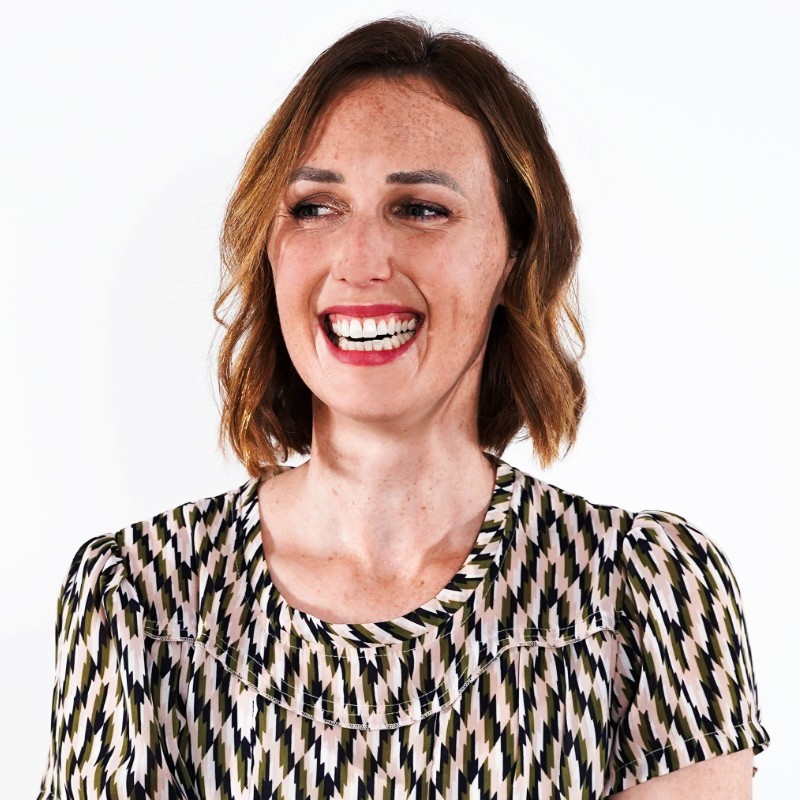
[Mary] Hi there. Welcome to Safety Labs. Today we're going to talk about the difficult subject of suicide prevention, specifically in remote work situations like mining or logging camps. What unique challenges does this kind of isolation present? How much can a company really do to prevent suicidal thoughts or actions in their workers? We'll draw on our guest's experience in psychology, safety, and resource extraction to discuss some of these questions. Donna Carter has delivered step-change projects in critical risk management, human performance, and suicide prevention across smelting, mining, utilities operations, and beyond.
She earned her Master of Science in Psychology from the University of Otago, and from there went into safety-related roles. As a solo consultant, she carries a wealth of knowledge that helps organizations bridge the gap between theory and operations, consistently bringing humanity, care, and applied systems thinking back into safety leadership. She's straight-talking and anti-dogmatic — there's never a dull moment in her work, and she always has time for a laugh. Donna joins us from Dunedin. Welcome.
[Donna] Hi, Mary. How are you?
[Mary] Good, good — doing well on the other side of the world, isn't the internet magic?
[Donna] We love it, we love it.
[Mary] So, you have a background in psychology. How does research into behavior and human cognition inform your approach to safety?
[Donna] Hugely. I see a lot of well-intentioned programs with the obvious aim of keeping people safe, but they often ignore what we know about human cognition, neuropsychology, and decision-making. So we often end up trying to force people to approach something in a way that's really unnatural for us. Wherever possible, I try to share those insights in right-sized pieces for businesses, so we can start to course correct and make sure our systems are brain-friendly and human-friendly, so we can get the best out of our people and our systems.
[Mary] Let's talk a bit about remote workplaces. Can you paint us a picture of the issue of mental health in remote workplaces — how big a problem is it, how does it come about?
[Donna] It's such a mixed bag. Part of the issue is that most of the remote workplaces we find ourselves in are usually in quite unforgiving physical environments — really hot, really cold, basically at the extremes of where we'd normally choose to live. So you've got isolation — you're hundreds of kilometers away from a town center, away from the creature comforts we're used to. You're living with the extremes of the environment, and it's just a different way of living. You have to think differently about how you'd approach something like improving people's mental health, particularly around suicide prevention, because you don't have the same things available to you that you would in a city. It's such a different way of life, which requires a really different approach.
[Mary] Can you tell me a little about your experience with workers in remote settings — how did this become a particular interest for you?
[Donna] For me, it was when I moved to a remote mining town as a safety advisor. I was midway in my career, and it was sort of by chance — because of my background in psychology, I was interested in the intersection between physical safety — we spend a lot of time and money on hazard ID, risk assessment, keeping people physically safe — and at that time, conversations around wellbeing were starting to bubble up, and we were starting to talk more about how we take good care of our workers. It became really clear to me that there's a connection — if people are coming to work carrying any sort of burden, that definitely influences their ability to remain physically safe at work. That was becoming really interesting to me. Then, by chance, I was given the portfolio of mental health — at the start it was mental health awareness, increasing people's understanding of common mental health issues, because the risk factor of working remotely increases the chance of experiencing mental illness. So we were trying to do our duty of care in that space. At the same time, we were noticing more and more reports of attempts, and people losing their lives to suicide. It very quickly shifted from mental health awareness — that wasn't enough. We needed a really strategic approach to getting a hold on what was going on with people taking their lives.
[Mary] You've mentioned extreme living conditions and temperatures, and a lack of resources when you're isolated, away from a town. Are there any other challenges that are unique to remote work camps compared to a nine-to-five job, or are those the main things?
[Donna] I think for a lot of people who come to these roles, a lot of them work away from their families. There were families in the town where I was, but they're families away from their extended families — so you've either got people by themselves, or the family unit of mum, dad, and the kids, but no extended family around. You become very reliant on the community around you, which isn't a bad thing at all, but there needs to be structure and process to support that. If you're not from that area and you've come to work in this town, you're starting from ground zero — no contacts, no network. If you're already having a hard time and you're alone in this bizarre place that doesn't look like anything you've been to before, it can be really confronting, and it can compound what someone's already going through.
[Mary] I actually know someone who used to be a logger in Canada — he'd go to logging camps, both before and after the internet existed, and he said it was almost harder to be able to do video chats with his family when he was away — he actually missed them more. So I was wondering, does that kind of technology help, hinder, or is it a bit of a mixed bag in terms of isolation and loneliness?
[Donna] I definitely think it's a mixed bag. We see this now, across society, where it becomes easy to create online connections, but many people don't have in-person or real-life connections that they spend the same amount of time with. We know that in-person connection is so powerful as a protective factor against all manner of mental health issues, and definitely with suicide prevention. So I think it has a place in opening up connection, particularly if you're working away from your family, being able to video call and so on. But at the same time, I think we're all guilty of falling into the trap of leaning more into the superficial connections you can create on social media — and when you're not feeling great, it's an easy option to hide away at home in your comfortable space, rather than go out and connect with people in real life, where they'll see you, talk to you, and might work out something's not right, which you might not want them to know yet. I'd say it's fifty-fifty — there's good and bad on both sides of the coin.
[Mary] You've kind of led into this, but vulnerability plays a big role in whether someone with suicidal ideation reaches out for help. Knowing that, how can safety professionals work toward creating the kind of trust needed for someone to speak up if they're struggling?
[Donna] I was hoping you'd ask this. It's such a big question — building that trust and creating that space takes a phenomenal amount of work, and it's not something you can create in a month. Decision-making at a senior exec level — misinformed, I'd say, because I don't think it's ever intentionally harmful — can erode months or years of work very quickly.
I can share a real-life example. We spent almost a year building up a community approach to suicide prevention in our remote mining town. This involved a mental health and suicide prevention working group within the mine, made up of people from across the business, representative of all the working groups. We were also mining on Indigenous land in Australia, so we made sure — and why wouldn't you — that we had an Indigenous voice throughout, because the local Indigenous people were affected at a greater rate than non-Indigenous people, and we needed everything we were doing to be inclusive of that. So there was the mine working group, and we also had a community working group, replicating what we were doing but at a community scale. In the little mining town, we made sure we had key people — the local pastor, some people from the school, Indigenous people who had lived in the town their whole lives and could inform us so what we were doing was respectful of their view of mental health and suicide too. It was about making sure everyone who could play a positive role had a voice at the table to inform how we were going to do this and what we actually needed.
It was lots of conversations, piece by piece, making sure what we were doing was visible — providing education for parents, education for leaders at the mine, bringing in subject matter experts. Because of the seriousness of what we were trying to change, we needed our approach to be clinically backed, so we engaged the local GP, and there was a small hospital there, so what we were doing was informed by their recommendations too. We made sure everything was clinically supported, and that if we were asking people to be upstanders, connectors, or mental health first aiders, we gave them appropriate training, because we don't want to cause more harm.
So, months and months of conversations, and then education — for the guys coming in, we called them education days. They'd come into a big training room and we'd talk about the stuff they did not want to talk about. Reflecting on the time from when we started — right at the beginning, I'd have people walk out, people stand up, in a room of fifty operators and plant maintainers. They weren't backward about coming forward — "I'm not doing this," colorful language, the whole shebang — and people would walk out. As we persisted with the conversation — and of course, while we're doing this, people are still losing their lives — we're having these conversations people don't want to have. I found that was almost the paradox of it: I know I'm hurting you by standing here and talking about this. I get that, and I know you want me to shut up. But while I'm trying to bring this conversation to light and create this space so you can raise the flag if you need to, we're still losing people you all care about. You're hurting and suffering, and I know I'm contributing to that hurt because you don't want to talk about this — but by not talking about it, it's going to continue.
It was really tough in the beginning to get engagement — there was a wall, "we're not talking about this, we're not having anything to do with it." I've heard the analogy that you can't blast someone with a fire hose and expect them to still be standing at the end. So it was drip by drip by drip. We got to a point where we could actually have really robust conversations about this, and we brought in some really influential people to help create that space — a New Zealand girl standing in front of a room of fifty men, my impact was limited. It was important to bring in people they'd relate to a bit more, and then, by proxy, they could see, "she actually is trying to help us, she wants us to be okay." It was probably a year before I had the first person come up to me and have the conversation we'd been hoping for — a year of slow and steady, building that trust.
Then it became important that when people did come forward, we had the right resources and the right people to connect them with, to get them the urgent help they needed. In those moments when people came forward, you'd see the vulnerability and the exhaustion — it was so obvious they'd been fighting this for so long and had nothing left. Most of the time, it would just be — I'd be finishing my session at an education day, walking out the door, and they'd say, "I need to talk to you," in this really gruff voice, and I'd think, "God, I've offended someone again, here we go" — and then it was just, "I need your help," that's all. But you could see through the gruffness that for them to have turned up that day and say "I need your help" was huge — they were terrified. It became so important that, for them to get to that point of asking for help, we absolutely could not drop the ball. We had to respond appropriately and get them to the people who could actually help.
[Mary] You started by saying that trust can be eroded really quickly. Is there more to that particular story?
[Donna] Yes. We had a man — when you think of an Australian miner, he's the person you'd think of. Worked there for years, his son worked there, he'd served in the army. Gruff, a man you automatically had an immense amount of respect for. If I ever had to go talk to him about anything safety-related, I was always — it's not that he was mean, but he was one of those no-nonsense people, and I'd think, "I've got to go talk to him right now, what am I going to say?" He was just one of those, "tell me how it is, don't waste my time" people.
He appeared at my office door one day, and I hadn't seen him for a while, and he was a shadow of who he was. You could see straight away something was terribly wrong. Same thing — he said, "I need to talk to you." He was in such a terrible place. It's one of those moments I still remember today — it quite literally took my breath away to see this man, who I'd only ever known as this big, gruff, no-nonsense man who could take on the world, and he was this shadow, like he had nothing left in the tank. We sat down and talked, and he said things like, "I haven't been sleeping, I keep forgetting things, I'm getting in trouble because I'm not getting my work done, I'm coming in on weekends to try to catch up, and nothing I'm doing is working." By this stage he was in tears. I remember sitting there thinking, as a business, how have we gotten to this point with this person, who's worked here for a very long time and has done his absolute best to perform in his role? Something's not right — it's so obvious that something's not right, and this is so much more than someone just not performing.
In that moment, we got him the help he needed. But — and this is a big learning for me now, looking back; back then I was a safety advisor, now I'm a bit wiser, with more years under my belt — what we'd failed to do as an organization, when we decided we wanted to make this change and have this positive impact both with our team at the mine and out in the community, was consider the codependent work streams and policies within the business. So what we ended up with, in this particular situation, was a man who wasn't performing in his role because he was mentally unwell and needed help and time. Instead, he ended up being performance managed, which I found incredibly upsetting. I remember when I found out — his son actually came to see me — and I just sat there thinking, why? Why are you doing this? He's not well. You wouldn't do this to someone if they'd broken their leg and couldn't walk up the stairs of the plant — you wouldn't say, "I'm putting you on a performance improvement plan because you're not getting to where you need to be." Again, it wasn't malicious — it's that education gap, where we're not thinking about the fact that we need to approach this in an entirely different way than we have before. That conversation had been missed, and in that instance, we really let that man down, and it eroded a significant amount of trust across the wider business, because it sent a very clear message: production and outcomes are more important than getting people well again. If you're sick and you put your hand up to say you're sick, this is what's going to happen. Coming back from that was gut-wrenching and incredibly frustrating. You can really only let people down that way once before everything you say after that gets questioned.
[Mary] This touches on it, but you've described your approach as anti-dogmatic. Where does the idea of dogma come into the discussion of suicide prevention?
[Donna] It comes in in what I just described. When you're dealing with groups of people in unique operating environments, you have to think beyond yourself and beyond your own expertise — there's no place for ego, no place for being the smartest person in the room, because it's not about that. The only way to do this properly is by community, for community — many hands make light work, and you've got to do what's right for the community at the time. Something that worked for a community on the other side of Australia might not be the right fit for the community you're dealing with right now. Because there are so many resources out there, and a lot of academic research, it's easy to become very formulaic about how we do something like this — and that's where I see dogma set in: "first we do this, then this, then this, because there's this research paper, this book." That's all great and it should inform the approach, but there's got to be flex, and you've got to capture the voice of the community, because that's who you're serving. You have to listen to what the community is telling you, because that's who it's for. When you take that approach, there's no place for dogma, because you actually need to try different things until you get the result you're looking for.
When we talk about that man who was put on a performance improvement plan, that was just dogma — "this is what we do when people aren't performing in their role, this is what we've always done." We didn't have any other process for when people are mentally unwell, and that's why they're not performing — we only had the one process we'd always used, so that's what we kept using. By taking that dogmatic, black-and-white approach, we caused harm, when if we'd just stopped and been more flexible and nuanced in our thinking, we could have gotten to a place where — yes, he wasn't performing in his role, that was never up for debate — but we knew why he wasn't performing. He wasn't coming to work saying, "I can't be bothered today, I'm just going to play on the computer and eat my lunch." We knew that wasn't what was happening. So why put him through a punishing process for something he had no control over? He'd done everything he could to get himself well again — it's a matter of time, and whatever the doctor decides is the right approach for that person. I see a business's role as supporting that person through that, not punishing them.
[Mary] You mentioned this before — one of the issues is that there are competing goals. There's the goal of wellness, but in terms of accountability, managers are usually accountable for production, right? I guess that's how it plays out. Is there any other way you've seen this tension play out?
[Donna] It's hard, because if you're private sector, you're in the business to make money, and particularly in big mining companies, big resource companies, it's all about earning as much as you can, production, productivity, output — I get that. But I think, if I could go back in time, knowing what I know now, there have to be conversations had at every level. It's amazing and inspiring to be part of departments and sites that want to change their approach to mental health awareness, wellbeing, and suicide prevention, but there have to be conversations that go all the way up, into the boardroom — because particularly in a remote mining town, we're not just talking about one or two people per hundred who are unwell, the number is higher. We're going to see decreases in productivity while these people come back to wellness, and that conversation was never had.
If businesses out there want to do this properly, take a long-term approach, and genuinely give life to these initiatives, they have to make peace with the fact that when people aren't well, they're not going to be as productive. We know that — it's common sense, not rocket science. But it's about accepting what that looks like on the balance sheet. We can't have it both ways. I think we owe it to our workers — if we're going to start having these conversations, we have to be honest about how far that support goes. If you're happy to support someone only as long as they remain productive, then say that, be transparent about how far it's going to go. Otherwise, you pour petrol on someone who's already on fire — you're not helping by offering false hope. When people are in crisis, all hope is gone for them, and to wave something like hope in front of someone and then rip it away — again, none of this is done maliciously, but that is what we end up doing, and it causes an incredible amount of harm. We need to be responsible for that, and really understand the implications of these kinds of decisions.
[Mary] You talked about intention — do you think most company leadership is aware of this tension, or aware of the resulting mixed messages workers get? Or are they too ensconced in their own circle of concerns?
[Donna] I think it's a mixed bag. I feel deeply for senior execs, because most businesses have competing KPIs, where people feel the tension of, "you want me to do this, but you also want me to do this, and they're in direct competition with each other, and I don't know what you want." I totally get that, and I see it a lot with my clients, particularly around safety in general. But I do think we have some leaders who hold what I'd call that old-fashioned belief that you leave your problems at the gate — whatever's bothering you outside of work, you leave it there, come in and do your work, and then when you go home, you can be sad or upset about something. We know that's not possible — you're not two different people. If you're carrying an emotional burden, it stays with you wherever you go, you can't run away from it. We know that now. But I think there are people in leadership roles who genuinely believe that if you try hard enough, you can park your issues at the gate, come to work, do your work, not be a nuisance, and go home — and that's a harmful belief. It's also not helpful for things like productivity, because then you end up with presenteeism, where people come to work and physically they're there, but mentally they're out the gate. You're no better off.
[Mary] Agreed. Let's talk a bit about scale. You actually shared some really good ideas at the beginning of the conversation about this, but mental health is extremely personal — it requires a lot of trust to ask for help. Even if safety managers on site develop that level of trust, which is an accomplishment in itself, how is it possible to scale that across a large corporation?
[Donna] Maybe it's not, but how would you go about it — what would I recommend? I think it's that nuanced approach — there are definitely things you should do, but you need to do them your way, with your community's flavor on it. You absolutely need a dedicated group of people driving it, and they need to be representative of the people you're trying to help. If we're talking specifically about remote work towns, whether mining, logging, or anything else, you need both the worksite work group and the community work group, because it's the community that provides all the protective factors and resources needed to help people back onto the path toward their version of wellness. You can't do that without engaging with your community and those groups. It's also a really quick way to find out what you're missing — what good stuff do we already have in this community, and what do we absolutely need that we don't have, and now we have to start lobbying or finding resources, money or otherwise, to make sure people have access to whatever's missing.
We did a bit of that with the community group — there are lots of grants you can get, and we ended up getting grants to bring up, I think two or three times a year, a child-specific counseling service focused on suicide prevention in preteens. Even to say that out loud, that a service like that is needed, is heartbreaking, but that's what we were dealing with. So finding those gaps and saying, we don't have anything here, a remote video conversation isn't appropriate, we need people on the ground — what's that going to look like, what can we do, who's going to pay for it. Those were the conversations, and I think that's a really important and good first step — anyone, anywhere, could do that with the right group of people. Again, it's about parking egos and working together collaboratively to quickly work out what's going on, who needs help, what help do we have on hand, and what do we need to bring in.
[Mary] When you talk about community groups in that sense, did you find communities to be really welcoming of this, or did some feel, "we've already got our own resources, we're good"? You could make the argument, poorly I think, that suicide in preteens doesn't affect workers directly — but if it's your child who's struggling, it's absolutely going to affect you at work. What was the community response?
[Donna] Once it was really clear this conversation wasn't going away, it very quickly became — I'd get emails from people saying, "I want to help, what can I do, can I be on the community group, I know a person doing this, I've got a contact here." It became all hands on deck very quickly, and I think it was because so many people were hurting. So many people had lost someone, within their immediate family, or a friend, or an uncle — it was very rare to know someone in the community who hadn't been affected by suicide in some way. Once the conversations were happening, the education was happening — I had a day where I was delivering a suicide prevention talk, and after I spoke for a while, we played a video of men from different rural communities talking about their journey, from having suicidal thoughts to getting help, to living their version of a great life. The morning I was going over to do that talk, one of the women I worked with, who'd lived in the town a very long time, said, "You're not going to go over and do that talk today, are you?" I said, "Yeah, why?" She said, "That's the crew of the brother who passed away last week."
It was that moment of do I or don't I. I rang the crew leader and said, "I've only just found out — what do you want to do?" And he said, "Well, if we don't talk about it, it's going to keep happening." I said, if I've got your support, I'm happy to come and talk about it, but I'm not expecting it to go particularly well. We trod really lightly, were really careful with how we spoke about it. I'd been talking for about five minutes, and two or three guys got up and said — more colorful language than I'll use here — but essentially, "I'm not doing this, we're not talking about this," and walked out. Then a couple more — the more I spoke, the more people stood up. Then the brother who'd lost his brother stood up and swore at all of them, and in a nutshell said, if we keep walking out and refusing to talk about this, we're going to lose more people we care about. It stopped everyone in their tracks, and we continued the conversation. It felt really cruel, actually, running that education day — there were people crying, people not particularly happy with me — but having that man's blessing to continue the conversation at such a difficult time, I think that was the point where we turned the corner, where people realized, yeah, it's a hideous conversation to have, but what's the alternative?
[Mary] It probably meant a lot that it came from the person who was closest, who was perhaps suffering the most — not that you can quantify these things.
[Donna] Yeah, that was the person who said, no, we do have to talk about this.
[Mary] I'd think having the buy-in of leadership on the ground — a team leader, or whoever — is probably pretty key, because without that, I have a feeling this kind of initiative wouldn't be very successful.
[Donna] Yeah. In a small mining town situation, everybody knows everybody, and that becomes your greatest strength but also your greatest weakness. If people can see you're genuine and trying to do the right thing by them, they'll back you a hundred percent and go out of their way to remove barriers — but they have to get to know you first, and they make you earn it. Especially being a Kiwi girl coming into an Australian mining town, and at that point in time the All Blacks were thrashing the Wallabies, so —
[Mary] Yes, I can see how that would —
[Donna] I had to work for it. But when you've got this really tight-knit community, and word gets out that you're trying to help people, doing it as a community — it wasn't just me going out on my own trying to fix things, I was part of an amazing working group — people from the outskirts of the community started saying, "we want to be involved in this," and it naturally grows and gets stronger, more people come on board. Once a handful of people were on board, basically everyone came on board. But, like I said, our greatest strength is also our greatest weakness — because everybody's so tight-knit and looks out for each other, if it's perceived that you've let one of those people down, the tide goes out very quickly and you lose everybody. That's a key takeaway I'd give anyone — you've got to build trust and get as many people on board as you can, but if you drop the ball, you'll lose all those people very quickly, because they are a community, and you've got to look after that community.
[Mary] This might be the hardest question I'll ask you — if you had to boil down this kind of suicide prevention work in remote settings into one actionable step, something a listener could use to start the conversation, start that kind of initiative, what do you think the most important first step should be?
[Donna] I think the first step would be creating a way for people to provide input on the scale of the issue. It's one thing to get stats from your local health authority saying this many people this week, and it's one thing to look at a pulse survey and see that people are a bit upset at the moment — but that's just words on a page, it doesn't have meaning. If you can create a forum where people can actually give you — not so much share their own problems, because you have to build trust for that — but share their perspective on what's going on in their town and community, and actually hear what they have to say, and use that to shape your initial response, how you're going to step out and start doing this — I think that's incredibly powerful. It shows people, right from day one, that you want to do this with them, not to them.
[Mary] Excellent. There are a few questions I ask near the end of every interview. One is, where would you focus training for the next generation of safety professionals? What skills do you feel might be overlooked in safety training, or that should be focused on?
[Donna] I love this question — I'll try not to get on my soapbox.
[Mary] No, please do, that's why you're here.
[Donna] I think we're in a really cool place with safety at the moment — the wheel is starting to turn toward a more humanistic approach, blended with an understanding of systems. But historically, we teach people how to do risk assessments, here's your risk matrix, you're going to use this to assess the risk of a task or a piece of equipment, we make sure everyone's got a procedure, we know how to do audits — but we treat people like they're just another part of the manufacturing or mining process: person A is going to do that risk assessment and implement those controls, person B is going to verify those controls are in place. There's no mention anywhere of the fact that person A might be having a really terrible time, their brain is out to lunch, and you're asking them to implement a critical control that relies on them doing everything correctly, at the right time, a hundred percent of the time.
What I'm seeing now, and what I try to advocate for, is that we have to recognize that the basics of hazard ID and risk assessment rely so heavily on our own cognitive processes, on how our brains are working. If we're not looking after our brains — if, as an employer, we're not looking after our employees' brains — people are set up to fail before they even begin. It's about recognizing that people are not robots. We have thoughts and feelings, stresses, commitments outside of work, and we don't leave those at the gate — they come with us. I use the analogy of an invisible backpack — no one can see it, no one knows how heavy it is, we've all got one, and some days it's really, really heavy, and you just want to throw it on the floor, but you can't. We don't talk about that enough in safety. We talk about wellbeing, but we look at it as a standalone thing — gym memberships, fruit bowls in the break room — and we miss the connection between that and keeping people physically safe when they're out interacting with hazards and big energies in high-risk industries.
What I want to see is more focus on that connection between brain, body, person, and system — getting more humanistic in how we talk about it, rather than treating people as pieces of a process to be refined and made more efficient and safer. We need to think about how the system around us interacts with people, and how people interact with the system, and take a more humanistic approach, so we're building safe systems that are brain-friendly and mind-friendly. If people aren't at a hundred percent — and in this day and age, with everything people are managing, when are people ever at a hundred percent? — but our systems of work, and particularly our critical controls, rely on people being a hundred percent on their game. That's a high-risk game to play. That's what I want to see — and we're slowly getting there. The conversations around work-as-imagined versus work-as-done are heading in the right direction. I'll get down off my soapbox now, Mary.
[Mary] I was going to say, there's probably some thought into making processes a little more flexible when it comes to the human element. With your example of someone who has to go do a critical control, it 100% has to be done right — but if there were a system where people understood ahead of time that there's a step where they ask themselves, "am I up to this today?" — and if there was zero stigma in stepping aside and saying, "you know what, no, the baby cried all night, I can't do this safely," and there was some kind of flexibility built in for that shift —
[Donna] I'm glad you said that, actually, because I've been developing what I call the Survival Mode Risk Assessment Tool, for exactly that. It's for leaders to say, "we've got a big shutdown in a couple of weeks, here's how I've allocated my team members and who's doing what — are we good to go?" It's a really quick diagnostic tool teams can use. I feel like I've struck a balance, because people don't want to talk about their problems all the time — it takes a huge amount of time for people to get to the point of saying, "supervisor, I'm not feeling great right now." So this tool is actually anonymous, because we don't need to know about individual people — the team leader just needs to know, as a team, "I've got people dealing with this category of emotional stress, and we are not good to go, I cannot have these people implementing these critical controls." So either we change how we're going to do that, build in more capacity so there's a backstop if someone makes a mistake, or, worst case, we don't use this team at all, they go do something else, and we get a different team for that part of the work. Those conversations are rare, and that's where I see this tool being of benefit, because it opens up just a little bit of conversation — someone can say "I'm not good to go" without having to tell you why, without spilling the beans if they don't want to. They can say, "please don't make me be the one to isolate that piece of equipment, because I probably won't do it right" — and we know what happens when equipment isn't isolated properly and people work on it. That's where I want safety to get to, because we focus so much on the process and not enough on the people actually doing the process.
[Mary] Right — they're not mechanical pieces that move in a predictable way at all times.
[Donna] And I think when we believe we're focusing on people, it's often through the lens of trying to error-proof them — which, again, we're always going to make mistakes, because we're human. It's about adjusting the system around us to hold us when we make those mistakes, so that a mistake doesn't lead to something blowing up — there's a backstop there so we can mitigate it first.
[Mary] Yes, ideally.
[Mary] If you could go back in time to the beginning of your safety career, wherever you feel that started, what's one piece of advice you might give yourself?
[Donna] I think I got a bit carried away with academia and research at one point. I had an operations leader say something to me — he's been a mentor for many years, and I hold him in such high regard — I'd gone over on my high horse, lecturing him. I can't remember exactly what the conversation was, but I was lecturing him, saying, "the research says this, the research says that, you're not doing this, you're not doing that." He said, so calmly, "If you say the word 'research' to me one more time, I'm not going to let you back in my department." You know when someone can say something so calmly that it's actually aggressive? I just thought, okay. I walked away and sat with it for weeks, and realized I was being a bit of a jerk. It's great to be informed by research, of course, but we don't need to weaponize it. I think that happens a lot in health and safety, where we get carried away — and this is where this whole anti-dogmatic thing comes from for me. You can turn a lot of people off, and it's almost anti-engaging, to be going around smacking people over the head with research and the latest greatest thing, when actually we just need to take a holistic approach. We can take the good bits from all sorts of things and still be really good at what we do — we don't need to weaponize who's read the latest book or paper, because it's not helpful, particularly for people who aren't safety professionals — they don't care, they just want you to help them.
[Mary] True. How can our listeners who are interested in this learn more about some of the topics in our discussion today — any books, organizations, or websites you'd recommend?
[Donna] I'd recommend, particularly if people want to look at what they can do within their own organizations — when I did this big suicide prevention project, the two main resources I used, particularly early on, to get my head around how to do this in a workplace and as a community, are both Australian-based, but they're fantastic: Beyond Blue, and the Black Dog Institute. We actually used them to do a lot of our leadership training, to build up leadership literacy around mental illness and suicide prevention, and what leadership through that looks like, what's helpful, what's good practice, what's not so helpful. There are a lot of really good free resources there too, to get the conversation going and get you started.
[Mary] Two great resources, those are groups you can look up on the web. And where can our listeners find you on the web?
[Donna] I'm on LinkedIn — if you look up Donna Carter, you should find me. I also have a website, thepersonfactor.co.nz.
[Mary] And for our American listeners, that's .nz —
[Donna] Yeah, it's "zed" for me.
[Mary] That's our show for today. Thank you so much for your insights, Donna.
[Donna] Thank you, it's been great being here. If anyone ever wants to chat, just message me on LinkedIn, happy to talk.
[Mary] Thank you to our listeners — if you have a moment, please rate, review, or subscribe to our show, it only takes a minute and it helps us tremendously get the word out. As always, my thanks goes out to the Safety Labs team and all their efforts to help support our listeners in keeping people safe at work every day. Bye for now. This podcast is created by Safety Products Global, the world's leading manufacturer of safety knives. Through our trusted brands, Klever, Slice, and PHC, we empower companies to prevent injuries by providing safer cutting tools for every material and application. Until next time, stay safe.