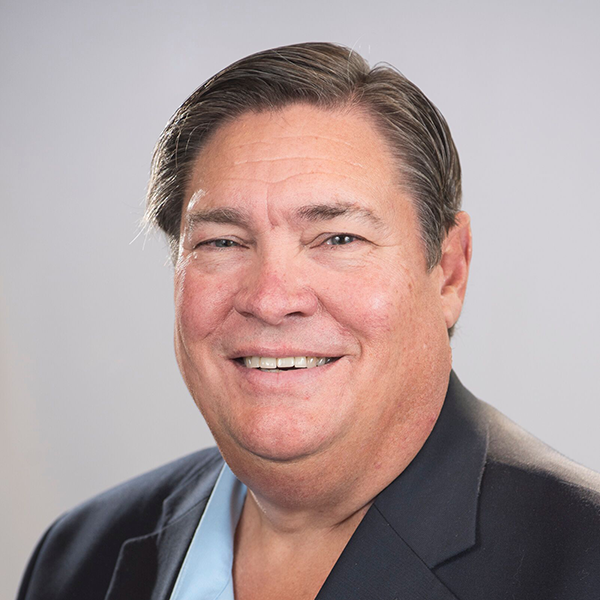
[Mary] Hi there. Welcome to Safety Labs. Safety looks very different in different environments. We've talked to a few guests most familiar with remote resource extraction sites, some in construction, and today we'll be speaking with a guest who has extensive experience in the retail environment.
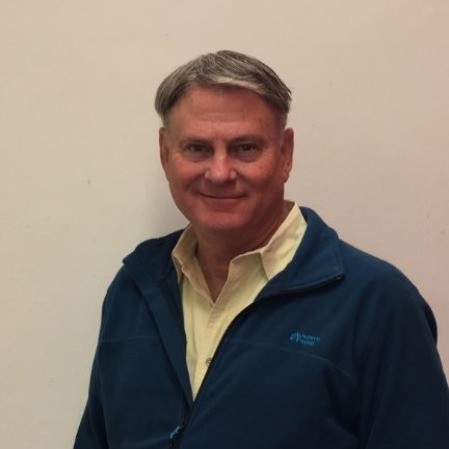
Mark Gobert is a retired safety manager who cut his teeth in insurance, then worked in retail safety for nearly thirty years. He worked in risk control for Macy's, and retired as director of safety for Williams Sonoma. His accomplishments include massive injury expense reductions, developing the first written safety program for Macy's, and crafting his own theory of safety practice, which we'll discuss today. Much of his work involved developing relationships with workers and executives to meet business needs and keep everyone safe. Today he'll share his views on the safety industry, explaining injury expenses, and showing recognition, among other topics. Mark joins us from the San Francisco Bay Area. Welcome.
[Mark] Thank you very much for having me on.
[Mary] Let's look at your career as a whole to start. Over your time working in safety, how do you feel the practice and understanding of safety has changed over the years?
[Mark] I think, bottom line, what I used to see, and part of what I heard in my own education, was that at first people just thought, well, it's just the cost of doing business, these expenses, there's nothing you can do about it. The more savvy individuals knew otherwise, but I often found myself having to explain this to people. The proverbial light going on was what I really tried to work toward — it's not just the cost of doing business. Is there an expense? Yes. But there's a lot you could do through engagement, very much through engagement, but also through practices and communication, to affect that. And then there's the ancillary benefit of morale, which feeds into productivity and everything else. That's where I saw the bigger shift. I think any good risk person has to find a way to bring communication into it, so the decision-makers gain a real conceptual understanding of the impact of safety — not just direct cost, but indirect cost too.
[Mary] There's an ongoing debate on this show about different approaches to safety and organizational culture — some people have developed principles to guide their practice, some focus on understanding the nature of work, some are more interested in context and how the organization functions, and some feel there's nothing new under the sun. Do you feel newer safety ideas are mostly recycled older ideas, or do you think they're truly shifting the conversation?
[Mark] Good question. I think some are recycled. What I've learned most is that safety is a basic process, but there are new ideas too. What I learned, time and time again, is that the associates, the employees, know the answers — but they're seldom asked. I have so many examples. One, from when I worked at Macy's — we had a wave of employees filing reports for neck injuries. I asked, what's going on here, met with them, and they got so angry they started using some inappropriate words. I said, okay, I get it, let's stay focused. It turned out to be the apron they were given — nobody had ever asked them about it. I took their ideas, had it redesigned to what they wanted, rolled it out to every Macy's store, and injury rates dropped significantly. It's about making contact with your associates. Now, sometimes I'd hear that employees are "just bad," that they complain about everything — and there are people like that — but most of the time, employees just want to be engaged and listened to. They have the answers ninety percent of the time. That's the big factor.
[Mary] Tell me a little about practicing safety in retail specifically — what sets it apart from industries like manufacturing or construction, in terms of safety?
[Mark] People in retail work hard, work fast, and juggle multiple tasks. I say that having worked in insurance before, at TransAmerica, where I saw all sorts of environments — but retail employees multitask, work odd hours, and during a visit or busy season, put in even longer hours. They often work without the equipment they need — material handling equipment that's missing or broken. It's a physical job for almost everyone, regardless of whether they're in sales or support, or really any position. People often work ten, twelve, thirteen hours in a day, and imagine what that's like during the holiday season. On top of that, they have direct contact with customers, who can be rude or very complimentary — that's an added pressure I don't think many people consider.
[Mary] I'd imagine — in construction, you drop something on your toe, hopefully you're wearing steel-toed boots, and you can let out an expression you might not be able to in the middle of Macy's.
[Mark] Correct.
[Mary] One of your approaches is about engaging management and associates in safety — can you explain what you mean by that, and are there different approaches for those two groups?
[Mark] For the management team, let's hit that first. One thing I learned, and I found so few safety people do this, is explaining the cost of injuries — why should they care, when they've got twelve, thirteen, fifteen items on their list, and often safety isn't one of them? That's where "it's just the cost of doing business" comes from. So I met with finance people directly, and what I was able to do was say, okay, we had this employee injury, it resulted in medical treatment — what's your operating margin? We set up a cost allocation program, which I can talk about more if you'd like — how much did that cost in terms of items that had to be sold, days of sales, how did it lower your profit margin, did you meet your operating margin and sales goals? An easy example — I could say, okay, this many medically treated injuries, run through the formula, that worked out to forty-five point two days of your sales. For one region, I showed that what they saved on injuries compared to the year before worked out to twenty-one extra days of sales in a year. Boom — instant credibility, because if they don't get that, there's a problem.
That was the management piece, but I never tried to come in heavy-handed, or act like I was better than them — I've seen some people in this career, especially early on, act like "I'm the safety person, I'm the most important person here," which is a turnoff right from the start. I tried to be consultative. Once I got their attention, which it eventually did, because when I relayed that message up the chain, they supported it, I'd then meet with employees, or work through accident investigation reports, and ask, how do I make this better for you? Sometimes it was as simple as, let's turn the lights on ten minutes before you get into the store, so you're not tripping as you walk in — and for employees, that was a real win. There were other recognition-based things I did too, which I can get into now or later.
[Mary] I have a question about that a bit later. You touched a little on my next question already, which is about explaining the expense of injuries so people understand — in this case, executives. I think it's fair to say most executives don't want people injured, it's not that they don't care — but do you think it's hard for them to wrap their heads around it without seeing it in numbers, costs?
[Mark] In all my experience, across my different roles, I found that no one had really ever brought this forward to them — it's an education piece. They'd be told things like, you have to open up so many credit cards to hit your goal, and I'd show them, well, it takes two hundred and ten credit card applications to pay for one customer injury. They'd say, my gosh, I had no idea. The finance angle works, because not only can you frame it that way, but when you show people at the top, who've often never been brought into the conversation about injury expense at all, that you could have increased your profit margin by eleven percent last year with just a fifty percent reduction in injuries — that's the kind of argument that lands with decision-makers, VPs, whoever.
But it's also true for employees — most of them care, there's always an exception, but most do. And you take that further with recognition for successful teams. We had an award called the No Lost Time Injury Award, which rewarded bringing injured people back to work in some capacity. The money would go to the location, and we'd sponsor a party directed at the employees — not just to pad the store manager's bottom line, because that's when you alienate people, "what's their buy-in, who actually cares about me." You really have to focus on bringing it back to the employees. When you explain the cost to them, they're often shocked, "I had no idea," and then it becomes, well, what do you need? That seemed to work pretty well. At Williams Sonoma, working from a cost allocation program, we reduced our employee injury expense over seven or eight years from $15.1 million to $3.4 million annually. When you can cite that, you have instant credibility — even finance people are staggered, they hadn't thought of it that way. I just want to be clear, it's not about the money for its own sake, but it gives you the basis, and the validity, for what you're doing.
[Mary] It helps translate something a bit abstract into the language of the people you're talking to. A minute ago, I think by accident, you said "customers" instead of "workers" — which brings me to a question: are you responsible for the safety of customers too? You must be, in some sense — how does that work?
[Mark] That's huge — absolutely huge. Creating a safer environment is a big part of that, floor conditions being a major piece — are you creating unsafe conditions, things falling onto customers? That's a direct expense, obviously, and the problem with a general liability claim is you never know when it'll end — it could drag on for years, and a severe case could run well into the hundreds of thousands. Someone has to pay for that. I'd often try to explain the four elements of tort law — people in retail have a lot going on, but if you can explain the basics to, say, the visual teams setting up displays, who'd never had this explained to them before — duty owed, breach of that duty causing a bad condition, injury or harm, usually bodily injury but occasionally something else, and proximate cause — that was the concept I tried to bring forward, because it reduces expense, but nobody wants to go into a store and get hurt because the floor's wet or something fell on their head. That's also when it ends up on social media — "I went in, they ignored me, I got hurt, never heard back from them." Once in a while, a customer would actually track me down directly, and I'd think, how did you find me? They'd say, "I'm a lawyer, I know how to do these things, you should be aware." I have to give them credit — if they're that diligent finding me, they'll be even more diligent pursuing restitution.
I could also sell visual merchandising standards the same way — don't you want a nice-looking store for your customers, instead of one with stuff all over the floor? That wasn't a hard sell either, once you brought those factors in. But I want to be clear — I always tried to be accessible, never full of myself. Being accessible and listening matters. You can't cut people off, or act like you already know it all, because you don't. The moment you take a bad approach is the moment you shut people down.
[Mary] I have more questions, but first, a message from the company behind the podcast.
In busy warehouse settings, safety competes for workers' attention with speed and productivity. Teams need cutting tools that perform consistently, stay clean, and last through shift after shift. Traditional box cutters can rust or dull, adding to laceration risks and productivity slowdowns. The Slice Box Cutter is designed to lower risk holistically, with an award-winning ergonomic design, blades that never rust, and a unique finger-friendly blade edge that's safe to the touch. You don't have to compromise performance for safety either — Slice blades last up to eleven times longer than traditional metal blades. Because they're chemically inert, they're easy to clean, and changing blades is quick and easy, with no extra tools required, so workers can minimize downtime. The Slice Box Cutter's distinctive, ergonomically curved handle protects users' hands from staples and debris, and reduces the risk of repetitive strain injury. Available in manual-retract or auto-retractable handles, you can offer workers flexibility without compromising their safety. Here's what one Slice customer had to say: "Bought these for our employees to use instead of regular metal blade utility knives. Thought I would have to take the other knives away to get them to use them, but once they found out how much easier they open boxes, now it's the only box cutter they use." Slice makes people and places safer. Slice is owned by Safety Products Global, which offers the largest range of safety knives on the market. Want to learn more about which tools will work for your materials? To request free samples, go to safetylabspodcast.com/samples.
And now, back to our interview. You'd said you feel it's important to work with people to get them on board with safety, and the emphasis was on "with." Can you describe more what you mean by that?
[Mark] A perfect segue here is the relationship I had with Slice — I want to bring this up. My contact, Matt, was absolutely terrific. When I started at Williams Sonoma, they basically had no safety program on the store side. I covered warehousing too, toward the end of my time there, but most of my work was stores and corporate offices. What I found was that they had no real program, and the box openers in use were horrid — just basic razor blade types. I worked with Pacific Handy Cutter at the time, and Matt's approach was great — he gave me a lot of different products to try. I distributed them, but I asked the employees, which ones do you want, what works best, how does this go? Because you guys became the supplier for all of Williams Sonoma Incorporated. That's terrific, because our injury severity went down significantly — you can have a really severe injury with a bad box cutter, of course.
We also developed a safety video showing how to use them properly, and built separate training with Matt's help to introduce the box openers correctly. What I liked was that there wasn't a one-size-fits-all approach — there were multiple options. And something that built a lot of credibility with the teams was that it wasn't just right-handed tools, there were left-handed ones too — "you need a left-handed one? There's a left-handed one." We put them on the supply list and essentially retired the old box openers — not easy to do completely, I know some hung around, but it made a real difference. At first I got pushback, "these cost more" — not much more, but they were looking at bulk costs — but when I showed the reduction in injuries, plus associate feedback, because I'd survey people directly and bring back their comments, it was field-tested, and that made a big difference to them. Again, it's about listening to employees. The box openers were a big win for everyone, I think.
[Mary] Field testing — that's a way to work with people, rather than just, here's your new box cutter, everyone uses it, have a good day.
[Mark] Right, and there's always a point where individuals just trying to get the job done will just order whatever seemed fine and move on — that was part of it too. Another part of engagement I probably didn't mention was instant rewards — small things, like refillable bandage holders in different colors, which people could take home, "my gosh, I have grandchildren, I have kids, this will work out great" — instead of just handing out a ballpoint pen.
[Mary] One thing you mentioned before that I wanted to ask about — incentives. What's your view on them, do you think they work, and are some better than others?
[Mark] I do think incentives work, but they shouldn't be structured in a way that discourages someone from reporting an injury — there's always that downside, and I've heard the arguments, and I think they're valid. Incentives that reward good behavior, through observations, for example, can work — though observations take time, and sometimes people don't want to invest that time. One thing I worked with was a safety binder — paper-based, in the retail world — and one feature was a "circle the hazard" contest, where people would circle hazards on a page. That crosses language barriers too, everyone can participate. Spelling "safety" backward in a crossword puzzle, I don't think that accomplishes much, though somebody else might argue the point. But making sure people feel they can report an unsafe practice or condition without it becoming fodder for a disgruntled employee — that's the key. So yes, I do think easy-to-do incentives work — report a hazard, fill out a form, reward good behavior. That's the big one.
[Mary] You alluded to this, but do you think there's a danger that if the incentive is tied to reporting, you get over-reporting, or if it's tied to reducing lost time or injuries, people might under-report?
[Mark] I'm not a proponent of posting "days without an injury" on a board. I know it's common, I've seen it a lot, but in the wrong situation, it can discourage employees from reporting injuries at all, so I'm not a fan of that. On lost time, though — there's a huge difference between a medically treated injury and a lost-time injury, once you factor in indemnity payments, medical costs, rehab, everything else gets expensive fast. What I found time and again was that line managers or department managers often had no idea there was even a difference. So, what light-duty work can you provide — and that has to be sanctioned by a medical provider, obviously, not just "I'll bring him back because I don't want him to miss time." But when you can offer that, and keep someone at work, it avoids morale problems too — say you're supposed to have five people working and two are out, that creates its own problems.
For incentives, I'd push things like a "Safety Idea of the Month" — ask people for their ideas, though I'd caution, screen them before reading them aloud, you never know who's going to submit something a bit too candid. But recognizing and implementing good ideas is great — again, it's about listening to your associates. I felt that bringing safety forward and engaging employees that way also lessened the appeal of unionization in some retail environments — I'm not against unions, my dad was in one — but employees who feel valued and engaged are happier employees.
[Mary] I'll zoom way out now — how do you feel about the future of occupational safety over the next ten to twenty years?
[Mark] I feel positive about it, I really do. The biggest difference between what I see today and what I saw thirty, thirty-five years ago is the introduction of the concept of "engagement" — that word was rarely brought up when I first started. I remember being sent to a plant that made plastic red caps for milk jugs, in Tennessee, and being told, "you'd better perform here, get this done." I drove up there and thought, my God — what I found was zero communication between management and employees. So I called a meeting half an hour before the end of shift — the eight managers stood about ten feet away from me, the employees another ten feet away, and I was in the middle trying to bridge that. That's really when I learned the importance of engagement. I think engagement and employee recognition are much more common now, and any employer or manager not at least considering that concept is making a mistake. That's how I feel.
[Mary] At the start, I asked how you felt the safety industry had changed over your career. I want to flip that and ask how you feel you've changed, and what you've learned, when it comes to occupational safety.
[Mark] I really loved what I did. Everybody, or at least a good percentage of people, said I had passion for it, and I think when you like what you do, you're excited about it, it doesn't feel like work. For me, it made me a better listener, definitely — that's something I had to learn, and I hope I did. It also improved my negotiation skills, because I learned there are at least two sides, maybe more — there's their side, maybe the insurance company's side too — and it's about how you present yourself, how you look, how you respond, that makes a big difference. Sometimes it's about delegating, but the biggest thing for me was follow-through. Someone told me, early in my career, don't just say what you're going to do, do what you say. I think that made me feel more fulfilled — I look back on my career very positively, with a real sense of accomplishment, and personally, that makes me feel good.
[Mary] If you had a magic wand, where would you focus training for the next generation of safety professionals?
[Mark] None of us really know what AI is going to do — there are a lot of questions about where it's actually taking us — but whatever the medium, I don't think it should just be "watch this computer program." I still believe in the one-on-one touch, whoever the manager is, whatever the situation — people shouldn't just go through computer-based training. There are benefits to CBT, but nothing replaces interaction, because interaction gives you instant answers, versus just watching a program with no feedback loop — if it doesn't allow for feedback, that's a mistake, and feedback is huge. Beyond that, I'd want employees to understand what percentage of sales, or operating margin, is going toward injury expense or the safety program. There's always going to be some expense in safety, but I think it's a controllable expense, and that's the approach I'd take.
[Mary] I want to come back to something you mentioned earlier — this will be true for safety managers in many parts of the world with a lot of immigration, lots of different cultures and languages — language barriers in the workplace, probably common in warehousing and retail. Did you do anything differently to approach that?
[Mark] Language barriers, especially being based out of Northern California, Spanish is obviously the dominant secondary language there, but that doesn't matter everywhere — I'd go up to Portland and there'd be a lot of Asian-language speakers too. I'd think, my gosh — finding some way to communicate, through a lead or some form of translation, because you also have to meet OSHA standards. Most people don't speak multiple languages, so you try to find a communicator in some form, a site person, a manager, and be there with them — not just hand off a script and leave, but be present so if there are questions, you can address them, so people feel engaged. That's huge — one place I visited had eight different primary languages among the staff. That's a tough challenge at times, but taking the time, and explaining to management ahead of time that you're going to do this, so they're not thinking "you just cut into my productivity" — asking, what day works best, what time is best to be there — trying to reach acceptance. That was the big piece there.
[Mary] Good question, though — was there a lot of travel involved, to different sites across the US, I'd guess?
[Mark] Yeah, at Williams Sonoma I was their sole safety person for over seven years, so yes, a lot of travel. One thing I haven't touched on, and I should, is OSHA exposure — unhappy employees are often the first to call OSHA, because they feel their concerns aren't being addressed. What I tried to do was elevate safety across the stores and corporate offices, and we went four years, as an S&P 500 company, without a single OSHA fine — not one, over a four-year period. That was huge. I think most people at OSHA are pretty good, I actually like OSHA as an agency, there are always exceptions, as with anything, but it's often the individuals who feel they're not being heard, often because of a language barrier, who feel disenfranchised, who end up calling. So you also need to know what percentage of your workforce is non-English-speaking before you take that on.
[Mary] Jumping around a bit — if you could go back in time to the beginning of your safety career, is there a piece of advice you'd give yourself?
[Mark] I'll go back to, do what you say, and say what you're going to do, and then do it. It's all about credibility — if people are relying on you and you don't follow through, you've lost it, "don't bother with him, he doesn't do what he says he's going to do." I do think there's also value in keeping a manageable workload — sometimes it's okay to say, "I can't do it next Tuesday, I've got other things going on," as long as you communicate that. Follow-through and communication matter enormously for the reputation of whoever's running a safety department, along with reaching out — there are other people who have answers, not everything's found through a computer or web search, though it is a lot easier now that you can look things up, versus the old days of having to go down to OSHA in person or dig through physical books. That strips away some of the old excuses, as far as I'm concerned.
[Mary] How can our listeners learn more about any of the topics in our discussion today — books, websites, organizations you found helpful?
[Mark] I've read some theory books — workplace violence is a big one, a terrible situation, but worth looking into. It's nice now, you can just search online for whatever program or resource you need. I think joining chat groups or organizations gives you both validity and outside perspective. Those are the big ones — though I don't think you need to belong to every safety organization that exists, that takes away from balance in your personal life. If anybody has a question or wants to reach out, they can find me on LinkedIn — I'm retired from Williams Sonoma, but happy to connect. I've also spoken at a couple of international conferences, which was really interesting, bringing different ideas together, fascinating experience. Anyone with questions, feel free to reach out.
[Mary] Well, that's today's show. Thank you, Mark, for joining me.
[Mark] Thank you, it was fun, and I appreciate being asked to do this.
[Mary] Thanks to our listeners, and of course to our writing, production, and tech team. Bye for now. This podcast is created by Safety Products Global, the world's leading manufacturer of safety knives. Through our trusted brands, Klever, Slice, and PHC, we empower companies to prevent injuries by providing safer cutting tools for every material and application. Until next time, stay safe.