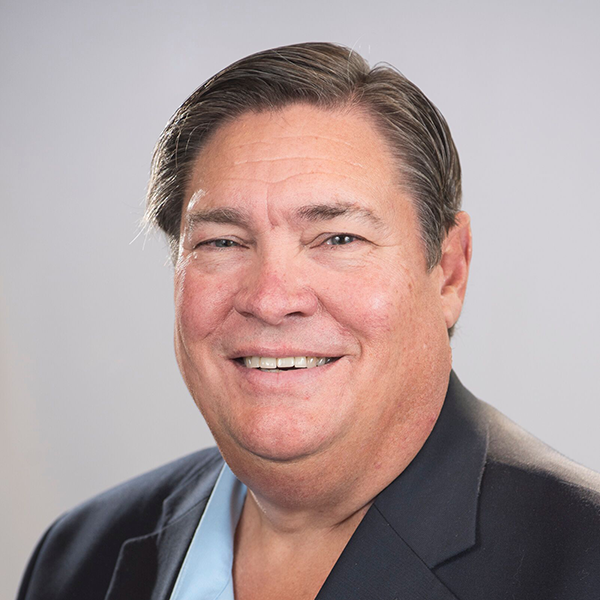
[Mary] My name is Mary Conquest. I'm your host for Safety Labs, the podcast where we explore the human side of safety to support safety professionals. We move past regulations and reportables to talk about the core skills of safety leadership: empathy, influence, trust, rapport. In other words, the soft skills that help you do the hard stuff. This podcast is created by Safety Products Global, the world's leading manufacturer of safety knives.
Hi there. Welcome to Safety Labs. Our guest today draws from diverse workplace experiences that might not seem related at first blush, but we're going to have a bit of a wide-ranging conversation to see where his approaches in different areas of experience overlap and inform each other.
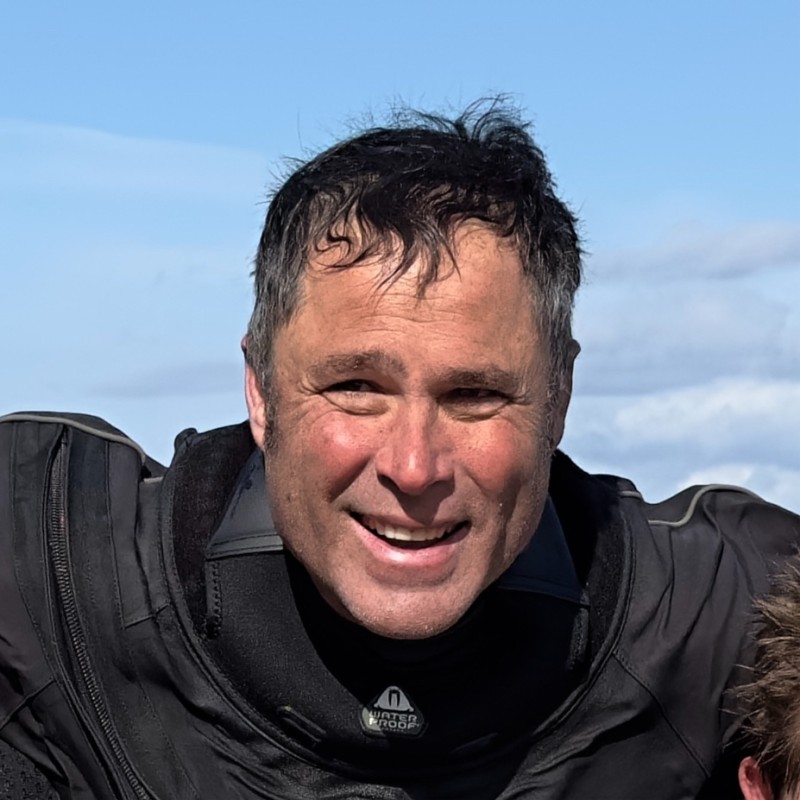
Aaron Potash is a division safety coordinator at Lawrence Berkeley National Laboratory, where he helps research teams safely navigate complex operations while fostering learning and adaptability. He has over a decade of EHS experience and an earlier career as a paramedic, which gives him a deep understanding of how people make decisions under pressure. Outside the lab, he runs Original Oaktown Divers, a scuba instruction business focused on developing resilient, confident divers.
At work and under the sea, Aaron explores how people observe, orient, decide, and act in changing conditions and how their experience shapes their understanding of their environment. Aaron joins us from Oakland, California. Welcome.
[Aaron] Thank you. Happy to be here.
[Mary] So how do you think your EHS experience influences your diving work? And vice versa. How do they play together or inform each other?
[Aaron] So when I take a diver out, what I'm doing is I'm taking somebody out, especially if it's their first time, and I'm putting them in a situation that's constantly changing, something that they may not really understand. And they have to go out there and face this big Pacific Ocean that's cold, sometimes it's low visibility, sometimes there's crashing waves. And they have to become adaptable to whatever the ocean's throwing at them. Which means that in order to play in that space, you can't just take one line of thinking. You have to constantly be vigilant. I mean, we talk about situational awareness, right?
And so my goal as a scuba instructor and as a leader in that field is really to build the ability to help somebody navigate situational awareness. Now I see this quite a bit at work as well. In many organizations, we have a lot of regulations, we have a lot of rules, and people are expected to follow these rules. But the problem becomes that when you're focused on the rules, you're not necessarily thinking entirely about the entire scope of the work.
[Mary] So one of the things you touched on — both workplaces and diving situations are VUCA, which is an acronym that I just learned. Volatile, uncertain, complex, and ambiguous. So knowing that, as you're saying, you can't just — it's not like you memorize a flowchart. Things, I imagine, change too quickly to be sitting there and going, "Well, if this is this, then yes or no," right? So how do you prepare divers for the kinds of decision making that they need to do on the spot? Like, what sort of exercises or instruction do you give them?
[Aaron] Yeah. So what we do in the pool sessions as well as in the ocean, but first in the pool sessions, is we plan for these bad-outcome type of events. We train a diver to be able to recognize a problem. We simulate things as best as we can, whether it's doing things with eyes closed, whether it's simulating an out-of-air emergency. And then we start ramping up the level of detail and technicality on these things. And so the idea is that we're building something that becomes more resilient.
And I find that that's also very useful in the workplace as well, is that when we start moving a worker away from the rules and regulations and actually really understand their world and we train them to operate and simulate their environment as best as is possible, then we're able to build a more resilient worker. We're no longer reliant on the rule to save us. We're actually training workers to be more competent in the field and to be able to recognize and adapt to the complex and ambiguous environment that work is as well.
[Mary] So is there an element of drills? I mean, I know firefighters, for example, practice all the time. They do drills. Is that something that comes into play?
[Aaron] Yeah, absolutely. I do have a firefighter background as well. So a lot of these concepts actually came from that space. When I was a firefighter, we would do blackout drills. We'd go into rooms that were completely smoked out so we couldn't see anything, because this is the world that we played in. And so a lot of the drills really are designed to simulate as best as we can the actual type of conditions that we may face. And they escalate in complexity too.
So we may have somebody who — your first thing is you take a sip on your regulator and you get some air out. But by the end of nine, twelve hours of pool session, maybe even longer, they're removing all their entire gear. They may be doing it with their eyes closed, and they're able to feel around things. And the idea is that we've built a certain level of resilience for them. And they can debug things. So maybe their power inflator disconnects or something like that, and they can almost blindly reconnect it and understand what those conditions are that got them in there and be able to navigate their way out of there.
[Mary] You mentioned last time we spoke Gary Klein's expert decision-making model. First of all, can you quickly explain that for the audience? They may be way more familiar than I was with it.
[Aaron] Yeah. So Gary Klein came up with something called the recognition-primed decision-making model. And I made a video about it — actually my son did — called "The Expert Decision Making Model," to make it a little simpler. But essentially what it boils down to is, if you go back to the firefighter, because Gary Klein actually uses the example of a firefighter, the fire captain shows up on the scene and they're not going through this process of weighing decisions. They're not thinking, "Well, maybe if I do that, we can do this, and then this next option I'll have." And then they're not comparing these decisions.
What they're looking at is that they already kind of had that gut feeling from looking at something, from their past experiences, whether it was a drill or whether it was an actual event in the past. And they're able to pull deeply from that instantaneously. And so they've already got this recognition and it's engaging their decision making at that very moment. And it's not to say that they're going to get it right. Gary Klein actually talks about being able to pull back and reassess almost instantaneously as well.
But this pattern recognition that they have comes from the building of understanding of events from past experiences, from drills, which is why all these drills that a firefighter or scuba diver goes through are so important. But even what a worker would go through.
[Mary] There must be some limits to the kinds of drills that you can do in the workplace. Like, obviously you're not going to want to do a drill for an actual fire, for example. Do workplace limitations — does it affect safety training?
[Aaron] Well, I mean, we do do fire drills within the workplace. We're an earthquake country as well, right? So we do earthquake drills as well. One of the interesting questions that I asked the last time we were talking about earthquakes — and because we're up in the Berkeley Hills, wildfires — is what piece of equipment or part of your experiment is really important that you'd want to take with you?
Rather than — we always talk about stop, drop, and roll. Or we talk about having your go bag. But you're now faced with this condition, right? And what do you take with you? I don't know if that's always asked. And so that's a kind of drill. That's a planning-ahead type of thing, thinking outside the box. And it'd be far better to kind of discuss that ahead of time.
But in any workplace, there's definitely limitations. You can't really do a smoke-filled room in a workplace. That might be against a lot of worker safety and health codes. But you can definitely have maybe a blindfold type of drill that you could do, or you can do a tabletop type of exercise to think about what are the things that we can do in the event that this type of event happens.
And one of the things about that is I find some of the best ways to make a drill are getting the people that are actually playing in that space, not the drill space but the actual workspace, to help come up with this, because they know what work needs to look like. They know what keys need to be turned off. And so when an organization comes in there and says, "Okay, this is how we're going to do it, this is how you're supposed to do it," it may not necessarily make sense for the workers.
So I take that back from the scuba diving type of thing. When I look at core standards, they're written maybe for a perfect type of environment. I don't always have that perfect type of environment. So I have to make the training realistic. And so my students will close their eyes during some of the training activities. Why? Because sometimes in Monterey we have visibility that might be a couple feet. Sometimes we also have fantastic visibility, 60, 80 feet of visibility as well. But I need my students trained for that level. And so it's my past knowledge that actually helps me to improve on this training to make it more realistic.
[Mary] That's actually an excellent point. I never thought about — I was part of a workplace where there was a fire at a workplace I was at. I was in the other building, so I didn't even know about it till afterwards. But people do stop and take things. And I mean, the conventional wisdom is just don't, just don't, right? But I think it's more realistic to think about what might they take, just to have that discussion so that they've considered it and they can confidently either go without or get that one thing. At the time, there was a man who went back for his laptop and his colleague chastised him. He's like, "You have kids, it's a laptop. Who cares? Let's go."
[Aaron] Well, that's a really interesting perspective too, right? I mean, think about the evacuation from an airplane. I'm thinking, you read in the newspaper about how people are grabbing bags during an evacuation type of condition. And we say, "Don't grab your bag. You need to evacuate." But what if you have a severe food allergy or something like that? And your meds, your EpiPen, is in there. Is it simple enough just so that we can say, "Don't grab your bag"?
Maybe the conversation that happens is, "Okay, the expectation is that you don't grab your bag during an evacuation. So put your — what are the items you would take with you ahead of time? You can have that conversation."
[Mary] Yeah. And even during that conversation, the result might be that the person says, "No, actually, there's nothing," but they've gone through that thinking. So when their brain goes into panic mode, they're like, "No, I've already thought about this and I know that there's nothing I need to take."
Do you have any anecdotes or stories about how the expert decision-making model works in practice, like either in diving or in your workplace? Have you ever encountered a situation where you or one of your students has had to go through this?
[Aaron] About a month ago, I was teaching a class in Monterey and I had several students. And we were on the surface of the water and we were done with our second dive of the day, and these students were fantastic in the water. And all of a sudden this woman from another group, I don't know who she was, she popped up behind me. And I had turned around just because I was looking on shore and I saw her in the peripheral part of my vision. And what I saw was a woman that looked like she was struggling at the surface and that she wasn't able to — we use the term — be floaty. And she was more sinky than floaty.
And what ended up happening was my initial gut assumption was absolutely correct. And I yelled over there saying, "Hey, are you okay?" And all I saw was — and her head's kind of bobbing — and as I started swimming over there, I made a beeline over there. As I started swimming over there, I noticed that she was really struggling to stay afloat. And so I was able to grab her and buoy her up temporarily and actually start removing her gear.
Had I waited, I may have missed an opportunity. And this could have had a very different outcome. And so my past experience — I've seen that type of condition before. So I didn't really need to wait for her to respond back, "Hey, are you okay?" I already knew what was going on. And those cues were there.
Gary Klein also in his book talks about nurses in an intensive care unit. They can look at a patient and know which direction that patient's going well before any type of clinical system is in place. And that's kind of what that is. For my years as a paramedic too, I could look at a person and I'm like, "All right, this is what's going to happen from this course on," without really going through this process of, "Well, are they this or are they that?" or, "Do I need this diagnosis?"
And the same thing with a master craftsperson, right? They look at something that's just not right. They can't really necessarily quantify it, they just know it. And they know it because they've been there before. They know every little nuance about things. They may not be able to express it, but they are the experts in the realm and able to pull from their past experiences. And we want to get people through to that level.
[Mary] Yeah. And often those past experiences are essentially mistakes or poor decisions. And so drawing from that experience and trying to pass it on to someone else so that they'll make better decisions in the moment, I suppose, is tough.
So let's talk about building trust. It's important in EHS, and I imagine it's very important for diving students. They need to trust your expertise so they learn. How do you approach building trust? And do you have any advice for listeners who are maybe trying to build trust in their workplace?
[Aaron] When I started as a safety person, I was very rule-based. I was, you know, "OSHA said it, it must be right." "The rules are written in blood," I think, is some of the expressions I used. "The rule's there for a reason." And that gave me this SME, subject matter expert, type of mentality. And I don't think people trusted me at that point.
And I find that as the years have gone on, I've become less about trying to become a subject matter expert in any field and really just being curious about what it is that the people that I support are doing or that my students are doing. Now, as a scuba instructor, yes, I am a subject matter expert, but I'm also super curious about what my students are experiencing. So I have to kind of walk that line.
But in the workplace, what it comes down to is really just being curious about your people and the projects and the experiments and the activities that they're working on and what are the challenges that they face. And when they're telling you the information, and sometimes you can't get them to stop talking, they've got a level of trust in you. And they're excited. And it's super fun to actually foster that.
And so as a safety person in that space, you're playing off what they need and helping them to make work make more sense. You're not coming in as a subject matter expert and saying, "This is the way we're going to do things," or, "This is the rule here." You're understanding their challenges, you're understanding their world, their context, and you're supporting them as they help make the changes that they need to actually make things happen.
[Mary] So it sounds like, as a very unscientific measure of trust, you could say, if your people are talking to you, you're doing well. If you find your people are not talking to you, then maybe there's some work to be done.
[Aaron] That is a yes. If you're getting the information — and I think it's Ivan Pupulidy, and I apologize if I got his last name wrong — but I throw this quote towards him: "Information is the currency of safety," if I have that right. And if we want a safe operation, we need to ensure that we're getting the information that we need. If we don't, we're not as safe as we think we are.
[Mary] Yeah. So on that note, communication is critical in a diving situation. A misunderstanding can have lethal consequences. I mean, the same in a workplace, obviously. But when you're diving, you can't speak to each other. There's a series of hand signs, I believe, that divers use, right?
[Aaron] Well, you use a lot of hand signs, yes.
[Mary] Yeah. So because it's as critical in a workplace, how can safety professionals foster environments where everyone is communicating but also communicating clearly? Because sometimes the speaker thinks they're communicating and the listener does not think that it's clear.
[Aaron] Yeah. And that's a fascinating field of safety in any workplace dynamic in and of itself, right? And I think one of the areas that I see communication stumble is especially in the realm of a new person. Somebody new to a group, new to an organization. And these people may be afraid to speak up. And so I think for an organization to be successful with that, they have to first realize that it's not simple enough to say, "Okay, you have the authority to say something," or, "You have the authority to stop work."
We actually have to have the conversation that we know people are going to be afraid to speak up. And we actually have to be vigilant about creating the space to allow somebody to speak up, but also to probe them and to realize that we may not be hearing the information that we really need to hear because it may be guarded.
And so as supervisors and leaders move up an organization, it's really important for them to identify spaces where we can create a space for somebody to be able to comfortably say what they need to say. And that's a real big challenge, especially the higher up in any organization that you get.
There are techniques that people utilize, red teaming type of techniques. An adversarial mindset where you can have people play the devil's advocate to an idea that actually helps allow for that communication to occur.
[Mary] Yeah. So last time we spoke, red teaming was a new term for me. Can you explain a little bit more about what it is and specifically how it might be helpful in a workplace safety situation?
[Aaron] Yeah. I really love the concept of red teaming. And red teaming is essentially, in my perspective, an adversarial mindset. It's, "Okay, we want to do something. This is our goal. I want to have a certain set of people to tell me why that goal's not going to work or what are the challenges that I'm going to have to that goal." Because every decision that we make, there's always bias because we're humans, right?
And I might have this bias of success. I don't know if that's the proper term — somebody please correct me on that — but we may have this bias that this project's going to work. And we need these other people to give us that information that we're not aware of. They need to illuminate what's on the other side of those blinders.
And so if you're building a building or something, having a team of red teamers may be able to tell you the vulnerabilities to the construction or maybe the public impact that you're not aware of because you've got all this money thrown at this building and you think it's going to be the best thing, but maybe you're not hearing the complaints that are coming out. And so the red teaming type of perspective might be able to help you understand that a little bit.
[Mary] Yeah, so I mean, there's often a person or two in a group who, you know, it's tempting to call them the Debbie Downer, the grumpy old man or whatever. But I think what you're saying is there's value in that perspective, or there can be. I mean, sure, there are some people who just complain, but criticism, or looking at things from a different angle, it recognizes that the person in charge might have a bias of success, right? A bias that, "Of course this is going to work because I think it's a great idea." Are there different approaches to red teaming that are kind of more or less helpful or effective? Like, can you do it wrong?
[Aaron] Yeah. I mean, first there's a matter of how you communicate a message and formulate a message. A Debbie Downer type of perspective may not necessarily be one that's thought of as very helpful, right? But if an organization recognizes that, "Okay, we want to set up this red teaming type of perspective," they can create a space to allow for a more seamless type of communication channel and make it easier to be able to communicate that.
If you're red teaming, you have to be kind about things. You can't be a jerk about this type of information because somebody's — you mentioned they have a bias of success and it's "my idea, I want this to work." Now all of a sudden I'm the one telling you you're going to have a problem here. That can be a big challenge. So if the organization recognizes that this could be a challenge, then they create a space to allow for that.
But as a red teamer, you do have to find good ways of communicating. The other thing is you can bake things into your project, things like a pre-mortem assessment. Instead of looking at how this project's going to be successful, we look at how is this project likely to be killed? And then we start investigating all the means for how it's not going to work. And so that can be done at a project level for the project manager. Instead of saying that this project's a success, I'm looking at it from the perspective of failure. And then let's go chase all those lines down. And that way they're creating their own adversarial mindset as part of this project.
[Mary] I would imagine too that there's some specificity that you might be able to tell between a Debbie Downer or someone who's giving critical feedback. Like, if someone says, "This sucks," that's not super helpful. However, instead of just dismissing that, you could say, "Well, what about it sucks? Like, tell me more, tell me more." And then you can decide if it's just, "Actually, I just have a tummy ache and I'm grumpy today," or if it's, "No, I see a potential pitfall that no one else has noticed."
[Aaron] Yeah, and I think the way you just said that was kind of interesting. You used the words "tell me more." Those are curious words, right? And I think that's actually really helpful to any type of conversation. If you're not quite understanding the information as you're hearing it, to be curious allows the person to open up and get more information. You understand, you get more context behind things.
And so maybe it's not just the red teamers that are creating this information. It's the other person that's receiving this information that's creating the space and helping foster that. They have to be open to that communication.
[Mary] So I wanted to talk a little bit about creating psychological safety because you mentioned that in diving instruction, you have to do that. In the realm of diving, why is it important and how do you go about doing it?
[Aaron] So for me, it's imperative that my students feel comfortable with me. I'm taking them into this volatile, uncertain, complex, ambiguous world. We're going across waves. We're wearing seven-millimeter wetsuits. And I'm taking somebody in maybe a couple feet or even less visibility. And if they get lucky, it's really great visibility. Which is not actually the place I like to teach in. I like the lower visibility because it allows us to do things and to challenge things in more of a training type of environment to help build that pattern recognition for later on.
But in order to do that, we have to have a certain level of trust. You have to know that I'm doing everything I can to support you and to help you grow. And that I'm there with you. And taking your mask off in frigid 50-degree water is a big challenge. And so it definitely helps to have that level of trust.
And so how I go about building it with my people is I listen to them and I allow them the space to ask questions and I encourage the questions. I don't want to say, "There's no stupid questions." What I look for is: are you able to ask a question even if you can't necessarily articulate what you're trying to say? And we dive into that.
If I have somebody that's not asking questions or not providing pushback, then that's a problem. If I have done something too fast, I need to know about it. And so I want my students to be able to say, "Aaron, I'm not comfortable with this yet." And if they're not comfortable, then we're good.
And so that is super important. If I have driven them past their comfort level, I don't want to be in that space. And we walk that fine line too, as scuba instructors or many people in the workplace as well, is that we're always on this certain level of uncertainty and complexity. And so we have to play in that space, but we have to really be listening to the cues from the people that we're supporting or that we're working with or our students.
[Mary] Yeah, I was going to say, there's different ways — if you say, "Does anyone have any questions?" there's different ways that people can respond and say no. Some people, when they say no, you're like, "Okay, I can tell by your tone, the way you're looking, that you genuinely don't have any questions and you genuinely understand everything." And then other people can be like, "No..." And again, through their tone, maybe their eye contact, there's different ways to look at it. You can say, "Okay, they have questions. They're just not comfortable speaking up yet."
[Aaron] Thank you for saying that. I mean, there's another part of that. So I do look at visual cues, like what their eyes are telling me. That's one thing. But one of the things that I'm really curious about, and this kind of goes back to some of the things that we were talking about earlier, is mastery versus mimicry. And I talk about this in class quite a bit.
When you repeat something that I'm doing, is it because you've mastered the skill or is it because you're mimicking it? And it's not a subtle difference between those two things. So when I think about what mimicry is — in the same context, you can repeat that skill and do it exactly right. But then when we change the context, so you've got a wave breaking over your head, or there's a fire behind you, or some other crazy thing is happening, all of a sudden the understanding behind that skill has kind of disappeared.
And so if we have developed this skill from the perspective of "I have mastered the skill," as changing conditions happen, I know when that skill is important to use or how to adapt that skill to the changing world that's around me.
[Mary] Yeah, I think that's an important distinction. So you have written and spoken about loyalty and dissent, and the context was the military, but you explained it — and I think this is maybe a common phrase, and I'm paraphrasing — but essentially, the higher up you get in the ranks, you'll never have a bad meal again, and you'll never hear the truth again. So I think that idea can be expanded to hierarchies outside the military.
Which makes me wonder if workplace hierarchies inherently break communication just by the fact of the structure. Like, is it an inherent feature of hierarchy that communication will be broken the farther apart people are in the ranks or the positions?
And have you seen this play out in EHS before?
[Aaron] Well, I think it's definitely a possibility in many organizations. Especially very hierarchical organizations that have similar type of structures to the military. And that can be big business, it can be construction, it can be government organizations, and of course the military, right?
And the idea with a hierarchical organization is that you often get information that can quickly be disseminated downward. But all too often, unless the organization is really set up for it, it's hard to get that information upward again. And especially the larger the organization — the organization really needs to learn quickly what's happening, what the boots on the ground are doing, what the workers are needing, so they can pivot. And many organizations aren't set up that way. I don't know if it's a systemic issue, but it's definitely something that I think a lot of organizations do have a difficult time with.
And so in that article, "Loyalty and Dissent," which came from a blog, I believe it's War on the Rocks, they did use that quote that you utilized. And I think it's a good example of what a leader in many organizations would go through. And EHS can definitely fit in that space.
And I think this is where really building systems that are based upon what the workers need, rather than necessarily what the organization thinks is necessary, need to be implemented. Of course, there's always external factors like regulators and compliance requirements that of course need to be met. But at another level, EHS also has to meet the needs of the workers. And so they need to foster that communication upwards, because all too often we put into practice an EHS requirement that may not necessarily be workable for the people that are working in the field.
And so if you don't have that line of communication, you won't know that. And then you have workers taking shortcuts to make something work. And the organization never knows about this because they don't have that communication network.
[Mary] Yeah, I was going to say, as you were saying that, I was thinking that the problem isn't necessarily the structure of hierarchy — or the structure at all. I don't know. That's a deeper conversation. But the communication lines from top down are well established. If you could establish the communication lines in the other direction as well, then the ranks themselves might not be the problem. It's just creating mechanisms and processes by which communication can go in the other direction.
[Aaron] Yeah, and this is definitely one of those spaces for red teaming. The organization, if they realize this vulnerable spot that they have, or that there are blinders and biases that exist, they can create a space where you get that adversarial mindset giving you the feedback up. Because somebody lower in the organization just may not have that psychological safety space to play in to be able to say, "I'm not comfortable with this," or, "This isn't working for me." Or maybe it's such a hierarchical organization that all they ever hear is rules — "Can't do this, can't do that." And it's like, "Here's another rule." And you don't get that feedback going up.
Super important — that's a space for psychological safety, to really create that space so that you can get information up. The organization has to be proactive in doing that.
[Mary] I think too we think of psychological safety as sort of a monolith within an organization, but often there's more psychological safety between a person and their direct manager than, you know, the VP of anything, right? I mean, because they just don't know them. They don't see them as often. And so it may not be that workers have to be comfortable going up to the CEO, who they may never see, but just kind of the pairings, right, of one rank — for lack of a better word — managerially, like reports. People who report to other people. And it may not be a manager either. It could just be a colleague that has some more experience that can do that.
[Aaron] And I think if an organization just says, "Okay, if you have a problem, report to your manager," that could be a vulnerability, because maybe a worker doesn't necessarily agree with their manager or doesn't see eye to eye with them and they don't feel comfortable in that space.
And so for an organization to really say, "We know there's going to be multiple ways that we're going to get feedback and we want to create these spaces" — I know some government organizations have dissent lines. I think the State Department has this dissent line so that anybody can contact and send information up. And it's confidential. And that's one way of going about it.
But if an organization recognizes that, "Hey, we have mentors out in the field and we're training these people to really listen and to be curious about what new people or lower people in the hierarchy are going through," you can improve the feedback in that realm. But also to be able to create spaces for these people that may not necessarily speak up — put them in a red teaming type of environment. And so they're given these opportunities.
Another space that organizations are playing around with for getting this information up is in the learning team process. And a lot of organizations are really embracing learning teams. I know you've had guests that have talked heavily about learning teams, but these learning teams are giving us this boots-on-the-ground information from people that are closest to work. And it's giving us beautiful context of work operations that can then be given up the chain of command so that the organization also learns quickly.
[Mary] Well, and it may be that one line of communication is never going to be enough because there are so many different situations. So the more lines of communication, right? Learning teams or a dissent line or directly reporting to your manager — if all of those are comfortable, or at least available, different people will choose different environments to speak up.
[Aaron] Yeah. And I think one key factor on that is the organization has to really be proactive and set those things up as well. Because without the organization's blessings, learning teams don't necessarily have — if they just self-assemble and nothing ever comes out of it, then people aren't going to speak up ever again.
[Mary] Yeah, they lose their trust pretty quickly. If you could choose one lesson from the world of diving that might be helpful to our listeners in terms of workplace safety, what do you think it would be?
[Aaron] I think the big lesson I've learned from diving is that the ocean is volatile, uncertain, complex, and ambiguous. And to lean into that complexity and to become resilient and adaptable to the changing conditions, whether it's in the ocean or whether it's at work. And that's really the fun place to play.
[Mary] Yeah, I think it sounds to me like a mindset shift — all these difficulties, be it in the ocean or at work, including minor incidents, are not disturbances. They're not annoyances to your perfect ideal situation. They are in fact challenges that you can look forward to, right? I mean, no one looks forward to incidents, but you can lean into them, I guess.
[Aaron] That's what I mean. Yeah, and that's exactly right. The leaning in is super important to all of that. And we have to be open and honest that we live and work and play in complex environments, right? And nothing's as simple as we'd like it to be. And so leaning in to embracing that really allows you to develop a certain level of resilience and adaptability that I think is key.
[Mary] Well, you've listened to the show before, so I know that you know there are some questions that I tend to ask at the end of the show. And one of them is: where would you focus training for the next generation of safety professionals? What sort of particularly soft skills do you think are important to develop?
[Aaron] So one of the things that I really embrace is the learning team type of activity. And so I think safety people should become aware of the options of conducting a learning team and how to do it and other red teaming type of skills. We really need to develop and create places for psychological safety. And so that's another area.
So I suppose, in a nutshell, the area of training I would focus on is less about subject matter expertise and more about understanding context and listening and learning, being a quick learner.
[Mary] Yeah. Excellent. And if you could go back to the beginning of your safety career, what's one piece of advice that you might give yourself?
[Aaron] I remember when I was a young firefighter, one of the fire captains said, "You have two ears and one mouth. Use them accordingly."
[Mary] And so that's something you might have taken on board earlier. I mean, it's kind of the nature of youth, right?
[Aaron] Yeah, and it goes back to listening.
[Mary] So in terms of discovery, how can our listeners learn more about some of the topics that we discussed today? Are there books or organizations or anything that you think are really valuable that people should look into?
[Aaron] Yeah, I mean, LinkedIn seems to be a hotbed of discussion lately on some of these new safety concepts. But I get a lot from — there's a lot of mentors that I have out there in that space. And so there's a lot of great conversation, there's a lot of great arguments out there.
Jessie Singer's book, There Are No Accidents, is a book that I highly recommend for anybody in the safety field, and anybody for that matter, because it's really interesting to look at traffic safety from her perspective, which I share. And so I think that's a wonderful space.
And Edgar Schein's works, particularly his book, Humble Inquiry, is a fantastic book. It really helps open up conversations for a new safety person into being curious about the questions that they ask.
[Mary] Excellent. So if our listeners would like to find you on the web, where should they look?
[Aaron] I have a website aside from LinkedIn, but my website is www.originaloaktowndivers.com. There's a lot of pride for Oakland in there. And we have a really cool logo. But it's going to have a blog on there and information about me and some of the work that I've done.
[Mary] Excellent. Well, folks, this deep dive is over for today. Thanks so much for joining me, Aaron.
[Aaron] Thank you for having me.
[Mary] And thanks to our listeners for your encouragement and comments on LinkedIn. The whole Safety Labs team appreciates hearing from you. Bye for now.
This podcast is created by Safety Products Global, the world's leading manufacturer of safety knives. Through our trusted brands, Klever, Slice, and PHC, we empower companies to prevent injuries by providing safer cutting tools for every material and application. Until next time, stay safe.