[Mary] My name is Mary Conquest. I'm your host for Safety Labs, the podcast where we explore the human side of safety to support safety professionals. We move past regulations and reportables to talk about the core skills of safety leadership: empathy, influence, trust, rapport. In other words, the soft skills that help you do the hard stuff. This podcast is created by Safety Products Global, the world's leading manufacturer of safety knives.
Hi there. Welcome to Safety Labs. Most occupations can benefit from lessons learned in other disciplines, and safety is no exception. For example, communications fundamentals can inform effective report and procedure writing. And psychology helps us understand compliance and on-the-job decision making. Our guest today believes that design thinking can improve safety outcomes. But what is design thinking and how can it affect your work as a safety practitioner? Stick around and we will find out.
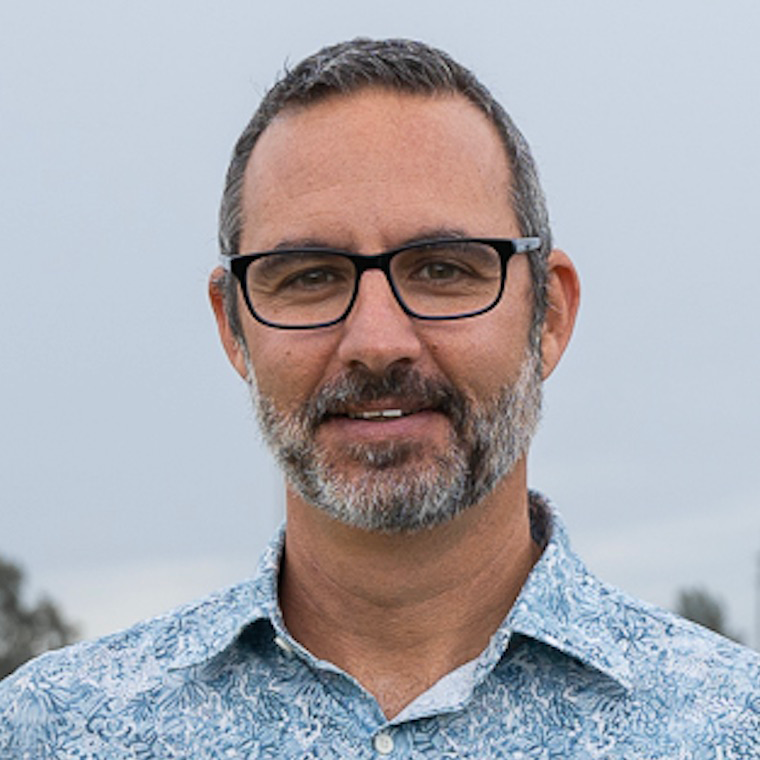
Dr. Ben Goodheart is the founder of Magpie Human Systems, an international consultancy working with high-consequence industries to design organizations that are safe, resilient, and adaptable. He has 30 years' experience in industries that include aviation, healthcare, and power, and holds advanced degrees in safety science and organizational risk and culture. His research focus has been on building safety capacity in complex adaptive systems.
Dr. Goodheart is recognized for making safety and leadership concepts accessible and practical in operations where the price of failure is high, and his work has taken him around the world to teach, learn, and connect with others who believe in the power of human-centered work. He joins us from Denver, Colorado. Welcome.
[Ben] Thank you.
[Mary] So let's start with the basics. What is design thinking?
[Ben] Boy. Design thinking is less of a thing, I think, and more of a lens. And that makes it almost even worse, doesn't it, just to say things like that? It is a way of thinking that is focused most on the user. And I think in safety, that's super easy for us to forget. We think of safety as this moral imperative and this series of controls and cool things that we can do. And then sometimes we get out in the field and there's people actually doing work that are going, "What in the hell did this person do? Why are they asking me to do this?"
And so design thinking is a way to sort of build that into the process. And it doesn't come from safety, which is sort of neat. Some of the best ideas maybe don't. But if you were looking for it, Stanford has their design school, which — because designers have to name things in a cool way — they just call it the D.school. But that's sort of the place where all of this really came together. So that's kind of a cool way to start.
[Mary] So what is the — I call it a design thinking framework. Framework, lens. As you said, it's kind of hard to pin down, but what's the importance of user experience?
[Ben] Well, the beneficiary of safety is the user. I mean, safety by itself, just floating out in space — I think, if we're talking about controls, a control in safety is meant to separate a user, a person, from some potentially bad thing. So I don't know. It seems strange to me that we don't talk more about user experience or user-centered design. Safety without a user — there's no — I mean, I don't know, someone's gonna listen to this and tell me there is such a thing as safety without a user, but I'll die on that hill. I think the user is who benefits.
[Mary] So along those lines, you've written previously, "Safety is not a singular outcome, it's a process." Can you expand on that?
[Ben] You know, one of the things — I think Dave Woods says it, other folks have probably said it too — is that safety is a verb. It's not a noun, it's not something that just exists. It is a continuous set of processes or a continuous cycle of learning or a continuous way of approaching the effectiveness of controls. And I think the cool thing about design thinking is it's cyclical in that way, right? There's an element of it that speaks to iteration in the words of design. And that idea that we're constantly iterating toward a product or a process or something that works better.
[Mary] Yeah. So I mean, originally design is designing products, physical products, I think, and software, right?
[Ben] Yeah, I think if you look back at design thinking, I'm not a designer by trade. I'm just a person who likes good ideas. And I think these folks are probably onto something. But if you look back sort of as a non-designer at where some of this comes from, it's really product design. And I think some of the cool stories are around like Apple computers back in the eighties and this real focus on this connection to a user instead of just a device.
Right. And I think everybody, even if you don't use Apple computers, everybody sort of understands that connection and the whole "Think Different" campaign back in the eighties and the fact that once Apple gets a user, that user is with them forever.
[Mary] Yeah. Yeah. A lot of brand loyalty.
[Ben] Exactly. And I'm not saying that — well, maybe I will say it, I guess — but there's a big part of safety that is marketing. Right. You don't walk in a room and everybody's like, "Holy crap, the safety person's here. This is amazing," right? It's not a typical response in most people's career. But a well-designed product or an experience, people do get excited about it, right? Designers always talk about delighting users. I'm not sure we're delighting anybody with safety, but I think maybe we don't, you know, crush their will to live.
And we do that, right? We write policies and procedures and they're miserable. And then we go catch people doing something wrong at work and we tell them that they don't know what they're doing. Like the whole experience and process is no good. So I think there's a lot of room for sort of mapping that life cycle of how we want that experience to sound and feel and look like.
[Mary] I want to go back a little bit. You talk about design thinking being particularly effective at tackling wicked problems. So, what — and in this context, we don't mean wicked like "wicked." We mean —
[Ben] Well, maybe. I don't know. Maybe we mean that. Sure. It depends.
[Mary] So what, classically or in the literature or in the discussion, what constitutes a wicked problem?
[Ben] Yeah, I think of all this too as sort of trying to avoid a vocabulary test. So I'm just going to say that complexity, which people are increasingly more familiar with, right? Organizational systems have a tendency toward complexity. Any system with a lot of people in it sort of tends toward complexity. So these complex interactions, dependencies, influences that we can't always know, right? There are sometimes these unknowable emergent things. Wicked problems live there. They are those things that I can't turn one dial and see some predictable outcome.
And I think as it relates to safety, that's the most important thing, is we tend to approach safety — I was talking with someone about this actually just today — about this sort of collection of things, right? We'll do this thing, this thing. And as long as there's more things, safety will be better. And now we get into this argument, right? If safety is a verb and it's not just some intransient state, if it's a wicked problem, or at least kind of built within one, we can't just do this thing and this thing, this sort of additive approach. So I think that's maybe the useful way of thinking about a wicked problem. There are definitions to this thing, and if you dive into some of the really cool design literature on it, you'll get plenty of differing opinions on what that means.
[Mary] So why is this relevant to design thinking? Like, why is design thinking particularly well suited to deal with complex problems?
[Ben] I'm going to argue against myself a little bit here, Mary, but I think when you think about things like HOP, Human and Organizational Performance, right? It's less of a framework, more of a set of principles. It's almost a way of thinking about the world, but there's just enough structure that we don't go wild, right? So is HOP a good way to approach safety, not as the absence of failure but as the presence of controls and capacity building? Yeah, perfect. But it's not a set of instructions.
And there's where I think design thinking sort of connects, right? It is also not a set of instructions. It is a way of thinking about how we understand the world around us, understand a user's perspective of that world, the constraints that shape their experience. How we can prototype, right? Rapidly experiment, micro experiment in that organizational system, and then iterate through that process to get that feedback from a user.
I think another good connection to HOP, and not to get us too far off topic, but when you think about HOP, right, it talks about people make mistakes and context drives behavior. If I want to know about context, who do I talk to? I talk to the user. Right? I talk to the user. So here's our connection immediately.
Now most of us don't just show up to work and we have some sort of formal, classical, user-centered design training or education. And I think what's sort of nice about design thinking is it's maybe a little more accessible. I don't know if you're going to be the world's preeminent product designer after taking a 20-minute online course, but it's accessible and it helps shape, I think pretty effectively, the way of thinking.
[Mary] Yeah. So speaking of — and again, this isn't really instructions, but a framework — there are some phases or some different kinds of exercises, phases that you move through when you're using a design thinking process. What are the Coles Notes on the phases of a design thinking process?
[Ben] Yeah, and again, this is where I always get worried about things like this in the same way that I do really with HOP or anything that is a framework, right? Out in the wild, I think frameworks get turned into process or procedure, and then I start to freak out a little bit. So I'm going to skip going through the actual steps. If you put this into the interwebs, as the kids say, anybody who's listening, you'll find it and you'll see these steps to design thinking.
But if we think about it just in a big picture view, we have to understand our user. That's a process of empathy. And in high-consequence industries, we're not always known as empaths. So there's a bit of that empathy.
One of the other things that I think is really cool about design thinking is, again, in high-consequence industries where I work, we really freak out about experimentation. And design is all about micro experimentation. It's just testing stuff out. So we empathize with a user. We try to understand an unmet need, which is sort of the typical phrasing, and the constraints around that need. We come up with ideas. One of the things that happens a lot in design thinking is we talk about speed, not accuracy. Fast generation of ideas. So we're prototyping. And then we test. We test them. We see what happens.
And I think another thing in organizations that we do is we do these big change initiatives. And then we act surprised when they don't go perfectly. And now we've put this out to forty thousand people and it's hard to unring the bell. If we think about it like a designer does — and you have to think, I mean, this is pretty high-stakes stuff, right? You design a car and everybody hates it. You may be promoted to customer pretty soon, right?
So this is a matter of a lot of user understanding. Of experimenting, of getting that feedback, of iterating to get to that process. So it's doable stuff. And maybe I've gotten ahead of us a little bit here, but it seems like in our organizations it's tough to experiment. And I think what you find is it just seems scarier than it is.
[Mary] We will get back to that. I do have questions about that, but I wanted to ask about inspiration, which is kind of the empathy stage. How does that idea practically play out? What does it look like in a safety context? How do you practice that?
[Ben] Yeah, I think — you've talked to Sam, I think, haven't you? Sam Goodman? Sam's got this wonderful deck of cards, Operationally Curious Questions. Sam, I'm plugging these things, man. They are great. They're great cards. So if you're talking about inspiration and sort of how I get to that point, for me, I think it's this act of asking really good questions. And there are books that will help you do this. The Book of Beautiful Questions is a good one. There's Humble Inquiry — Ed Schein's stuff can help. Sam's cards.
And you just get this boatload of really great questions. To me, that's the inspiration, right? Because people are then sharing that thing that either they really like or appreciate or enjoy, or the thing that's driving them a little crazy. And I think safety folks, we tend toward wanting to fix things, to solve problems, or to get better. And I think for anyone who really likes making things better, that's inspiring to learn those things.
[Mary] It sounds to me like a combination of curiosity and active listening, really.
[Ben] Yeah, and curiosity's tricky, right? We tell people all the time to be more curious, and that works about as well as telling an angry person to calm down. It just — "What do I do with that?" Right? "Go be more curious." Okay. Cool. The ways to operationalize that, I think, are those books on how we ask better questions. For me, honestly, it's learning how to shut the hell up. Right. And let people tell that story and just sit and, as you said, listen actively, listen with intent, and be a good story learner.
[Mary] I agree. I think — I was just thinking that when you're listening, part of active listening is not just listening to the content, but sometimes the subtext. So sometimes the tone of what someone is saying, or if they are suddenly making a lot of or no eye contact, like are things changing as they talk? So that's what I was thinking about.
[Ben] No, look, I think there's a weird thing that happens. I think we go to work — it's another reason I think this idea of design is so important. It's this impetus of trying to learn new things. We go to work, most of us, and we get this technical training. Maybe we went to university, trade school, maybe it's OJT. We learn a skill, we do the skill, and we aim for mastery of producing a thing, producing some sort of an output, whether that's physical or otherwise, right?
And we don't — you know, people say be more curious, pay more attention, care more. It's all these things that aren't really useful. And I think to be good at this idea of design, it just sort of shines a light on where we're maybe missing. I mean, empathy, for me, Mary, I've got to tell you, not a natural skill. It's just not. I didn't emerge from the womb as an empath. I'm sort of the opposite, I think. I grew up in the Midwest and in Kansas of all places. Nobody — you don't talk about your feelings, you shut up, rub dirt on it, and move on.
But if we're just going to brush that under the rug, we never really learn all that well, right? We just suck it up and move on. And in a workplace, I think in a place with wicked problems, right, that just snowballs, gets tangled, and it's so tough to untangle. And I think as we go through that framework — and again, I'll keep drawing that connection to HOP, right? When I say "context matters," all of a sudden I have to think about, "What does context mean and how do I find it?" Specifically.
Or "learning isn't optional." You go, "Okay, right. Cool. Am I learning? Am I learning as well as I should be?" So it starts you on that path. We use a lot of tools to help folks get better at empathy. And again, I think as a framework, that's really the best outcome — is not that we've solved all the world's problems or designed perfection, but that we help people get a little better at the skills we don't typically train on or develop at work.
[Mary] Yeah, which is going to give them capacity to later —
[Ben] Good point.
[Mary] — improve safety, right? Okay, so I'd like to talk about ideation. How does that work for design? And what might that look like in safety practice?
[Ben] You know, when I started in safety, it was really heavy on investigation. So the bad thing has already happened. I can't fix it. And you go, "Well, maybe at least I can't make it worse." And I think we did make it worse a lot of times. And I think we did the opposite of ideation. And what I mean by that is we would go down and in, trying to find these minute details, and then draw some conclusion and write a report that told somebody what to do. And we were nowhere near the work they were performing.
And ideation's sort of the other way around, right? If we're really doing it well, we have either empathized so fully that we can take on that persona, right? Or take on the way that someone feels in their own shoes, right? Empathy. Or we've got the people in there, right? A designer who's designing a new product uses focus groups and things like that. But in safety, we come up with procedures and recommendations and we've never thought of a focus group in our damn lives.
We've decided as a safety pro, we know the answer. And so I think what it looks like when it's really good is another one of those connections to human performance, right? Of getting the people who are close to that work involved in that co-creation of ideas. And a lot of them. A lot of them. And then — I don't know, around here, maybe we're not good at naming things — but I always call it the Idea Thunderdome. Right? Like no idea is safe. We're going to have a bunch of them, and a lot of them will not survive. And we kill off ideas ruthlessly, but you've got to have a lot of them to be able to get a few good ones.
So I think ideation looks like that. It's a numbers game. It's being unafraid to come up with things that we think might help. And one of the things that I learned from folks who are really good at this — I don't know about you, I tend to get super tethered to reality and maybe that's good in safety. But when you're coming up with ideas, like the wild, out of the blue, kind of crazy stuff is so important. You have to have a few of the really wild ones to kind of push things around. So I think that's something we can learn in safety too, is sort of being unafraid to get a little weird.
[Mary] Yeah, I think before the Thunderdome, you had written, "Ideation thrives on the ability to defer judgment." So that's that first phase, right? Where you're bringing in all these ideas. And what it makes me think of, honestly, is improv.
[Ben] Such a good connection. Yeah, perfect.
[Mary] It is, because improv is fast. And you don't argue. When somebody says whatever that line is, you don't argue, you just go.
[Ben] That's a perfect example. Yeah. You don't say, "You made a wrong choice about this scene." You have to go with it. You just go. And that's — I might steal that from you if that's okay, but that's a great way of thinking about that deference of judgment. And it's so hard.
[Mary] Yeah. We're definitely not — I think anyway, in this culture, we're more likely to self-censor than we are to defer judgment. But then the judgment, as you said, it's not like we're deferring it forever. That's just in the collection of ideas.
[Ben] Right. Yeah. This is again, it's a numbers game. That whole idea of speed. And I think sometimes that helps. I have to do that a lot, which is just set a timer and say, "Okay, for three minutes, our goal is just take a pile of sticky notes and write as many ideas as we can." It is a volume thing. Just get as many as you can. Sometimes it's nice to be heads down because you can't judge if you don't see everybody else's work. The self-censoring is something in there too, but I think if we pre-brief this stuff well enough, we can not eliminate but maybe mitigate some of that. But it is so hard because we're not used to that. We sit in meetings and try to come up with the one true path. And now we're asking people to do the exact opposite of everything they've done.
[Mary] Yeah, we're asking them to stop being attached to looking or sounding clever.
[Ben] Well, I've never had that problem. Maybe that's why I like design thinking work — the looking or sounding clever has never been a challenge. I'm not getting there, no matter how hard I try.
[Mary] I also think of like user research — I'm backing up a little bit here — but like when they design software, they look at heat maps. They look at where people's mouse stops. They literally look at the paths of where people's mouses are. And if one button is really hot in the heat map, they'll ask themselves, "Okay, well, why is that? Is it because it's confusing and they pause there?" And then they do a lot of user interviews. They say, "Okay, well, if you see this interface in this software and you wanted to do this task, how would you go about it?" To see if people are finding the menus, right? That sort of thing.
[Ben] Yeah.
[Mary] So the rubber hits the road, however, at the implementation phase. And it seems to me that implementation is actually where most safety practitioners spend their time. And I'm quoting you here, quoting other people, which is, "One of the common mantras of designers is build to think, test to learn." So I was wondering if you can tell us a little bit more about that idea.
[Ben] Yeah, that idea of building is often — you'll see it as prototyping. And if you found yourself in a design workshop, I think you would probably find yourself being asked to prototype. And often they have cardboard and paper and tape and just junk laying on a table. And you actually have to build this thing.
And I think what gets really tricky and kind of cool — we do this with Legos a lot with folks — is even to force ourselves to build a concept. So if I want to change something conceptually in an organization that I think will build capacity, forcing myself to sort of put that into three-dimensional space, that building to think means I'm engaging different parts of the brain that maybe aren't otherwise firing at the same time. And it's a cool way to just sort of approach it from different angles, to have something to show. And actually, designers say things like "show, not tell," right? Is another sort of common thing that you would hear. Build the stuff, break it, build it, break it.
It's really tough in safety. We're not going to do Silicon Valley stuff. They talk about failing fast. Well, that has sort of limited utility in a nuclear facility. You're like, "Hey, maybe don't fail fast, guys." But where I would think about this in a really tightly coupled place or a high-consequence industry is fail small.
I pick these little things that I can build. And I've got a great experience team. Or I've got redundancy in a system or I've got spare parts. So I know I can kind of poke and prod at the edges a little bit. Fail small, learn. Right. So build to think. And then now let's go learn when we start breaking stuff.
[Mary] That actually leads me right into the next question, which is: I imagine that there are times when safety practitioners see a lot of practices that need fresh thinking in their organization. If those practices or processes are systemic throughout the organization, it must sometimes feel insurmountable to get started. So that brings up what you were just talking about, the idea of incremental change.
[Ben] Yeah. And I would just add, I think incremental is a really important way of describing that. And I would just add: smaller than you think.
Psychological safety, right? Big thing that we like to talk about in organizations, this ability to speak up or try things and not feel like we're in professional jeopardy. Super great. But nobody likes to look like a dummy in front of their boss or their peers, right? Some of that is just self-imposed. We don't often reward that experiment, fail, experiment, fail sort of thing, especially at work. Efficiency is being pushed, right? It's a financial thing.
So I think smaller than you think works better than you think it will. And I always ask people to look for places with capacity first. During the holidays when I'm working at half staff — no, let's probably not experiment right now. Let's wait till we have some folks around. Turnover is hitting us really hard. I've got 60% turnover on the team. I'm losing experienced people. I don't know that that's the right time or place to experiment.
But finding those places, whether it's a job site or a line of business in the organization, or even a shift, and saying, "Hey, we're thinking about a few ideas. Actually, you helped us think of some of these ideas. We want to try them out. Would you try it for a week and we'll just meet in a week and see what we think? Just beat this idea half to death. It'll be great." And it's almost that permission structure to say the expectation is actually that we break it. Not that it's an unwanted side effect.
[Mary] So you would want to emphasize, like, this is an experiment. This is not us telling you, "Let's try this and we hope that it will make things better. And if it doesn't, then it's your fault."
[Ben] Right. Which, fun as that sounds, is sort of a limiting experience at work if what we're trying to do is something cool. Daniel Hummerdal talks about this a lot too, about this idea of small-scale or micro experiments in organizations. Not maybe in the context of design or design thinking explicitly, but it's so frustrating to do, you know, to change the Cracker Barrel logo and go full tilt and find out everyone hates it. Or HBO Max — I forget, somebody paid McKinsey to do this and change the logo four times. It's so much more expensive to do these things at scale. And you're just losing that trust every time you do it, right? I put out something bad. I tell everybody what we're doing. They look at me like I'm crazy. It gets out into the wild and we find out it's not helpful or worse, it makes it tougher.
And I think intuitively a lot of us, I'd say almost everyone, knows that, right? And they're frustrated by it. But for some reason, the act of experimentation is scary. And you just want to shake people sometimes and go, "You just experimented huge. I'm just asking for you to do it on a smaller scale."
[Mary] Yeah. I don't know. It sounds like more fun to me. Can you give some examples, either fictional or real, demonstrating an improvement in safety outcomes using the kinds of design thinking, the kinds of things that we've been talking about?
[Ben] Yeah. I'm going to tell you the one that I think is the coolest. And we'll let anybody listening decide if they think it's cool, but I think it's pretty stinking cool.
We were in an organization that had several operational units, but it had a unit that was in charge of maintenance, right? And it had some maintenance functions that were so critical that you would wear a vest that said, "Don't bother me. This is critical work." Wow. So you couldn't step away, right? You're following this procedure. If we miss a step, that's a big deal.
And we're asking everyone in this organization, and they're doing it, right, to contribute and to report — to report ideas they think are working, but definitely to report safety issues. And what you could see is that there were no reports, or very few, from the maintenance group. Well, come on now. They see more than all of us, right? And why aren't they talking with us?
So if you're thinking about this like a designer might, then you say, "Okay, it's time to get curious. It's time to learn, time to empathize, right? To get that inspirational bit." So now we start asking questions. "Hey, could I hang out with you? Can I watch how the work — I won't bother you. The vest says don't bother you, but I'd like to just hang out. Maybe we can talk."
And what you'd see is something would come up and it's a thing that you would love as a safety person to learn about, and they just fix it and move on. Makes sense. They don't want to talk about their feelings, they fix it. And then at the end you go, "Hey, do you think people on other shifts are facing the same problem?" "Yeah, absolutely." "Well, you seem to have a cool solution. Do they know how to solve it?" "Like, I don't know, probably not."
"What if we could share it?" And then they go, "I don't know, where do you want me to share it? I'm going to go fill out a safety report? It's in the next building on a computer. I don't know my login on the computer. I don't use that system. So then you want me to fill out a paper one? I don't even know where a paper one is. I can't leave the work. I have a vest that says 'don't bother me.'"
And so we sat with folks and just asked the question, "If it were easy to submit a report, what would it take? What would it take to be easy to submit a report?" And people are just throwing out ideas. And again, we're setting a timer, we're throwing out ideas. And somebody says, "Well, if you could just, like, yell into space, 'Here's my report,' that would be good." And that gets overlooked, right? If you sat and judged that, you might say, "That doesn't make any sense."
But we sat down and started looking at ideas and somebody said, "Well, what if you just yelled at Alexa? Like, what if on the rolling toolboxes that you have with you, we just put an Alexa? I mean, the cool thing is you could listen to music on it if you want. But what if we just made a function on it where you could say, 'Hey Alexa, file a report?'"
And today, the way that they file reports in the maintenance department is by talking to Alexa. Or for some of the folks, they have watches that you can talk to. I'm not a technological expert. But we helped create that function — it's got a different name — to where you could just shout out into space and say, "Here's the report that I want to share." So we went from no reports to a whole gob of these things because we were willing to entertain what sounded like a crazy idea. Buy one of these Alexas, throw the thing out, test it for a while, see what worked. End up finding out that it worked great, buy a few more and move on. To me, that's pretty cool.
[Mary] Yeah. Yeah. I was thinking voice notes, but actually, "Hey Alexa" is easier. You don't even need your hands, right?
[Ben] Yeah. Pretty stinking cool.
[Mary] So there are different ideas and systems — things like Six Sigma, Total Quality Management — that people often see as sort of a marketing venture. And they all have adherents too. I'm not dismissing that. But what would you say to someone if they said to you, "Design thinking, that's just another fad. It's just a, you know"?
[Ben] Yeah. I mean, Six Sigma is a thing, it's a process. You buy into it, a lot of times you audit to it. It's like a style, right? So it is this idea of quality improvement or continuous improvement. But it's bell bottoms, right? At one point it was really in style and maybe sometimes it's not.
I think design thinking is just like pants, man. Everybody should probably wear pants. There is no actual style to it. It's just an idea of a way of thinking. I mean, I think everyone should wear pants. I'm starting to question this metaphor now, but it's always fun to talk about that.
You would be hard pressed to find someone who would sell you design thinking or an audit to design thinking or a checklist. I mean, there's probably somebody selling anything. I don't know where you'd even go. But you could find vendor after vendor after vendor to help you implement Six Sigma or Lean. Or buy you multicolored belts or something like that.
Design thinking doesn't work that way. If you went to — and you should, you should look it up, right? Stanford has some pretty cool open-to-the-public events. If you went there and talked to folks about how this works, there is no thing to sell. They're just describing how people get from "I wonder what it would look like if we made a really weird new toothbrush" to Sonicare, right? And there's a lot of steps and a lot of ways of thinking, but it isn't always intuitive.
[Mary] I think one of the most valuable and interesting things that isn't intuitive, but people think it is — and I'm hearkening back to something you said earlier — is telling people to be curious, but not teaching them how to ask better questions.
[Ben] Shockingly ineffective.
[Mary] If you had to boil down today's topic into one actionable step — so if there's a listener, a safety professional listening, and they're thinking, "This is cool, this is interesting, I want to do something concrete" — what shall I do?
[Ben] I will tell people until the day I die: empathize. Figure empathy out. It's not easy for people like me, but it is learnable. I always think about it — and I tell people it's like singing, right? Most folks have the ability to sing, and you may not be good at it, but if you had a voice coach, you'd be better. And I think empathy is that way. You may never be the best, but you can be better.
There's a company called XPLANE, and it is the letter X, P-L-A-N-E, and then you put dot com and you go to their website. XPLANE does some really cool visual work, visual thinking, but they also have something on their website you can download called an empathy map. Or you can reach out to us. We'll give you an empathy map. And an empathy map is just a guide. That's all it is. It just gives you seven steps to follow. So a little bit of structure. It's sort of like saying, "Be curious." Well, I need to teach you how to ask better questions. "Be more empathetic" is not helpful. It's probably actually harmful. One of the ways that we can do that is with a little bit of structure that's repeatable. It has sure helped me over time.
And there's plenty of really neat books on that as well. But I think once you start empathizing, you can't help but see things differently in the world. And if you are at all interested in making the world better, now you've just got a million opportunities in front of you.
[Mary] Okay, I'm going to zoom way out now. Way out into larger territory. I ask some questions that I ask every guest. So the first one is, where would you focus training for the next generation of safety professionals?
[Ben] Not on safety. And I mean that. Normally I answer with some pretty smart-ass commentary, but that's not it. I mean, we can teach safety. I can take somebody and sort of work them through that process of understanding safety.
The thing that safety professionals struggle with isn't that, right? Nobody's talking about their safety professional saying, "Boy, I don't think they knew much about confined space." Safety professionals often know the detail really well. The way you communicate, the way you frame problems — I mean, this is another thing that I think we struggle with. We're people that love to act. And we often try to solve a need that we haven't really identified a user for. We just start fixing stuff.
So I think that's where I would focus: exclusively on the non-technical pieces of things. How do I communicate? How do I lead? How do I understand the way people make decisions? The safety stuff, we'll figure out.
[Mary] Okay. And now we've reached the hardest question, I think.
[Ben] And I'm winded now a little bit. Okay, here we go.
[Mary] If you could go back in time to the beginning of your safety career, what is a piece of advice that you might give yourself?
[Ben] Settle down, dude. So much of my safety career is sort of a warning to others, Mary. I think I just — I thought I had some monopoly on good safety ideas. It's ridiculous to think about. I was the least experienced person in the room, and for some reason — some of that is just being younger, I guess — but I just thought knowing safety was way more important than it was. I really misunderstood the importance of actually that bias toward the people that do the work, that bias toward the action that they were in. So I think I would just tell myself, "Dude, settle down. You're not that important."
[Mary] I think that's a common trap that younger people fall into because they discover things and then they feel certainty and they're excited about certainty. And then as we get older, we hopefully get a little more comfortable with uncertainty.
[Ben] Hopefully. Man, you should can that. So for anyone listening, Mary's just said the smartest thing on the whole podcast here. Among all the other smart things that you've said, is that idea of just sort of not trying to get comfortable with uncertainty. And that's just like "be more curious" or "pay more attention," right? "Be comfortable with uncertainty" is not a useful thing to say. But there are really cool things you can do to learn how to navigate it a little better. And I think that's where those experiments come in too, is just learning in small chunks, trying to kind of figure our way around these things.
[Mary] Yeah, I think that's your snippet for this thing.
[Ben] I voted against myself and this is your —
[Mary] Well, I think being comfortable with uncertainty sets you up for dealing with wicked problems because they're complex and there's a lot of uncertainty, right?
[Ben] Absolutely.
[Mary] So you have mentioned a couple of things, but are there any books or websites that you would recommend if anyone's jazzed about what they've heard today, that they should check out?
[Ben] I'm going to start — well, I'll probably start and end with one just as a really good place to build from. And it'll be a black hole, you'll dive in and find yourself sucked into this stuff. But there's a company called IDEO, and it's just I-D-E-O.
They've been around a long time. They're probably one of the best-known design firms out there. And they've moved several years ago from really a focus on product design to organizational design. And I think that's really stinking cool. And they do a great job. And if you go there, then you'll find Tim Brown's stuff and you'll start reading Tim's books. And then you'll find articles and you'll find some webinars.
But if I were to tell you where to start, that'd be it. I'd go to IDEO. They've got a lot of great places to go. And if you find yourself in too much trouble there, give me a holler and we'll find some more trouble.
[Mary] So on the note of giving you a holler, where can our listeners find you on the web?
[Ben] safetyforhumans.com is Magpie's website. If you want just pure ridiculousness, Punk Rock Safety is a podcast that I do with Ron Gantt and Dave Provan, two folks that I think you know. And definitely don't listen to that one, though. But if you do, skip episode one. It's just a few knuckleheads talking about safety. But that's probably — or if you're in Golden, Colorado, stop by, knock on the door, we'll grab a cup of coffee.
[Mary] Great. Well, that is a wrap, folks. Thank you, Ben, for joining me for a chat.
[Ben] Ah, thanks for having me around. Appreciate it.
[Mary] And hey, listeners, come and join the safety conversation on LinkedIn. If you enter "Safety Labs" into the search bar in LinkedIn and then you choose posts, you will find our posts and the conversations that they generate amongst safety professionals around the world. So come have your say. I'd like to offer my thanks to the Safety Labs team for their enthusiasm and hard work to bring you interviews like we've just had and conversations on LinkedIn. Bye for now.
This podcast is created by Safety Products Global, the world's leading manufacturer of safety knives. Through our trusted brands, Klever, Slice, and PHC, we empower companies to prevent injuries by providing safer cutting tools for every material and application. Until next time, stay safe.