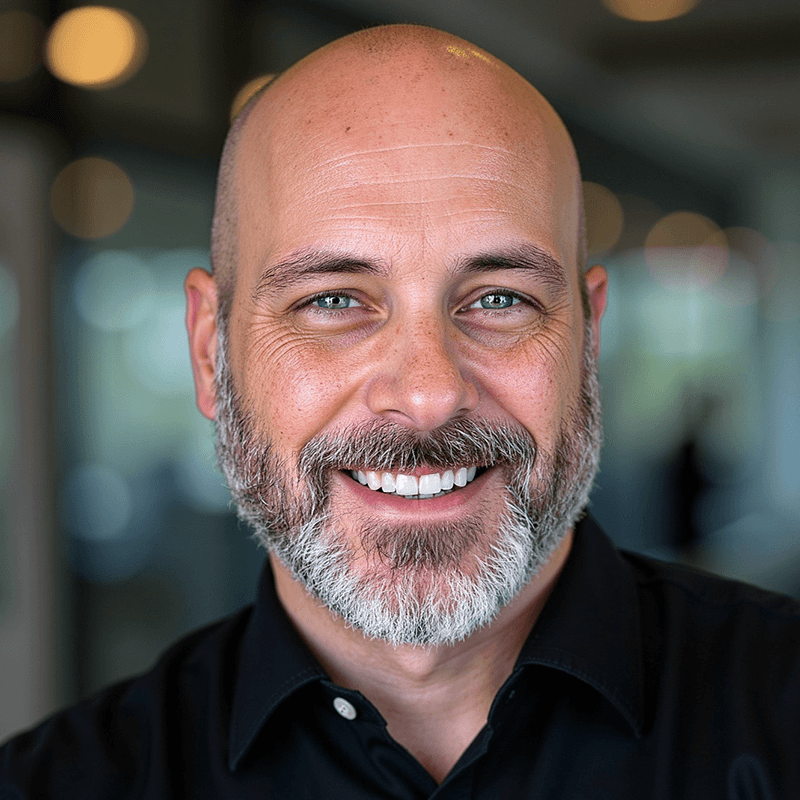
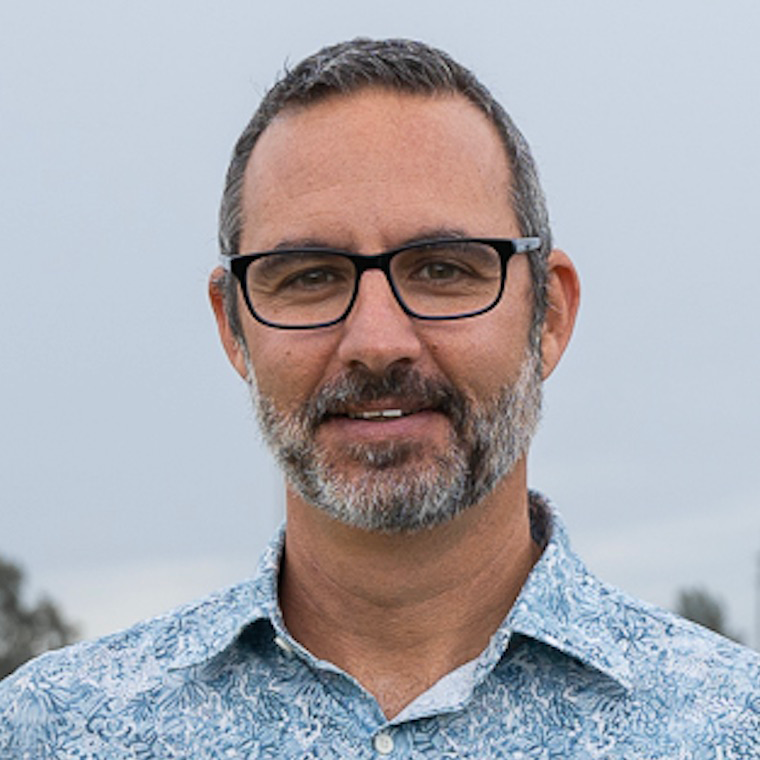
- [Mary] Hi there. Welcome to Safety Labs. Most companies rely on contractors to get at least some of their work done. Often there are layers of contractors, and that can lead to friction, miscommunication, or even disaster.
Today's guest has thought about, written about, and researched some of the reasons for these problems, as well as potential solutions. We'll talk about what you can do as a safety practitioner to make these relationships smoother and more efficient while taking safety into account. Ron Gantt is a certified safety professional with over two decades of experience in industries such as construction, utilities, and chemical manufacturing. He's currently vice president of EHS for Beale Infrastructure, a data center developer. Ron has undergraduate degrees in occupational safety and health and psychology, as well as graduate degrees in safety engineering and resilience engineering. He's also a co-host of the Punk Rock Safety podcast. Ron joins us from California. Welcome.
- [Ron] Hi. How's it going, Mary? Glad to be here. Thanks for having me.
- [Mary] It's a very useful topic, so I hope this is a good one for our listeners. One of the reasons to tackle this topic is something called the multi-party dilemma, which is a fancy term for... can you explain what that is?
- [Ron] Yeah. So the multi-party dilemma is something that was actually discovered in a non-safety world, in critical digital services, where they rely on a lot of contractors. They found that in order to compete, you have to rely on these third parties — contractors, consultants, et cetera — to get work done. But in the process of doing that, in order to get the benefits, you create new opportunities for failures to happen. For example, they would find that when there was an outage in the software, they'd have to spend a lot of time getting the consultants up to speed on their processes, which isn't something you'd have to do for an internal person. So you get some of the expertise and maybe some of the economic benefit, but you also have that downside. This opportunity for failure that wasn't there before all of a sudden becomes a problem, because people have to spend time getting these third parties up to speed and figuring out how to coordinate with them.
When I saw that in the critical digital services space, I thought, that sounds a lot like what we deal with in construction and a lot of other safety-critical industries, where we also rely on a lot of third parties. So many safety people would relate to this: relying on contractors creates new problems, new challenges, new risks. You have this dilemma where either you can't compete in the industry because you're not going to bring everything in-house, or you have to introduce these new risks and challenges that you have to overcome.
- [Mary] I think our listeners are all going to intuitively understand the issue through experience. But I was curious — there are some famous disasters or issues, but one that people don't talk about as much is the internet outage that involved Microsoft and CrowdStrike, and you've mentioned that contractor relationships were a contributing factor. Do you want to touch on that?
- [Ron] Yeah. I'm certainly no software expert, but I know a little bit about the incident. One of the things that happens is, you have a company like Microsoft, for example, that farms out parts of its services to other third parties, like CrowdStrike, to help their system work. The problem — and the interesting complexity in all this, which I think a lot of people in safety-critical spaces will relate to — is that CrowdStrike doesn't just work for Microsoft. When you work with third parties, they have other customers they're working with too, and you start to get these intertangled webs. CrowdStrike is working in other industries and other spaces, with other platforms, and all of a sudden CrowdStrike can have an outage that ripples through systems we didn't even think were connected. All of a sudden these systems are connected, and you have this massive outage. I actually was flying home from London when that happened.
- [Mary] That was a nightmare.
- [Ron] Yeah, I was driving to the airport when I saw the first internet alert, and I thought, this is going to be a long day. You walk through the airport and see all these screens with that blue screen of death that we've all seen when a computer crashes. Who knew that the systems managing the scheduling and the screens at airports were connected to the systems in hospitals, which also had an outage?
- [Mary] Right, and that had nothing to do with just one company.
- [Ron] Exactly — it had everything to do with the connections between those organizations and how it rippled out. You see a similar thing happen in the data center industry, where you can have two big data center construction jobs in the same metro area, and you're both pulling in labor and contractors to get the job done. Electrical contractor one, who's maybe the best in the area, you go to them and say, "Hey, can you work on this job?" And they say, "Yes, we absolutely can." Then the other job just down the road is also using that same electrical contractor. All of a sudden you're pulling from the same labor pool, and something that happens at that other job, which has nothing to do with my job, now affects my job. You see that same interconnection just because one company is using the same resources as another, which is what I think happened in the CrowdStrike incident.
- [Mary] It's kind of a perfect metaphor, really. Not a metaphor for those who were grounded, though.
- [Ron] No. I ended up stuck at Dulles Airport for about eight hours, but at least I made it back into the United States before it really started to affect me. A lot of other people had it way worse than I did, I know that. So, in order to understand what specifically might go wrong, let's talk a little about what needs to go right.
- [Mary] Can you explain the concept of common ground and how it affects contracting relationships?
- [Ron] Yeah, that's a really good question. Common ground is something that, if we take it out of the contracting space for a minute and just think about interactions with other people in day-to-day life — you go to the coffee shop and want to buy a cup of coffee. You walk up to the counter and say to some other human being, "I would like a cup of coffee," and you hand them money. That other human being has to understand what you're even talking about in that moment, because think about how random that is. They have to know that this person wants them to make coffee, and that in exchange, they're going to give them money — and they need to know what the appropriate amount is. There's all this unspoken stuff that just happens without us even realizing it, that makes it work. Then they take the money, and we know that means at some point in the near future, they're also going to give us coffee, not just take our money. There are all these things that are unspoken but just happen in order to help us be successful in that one basic transaction.
Now expand that and think of the common ground that happens at a traffic intersection. You stop, and you just assume other people are going to stop when they're supposed to. And that happens most of the time — everybody stops at the red light. So when your light turns green, you know you can probably go. Or when it's your turn to go, you know that other people who could hit you are probably going to stop. How do you know that? Because you have this sense of common ground that's facilitating your activity with those people. And the interesting thing is, you're coordinating with them even though you're not talking to them — you don't even know who they are, you don't know their names. That's just because of the common ground we've established as a society.
Now put that into the contracting world. A contractor walks into your organization, and you're hiring them to do a task. Right off the bat, you have to believe that you both kind of know what the task is. When I say, "I need you to fix this pipe," or "I need you to build this building, install this electrical system," you kind of have to have an understanding and hope that they know what you mean. We've tried to verify that through training and certifications, but at some point we have to trust them — and that trust is the common ground. Most of the time, small breaches of common ground don't matter. But sometimes they do. For example, if we're having someone work on an electrical system, we need them to do it without getting anybody hurt or killed. We assume they know how that electrical system works and how to isolate the energy source so they can work on it safely. But how do they know that? We assume they're going to look at the appropriate drawings, and conversely, they assume we've given them the appropriate drawings to do that successfully. But again, these are all assumptions being made. How did we establish that we can trust these people? Oftentimes we just do — but I think what we're really doing is trying to build a sense of common ground.
One of the ways you see this in a very practical way — and this isn't an intentional organizational thing, it's something people do naturally, just a little shortcut anybody who's been in industry has used — is we build relationships and start to use people we already have relationships with. I call it the "I got a guy" syndrome. Something goes wrong, and you think, "I've got a guy who can handle that." What is that? That's someone you have common ground with. You know how that person probably works most of the time, and you know they're probably going to be able to handle that situation for you. That's someone you have pre-established common ground with, that you draw on to get the job done. People do that all the time. In my research, that's what I found, and it resonated with my own experience — one of the first things a lot of people do in a new job is try to build relationships with other people, because it helps us know how that person operates. When they say this, it means they're really upset; when they say that, it means they're confident, or that they don't know what's going on. All these little things help us coordinate with each other day to day, and that's something we try to build on a job site, just through establishing those relationships.
- [Mary] You talk about interpredictability, which is really what you're describing here. Is that synonymous with trust?
- [Ron] It kind of is. It's probably easier to just call it trust at the end of the day, but it's also about — if something happens, you have an idea of how someone is going to behave. For example, right now, in this conversation between you and me, if the technological systems break down somehow — your internet dies, my internet dies, or one of our computers dies — we probably have a vague idea of what the other person would do, but that's mostly based on norms we kind of all have in our heads. You and I haven't really talked about it, though.
- [Mary] It would be super weird if we were just like, "Okay, bye," and walked away. Back to our jobs, it's fine.
- [Ron] Right. So we have a small amount of interpredictability — we probably won't just walk away, we'll probably take some action to re-establish a connection. But we haven't really established a strong amount of interpredictability. Now imagine the people you work with, the technical people who help you run this podcast — you probably have a much higher degree of, "If something happens, I have an idea of what they're going to do." That's a sign that you have much stronger common ground with them, which, if you think about it, really creates a level of resilience in your team. If this unforeseen — or maybe foreseen, but you just don't know when — event happens, like an internet outage, I know how you're going to behave. That makes it much easier for me to act on the assumption that if you're going to do this, then I can do that, knowing you're going to be there. It's like track runners doing a baton pass — I know that when I reach my hand back, you're going to put the baton in my hand. I don't have to look, we don't have to talk about it, I just know what's going to happen. That really facilitates successful action, efficiency, and safety. Going back to the lockout example — if I hand you these drawings, I know that you know how to look at them and establish where the isolation points are. That frees me up so I don't have to do as much. That interpredictability is trust, but it's not just that I trust you as an individual — I trust your competency and your assessment of the situation. That really helps people figure out what to do.
- [Mary] I think people understand how common ground is helpful, but you also talk about another factor in contractor relationships: coordination costs. This is something I think we all understand, whether we have a label for it or not. Can you explain what you mean by that?
- [Ron] Yeah. To me, this is probably the most important takeaway from our conversation. David Woods, one of the professors on my committee, has said this a lot: coordination costs, continually. His point is that working with other people is work. It doesn't matter what you're doing — in addition to that, working with them is work, because it creates a need to coordinate. There are actions you have to take to make that coordination successful, and those are costs. Think about right now, for example — you and I are working together to create this podcast. We're each doing our part, but we're also keeping an eye on the other person to see, "Are we doing this correctly? Does Mary want to say something now? Maybe I should stop talking." We're trying to monitor the other person to see how the coordination is going and whether we need to adjust. Because once we've established common ground, it's not a check-the-box thing — common ground can be gained and lost over time. I could think you and I have common ground, but then the situation changes. Maybe in your mind, you're thinking, "Here's how the podcast goes, here are the different phases," and I'm thinking it's just one phase, and you move to a different phase — all of a sudden, where we had common ground, we no longer have it. So I'm keeping an eye on you, you're keeping an eye on me, and we're looking for cues that something's different, that we need to adjust what we're doing to keep the coordination going well. That's a cost.
At a very simple level, anybody who's worked on a team with a new member who doesn't fully understand the project gets this. Or imagine you're trying to cook — I think this is an example Dave Woods used — and you bring a five-year-old into the kitchen to help. All of a sudden there's additional effort you have to give to that person. That's an extreme case, but at a basic level, we're all trying to make sure our work goes well together. In a contracting relationship — construction or any other kind — we're always working together, but we're also monitoring the other side to see if the relationship's going well.
Now, this is where it gets really interesting, because the costs aren't equal on either side of the boundary. The amount of effort it takes for a customer to reach across the boundary and see what's going on on the other side is far less than the cost on the other side. For example, it's really difficult for me to go to our customer and say, "Could you walk me through your processes so I can make sure they're aligned with ours?" Our customer could easily look at me funny and say, "No, we don't want to do that."
- [Mary] That speaks to what I was going to ask — what happens when the coordination costs get too high?
- [Ron] That's exactly it. There are a number of things people can do, but an easy one that happens all the time is shedding load. Think of all the times you've been working with someone, and then suddenly it's a high-pressure situation — the tempo picks up, you're running out of time, or the workload increases — and all of a sudden you think, "I don't have time to work with you, I'm just going to do it myself," or "I don't have time to explain where I'm at in the process, so you can get up to speed — I'll just do it myself." That's one of the things that happens.
In a customer-contractor relationship, what tends to happen — and this is something I found in my research, which coincides with my own experience — is that a lot of contractors in that situation will still exert effort, but they're exerting effort to actually keep the customer away. It's like putting up a smoke screen so the customer thinks everything's fine and leaves them alone to do the real work. As a result, it's no longer coordination — it's just, "You pay me, and I move on with my life." It's not that different from the coffee shop example. Whereas in an ideal world, it's supposed to be much more of a partnership — everybody talks about wanting a partnership, wanting to work well together and use each other's relative expertise to deal with the project. But when coordination costs get high, and one of those costs can be the risk of coordination — for example, if a contractor is too open, that creates the risk of looking incompetent, and the customer doesn't want to work with them anymore. That has a much higher effect on the contractor, so they tend to hide things more often. Basically, when costs get high, coordination starts to break down, depending on where the costs are coming from.
- [Mary] You're talking about one of those costs being how you control information — and that's something anyone who's had to rewrite an email three times to get just the right words, so they can get their message across without hurting feelings, will relate to.
- [Ron] Exactly. That effort to get the message across without hurting feelings is a coordination cost, because you're trying to manage multiple things — I'm trying to get the message across, but I'm also trying to manage the long-term relationship. You could get the message across by saying, "Hey, stupid, this is what I mean, don't be so dumb next time" — you'd get the message across, but you'd sacrifice that long-term goal. So the number one thing I'd want people to take away about contracting is that coordination has costs — it's work. But the second thing is that it's difficult work. It takes effort, and it's often complex, with trade-offs people have to make, like you just described. A contractor, for example, is in a situation where they not only need to coordinate well with their customer, but also have to make it look like they're doing a good job no matter what, even if things are starting to fall apart — because if they just open the door and show what's going on, there's a risk the customer won't understand. That creates a sort of cat-and-mouse game, where both sides are trying to deal with the present situation while also managing a long-term relationship over time. Going back to the point about how people manage common ground through building relationships — that's a good thing, but it also sometimes makes this trade-off harder.
- [Mary] And you've pointed out that this is actually, in some ways, inherent in the structure of the relationship itself — this isn't necessarily avoidable. Some of the challenges are perhaps avoidable, but there's no magic formula to prevent coordination costs or the need to build common ground.
- [Ron] A hundred percent. This is just the nature of coordination. Human social systems require us to build a set of norms and beliefs about how we're going to work well together, how the world works, and what you're going to do when X happens so I can do Y. That's just how work happens — it's not a feature of incompetent contractors or people not communicating enough. We don't pay much attention to it because, first, we're really good at it — so good that it just happens. Second, it's not catastrophic every time we have a breakdown. If, for example, you thought the conversation was going to go one way and I went a different way, it's not like the podcast just breaks.
- [Mary] We're done, that's it, cancel everything.
- [Ron] Right, it's over. We often just repair the coordination through some other mechanism, or it's not even worth repairing. So we don't pay attention to these little breakdowns, even though they're happening all the time. As a result, I think we don't take it seriously, and we don't organize in a way that allows us to coordinate better with people. We just let it happen naturally, which most of the time works fine. But sometimes — like in the CrowdStrike incident, or Deepwater Horizon, or numerous other instances we can point to, like the interrelations between contractors and the NASA Challenger disaster — breakdowns in common ground can be catastrophic, and people can die.
- [Mary] Unfortunately. And you've also mentioned that, often, there are authority differentials — and when you mentioned NASA, that made me think of that. There's a command structure, and that has effects on building common ground.
- [Ron] Yeah, absolutely. The authority differential you'll have in most contracting relationships comes from the idea that a perfectly symmetrical relationship would be one where, if either party breaks off the relationship, it has a similar negative effect on both sides. But most of the time that's not the case. If the customer breaks off the relationship, there are probably five other contractors out there they can pull from — that's not always the case, but it often is. In my industry, for example, where we have a very small customer base in the hyperscale data center industry — depending on how you count them, there are maybe five or six hyperscalers in the entire world — if we lose the ability to work with two of them, that could be the end of our business. But if they lose the ability to work with us, there are forty other providers they could probably find who would happily do the work for them. As a result, that creates a dynamic where the consequences for coordinating poorly aren't the same across the board, and information flow from one side to the other isn't equal either — because if we send the wrong information, that's going to be much more consequential for our side than for our customer's side. As a result, the coordination costs are unequal, because it takes much more effort on our side. When we send a message to a customer, we look at it closely — is this right? Let's review it internally before we send it. You can't just send an off-the-cuff email, because that could be really problematic if we say the wrong thing. Whereas they could probably send an off-the-cuff email and it'd be fine — they were just cranky that day, not a big deal — whereas for us, it could mean we lose the contract. As a result, common ground is harder to create and maintain, because they have no idea what's really going on on our side. You get this weird dynamic because of that authority differential.
- [Mary] Okay, so we've established that there are coordination costs and that common ground is incredibly important. So now we get to what you'd suggest to help mitigate that — baked into the structure as it is, what do we do?
- [Ron] Yeah, exactly. Number one, I think we need to take this part of the work seriously. When you're entering a contracting relationship, don't make the mistake of thinking, "We can either do it in-house or hire a contractor, and if we hire a contractor, we just tell them what to do and they do it." It's never that simple. When you hire a contractor, you're creating a new form of work — how are the people who have to do that work set up to do it? On our side, if we're hiring a contractor, we have to think about who's going to manage it, how we're going to give them the time and space to do it effectively. Think about writing that email three times — are we actually giving people the time to really think about how to build common ground with each other?
One of the things we're doing in my organization to build more common ground with our contractors is spending a lot more time on the front end, not just talking about what the project is, but how we see the project. How do you think about these sorts of things, when it comes to safety, for example? Let's say an incident happens — how do we want to think about that? What are the concerns you have in that situation? It sounds esoteric, but those conversations have actually led to some interesting realizations — "That's interesting, I didn't know you thought about it like that; here's how we think about it" — and then we can come to an agreement and move forward based on that understanding. One person in a recent meeting with one of our general contractors asked a really great question that I think exemplifies what we're talking about: "How do we want to argue together?"
- [Mary] That's a great question.
- [Ron] It really is — it's so powerful, because we know that over the life of the project, we're going to have an argument at some point, we're going to disagree. So what are the expectations when we argue? Some of the things you find when you have those discussions is that stuff we didn't think was a big deal turns out to be a much bigger deal for the other side. For example, "If you use this terminology and our leadership hears about it, they're going to escalate it — all of a sudden it's a formal issue," whereas on our side it was just an off-the-cuff statement. So now, thinking back to writing that email, we're actually a little smarter about how to craft those kinds of messages if we need to. We're building that common ground so we know how we're going to coordinate, especially in high-pressure situations. And if you think about it, that builds interdependency — I kind of know how they're going to respond if I say X, Y, or Z, which makes things a little easier for us.
So I think number one is taking it seriously and spending more time on the front end building common ground — that's the first piece of it. The second piece is, as the project continues, don't take it for granted that everybody's always on the same page. Build in opportunities to connect with one another. Whenever possible — and this isn't always possible or appropriate — I'm a big proponent of commingling. Often you have people in different trailers in construction — there's a customer trailer, there's the contractor's trailer. Sometimes that's necessary, but as much as possible, let's go work next to each other.
There was a head of safety for public works at a city I was talking to a number of years ago — this wasn't a contractor situation, but I think it applies to what we're talking about. We were talking about what she'd done that she was really proud of in her safety work, and one of the things she said was that the best thing she did to improve the safety culture in her organization was move her office and her team's office from City Hall to the yard where the workers were. She also changed their work hours so they started at the same time as the workers did. And the thing she said that did, that was so powerful — when you arrive at the parking lot at the same time and walk through it together, you get the opportunity to say, "Hey, how are you doing? How was your weekend? How are your kids?"
- [Mary] Right.
- [Ron] And so you're building that kind of understanding, that common ground, even at a relational level — which makes it easier, going back to the conversation about arguments. If I have a random person who makes an off-the-cuff statement to me, I have no idea what that person's intentions are — I'm just relying on my own assessment of the situation and my own temperament. Whereas if it's someone I know, someone I've had lunch with, talked to, heard about their family, had some good interactions with — and they make an off-the-cuff statement, I'm much more likely to think, "That's just John, he's having a bad day," and give him the benefit of the doubt. The cost of maintaining common ground goes down significantly just from intentionally creating opportunities for people to build and maintain relationships throughout the project. So I think those are two big things we can do. I'll pause there — there's a third one I think might be good, but I don't have as much experience with it, though there is some evidence to support it. Does that make sense so far?
- [Mary] It does. I find it interesting that people do this organically, and we all see this — we're social animals in groups. Some people are great at it, and some really aren't. But what I wanted to ask is, you're talking about having a person — maybe not a full-time role, but someone whose job it is to manage these coordination costs and keep an eye on common ground. Do you think, depending on the context, the onus is on the customer or the contractor to bring that person in, or does it just depend on the situation?
- [Ron] Yeah, it's a really good question. This actually came out of my research — in my dissertation, I called it a coordinator, or a choreographer, to coordinate the dance between the different parties. But since then, a friend of mine, Daniel Hummerdal, suggested that maybe a better analogy is a host — like at a party. This role is for someone who keeps an eye on the situation and makes sure everybody's getting what they need.
- [Mary] You set appropriate boundaries.
- [Ron] Right — "don't go into that room," that kind of thing. In general, making sure things are going well, keeping an eye on how people are interacting. I think that's a really good way to look at it. This could be a project manager role, or other functions — it doesn't have to be a full-time person, but someone needs to be keeping an eye on whether we're coordinating well together. Not just whether the project's going well, but whether we're coordinating well, because that's going to be a key differentiator.
To your question about where this should come from — my personal sense, based on my experience, is that it helps if the party with the most authority is the one who starts it, and then you build a joint hosting of the situation from there. It's often much riskier for the contractor to start that process. In our case, we're trying to take the initiative to be that kind of host with our general contractors — that's explicitly one of our core safety principles, to be a good host. We know everybody pays lip service to building a partnership, and sometimes it happens organically, but we want to do it intentionally, and it needs to start with us. In the EHS world, I'm basically adopting that role.
The problem, of course, is that not everybody listening to this — and not even our organization — is always on that side of the fence. Sometimes you're on the side with lower authority, and for one reason or another, the other side just isn't doing it. So who's going to start the process? In that situation, I think there are still opportunities. You can start just by understanding that you need to create space for yourself and your partners to coordinate well. It's a little riskier, so you might take baby steps — start asking questions like, "How do you want us to disagree with each other when the time comes?" in an informal way, starting those conversations about how you're going to really work well together, and see how they respond. If they respond well, keep pushing, and maybe introduce the idea of taking some time to build common ground, or commingling during the project. If they're not responsive, then you know what's going to happen — and going back to what we said earlier, in situations where you don't have good common ground, the coordination costs are higher. So you know there's going to be additional cost on your side, and you have to think about how to manage that. The host, in that case, has to think, "This isn't going to be a fun party — how do we manage it so it doesn't mess up the house?" You're still managing the coordination, even if it's not as cooperative as you'd like. So the short answer is, it can come from either side, but I'd advocate that the first step is often best taken by the side with the most authority.
- [Mary] You also talk about reframing the idea of coordination. You've said people tend to frame it as, "How do we get people to do what we need them to do?" — but that's the wrong question. How should we shift our mindset about that?
- [Ron] Yeah, I like that question a lot. A lot of times we ask, "How do I get these contractors to just do what I need them to do and not cause problems?" I think a better question is, "How are we going to work well together in order to achieve success together?" That's what we're all trying to do, and at the end of the day, that's a much better definition of success.
This also gets to a point I don't have personal experience with, but think is worth exploring — inherent in the nature of this relationship, even in the name "contractor," is "contract." These contracts often create legal constraints. In my research — and I think this coincides with a lot of people's experience — we often talk about contracts pejoratively. We say we need good contracts, but you never want to be "contractual," because if you're always going back to the contract, that means you don't have a good relationship. You often hear people talk about using the contract, or threatening to use it, almost as a punishment for not coordinating well. I think that speaks to the inherent nature of a lot of these contracts being very much "shut up and do it" — just defining what I need you to do, and you go do it.
There are other types of contracting relationships out there, though, and I know some people listening will be familiar with them — relationships that are contractually designed to work together, not "you do this and we do that," but "we are going to do this together, and this is how we're going to define how we relate." In some parts of the world — the UK, for example — there are even standards in place on how you can build coordination into the contract. They call it relational contracting. I wouldn't recommend going as far as this, but it's effectively answering the question "how are we going to argue?" within the contract itself, in a positive way, not a "we're going to go to arbitration" kind of way.
- [Mary] It's kind of the opposite of "who are we going to blame if something goes wrong," which I think is the traditional contract approach.
- [Ron] Exactly. Whether you do it through the contract or not, I think exploring the contractual relationship is an important part of this conversation too. But in general, reframing the conversation from "I just need to hire these people to do this job" to "this is complex work, and yes, these are experts, but they're experts in a technical understanding of the work — they're not experts in our specific job site, our specific processes, or our specific people. Those three things have to come from us and be given to them, so we have to coordinate well with them, there has to be a partnership." Going back to your question — "How are we going to work well together? How are we going to deal with the complexity of this work in a way that helps us all be successful?" — I think that's a better way to frame this challenge of coordination.
- [Mary] And it sounds to me like — not to upset any lawyers — it's a bit of a call to action too. I'm sure there are ways we can write more cooperative or relational contracts without sacrificing the legal protections that have to be in there.
- [Ron] Absolutely. The challenge I'd give to the legal profession, and to people dealing specifically with these contracts, is that, in my own research — and I think anybody who's worked in the industry will recognize this — people are already routinely violating contracts. The very things contracts are designed to mitigate the risk of, people are already getting around. Some of the relationship-building we described earlier is specifically meant to allow people to violate contractual standards without individual risk. It's like, "Mary, we've got to do it this way officially, but you know, this way's actually better" — wink, wink, nudge, nudge — "you're not going to get me in trouble, I'm not going to get you in trouble, because we have a pre-established relationship." That's happening right now, and it's not because these people are evil or dumb or love breaking contracts — they're doing it because they think it's the best way to get the work done and coordinate well with the other side. So the risk we're trying to mitigate is already happening — we're already exposed to it. I think we need to admit that and find better ways, because the best way to mitigate the risk is actually to help the coordination go successfully.
- [Mary] I always end on a few questions that I ask everyone. The first one: if it were up to you, where would you focus training for the next generation of safety professionals — not necessarily in terms of contracting, just in general? Is there an area you think is underserved?
- [Ron] That's a really good question. I would want safety professionals to be good consumers of evidence, and generators of it as a byproduct. This is probably going to sound a bit surprising, but I wasn't trained this way when I first became a safety professional, and I have no reason to believe it's changed since then. I believe safety professionals are trained to be good consumers of regulations and "best practices," but not necessarily able to look at what the evidence actually says about these things, and how to evaluate whether an intervention is appropriate for their situation. Ultimately, the hope is that they can then start to generate their own evidence — because one of the things they'd find very quickly is that there's actually not a lot of evidence to support a lot of what the safety profession does, from a research perspective.
- [Mary] Hopefully that would start to generate evidence that benefits the entire profession — and probably be a little less frustrating too, if you're working with what's actually happening rather than what you think should be happening.
- [Ron] Absolutely. I think one of the challenges a lot of safety professionals face is that we come into organizations and say, "Here's what we have to do." And if we're challenged on that — which we are sometimes, and reasonably so — with, "Why are we doing it this way? How does this benefit us?" — we often don't have a really good answer. So we end up pointing back to, "Well, OSHA says we have to," or, "This other great organization that's supposedly really good at safety does it this way, so if we want to be good at safety, we should too." But that's really weak evidence — easy to poke holes in, and anybody who's reasonably skeptical will poke holes in it, and we'll lose credibility really quickly.
- [Mary] It's the equivalent of yelling "best practices" and hoping for the best.
- [Ron] Exactly — because it's shiny and you like it.
- [Mary] If you could go back in time to the beginning of your safety career, is there a piece of advice you'd give yourself?
- [Ron] Yeah, outside of the whole evidence thing, I would spend a lot more time early in my career learning about people — not necessarily about safety, but about psychology, sociology, that kind of thing. And if it's psychology, not just behavioral psychology, because safety seems really stuck on behavioral psychology — but the other branches too: social psychology, ecological psychology, environmental psychology, sociology. Spend time learning about that, because once I finally realized how important that stuff was, a lot of light bulbs went off — "This is why we're doing it this way," or "the way we're doing it doesn't actually make sense, let's go this direction." Things started to click a lot more. So I'd say, get into those books earlier, rather than spending time becoming the expert in regulation X or whatever.
- [Mary] How can our listeners learn more about the topics we discussed today — books, websites, anything useful?
- [Ron] Yeah, that's a good question. When it comes to coordination, there's a lot of really good research out there in the critical digital services space. I'd highly recommend looking up anything from Dr. Laura Maguire — she's a colleague who works at Ohio State and has done a lot of research in this area. Others, like Sarah — and Alex, whose last name is escaping me — co-wrote a paper on the multi-party dilemma. I think looking at what they're doing and seeing, "Oh, that actually sounds a lot like what we're doing over here," is valuable. I think that's one area people need to pay attention to. Eventually I'll also have a book chapter published — I've already written it, and I think I shared it with you — that goes over a bit more of my research in this area, which I think will be helpful for people. Those are the two big things I'd recommend people look at when it comes to contracting.
- [Mary] And if people want to reach out to you, what's the best way to find you on the web?
- [Ron] Probably LinkedIn is the easiest — I'm always reachable there. If anybody wants to set up time to talk more in depth, I'm always happy to have a conversation. Just reach out there.
- [Mary] Folks, that's about it for today. Thank you, Ron, for chatting.
- [Ron] Thank you, Mary. It was a lovely chat.
- [Mary] And my thanks also to the Safety Labs team, who make sure we have high-quality sound and video to share with all of you. Thanks, Safety Labs wizards.
- [Ron] They appreciate it.
- [Mary] I'd like to thank our listeners and ask you a small favor — if you've learned anything helpful from our podcast, please leave a rating and review to help other people find us. Bye for now.
This podcast is created by Safety Products Global, the world's leading manufacturer of safety knives. Through our trusted brands, Klever, Slice, and PHC, we empower companies to prevent injuries by providing safer cutting tools for every material and application. Until next time, stay safe.