[Mary] Hi there. Welcome to Safety Labs. Authors such as Dekker, Edmondson, Reason, Hollnagel, and Conklin have inspired safety professionals all over the world with their ideas about human error and its place in larger systems. And yet there's some critique of their work — some questions their ideas, but a common refrain is that the academic style of their writing is inaccessible to many people, and therefore has less impact than it might otherwise have. Our guest has set out, in part, to remedy that with the book we'll discuss today.
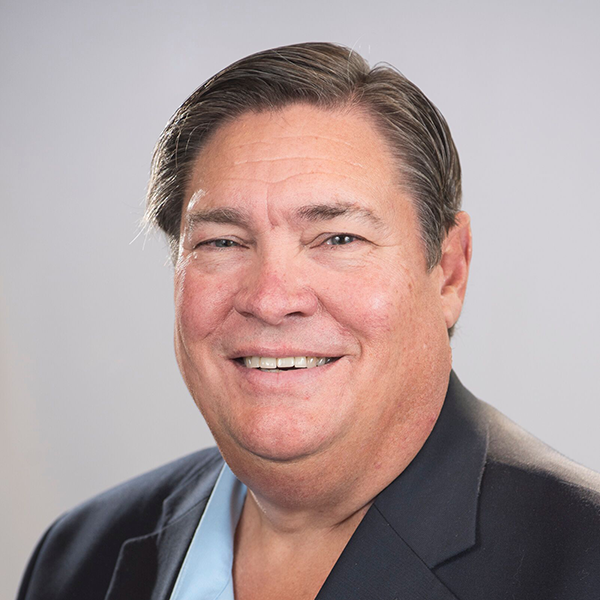
With over 30 years of field and academic experience across three continents, Dr. Simon Goncharenko leads expert services at Veriforce. He teaches safety policy and ethics at Liberty University, and is reshaping safety culture worldwide. He's a respected voice in operational excellence and human factors, who has worked with global giants like Google, Meta, and BHP. Simon is an active public speaker and author of six books, including the one we'll discuss today, "Save Lives: Pushing Boundaries in Human Factors." He developed and trains organizations in the world's first human factors program for mission-critical facilities, called Save Lives Global Human and Organizational Factors. Simon joins us from Houston, Texas. Welcome.
[Simon] Thank you, thank you so much.
[Mary] Let's start with the style of writing. Why was it important for you to choose a different style than the one commonly used by the authors I mentioned in the introduction?
[Simon] I think that's a really fair question. It's interesting, because at the very beginning of my book, given the wide range of resources already in this field, I felt I had to answer a simple question — why this resource, why now? I go through, I think, five or six different things that make this resource stand out from the rest. One of these differences is the style. As an academic myself, I'd previously published resources that were heavily footnoted, with a lot of research and evidence, documenting every single claim. There's room and a place for those kinds of resources. But the idea for this book actually originated, believe it or not, while I was doing a podcast much like this one — it was called something like "Two Safety Dudes," very laid-back. I'm not kidding, these were two safety professionals in the construction industry, recording in their respective trucks in their employer's parking lot during lunch break. That's how we recorded the episode. It got my wheels turning — we were having a very engaged, fun conversation, talking about day-to-day struggles, concerns, issues, in the lingo they were used to. One of them said, "Dude, if you ever wrote a book on all this stuff we're talking about, I'd love to buy it." It clicked for me — Hollnagel, Reason, Conklin, Dekker, awesome guys, I could keep adding names to that list — but their style isn't something these two safety dudes in construction were ever going to pick up and read.
That's where my book comes in. I purposed, from the very beginning, to write it in an easy-to-read, almost eighth-grade-level vocabulary, with minimal citations. It was very hard, as an academic, to write an entire book with no footnotes, but that was one of my purposes. I often direct readers to either the bibliography at the back of the book, or to common search engines, where they can easily plug in the right prompts to find the information themselves. Everything I write is documentable — none of it is made up, fictitious, or fake news — but it's all purposefully written in a very easy-to-read format, because I'm trying to reach a segment of the population those other resources probably won't reach.
[Mary] Here's a question I've tried to wrap my head around before, and I think our audience is likely a lot more familiar with human factors than I am — can you explain what human factors is as a discipline, and maybe give a brief history of how it developed?
[Simon] Absolutely, great question. It's interesting — just recently on LinkedIn, I posted about this, and it generated a lot of interaction, people really enjoyed it. We can go historically way back, to the late nineteenth, early twentieth century, when factory owners in the UK would put residential complexes for factory workers close to the factory, because they recognized it made it easier for workers to get to work and built a sense of community, and they saw an increase in productivity. There were elements of human factors there, without anyone formally recognizing or naming it that way — we saw those tendencies early on.
But formally, as a discipline, human factors began developing after World War II, from findings around bombers that weren't successfully returning from missions. They were trying to figure out what was contributing to an insane number of crashes, and one idea floated around was, maybe we'd finally designed a piece of equipment too complicated to operate. Of course, that wasn't it. What it was, first, was that checklists weren't being used — you'd be shocked, because today, when you and I board a commercial flight, it's completely normal to expect the pilot and co-pilot to go through a pre-flight checklist. That wasn't done then. On top of that, they discovered some controls — for landing gear and so on — were positioned too close together and looked too similar to one another, so that under the stress of combat, pilots would reach for a control and inadvertently push the wrong one or pull the wrong lever. That's how it came about.
As a science, its development traces back a lot to European resources. It looks at human-machine interaction, the way systems interface, and has ties to resilience thinking and high-performing organizations. It's out of that science that the more philosophical approach of HOP, human and organizational performance, also stemmed from, in a sense — not fully originated from it, but there are a lot of parallels. Human factors as a field traces back to World War II and the European context, and there are university degrees you can get in human factors, bachelor's, master's, PhD. There's a Society of Human Factors with an annual convention, publications, and so on — it's a well-developed, well-oiled machine. Some of the more high-hazard industries in the US have had more interaction with the subject of human factors than others — oil and gas maybe hasn't as much, but energy has — the Department of Energy developed a human factors handbook a few decades ago. Even our military, US Air Force and US Navy, has incorporated human factors principles and training over the last couple of decades. And of course, the aviation industry, in a lot of places around the world, has regulatory requirements for annual human factors training and refreshers, because of the benefit derived from it.
[Mary] That answers it — it sounds like there's a lot of overlap with engineering, safety, ergonomics, and a whole bunch of other things. I want to move on to talk a bit about other theories in safety, one being behavior-based safety. One of your critiques is that, traditionally, "focusing on behavior" in safety meant focusing on frontline behavior exclusively — based on the unspoken assumption that only frontline workers perform, or can perform, unsafe acts. Can you talk about that, and any other critiques or thoughts you have about behavior-based safety?
[Simon] Absolutely. To be clear from the start, I consider myself a lifelong student — I never think I've arrived somewhere, that there's no place left to improve or learn. Even since writing and publishing my book, I've realized — and this goes back to the core reason for my book — that I'm a practitioner at heart. That means I'm not married to the latest and greatest, or to any single philosophy or way of doing things. That's actually the reason the book is titled the way it is — at the end of the day, what motivates me and keeps me going in this field is the desire to save lives, to do everything we can.
I say that because there are definitely some challenges and issues with behavior-based safety, but there are also good things, good tools it brought to the table. My criticism isn't to say let's leave behind everything related to behavior-based safety and fully adopt human factors or HOP, to the extent that even Dekker or Conklin sometimes push it — Dekker goes as far as to refer to himself as a safety anarchist or something like that. I think that goes a little to the extreme — it almost reminds me, I grew up in the former Soviet Union, with communism being preached and propagated, and it almost sounds to me like a kind of "safety communism" idea coming to the fore. My approach is, let's get the best of every philosophy and system out there, leverage the best possible tools, so that by every means possible, we can save as many lives as we can. That's my overall philosophy.
Having said that, there are definitely some good things — the observations, some of the accountability elements of behavior-based safety, I think, are good. But over the years, we've had some wrong methodologies, and we've misapplied a lot of the good parts. The example you gave, I've seen so many times in practice across various industries — organizations that fully buy into behavior-based safety tend to apply its tenets just to what Conklin or Dekker would call the sharp end, just the frontline personnel. That creates a dichotomy where safety is done to you, not done with you — almost a two-tier system within the organization, where leadership never participates in any safety briefings, because safety is "the safety person's job," and the safety person is responsible for making people safe, while everyone else is just there to make money. That's a totally different way of doing things.
So that's one of my biggest critiques — behavior-based safety is subject to misapplication, and has been misapplied quite a bit. Some of its principles are also too overly simplistic — I mention this in the book. You can move a single-celled protozoa, an amoeba, with sugar to attract it, or pain-associated signals to discourage or repel it. But humans are multi-billion-cell organisms, with things like moods, with "I don't feel like doing it today." Behavior-based safety sometimes oversimplifies, thinking you can fully control and motivate a workforce with just rewards or just punishment. It takes more than that — a single-celled amoeba doesn't wake up one day and decide it doesn't feel like doing something. That's one issue with behavior-based safety. All in all, it has some good parts, and organizations using it should continue to, but they also need to step back, look at things more systemically, and reevaluate where they've misapplied it to their own detriment.
[Mary] I think it made sense when it came in, and it did revolutionize how we look at things, as I understand it. In our current moment in safety history, you say it's important to focus on SIFs, serious injuries and fatalities. Why is that focus important right now?
[Simon] Also a really good question — I'll qualify my answer, as I have with every question so far. I know an individual in the safety field who answers nearly every question with "it depends," and I think it really does depend on a lot of things. First, I want to qualify my answer by saying I don't believe replacing one lagging indicator, total recordable incident rate, with another lagging indicator, serious injuries and fatalities, is the only answer out there. At the end of the day, both are lagging indicators, and we need to keep that in mind.
Having said that, multiple studies now show that over the last 30 to 40 years, we've successfully brought TRIR numbers down quite a bit — I've seen statistics ranging from 68% over the last 40 years to 84% over the last 20, depending on where you look. The numbers are staggering, impressive, we've done a good job. But let's unpack that — does it mean we've made our workplaces 84% safer? That's a different question, with a different answer. Bringing TRIR numbers down partly reflects safer workplaces, but we've also figured out how to keep incidents from being recordable — whether by playing a bit loosely with recordability, having special arrangements with local occupational clinics, employing on-site medics and nurses, or other means. We've used every means possible to bring that number down. So if TRIR dropped 68% over the last 40 years, it doesn't mean our workplaces are 68% safer.
In connection with that, we're also seeing a different trend — the law of unintended consequences, where focusing on one thing produces something different on the other side. By virtue of that, over the last 20 years we've seen serious injury and fatality rates not just fail to drop at the same rate as TRIR, but actually stubbornly refuse to go down, and then start to rise. You can have organizations with incredible TRIR numbers — point five or below is considered world-class safety by consensus — but those same organizations, with that insanely low TRIR, can experience multiple fatalities annually, and because their workforce is large enough, it doesn't move the overall TRIR number, since it's divided by total work hours. They're able to hide that. But how do you put a price on human life?
That's the reason — we successfully brought TRIR numbers down, but realized the things that allow us to bring those numbers down aren't causing an equal decline in serious injuries and fatalities. So some folks are saying, let's abandon the "tyranny of TRIR" and focus on the things that actually maim or kill people. There are lots of different definitions of a SIF — that was one of the first challenges, defining it. OSHA has a definition; the CSRA folks out of Colorado came up with a life-altering, life-ending, life-impacting definition; ASTM, through NSC and other organizations, ASSP with ANSI standards — NSC has ASTM E2920, just updating its 2025 edition, working through approval, plus three other related standards. These are consensus standards meant to get people on the same page, defining things the same way, protecting employees the same way. It's really about continuing the mission of bringing workers home safe — focusing on things that actually hurt or maim us, as opposed to things that twist an ankle, or that we've gotten quite good at preventing from being recordable.
[Mary] It sounds like what you're advocating for is curiosity — not taking the numbers at face value, understanding that lagging indicators have inherent problems, that numbers can be gamed, and that looking at overall trends is probably more important than fixating on specific numbers. Not hyper-focusing on the measure, but getting curious about the trend — does that sound right?
[Simon] Yes, absolutely. In my experience, you have to look at more than one number — not just TRIR, but, for example, here in the US, EMR, experience modification rate, an insurance rate that's calculated over three years, not annually — that's another interesting thing about TRIR. There have been numerous studies revealing a couple of things — first, statistical validity. You need serious datasets to even approach statistical validity, and I mean something like a billion-plus work hours. Only at that point do you start approximating some degree of statistical validity with TRIR. Most organizations aren't dealing with billion-plus work-hour datasets, so we're far from statistical validity with TRIR as it's typically used.
My pet peeve is when we don't just track annual TRIR, which already lacks enough work hours for statistical validity, but start tracking monthly or quarterly TRIR, which pushes it even further into statistical invalidity — just numbers for the sake of numbers. The other interesting thing about TRIR is that it doesn't tell us whether we were good or lucky — it doesn't tell you whether an organization is actually effective at implementing the right controls, or just got lucky. There's zero predictive validity — that goes back to the nature of lagging indicators, they don't tell you what's going to happen, they tell you what did happen.
That's why I like comparing TRIR, an annual number, with EMR, a three-year number, to see if there's any discrepancy that reveals whether one number is being tinkered with more than the other. And look at fatality rates, significant injury rates. The good news about the age we live in is there's so much research out there — I could probably name half a dozen other proactive, leading-type indicators that have been proposed, which, adopted alongside TRIR or whatever other numbers you're tracking, give you a fuller picture. When you're only looking at one thing, you have a very limited idea of what the organization is actually like.
[Mary] That touches on something I wanted to ask about — in several parts of the book, in different contexts, you talk about the concept of "going broader." Would this be an example of what you mean by that, and why is it a useful practice?
[Simon] That's definitely one example. It's useful because, like we just discussed, if you want the actual picture of where your organization stands, you need to ask more questions than just what your TRIR is — you need to go beyond lagging indicators. That's part of what I'm suggesting. The other reason for the subtitle of the book, "Pushing Boundaries in Human Factors," is that I go beyond traditional human factors, ergonomics, human-machine interaction, and look at things some might consider more controversial. Everyone talks about performance-influencing factors like nutrition, sleep, stress — but I go beyond that. I talk about the value of personal relationships, about smiling, and I touch on emotional intelligence. In another book I recently edited, "Operationalizing 21st Century Safety: A Human-Centric Practical Guide," I wrote a chapter on emotional intelligence, because I think that's an area we haven't talked about enough. If physical hazards are addressed by traditional health and safety, and how we think is addressed by psychological safety, nobody talks about how we feel — that's where emotional safety comes in. We're very emotional beings, and there's plenty of research showing most of our decisions are made emotionally and then rationalized intellectually afterward.
I even talk about spiritual well-being as part of that. The reason I bring that up is, just like in the eighties and nineties we used to tell people, leave your home life at home, you're at work now, leave your problems behind — we don't say that anymore, because we've realized humans are emotional, psychological beings, this wonderful interwoven mess of data, and what happens at home very much affects my ability to think clearly and make effective, efficient, safe decisions at work. So instead of "leave it at home," we now push psychological safety, look at psychosocial factors, and so on. By that same logic, I'm saying we're spiritual beings too, and that's part of who I am, and it plays a role in my ability to work safely. I recently celebrated my 27th wedding anniversary and posted about it on LinkedIn — unusual, since people usually post that on Facebook, not a professional network — but what I said was, my marriage, my wife of 27 years who stands behind me and supports me, is a huge contribution to my success and my ability to do what I do today. Without that support, I wouldn't be where I am. I think it's time we bring some of these issues into the public conversation, because for too long we've left them aside and built this truncated picture of what a person actually is.
[Mary] Since you talk quite a bit about off-the-job factors, this whole category of things that influence work performance — what can safety personnel realistically do about off-the-job factors? Or when you wrote this, was the information really aimed more at frontline workers reading the book?
[Simon] I think both. That's a really good question, because you can go a step further — I even talk in the book about things like chronic illness. If you look at statistics for some industrialized nations, including the US, we've seen a tremendous uptick in diabetes, for example. As a supervisor, it's really important for me to know whether people on my team suffer from that, because I need to know what times of day to schedule certain work, when to be especially cautious, which tasks I can set them up for success on, and which tasks I might be setting them up to fail.
I've conducted a lot of trainings on the principles in my book, and people often raise the question, here in the US we have HIPAA laws preventing supervisors from asking overly intrusive health-related questions. My answer is simple — we don't need to break any of those laws, we don't need to be intrusive. All we have to do is open our ears. If you stand at a lunch break area, by a water cooler, by a drink station, and just listen, if you care to listen, workers volunteer all kinds of information about themselves. I'm not saying weaponize that information — use it wisely to help them be better, to help yourself be a better supervisor. You can know how to set up schedules, teams, and critical tasks around personnel and timing. It's about awareness — and paying attention if, say, Johnny on my team has been complaining about issues at home, asking myself, is his mind in the right place, is he prepared to do critical electrical switching today that could put his life and his partner's life at risk? Or maybe I should ask Johnny directly.
I've actually seen, when these principles are implemented, workers come to their supervisors and say, "ever since we started talking about this and raising awareness, I've realized that with everything going on in my life right now, I'm not the right person for this critical task this afternoon." Initially, that sounds scary — "you're going to disrupt my operations" — but a brief, momentary disruption can save you hours, potentially millions of dollars, in recovery, repair, restoration, medical costs, not to mention reputational damage. I've seen studies showing reputational and contractual damages in the tens of millions from situations like that, plus the disruption to business. We just experienced an insane Cloudflare outage yesterday that impacted operations worldwide — I haven't looked at the specifics, but in my experience, a lot of these things, while partly technical, often trace back to something as simple as a technician at some brick-and-mortar data center somewhere — it goes right back to human factors, believe it or not. We've come full circle, folks.
[Mary] I was thinking, as you were saying that, how refreshing and wonderful it would be to have a workplace where you can go and say, "I'm not up to this right now," with confidence — and that doesn't mean you're not confident in your ability overall, just that the baby didn't sleep last night, or you're getting over a cold. That speaks to culture, so let's get into everyone's favorite topic, safety culture. In the book, you ask whether safety culture even exists, and contextualize that discussion in terms of other organizational cultures, including just culture — I think there were five or six different types you discuss. I'm curious about your views on that.
[Simon] My question is a little tongue-in-cheek there, because there's been debate on the subject — some say there's no such thing as safety culture, it's just organizational culture, you don't have an "accounting culture" or "finance culture" or "operational culture" separately. I get that point. But at the same time, I also make the point in the book that language is dynamic. All languages are — my first language is Russian, and I left what was still the Soviet Union in 1991 to come to the US, so my Russian vocabulary essentially stalled out at 1991. If I went back today, I'd easily be recognized as using somewhat dated vocabulary. Similarly, in English, twenty years ago, if you said the word "woke," people would think you had poor grammar — it wasn't a real word. Today, it's become one, with a different meaning altogether. By the same token, I'm not fighting the whole "safety culture" framing — if that's an easy way to identify what an organization is doing overall with regard to health and safety, let's talk about it, with the understanding that it's a reflection of the larger organizational culture.
With regard to just culture, I think it goes right back to the previous point — just culture is very closely related to psychological safety. It's a place where there's freedom for personnel to report hazards, even if I did something that inadvertently put myself or coworkers at some risk — I feel free to report it, without an honest mistake being immediately punished. We did the blame, shame, and retrain thing for so long that when we first started looking at just culture, we overcorrected to the other extreme — total amnesty for all reports. That's not right either, because if there's blatant disregard, actions that put not just the individual but coworkers, contractors, or bystanders at real risk, there needs to be accountability. So we found out "no name, no blame" doesn't work either — it's not effective. Just culture sits in between — we recognize honest mistakes as just that, and don't penalize people for making them, and that opens the door to learning culture: information coming in about hazards, what mitigations and controls work or don't. That feeds informed culture — knowing what's working and what isn't — which allows for flexible culture, and so on. These are all steps toward that overall organizational safety culture, whatever you want to call it, and there's no shortcut. Anyone who tells you otherwise is selling snake oil — there are no three easy steps, no fifteen-step solution, no thirty-day jump to safety culture. It looks different for every organization, depending on their starting point, leadership commitment, and a lot of other factors. The path is difficult, and it's different for everyone.
Safety culture is also not a destination. Companies that think they've arrived are often the ones bragging about millions of work hours without a single recordable, and then suffer a fatality, the worst possible incident — because they get complacent, feeling they've finally arrived, and start riding the coattails of their success. Safety culture is a continuing, constant journey. I like to reference the founder of UPS, who had a personal philosophy of continued constructive dissatisfaction — constantly looking around, constantly asking. That's what high-reliability organizations have picked up and run with — the answer to "if it ain't broke, don't fix it" — a normal person answers that one way, but the founder of UPS, and high-reliability organizations generally, ask instead, "then why isn't it broken yet?" They're constantly, constructively dissatisfied, looking for how, where, why, and when things might go wrong, because we understand we're all fallible — none of our systems or equipment are perfect, and even the best-designed infrastructure will eventually fail.
[Mary] I have a ton of questions, I'm not going to get to them all, but I did want to get to this one — you write about soft skills in the book, and this podcast focuses heavily on soft skills. In your experience, what soft skills do safety professionals find most challenging, and what's your advice for developing them?
[Simon] Great question — this is another area I think we need to do a lot more work in. What does a typical organization do? We take a really effective person, great with their hands on the tools, my best producer, and my supervisor says it's time to promote a few people, so I take my best producer and make them a supervisor, and I've just lost my best producer and gained the worst leader. Why? Soft skills, or lack thereof. We often don't recognize that the same skills that make someone a great producer aren't what's going to make them successful as a leader of people. Now they need to know how to lead, communicate, make decisions, foster good teamwork, handle conflict resolution — skills they never needed while working with their hands.
I've been blessed to work at both small mom-and-pop operations and global tech giants with really well-developed, six-month-long onboarding journeys — and I'll tell you, both ends still lack effective ways of teaching, training, and talking about soft skills. Leadership — what does a good leader look like, what doesn't? Communication — the older I get, the more I realize how complicated that subject is. As a kid, I thought, what's so complicated, you just say it. But you can say something and have it taken fifteen different ways, depending on how you say it — face to face, with eye contact, over email where motives can be ascribed, over text, where maybe your keyboard's stuck on caps lock and a younger reader thinks you're yelling. Then there's nonverbal communication — most experts say something like ninety percent of communication happens nonverbally. If you know how to read nonverbal cues, no one can slide one past you, because while we can lie verbally, there are things we absolutely can't control nonverbally.
Speaking of nonverbal communication, it was really interesting to watch this play out globally, in the months before Vladimir Putin invaded Ukraine — a number of world leaders went to Moscow to try to dissuade him. Every leader he didn't particularly like was photographed at one end of a ten- or fifteen-foot conference table, with Putin at the other end. How do you communicate "I don't like you, we're not on the same page" more effectively than that? Then, in the middle of all that, he met with a Brazilian leader, I think it was Bolsonaro, and the picture that came out was completely different — a tiny side table with a small plant, the two of them sitting close enough to touch. What's that communicating? "I see eye to eye with this individual, I like you." It's fascinating to watch this kind of thing play out, if you know what you're watching, in every sphere of influence, every type of communication, every conversation. There's a lot more to soft skills, but I think that's a field where we need a lot more upskilling, a lot more work.
[Mary] There's a discussion of religion in your book, specifically your Christianity. I imagine that makes the book more inviting for some people, and less inviting for others. As you wrote it, was that a concern, in terms of the impact on how the safety information would land?
[Simon] Great question. I'd already touched on this earlier — I am who I am, I make no apologies for that. I'd go as far as to say the reason you and I are talking today, in my view, is because of everything that's gone into me becoming who I am, and my personal faith, my faith in Jesus Christ, my relationship and walk with him, is absolutely a huge part of that overall package that is Simon Goncharenko today, and a huge part of what underlies this conversation. So no, I had zero concerns about including it, to this day, zero. I understand it may be offensive to some — for that reason, I put that information in the appendix of the book, and clearly state up front, if this isn't your cup of tea, that's perfectly fine, you've read the bulk of what the book is about, hopefully gained some valuable insights, and you're welcome to close it there. I'm not trying to offend anyone, but I'd feel it would be wrong not to be true to who I am by omitting that area, since it's such a big part of who I am. To write a book called "Save Lives," subtitled "Pushing Boundaries in Human Factors," when the entire purpose is to push boundaries and look at things we haven't looked at before, and then omit a huge part of that — I'd be breaking the very purpose I set out on this journey for. I never intentionally want to offend anyone, but by the same token, I have zero apologies for who or what I am.
[Mary] Totally understandable. If you had to boil down your book — this might be the hardest question I'll ask you — into one recommendation for the safety professionals listening, what would it be?
[Simon] As you're asking this, I have a million different thoughts coming to mind, and I'm going to turn this into a teaching moment instead of directly answering. For decades, maybe longer, operational leadership has come to safety personnel asking for that one thing they could invest in that would satisfy the regulators and let them get on with the business of being productive and profitable. I think that's the wrong way to look at safety entirely. Safety isn't about one thing, one trick — and for me to summarize my book into a single recommendation would be failing all my safety brothers and sisters out there, by suggesting safety can be boiled down to one thing. That's not how it works. Safety is about incorporating a way of thinking into everything — it's not one thing, it's everything. It's changing our thinking from "what's the one thing I can do" to "how can I incorporate this way of thinking into everything I do," on the job, off the job, and everywhere in between. Hope that makes sense — I know it didn't directly answer your question, but there's the teachable moment.
[Mary] No, it does make sense, and I'd say everyone has different things to learn anyway, and is ready to learn different things at different times. If you could go back in time to the beginning of your safety career, is there any advice you'd give yourself?
[Simon] Great question. Looking back at how I started my safety career — and I kind of stumbled into this by accident — one of the things that really helped was that I took a deep dive into a lot of the core principles, the key parts of OSHA regulations, even taking specific classes on each regulation, going deeper than most. Having risen through the ranks and participated in boardroom conversations with director- and VP-level safety professionals, what I've witnessed is interesting — a lot of those leaders have great knowledge of systems thinking, leading, thinking organizationally, but because of where they are today, many don't have that deep technical knowledge anymore — what does fall protection actually require, at what height in general industry, what's different in construction. I'm really glad I started the way I did. So maybe this isn't advice for a younger me, but advice for younger safety professionals getting into the field, or looking to: you'll pick up the systems thinking, the organizational and higher-level stuff, as you progress, that'll come naturally — but what won't come naturally is taking the initiative to do that deeper technical dive, because that's what's going to make you irreplaceable, a really valuable asset later on, because you'll have both the operational knowledge and the technical knowledge. There aren't many people who have both.
[Mary] Obviously the book is the first answer, but other than that, how can our listeners learn more about the topics in our discussion — are there other resources you'd recommend?
[Simon] Great question too. Obviously "Save Lives: Pushing Boundaries in Human Factors" is there. I mentioned the other book we just put out — there's a cool story about that one. When I put out feelers for the first book, just gauging interest in the market, I started getting feedback from fellow PhDs in safety, operational leaders with incredible global experience, and a lot of them weren't just saying "that sounds like a great idea, there's room for this" — they were saying, "I want to help, I want to join you, I want to write a chapter." I was kind of shocked, didn't expect that at all. So my initial focus was getting "Save Lives" out, and after some time doing that on my own, I went back to those individuals and said, let's do it. We put together a really diverse group of people from different walks of life, countries, geographical and racial backgrounds — a really cool group — and put together this second book, "Operationalizing 21st Century Safety," which I'm general editor of. That's another resource out there.
As folks started buying "Save Lives" on Amazon, I noticed, over the first year, it was purchased on every continent — I think fifteen or sixteen different countries. There's this feeling of a "Save Lives Global" movement afoot, to make safety not just the currency of industrialized nations, but the everyday currency of all nations. SaveLivesGlobal.com is the website that goes along with that, with additional resources, training, and speaking resources. And of course, LinkedIn is another place to find me — I share things I come across, pose questions, and continue pushing those boundaries there, the way I do in the book. Sometimes I say things that are a little on the edge, but my purpose, just like with the book, isn't to offend anyone, it's to probe questions, raise issues, identify potential challenges, so we can come together and find better solutions. It's about pushing the boundaries of what we talk about.
[Mary] Hopefully there will be lots of discussion on LinkedIn when this episode goes live — there'll be clips of different things you've said, and hopefully it generates some good discussion.
[Simon] I look forward to that.
[Mary] That's our show for today. Thank you for joining me, Simon.
[Simon] Thank you so much.
[Mary] And thanks to you, the safety professionals, who take the time to listen to our podcast so you can improve your practice and make the workplace safer for everyone, and thanks to the Safety Labs team, who find, approach, organize, edit, and converse with guests and listeners to make this podcast the success that it is. Bye for now. This podcast is created by Safety Products Global, the world's leading manufacturer of safety knives. Through our trusted brands, Klever, Slice, and PHC, we empower companies to prevent injuries by providing safer cutting tools for every material and application. Until next time, stay safe.

%20(1)-8.png)