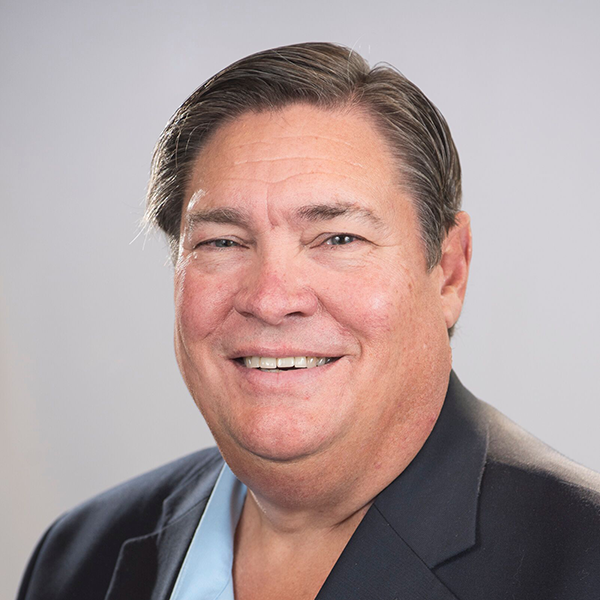
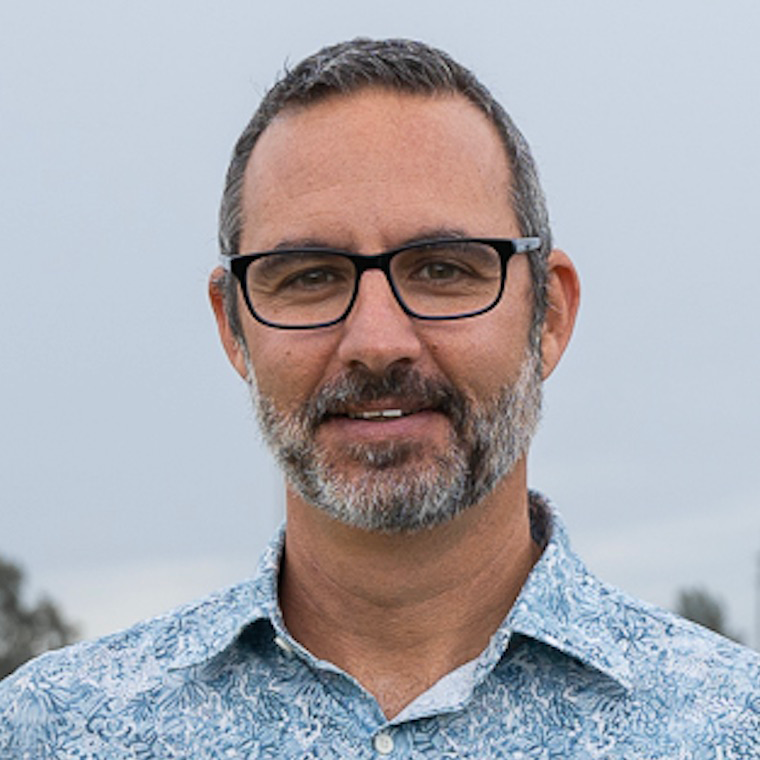
[Mary] Hi there. Welcome to Safety Labs. What does it mean to be a safety leader? There are many approaches to safety, and it can be daunting to change the outlook of an entire organization. So what kind of practical actions can we take to improve safety today? According to our guest, it starts with better conversations. Today we'll discuss his recent book, "An Invitation to Safety: Safety Conversations," which is about real dialogue and better work.
Initially trained as a pilot before retraining as a psychologist, Daniel Hummerdal's career has taken him all over the world, working in Sweden, France, the UK, the US, New Zealand, and Australia, focusing on the role of humans in safety and organizational improvement. Daniel has worked in various roles across a range of industries, from construction and mining to electricity and aviation, supporting leaders to implement and manage meaningful change. With a core interest in human potential, Daniel has designed better practices for end users, ensuring people are not held back by outdated ideas or overburdened by processes. Daniel joins us from Brisbane. Welcome.
[Daniel] Thank you, Mary. It's a pleasure to be here.
[Mary] Let's start with a really big question — what is safety leadership, to your mind?
[Daniel] I think safety lives in a system's ability to notice, make sense of, and adapt to everything that's going on. That doesn't really happen without leadership — having someone who can set up the infrastructure, the social structure, through which weak signals can travel, through which truth can travel about what matters, what's getting in the way of good performance, and what's helping good performers. Creating that collective scaffolding for collective intelligence to happen — that, to me, is a safety leadership challenge. It's not the only thing that defines safety leadership, but it really allows the organization to activate a shared approach, to activate people at all levels to tackle shared well-being challenges. That aspect of activating people is quite different, in my approach, from what I hear elsewhere, which is more about creating followers. I'm not a big believer in the follower school — it's more about creating a fellowship of people who work together to tackle whatever needs tackling.
[Mary] That does make sense — I'll follow up later about the architecture of communication, but I also want to get into safety conversations, since that's really the topic of the book. You define six different types, which we'll get into soon — but looking at these conversations with a wide lens, collectively, what does and does not qualify as a "safety conversation," in the way you're using the term?
[Daniel] Good starting question. I think everybody, well, most people, are pretty good at having conversations, because that's how we communicate as people — at home with partners, kids, colleagues, friends over the weekend. There's something very organic about conversation, in the broadest sense — you say something, I think about it, and return something else, and meaning emerges between us. The direction is emergent from the discussion, we don't really know beforehand where we'll end up. It's two-way, emergent rather than scripted. It's not something we do to audit or check on people — it's more checking in, seeing where people are at. That's what I mean by conversation.
Now, many organizations have built "safety conversations" into their management practices — observations, interactions, and so on. But much of what I just described, what happens organically between two people in everyday life, has been scripted, turned into a checklist or a process. That's what happens in organizations when something matters, like safety, or conversations themselves — we engineer it, write down every step, and it becomes artificial, technical, rather than human to human. What I mean by safety conversation is returning to that human-to-human notion of just talking to one another, which requires connection, where trust can emerge so people can be honest and truthful about how things actually go — requiring curiosity and compassion, all the things happening in everyday conversation. I'm trying to make a good case for why those matter in our workplace too.
[Mary] That leads right into my next question — what makes safety conversations so powerful? You've clearly written a whole book about them.
[Daniel] On the back of my book, I say something like, organizations that can't hear themselves can't improve, and I strongly believe that. If we don't understand what's happening in organizations, our improvement actions are best guesses, at best. Organizations have lots of other tools to try to get signals about what's happening — incident reporting, hazard reporting, audits, observations, engagement surveys, all meant to help us understand the qualities of being an employee, of safety, of our interventions. I do think safety conversations, just having conversations, offer up a different set of qualities altogether. They let us hear things we can't hear through established channels — and this goes back to what happens before an incident, before a violation, before something even becomes a "safety topic." Before that, it's just normal operational work, and if you talk to people about the work, they'll talk about frustrations, things that aren't working, not being listened to — it might sound like gripes, like uncertainty, people making sense of a noisy environment, trying to pull out the signal. Before something gets formally called out as a safety event or concern, it's just uncertain, noisy stuff, and we don't really have good methods for understanding that, whereas conversations give us a much more open, engaging, alive, and dynamic way in.
The other aspect is that conversations are always available — you can just go out and talk, you don't have to wait for the quarterly survey, the audit. It's also very personal, compared to an incident reporting mechanism, where you go into an IT system, fill in fields, drop-down menus, turn your story, the thing that matters to you, into a corporate format. A conversation is just your story, your world — we're being invited into someone else's world, to make sense of it with them. That's a different format, a different quality, and it lets us be much more calibrated to what's actually going on. I think it also drives accountability in us — when we hear someone share something difficult or dangerous, there's an expectation that we'll do something with what they've shared. It activates us in a very different way — more emotive, relational, and meaningful than seeing the monthly stats and the collective pattern. I'm not saying those don't matter, but safety conversations add to that, and let us make sense of the stats in a different way too.
[Mary] In the book, you say the pursuit of safety is "relational work," which I think is what you're describing.
[Daniel] Absolutely. There's a clear technical side to safety — technical barriers, procedures, working at height, fall restraint systems, protection against dropped objects, all of that is really meaningful. But it also needs to fit into the social setting people are working in — it sometimes interferes, or interacts, with productivity, quality, and other priorities, so we need to think through what we should prioritize in a given situation, how we trade one thing against another. These are human judgment calls — when we change something in the system, it normally triggers changes in relationships, in how people work together. We need to understand the social situation these interventions need to fit into. You can impose whatever technical solution you want, but if you're not calibrated to the social reality, how people feel about it, how it changes how people work together, it's not going to end up in a very effective place.
[Mary] I got the impression from the book that while the idea of safety conversations is simple, that doesn't mean it's necessarily easy. Where do you think people tend to stumble when they're first starting to engage in this practice?
[Daniel] It depends a bit on their background. Much of my work is with safety professionals, and what I've noticed in workshops and training is that I get questions like, "this sounds really good, but tell us exactly where to start, give us the exact process to maximize value" — give us a script, essentially. I'm arguing for stepping beyond compliance, beyond having all the answers, allowing yourself to be surprised — but then people want a structured process for being surprised. That compliance mindset comes in and undermines the approach, holds us back from actually having an open-ended conversation, getting to know someone, getting to know their work, and seeing where it leads. This sort of perfectionism, the guaranteed-success mindset, holds us back. My advice is, just get started — go out and be curious about one thing. You don't even have to go looking for something specific. Setting that expectation so high at the start is understandable, but I sometimes encourage people to just go have coffee with someone, don't even go looking for friction or danger, just try to connect, and see what happens. That can be a good, simple starting point. To some degree, you just need to trust your human faculty that interesting things will happen when you get into conversation — we listen to people, discover they've solved something for us, or they're struggling with something, and we just have to follow where the context leads. We have things we're interested in, and I'm not saying forget about that, but allow yourself to be led by what appears in front of you.
[Mary] I can imagine an imaginary conversation where a safety professional says, "I want to start doing safety conversations," and someone in the C-suite says, "I need the ROI, what's the script, quantify this for me." But I think the beauty is you don't actually need permission to just go out and connect — it doesn't have to be an initiative, doesn't have to be formalized.
[Daniel] The ROI framing is really interesting. I often think about "Undercover Boss," if you've seen the TV show — which is great, exactly that, a chief executive going undercover, getting more familiar with their own operating environment, talking to the people actually doing the work that makes the business successful. As an outcome of that investment of time, the boss becomes much more calibrated, starts making changes to the operating environment, supporting people, maybe developing opportunities, maybe something at home. It's normally a tear-filled, emotive moment at the end, a bit Hollywood, but that is the ROI — you will learn new things, I can almost guarantee that, when people step into operating environments. Will they do something with it? If you do, that increases the ROI even more, you can start making changes. How big the ROI is in dollar terms depends on what you come across, but the more you do this, the more interesting it gets.
I have a friend who's essentially a professional "discovery agent" for a railway — that's all he does, he's out talking to people, then meets with the board once a month and describes everything he's heard. The board eats it up, loves every bit of information. He told me it ends the same way every time — they say, "we're so grateful you came and told us about what's happening in the business, but we kind of wish you hadn't told us," because once they understand the challenges, the risks, the exposures people face, they have the responsibility to do something about it — and that's the value, it can be the difference between life and death, depending on what you come across.
[Mary] I suppose it lays bare complexities they may not have realized before. As much as safety conversations are emergent, meant to surprise you, you do delineate six different kinds in terms of purposes and characteristics. I want to go through them and ask you to comment on each. The first is a connection conversation.
[Daniel] The connection conversation is probably the common denominator for all the others. Regardless of whether you're having a learning conversation, a restorative one, or talking about accountability, the connection you form with the person you're speaking with shapes, enables, allows whatever comes after. If connection doesn't form, it's almost impossible to have whatever comes after — it becomes more performative, a bit of theater. But if you're standing on the same ground, you have trust, you start shaping what happens together — that's an important step. It's not the end-all of the conversation, but it's important on its own too, because it lets you go back to that person next time you have a question — you've invested in social capital in the organization that you can tap into later, even if not immediately after that connective moment.
[Mary] Similar to what you said — just get started, go out for coffee — that would just be a connection.
[Daniel] Right, have a coffee. There are little moments where people open up ever so slightly about something — you can tell from little clues, how they're dressed, a hint about something they did over the weekend, whether they have kids — all that social stuff that lets people be a bit more than the job description, a bit more than the role we've given them in the organization. When people allow themselves to be more than that, that's a good sign.
[Mary] The next is a learning conversation.
[Daniel] That's probably where I spend most of my time. This is about ensuring information flows from other people to you, as the conversation partner — learning what normal work looks like to people, what they experience. By "normal," I mean not necessarily about incidents or things going wrong, just what it's like to do work in a given context — figuring out work. I talk about three levels of learning here. The first is the very tangible level — the hardware, where hands go, the process, where work comes from, what happens downstream — just the factual level of work. Then you can go deeper, into some of the pressures, the goal conflicts people have to navigate to get things done, the dependencies they have — things you may not see, but that are always there, more in the background. As the learning conversation continues, you start realizing this job is maybe not that easy — you can ask people when their work is most difficult, and since work is dynamic, not level, it changes — is it Monday morning or Friday night?
When you start getting that color and shape, the next level is the adaptive layer — when people come up with solutions to deal with curveballs, goal conflicts. That's the really juicy level — that's where you find workarounds, some of which can be a bit scary to hear about, but you have to dig your way into understanding that depth of work. You can't really start a conversation by asking, "tell me about the workarounds you guys do around here" — people will probably push back against that question. But if you follow along in a conversation, it emerges naturally — people start sharing what they do to overcome design challenges or pressures, and all of a sudden you're there.
[Mary] In your book, you tell different stories about safety issues, and a phrase from one caught my eye — you talked about the Transpower tower painters, and said safety conversations "revealed a system working against itself." Can you expand on that, and maybe share that story?
[Daniel] It's not in any way unique to Transpower — pretty much every workplace I've been to, I come across people very keen to do a good job, committed, but often undermined by the complexity, scarcity, or messiness of the situations — basic hygiene issues around tools and equipment. You can jump up and down about accountability, expectations, controls as much as you want, but if you don't understand what's holding performance back — if you just assume it's about motivation, "people should care more," without understanding the tilt of the playing field people are working on, how that shapes performance — you'll get a very marginal improvement at best. The story about Transpower is that they didn't get improvement despite turning the accountability dial up to eleven — they just got more and more frustrated. It wasn't until they started asking people, "what's it like to work here, what's getting in the way of good work, what can we do to enable you to work at the level we need?" This approach isn't about being soft or holding hands all the time — it still has very high expectations on people and performance. It's a smarter, more efficient way of unlocking performance by being better calibrated to what people are actually experiencing in the workplace.
[Mary] The next is an appreciative conversation.
[Daniel] Is that just telling someone they're great?
[Mary] No, I don't think so, but go ahead.
[Daniel] That's a compliment. Appreciative is about being interested in strengths, in understanding where good performance comes from — backtracking, doing investigation, or learning around understanding, focused on the good, the strengths, the things we should spread, invest more in, be very careful about, or really value as an organization. It's a counter to what happens most often in organizations, the deficit lens, the "depreciative" lens of calling out shortcomings, underperformance, nonconformances — anything but green on the traffic light. I put it as its own chapter so it doesn't get muddled, but it's essentially a type of learning conversation, focused on the good stuff.
[Mary] What about possibility?
[Daniel] Learning and appreciative conversations are both based in the current setup, the "what is." Possibility is more about exploring a hypothetical situation — what if we changed things around here, what could happen then? It's essentially ideation, opening up possibilities — what haven't we thought about, what have you thought about on-site that I can benefit from, because I'm connected to people with resources and decision-making power to make changes. It's different from a learning conversation, but again it's a two-way conversation, testing ideas, a shared mental prototype of what could be happening — a kind of simulation.
These conversation types we're going over — I rarely go in thinking I'm going to have a "learning conversation" specifically, because you don't really know what you're going to encounter. I'm ready for any kind of conversation, and follow whatever people are opening up to, or whatever they're ready for. Sometimes they don't trust you yet, you need to invest in connection first. Sometimes they're jaded, hurt by previous conversations with other consultants or safety people, and you need to do a bit of restorative work before you can get into learning.
[Mary] I think it's important to note that as we go through these types, this isn't a checklist — it's not "I'm going to go in and have this kind of conversation," it's simply aspects that might come through, or areas you could choose to focus on.
[Daniel] You can choose, but you can also give permission for other people to lead you there — it's not just you in control of what happens, but following wherever it goes. And it's not exhaustive — I think there are more types, but those are the six I've done some work around.
[Mary] The next is accountability, and this word can be very loaded — I think people mean different things by it. Sometimes it means punishment, sometimes justice. What's your view?
[Daniel] It's been really interesting — I released the book about a month ago, and there's been a lot of reaction on LinkedIn, which has been delightful. Some people seem to assume safety conversation is really about coaching or cajoling people, getting them to do what they're supposed to, getting them to understand the role, the expectation — and that's probably part of safety to some degree, a lot of what inspectors do on-site, explaining what's required. But to me, it's about activating or inviting responsibility — people can choose to step into this role. If accountability seems missing, if you have a non-conformant behavior in front of you, around safeguarding, PPE, or procedures, how do you invite people to see they have a role to play in relation to that discrepancy? That's the space I'm talking about with accountability — the approach in the book isn't to enforce accountability, but to invite responsibility to be accountable for something. I go through six different streams or sources of responsibility — anything from who you look up to, what good looks like, what a professional does around here, inviting that sense of mastery, Dan Pink's notion of mastery, autonomy, and purpose, what you want to leave behind. There are lots of ways to invite people to see their role — if they don't understand how their behavior affects downstream functions, our ability to win more work, those are good moments to invite, "what you're doing here is really important," and have a conversation about that.
Again, it's not about forcing or manipulating, but saying, "when I see there's no machine guard on the angle grinder, it makes me really worried, I care about this, can we talk about it?" Instead of showing up, policing, "put the guard on," and walking off — what's actually changed there? How have we invited people in? Call out what needs calling out, then ask, "this is how I see it, what do you think, what do you think needs to happen now?" — a partnership approach to talking about what needs to happen next. I think we stand a much better chance of engaging people meaningfully and getting them to own the work in a way that works for them too — more respectful than a policing role.
[Mary] The last one is restorative, which you touched on a little earlier.
[Daniel] Restorative comes from the restorative justice way of thinking about work. When trust is broken, we look at how we can restore it, how we heal when things have broken down between people. We're quite often disappointed in each other at work — disappointed in a manager who promised something and didn't deliver. As a consultant, I've come across situations where people shared their ideas and frustrations, and nothing was delivered from previous improvement initiatives — and that gets held against me, even though I had nothing to do with it. Sometimes we need a bit of that social mending, looking after the social fabric of the organization, and when it rips, restorative conversations are a good lens — this isn't about learning, isn't about accountability, it's about looking at how it fell apart, recognizing damage was done, that we missed each other, intentionally or not, who knows — but recognizing that is the first step. Then the second part is, given that, what should happen now, how do we find a pathway forward that works for both of us, again in a partnership approach. Sometimes people's asks aren't unjustified, but they might want more than we can offer, so you want to be calibrated, end up in a space that works for everyone — it's not a free-for-all, not just granting wish lists, it's about understanding people's needs, rather than their wishes.
[Mary] It's interesting — when you talk about restorative, restoring trust, it feels like it comes full circle back to connection, building initial trust.
[Daniel] Absolutely.
[Mary] We'll come back to more, but I do have a word from the company behind the podcast.
In labs, R&D, and manufacturing, precision manipulation requires precision tools. Most precision knives on the market, like scalpels, don't have the right shape — they're incredibly sharp, and they can be dangerous. Slice has a line of precision knives featuring a number of different handle and blade options — and I'm sorry to listeners on audio only, I'm holding some up, you'll just have to imagine them, they look great. They've got straight blades, hook blades, chisels, and these cutters offer — this one's got a little micro blade here — control and safety, with textured grips and a design that prioritizes balance and stability. This is one of my favorites in terms of control. The finger-friendly blades are safe to the touch, oil-free, and chemically inert, and with no-tool blade changes, workers can quickly switch to the blade they need for the task at hand. If you want to learn more about which tools will work for your materials, you can request free samples by going to safetylabspodcast.com/samples.
And now, back to our discussion. Let's talk about the architecture of communication — I found that really interesting. You talk about an "organizational communication architecture" — I think I'm quoting here — "what information do we notice, measure, and communicate?" And to me, this is where the architecture comes in — through what channels. Do you want to expand on that?
[Daniel] My starting point is, what do you do after the conversation? Say you've been out talking to people, learned something, realized something, had an important moment, and you think other people should know about it, it would be valuable to them. Do you put it into the incident reporting system, which is one option, where it probably gets clumped up with all kinds of things? This is a chapter on how we move from a moment to creating movement in an organization around the things that matter. Your job, having realized something, having an insight you think others should know about, is figuring out how to invite other people into that aspect of the conversation. You can't really take the whole conversation — maybe if you recorded it, but it might be twenty or thirty minutes, not entirely digestible.
What I'm talking about is the next step, creating a story, using a storytelling format, to give your insight wings, to let it travel to people — who did what, when did it happen, a time marker, a place marker, people involved, some tension, some relevance. That's how we tell stories — "I was on-site, met this electrician, we talked about this thing, and he told me the most amazing thing." Giving people a format like conversation, storytelling, an ancient human trade, people get it immediately. That's quite different from an incident reporting system with drop-down menus — there's usually a free text field, and I do encourage people to use a story format there. Becoming better at telling good stories about what we've learned is valuable — using good quotes from people, staying true to what they shared, also thinking through ethical aspects, protecting individuals, since it's not about specific people, it's about the system. Then you need to think about who needs to hear this story — you can broadcast it to everyone, sure, but you can also be more intentional, "this needs to go to the executive," "my manager needs to hear about this." Try to get diversity of views, because it might matter to you, you have a vague sense it matters to others, but invite diverse perspectives to make sense of the story — it might be relevant to HR dealing with training, to tools and equipment procurement, to contracting procurement. Is this just a safety story, or are there bigger lessons? Invite more people to make sense of it together — stepping into more of a social sense-making architecture or scaffolding, rather than a trim information management or technical challenge.
[Mary] Let's talk about stance — you mention three core qualities that make a conversation work: curiosity, compassion, and courage. I'm really interested in courage — I think that's one people don't think about much. Can you explain how these qualities are essential?
[Daniel] The book itself is more focused on you, the person having the conversation, less on technique or process, less on "what happens" — it's not scripted, not a recipe. The book is designed to work on you, raise questions about what you believe and how you show up on-site. Chapter three is about that stance, the inner work you can do on yourself. Curiosity is something that's always there, good to lean into more and more, working with it as a guiding star — it'll take you to interesting places. Compassion is about how you respond when people tell you things — do you try to correct them, or just want to understand? Not just sympathizing with what they're saying, but empathizing, trying to put yourself in their position.
Courage is the third aspect — staying with it, sticking with it, because some of what we hear isn't easy to hear. It can be challenging, even threatening, just difficult. In some training I've run, people have worried, "what if someone starts talking about their divorce, or their suicidal teenage daughter at home, what if it goes somewhere I'm not equipped to handle?" These things can come up, and I recognize we might be hesitant to approach people because it feels like a minefield, we don't know what's going to come out. That's where courage is required — to actually show up, be there, be at least somewhat prepared, and meet people where they're at. It doesn't mean we're responsible for everything that comes out of it, but staying with it, not shutting down as soon as something gets difficult. Sometimes people are very critical of past experiences — I had one session where someone just started screaming, left the room, slammed the door. It really jolted me, I was quite upset. Another person said, "don't worry about it, he's struggling with some things." We don't really know the psychological or social landscape we're walking into.
Sometimes people are upset with something you've done, or you come across something you put in place — a design, a procedure, a standard, a golden rule, that hasn't landed with people. When they start talking about that, if you have a sense of ownership over the rule you put in place, you might get protective, want to push back, challenge people — that's your right. But be mindful that doing so means you get less of their version, and you start sending signals about what matters to you. Sometimes being courageous means saying, okay, I'm just here to hear their version of how this is playing out — without that, I'm not going to understand what I'm actually designing for. Courage is sticking with it, letting information come to you even when it's difficult to hear.
[Mary] You mentioned a couple of things that aren't necessarily helpful in learning conversations — one is opinions, and the other is the word "why," which you caution against relying on too much. Can you explain what it is about opinions — not that they're bad, but maybe not moving you toward learning?
[Daniel] I both like and dislike when people give me opinions — "my supervisor is an idiot." What I like is that people are inviting me into their world, it's a beginning of something, a signal that says, "I'm ready to talk about this topic." But the limitation of an opinion is that it's easily dismissed as just an opinion — it might find other people with the same opinion, but it won't travel very far. The way to work with opinions is to move beyond them — "tell me about a time when your supervisor was being an idiot. If he's an idiot, he's probably an idiot all the time, but when was the last time, the worst time, the first time you thought, this isn't right — give me the exact moment, the experience, the facts of the situation." That can travel. We move from "idiot," a judgment label, to "this is about micromanagement," "distrust," "procedures that are too vague" — reframing the challenge from a judgment into something we can actually work with. Opinions are good in that they highlight an issue, but don't stop at the level of opinion — try to get to the stories, the events, the episodes, the history, where it's coming from.
The other thing is the "why" question. In safety we resort a lot to the Five Whys in incident investigations, digging deeper — and curiosity is driven a lot by "why," where is this coming from. I have a four-year-old who asks "why" constantly, and I don't want to stop that — it's a good thing. It's not problematic to ask "why" about hardware or process, things out there. It becomes sensitive when you ask "why" of people, because it can come across as questioning their behavior, their judgment, their decisions, their preferences. I encourage people to be mindful, maybe not frame it as a "why" question — "why are you doing that" sounds almost hostile, like you're really questioning someone's choices, even if you're just driven by curiosity. Other ways to get there: "tell me about what you're doing right now, what's important to you, what do you want to achieve, what are you trying to avoid?" You're still getting at the drivers, still trying to understand the landscape, but you avoid questioning people directly, you're siding with them to understand what they're navigating.
[Mary] I also think humans aren't always great at knowing their own motivations — if you ask someone what their motivation was, they may well not know.
[Daniel] That's fair, and motivations and judgments — we like to think that asking "why did you decide that" gets us the full factual answer about how someone thinks, but really what they give you is how they make sense of the world. Moving beyond that, to "tell me about a recent situation where you had to use judgment" — they can tell you a story about what happened, and you're invited to make sense of it together, rather than just receiving their explanation. Moving toward the story behind it is the way to go.
[Mary] If you were advising someone starting to have safety conversations, what assumptions would you encourage them to let go of, and what assumptions are helpful to bring into this kind of interaction?
[Daniel] It depends on what assumptions they have, but with me and others I work with, I've noticed an assumption that people don't want to talk to us, that we face an uphill battle to get a good conversation. What I've discovered time and again is that people are actually very keen to talk about work — keen to be seen and understood, keen to share what they've learned. Occasionally you meet someone who doesn't want to talk, but in general, people want to talk, want to be seen, want to be heard. Work on the assumption that you're welcome, that you're going to have an interesting conversation — that gives you a bit of a downhill start. Introduce yourself, say what you're doing there, see where it goes. Sometimes we're our own biggest obstacle to getting started — the compliance mindset, needing it to be perfect, needing a process, or assuming people don't want to talk to us. Neither is true. Just go out and figure things out. If someone doesn't want to talk, if it's not the right time, that can happen, and you pivot — come back later, talk to someone else, it's fine.
[Mary] This next question I ask a lot of my guests, and it's a bit of a big step back — if you had a magic wand, where would you focus training for the next generation of safety professionals?
[Daniel] I wouldn't want to take expertise away from anyone in saying what to remove, but if I could add something, it would certainly be around curiosity about work, about the normality of how things actually play out. We understand procedures — they're nice and tidy — but when you step into the work that surrounds the procedure, you start understanding where things actually need to fit, and it becomes much more complex and interesting. Curiosity is maybe the key thing there — encouraging people to be more safety journalists than safety advisors, going out to capture stories. The other aspects we mentioned, compassion, being more human in the workplace, matter too. The questions, the process that comes after — if you get curiosity, compassion, and courage right, the specific questions aren't that important. If you don't get those right, the questions don't matter either, they won't be helpful. So it's about allowing yourself to be a bit more human in your role as a safety advisor, safety manager, safety leader, or just leader.
[Mary] If you could go back in time in your career — I'm not sure if there's a specific moment when you pivoted to safety, since you were in aviation, where safety was certainly part of it already — is there a milestone you could go back to, and some advice you'd give yourself?
[Daniel] Not so much about doing something differently, but — give things a try, don't be so scared, it's going to work out. I put a lot of pressure on myself to deliver high-value insights, and looking back, I realize it wasn't so much about how badly I wanted the insight — it's more about what happens in the situation when you're talking to people, the insights are out there, you can't really force them out. Just go out and start talking to people, be a bit wild, undisciplined about it, don't be so tight in thinking "I need to run a process to get there" — trust that, hey, I'm a human, there's another human, we're going to talk about stuff, let's see what we find out. It sounds whimsical, but it works.
[Mary] I promise you, that was the hardest question I ask people. My last couple of questions — how can listeners learn more about the topics in our discussion today? Obviously the book, but are there other websites, ideas, or frameworks you'd recommend?
[Daniel] If there's one book that's influenced me a lot in this space — there are actually a bunch — I often direct people to Edgar Schein's "Humble Inquiry," which is about being human, not having the answers, listening, and making sense together. He writes beautifully about it. It's not a new book, but it's a classic, with a lot of value in it. I have a website for my book, safetyconversations.com, with blog posts and more resources coming. I'd also say, don't limit yourself to safety literature — look beyond safety to learn new perspectives. Look at restorative justice, which isn't necessarily a safety field, there are lots of resources online around that. Look at conversational practices, what therapists and social workers are doing around how they talk about things. There are so many sources we can learn from — safety tends to be a late adopter of a lot of things, so look elsewhere for inspiration, and be an early adopter yourself.
[Mary] You mentioned your website — where can listeners find your book, and where can they find you if they want to reach out?
[Daniel] The book is on Amazon, probably the biggest network, the easiest way to get it — but you should also be able to ask your library to order a copy, or go into pretty much any bookshop, it's linked to a lot of different retail places, fairly accessible. If you want to get in touch with me, the easiest way is probably LinkedIn, just look me up, I'm always happy to connect and have a conversation. Otherwise, the website has contact details, safetyconversations.com.
[Mary] Well, folks, this safety conversation is now, unfortunately, over. We hope it gave you some good ideas to improve your work. Thank you, Daniel, for joining me.
[Daniel] Thanks, Mary, pleasure to be here.
[Mary] And thanks to the listeners for your time and your brain space. If you enjoyed this episode, why not leave a rating and review on the platform of your choice — we're on all standard podcast platforms and on YouTube. And as always, thanks to the Safety Labs team. Bye for now. This podcast is created by Safety Products Global, the world's leading manufacturer of safety knives. Through our trusted brands, Klever, Slice, and PHC, we empower companies to prevent injuries by providing safer cutting tools for every material and application. Until next time, stay safe.