[Mary] Hi there, welcome to Safety Labs. We talk a lot about human and organizational performance, or HOP, on the Safety Labs podcast — not because we endorse any one approach to occupational safety, but because it's a hot topic in the safety world. Today's guest has a nuanced view of HOP that we'll discuss. We'll also discuss a recent post he wrote on LinkedIn about applying HOP principles to a high-profile accident, the discussion that post generated, and what it says about views toward accident investigations.
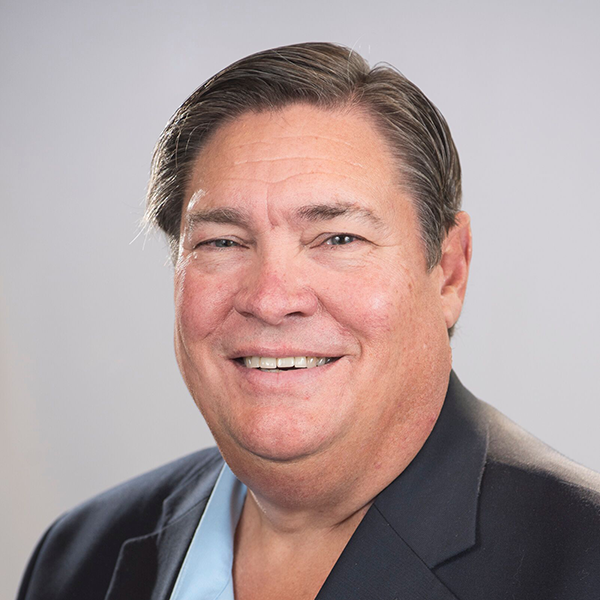
Trevor Farr started his career as a utility operator in the dairy industry. Over the ensuing 21 years, he worked his way up to a position as an environmental health and safety manager. Along the way, he earned his certification as a safety professional, and now holds a Master of Engineering in Advanced Safety Engineering and Management from the University of Alabama. Leadership, specifically safety leadership, is an outlet for Trevor to build connections, practice care, and gain people's trust. He recognizes the importance of relationships in the workplace, and the soft skills needed to influence and provide strategic value to any business. Trevor joins us from Bristol, Vermont. Welcome.
[Trevor] How are you doing, Mary? Glad to be here.
[Mary] Good, good. Let's start with a broad look at HOP — as a refresher for listeners who need it, the principles are: human error is normal, blame fixes nothing, context influences behavior, learning is vital, and response matters. Obviously incredibly condensed, but that's the broad overview. Trevor, is there anything you want to add — how would you define HOP?
[Trevor] And like you said, piggybacking off them being very broad — those don't have to be your only principles either. Some people have six or seven. HOP is really just a tool in the toolbox, one of many things safety professionals, and really leaders in general, can use to transform their mindset and their view of how their organization operates with humans.
[Mary] So what isn't HOP? I asked what HOP is — what isn't it, in other words, what do people most often get wrong about it?
[Trevor] I think it's not really a cause of increased injuries. It might be correlated, but a lot of times that has to do with the level of psychological safety we want to build as leaders and safety professionals — wanting to inquire humbly, ask open-ended questions, really dig into things, get people to open up, open those floodgates, report those little tiny things, those near misses, those risks. We can't fix what we don't know about, right? So you may very well see, in my experience, an increase in injury reports — but that doesn't mean those things didn't happen the previous year. Those hazards, that work, still happened the year before, nothing changed there. What did change is giving people the comfort and confidence to come forward, when we, as leaders, respond and show we're willing to listen and follow through.
[Mary] So what you're saying is, people often criticize HOP on the basis that it doesn't lower injuries, or even that it increases them — is that something you hear?
[Trevor] Absolutely. And it's really not something you can grab onto, it's not this physical, tangible thing — it's not like I'm going to take HOP and integrate it into everything we do here, and it's going to be the new flavor of the day. It's not a lean management tool, or Six Sigma, where we make everything super efficient, find all the errors and faults, and things just go away. There's a lot of criticism that it can't be measured — and that's true of culture, true of psychological safety, true of so many important things in the workplace, like trust and care. We probably shouldn't be measuring those things — if somebody claims they can, I'd be highly skeptical. Same with HOP — we can't measure it, it's hard to see, you're not going to see results overnight, over a week, maybe not even in a year. It might take a couple of years for real change and culture transformation to take hold, in how you look at incidents, and even at successful work. That's one of the criticisms — the lack of measurability, that lack of certainty.
[Mary] You also mentioned lack of efficiency — I think, from what I know of HOP, efficiency isn't its number one priority. As you said, digging in, humble inquiry, isn't necessarily efficient. In what situations do you think implementing HOP principles is most effective — what types of organizations, or what maturity stage, do you think it's a good fit for?
[Trevor] Great question. I think it can work for all different types of organizations, even authoritarian ones — military, sports, organizations with more authoritative cultures. I think it can work in all of them, and can be slowly effective at different maturity levels. It's going to be very tough for organizations that can't move away from applying agency when incidents happen — meaning the blame, the shame, not wanting to learn or really inquire and make sense of why things are happening. A lot of those cultures are what Edgar Schein calls anxiety-avoidance cultures — companies that don't want to change, that are just survivalists, that stay where they are and get stagnant. It's going to be really hard for those organizations to adopt all five principles. They might adopt small things, but it may not work as well at that maturity level.
[Mary] I think there's an underpinning of, if you don't want to learn, probably no tool is going to help you learn, really. Do you think HOP is new, or is it kind of a repackaging of older ideas that had already been circulating in safety?
[Trevor] Great question, and another one of those common criticisms. I don't think it's new. I always tell employees I train during onboarding, this isn't a new flavor of the day, or decade — not some revolutionary, groundbreaking thing we just discovered. It's repackaged, rebranded — a lot like High Reliability Organizations one decade, turning into Resilience Engineering the next, and then Safety Differently. We have all these things, and probably in the next ten years we'll have another name or term. It's a lot like Taylorism — a hundred years ago, you still see elements of that in business today, but now it's called Lean Management, or Five S, now Six S. I think it's very comparable to other elements of organizational function that just changes terminology — and we're still pretty terrible at those five principles, things we've known about for a long time, and still haven't fully adopted or accepted.
[Mary] I suppose if the criticism is "this is nothing new," the response is, "sure, but we clearly haven't gotten it right yet, so maybe approach it this way."
[Trevor] Absolutely, we don't have a great foot to stand on there.
[Mary] Are there valid criticisms of HOP — and I'm not saying other criticisms aren't valid, but which ones do you think people should be most aware of, the most important or reasonable ones?
[Trevor] Absolutely, there are a lot out there. I think the principle that gets the most criticism, with some real support behind it, is number two, "blame fixes nothing." I've seen a lot of credible research showing there are cases where blame does change behavior and influence people constructively — though it doesn't always fix something or have merit, we don't want to just start with blame. We may have to work our way there, and we probably don't want to call it "blame," but we do need to at least inquire, learn the context, and practice sense-making before pointing fingers and judging people right away.
[Mary] So blame isn't necessarily not the answer, it's just maybe not the best place to start from.
[Trevor] Right, and I think when Todd Conklin called it "blame fixes nothing," it was meant to emphasize how detrimental blame can be to your culture, from a negative standpoint — not literally that it fixes absolutely nothing, but as an analogy to really heighten the importance of not jumping to blame, really digging in and learning what's contributing to things, why they make sense.
[Mary] It's tough — when you're trying to share ideas, you often end up with slogans, by necessity, when it's a short phrase, and you can't capture all the nuance in it. There's usually more behind the phrase.
[Trevor] Absolutely.
[Mary] You touched on this, but in your view, does HOP increase or decrease injuries, or how does it interact with that?
[Trevor] I think it's both. As I touched on, in my experience, you see people reporting things that wouldn't have been reported before — maybe due to the culture, your leaders, or how you're measuring things and not wanting metrics to look bad, having to report it to stakeholders. When you get the workforce to accept these principles, and they see leaders and managers wanting to learn, going out to where normal work happens, really following through — you'll get small reports, a broken fingernail, little ticky-tack things — but every now and then there's a near miss, something that could be a potential SIF, something significant that's always been there, always been a risk, but never really got communicated by the workforce, normalized over the years. So yes, I do see it raising injury rates, and that's part of the learning curve HOP can really help with.
[Mary] We're going to return to our chat in a minute, but first I'm going to take a minute to talk about Safety Products Global, the company behind the podcast, and do a deeper dive into some of their more popular safety knives across their brands, Slice, Klever, and PHC.
In warehouse settings, safety competes for attention with efficiency, productivity, that sort of thing. Traditional box cutters can rust or dull, meaning laceration risks and productivity slowdowns. One solution is the Slice Box Cutters — there's a manual-retraction one, like this one, and an auto-retract option. It's an award-winning ergonomic design — I didn't prep this, but here we go, I'm going to show you in my super high-tech demo. It's ergonomic because of how you hold the blade — it requires less force to pull than to push, and it wraps around and protects — you can see my knuckles are protected from staples and that sort of thing. The blades also never rust — they're made from engineered ceramics, and they last up to eleven times longer than traditional metal blades. They also have a finger-friendly blade that's safe to the touch — now, you can still cut yourself with this, but I wouldn't be touching it like this if it were a traditional metal blade. If you want to learn more about which tools will work for your materials, you can request free samples — go to safetylabspodcast.com/samples.
Okay, now back to our interview. I'd like to continue talking HOP, but through a case study — there's a bit of setup here, bear with me. Recently there was an accident at LaGuardia, where an Air Canada plane collided with a fire truck on the runway — both pilots died, and there were multiple injuries. After the incident, you posted on LinkedIn, and there was a lot of discussion. I'd like to read the post and use it as a case study to discuss HOP principles in the context of accident investigations.
First, I want to flag an important piece of context — this was posted 48 hours after the incident, when very little information was available, and certainly by the time this episode is published, there'll be more information. Hindsight is always 20/20. So here's the important part of the post: "Applying human and organizational performance principles to this incident can enhance learning, causal recognition, and ultimately improve system resiliency and capacity. The mapping below represents my initial effort, based on some research and limited findings just a few days after the incident. It serves as a primer to instigate sense-making in a complex adaptive system. Consider the potential outcomes of a learning review involving key stakeholders and sharp-end workers — the insights generated could be invaluable."
And, dear listeners, you'll have to picture this in your head — it was followed by a mind-map-style diagram, showing links in several directions across different sections: air traffic controllers, environmental conditions, engineering controls, communications, fire truck response, human factors, and standard operating procedures. There were 43 comments on this post, and I wanted to ask about your response to some of the points raised. Is there anything else you want to add about the initial post?
[Trevor] No — only that it took me maybe an hour, so this could have been much more in-depth, gone back further in time, really dug into the culture — LaGuardia as an airport wasn't even on there. There's so much more, and it was just me. So this was more of a proof of concept, not, "today I've solved everything."
[Mary] The first comment was around causal learning — not quoting directly, but the point was something like, "causal learning is perhaps a misleading approach because it exists within a specific belief system, we don't know anything yet, just that we have to watch out for witch hunts and scapegoating." What's your response to that, the idea of causal learning at this early stage?
[Trevor] I'm not totally sure what the intention of that comment was, but it's likely, like a lot of comments on there, jumping the gun a bit, making some assumptions — which isn't necessarily wrong, but I think that's what it's tied to. It's only 48 hours after, we don't know a lot yet, until the professional investigators, the NTSB, the FAA, really start digging in.
[Mary] Someone else commented, not critically I don't think, on the importance of foregrounding questions and distinguishing between observations and inferences, to resist creating narratives — which I think might be what you mean by "jumping the gun."
[Trevor] Correct, yep. What we want is a good starting point for learning — we want to recognize that we have biases, that we're going to come in ready to fire off conclusions, "this person was stupid," "they were clearly at fault." We want to recognize that and look further out into the system as a whole. We still want the agents on the map, but we really want to look at the systems, the processes, gather context, and that's what the mapping process does. The inferences — the map was really built around a lot of questions, the open-ended questions we want to start a learning review with, so we can dig even further.
[Mary] I've done something similar in a completely different field, content — and I find it's not even the finished product so much as the discussion. You did this by yourself, but ideally, this kind of review process wouldn't be a single person, it'd be a discussion among a lot of different stakeholders, I'd guess.
[Trevor] Correct — you'd want to include people at the sharp end, controllers, pilots, leaders at the airport, all different levels of stakeholders. You may have only a few investigators — I'm sure the NTSB is really good at this, unfortunately they've had plenty of reactive opportunities to respond. But a lot of organizations don't like to include sharp-end workers, interviewing the right people, even people not directly involved — and that's when you really start to learn about influences, near misses, normalizations, interactions between processes. With only a few investigators, the challenge is that they're the ones judging what's fact versus fiction, and "fact" is a very constructed term — what one person finds to be a fact, someone else may not. You see that in juries all the time, hung juries — why does that happen? You've got to be careful if you're just going to have investigators gather information, sit down, and declare, this is fact, this is fact, this is fact. I think you really have to pull in sharp-end workers, and people with different perceptions and experiences.
[Mary] I think "fact" comes back to measurement, right — in the jury analogy, a witness says they saw someone do something, is that a fact? The jury has to decide, because they have to decide whether that witness is credible, lying, or not. That brings me to the next point — a couple of comments pointed out, "we can only work with evidence and facts, we need facts to prove system weaknesses instead of just assuming them."
[Trevor] That was a great comment, it really provoked a deeper conversation, and I remember working with that gentleman in the thread to meet in the middle, agree to disagree on some things. Facts and evidence are great, and that's what investigators are paid to find — and what society, culture, politicians, whoever, pressure them to do, sometimes negatively. But what we really want is what's correlated too, not just what's caused, not just causal factors, but what's correlated — is there something in our culture we can't measure that allows risk-taking decisions to happen? That's not necessarily a "fact" from a measurable standpoint, but it's something you can clearly learn from and apply going forward.
[Mary] An example of that is commercial pressure — production pressure or whatnot. We want you to do things safely, but there's also this huge commercial pressure to keep production going, so risk-taking in some places becomes normalized, because, sure, we have to be safe, but we also have a deadline.
[Trevor] Absolutely, and I'm glad you brought that up, because I read something yesterday that sparked this for me — and I don't know if it's confirmed true, but apparently this air traffic controller stayed on shift, somewhat against recommendations, after something like this happens. You have to wonder about his mental state, continuing to make decisions on that runway. Why did he stay on? Because they only have two people on at night, already a high workload, planes can't just stop, there's still stuff going on, so they needed him to stay. There's organizational pressure right there. What if he made another bad decision, already behind the eight ball, likely mentally unstable after something like that? There's risk the organization is taking on too. So there's a lot of risk-taking happening, and mapping it out, interviewing, asking open-ended questions, will surface some of that risk-taking behavior and activity.
[Mary] Which leads right into the next one — about the mapping itself. One comment said mapping the questions is a good way to present them, but that a traditional investigation, given enough time, would arrive at the same place — that the mapping isn't actually that important. What do you think of that?
[Trevor] Again, going back to not having a great foot to stand on — when you look at previous investigation reports, the terminology, the agentive language, the blame baked in, there aren't a lot of genuinely good reports out there. I think we have to transform the investigative process — even change "investigation" to "inquiry," and "investigator" to "inquirer." Just that change in terminology opens up the floodgates a bit, sets a more even playing field. I really think we have to get better at investigations. I've worked for a lot of organizations that still use "investigator," "safety officer," terms that don't really help us — we're already behind the eight ball when we want to genuinely learn and investigate. With mapping, if you put the question in the middle, "why did this make sense," and branch out from there, everything's fair game — you don't see that in a lot of investigative reports. Andrew Hopkins has written some good ones, but most reports don't include culture, decisions made by upper-level CEOs, budgetary decisions, things that clearly correlate to why we're doing what we're doing. So I think it's a bit of both — there are probably some good investigations out there, but I don't think there's a strong foundation to keep going down the path we're on. We've got to change the language, dig deeper, find more context, just like the HOP principles ask us to.
[Mary] I think changing the language — people might say, what's the difference, a rose is a rose — but it signals to people, hey, we're reframing this, doing something different, pay attention. Everyone learns differently, but with mapping, I've found that putting it up visually in front of everyone, people often see concepts that aren't obviously connected on the map, and think, wait, we're talking about this now, but it actually circles all the way back to a seemingly unrelated topic.
[Trevor] A lot of people are visual learners, so this visual management can be key to getting sharp-end folks, sitting in a learning review, to open up even more. It's natural, how our brains work and the things we think of — the map can capture that dialogue, that conversation. Just because it's on the map doesn't mean it's necessarily relevant, but we're capturing it, and maybe we come back to it later, "actually this is related to that," and it sparks even more inquiry, even deeper digging.
[Mary] Another comment, I think about the map, said it "clearly shows that errors are not causes." Can you comment on that? I have to admit, I'm not fully sure I understand what they're getting at.
[Trevor] What they're getting at is really HOP principle number one, that humans are fallible — humans make mistakes, we make errors, and we don't want to "fix the human." Ninety-nine point nine percent of the time, these aren't bad apples — the bad apple theory says it's a bad-apple air traffic controller who made this decision, we need to fire him, set an example, and this'll never happen again. No, that's not true. What we want to look at is, what are the system weaknesses, where are our processes and systems brittle, that allowed this air traffic controller to make this mistake? It's absolutely horrible, and I'm sure this person has to live with this decision for the rest of his life — but the system failed him. How was this allowed to happen? That's what we need to look at, when we're mapping and diving deep — does our system have the resiliency, the capacity, the margin — a lot of terms thrown around in the safety profession that mean roughly the same thing — do we have a buffer, a place where mistakes can happen, since we know humans are unreliable, and not have something as undesirable as that consequence occur? What can we put in place? When you look at the map, what that person's pointing to is the runway lighting system, the automation involved, the fire truck's transponder, all these technological systems in place that can create margin.
[Mary] I was thinking, my husband always says everything's "comms," he works in emergency radio. Anyway, is there anything else you wanted to add on this?
[Trevor] I've got a good example, go ahead.
[Mary] Go ahead.
[Trevor] You mentioned your husband — I get into a lot of conversations with my wife about something in the news, and a perfect example is someone leaving a kid in the back seat of a car. Your first instinct is, that's a terrible parent, I would never do that — and it's usually the best parents in the world. What happened is something within the system changed — the routine, the habit of the day, something on their mind — something changed, and the system didn't allow them to account for that change. They went about their day and forgot, right? They didn't wake up that morning wanting to leave their kid in the car, just like this air traffic controller didn't wake up that morning wanting that plane to crash and kill two pilots.
[Mary] I find people who are most judgmental about that scenario haven't experienced the sleep deprivation that is parenthood, because it's a real factor.
[Trevor] It is.
[Mary] Anyway, I want to shift focus, but is there anything else about HOP you'd like to say, anything you want people to understand about it?
[Trevor] In a lot of what we talked about today, I think the biggest gap in organizations that HOP can really help fill is learning-based safety. A lot of companies are stuck traditionally at a certain step in the process — stuck in single-loop learning. Causal mapping and HOP really push us toward double-loop learning, where we don't just say "this is why this happened," we keep finding other contributing factors behind why that happened. Take the LaGuardia incident — maybe there wasn't a transponder on that fire truck. Okay, let's dig into the budget, other decisions, standards — was it required, or just recommended? If it was just recommended, why was it only recommended, what contributed to that regulatory decision? We want that double-loop learning, where the wheels are constantly turning.
[Mary] Double, triple, quadruple loop, really — I don't think there's necessarily a point where, budget aside, you could say we've learned everything about this. Like science, there are always new questions.
[Trevor] Absolutely, you could go back and revisit something from ten years ago and find new things.
[Mary] I also want to talk to you as someone who shifted into safety more recently than many of our guests. Can you describe your transition into safety — why that path, and what steps did you take?
[Trevor] I originally spent four years in quality management, in a couple of different roles in food safety, and realized it aligns very well with safety — there are still regulations, still food safety standards, so it was already in my wheelhouse. I had a huge learning curve, though — learning OSHA, EPA, different regulatory agencies, consensus standards, it's overwhelming, mind-boggling how many rules there are. The transition worked well for me — I was used to dealing with regulators, inspectors coming in to inspect our food facilities, and it really isn't that different. It's still important, still high risk and high consequence, whether you're talking about food or workplace hazards. An opportunity opened up, I love to learn, take on a challenge — it's definitely been challenging. I'm a young safety professional, only five years of experience, so my perspective may not be the same as a thirty-year veteran.
[Mary] On that note, a lot of the people I speak with who are closer to the end of their careers didn't necessarily get a formal safety education — I'm sure there's been OHS training, but I think there's more formal education available now than ever before, and a lot of long-time safety professionals didn't have a degree specifically in this. You did get that opportunity — what did you think of the formal part of your education? Is there anything you'd change, do you think it prepared you well?
[Trevor] It was a great program at UAB, and I'd recommend it to anybody. Is it the magic elixir? Is it going to make me the perfect safety professional, guarantee success in the profession or for an organization? No — I don't think there's a magic list of ingredients, "take this training, this degree, and you're all set." If somebody had found that perfect recipe, we'd all be doing it, and we'd all be succeeding. I do think a lot of people who've been in safety a while learned more hands-on, a bit closer to the work, back in the day, and weren't as overwhelmed with rules and standards and all this learning. Today it's turned into this huge ecosystem of terms, theories, concepts, methods — it seems like every day somebody comes out with something new, which can be overwhelming for someone who's been doing it for thirty years. They probably think a lot of that's just, "this is how I did it thirty years ago, and it's worked for me" — and that's fine, there's nothing wrong with that, it may well be true. It's different for every organization, every culture.
[Mary] You mentioned, when we spoke earlier, that diving into safety topics as a total beginner was overwhelming. Can you describe what that was like, and how you found your way out of the overwhelm, or did you?
[Trevor] Great question — I don't know if you ever fully find your way out of the overwhelm as a safety professional, I think that just comes with the job. But early on, getting into the UAB program, being new to safety, seeing all these theories — I have a big presence on LinkedIn, so you see all the methods, all the theories, everything people are working on, and at the same time, since I'm still a working professional, I'm thinking, will this work for my workplace, I don't know if this works for my culture, this might work for that team but not that department — and then it's like, man, what's the actual answer? I'd also read a lot of books, Charles Perrow and others, and it was definitely overwhelming. As I got further into the UAB program, it became much more focused — risk assessments, drafting system programs — but there was also HOP, which helped, because it's so broad it kind of captures a lot of those other ideas, and you can see how they all connect and make sense, given how broad the HOP principles are, if that makes sense. That's when it started clicking for me.
[Mary] I think a lot of university programs aren't so much telling you what to think, as showing you how to think, how to think critically — and HOP seems like a model, a kind of filter you can look at safety through.
[Trevor] For example.
[Mary] Do you have advice for listeners who are also feeling overwhelmed, regardless of where they are in their safety career?
[Trevor] I always like to say safety is fifty percent rules, fifty percent care and the humanistic side of things — you can't have one without the other, you need both. If you're looking at a program, UAB was a good one, with technical classes on the rules, but also classes on language, HOP, the humanistic side. You need that blend. There's going to keep being more rules, that's not going anywhere — more and more rules — but that's going to make the humanistic side even more essential, because you need to be able to influence people to actually follow those rules, and learn why rules don't get followed, once you get into mapping and sense-making. So you really want that blended approach.
[Mary] I was thinking that a lot of formal safety education historically lived in engineering departments, and I'm seeing a shift now where people are asking, what about the humanities, the social sciences, psychology? What's your sense of how the industry has evolved over the past, and what are your hopes for its future?
[Trevor] Similar to what I said before — I still see a lot of people stuck in traditional safety management, that safety-officer, safety-cop mentality, which you still see with behavior-based safety. Organizations are still stuck on that — it may be great, but they're not rolling it out right, still calling it "behavior," which carries a negative connotation. Why not call it learning-based safety? I think there's still a lot of work to bring the humanistic side into safety, whether that's psychology, psychosocial factors getting a lot of attention now, cognitive science — things people can't measure, but which we can't ignore, since we're human, not machines. We don't want to focus a hundred percent on rules. There's still a lot of work to move safety in a direction that finally moves the needle on fatalities, which have stalled for the last two decades.
[Mary] I think there's a discomfort with uncertainty, which brings us back to, if you can't measure it, it makes people uncomfortable — but it's very difficult to measure culture, or influence, that sort of thing. If you had a magic wand, assuming you couldn't wish for anything else, where would you focus training for the next generation of safety professionals?
[Trevor] Great question. We talked a lot about learning today, and I think that has to be a huge focus, a broad topic. A lot of what we mentioned — teaching safety professionals humble inquiry, the TED questions, "tell me," "explain to me," "describe to me," "show me," open-ended questions, how to build authenticity, build working relationships, earn respect, show genuine care, those soft skills. I think organizations, and business generally, are still heading in the wrong direction with AI, software, technology, computer programs doing the work for us, and we're eroding the human side. We need to recognize, with new safety professionals, that the human side is just as important, and we can't keep using AI to do our job for us. Going out and having a conversation with somebody, building a good working relationship, is going to help me learn about their job, their challenges, what they need — and AI isn't going to do that. AI isn't going to go have a conversation with someone and surface all those normalizations, error traps, the way they actually do things. AI might point out that something's a hazard because OSHA 1910.146 says so, but it's not going to say, "this, this, this, and this together create an error trap."
[Mary] And it's not going to say, "I walked into the room and sensed from the mood that this isn't psychologically safe," or "people are speaking up, but I can see in their eyes that they're frightened," that sort of thing.
[Trevor] Absolutely, yep.
[Mary] If you could go back in time to the beginning of your safety career, however you define that, what's one piece of advice you'd give yourself?
[Trevor] That wasn't that long ago, only about five years.
[Mary] You make it sound like I'm asking you to go back three decades. However you define it — you could define it as the beginning of your entire career, but I'm more focused on the safety part.
[Trevor] Same thing we kind of talked about — I started off, coming out of quality, with a learning curve, so I immediately took an OSHA 30, a 24-hour environmental course, started reading the 1910 book, creating spreadsheets on all the standards, where we stood on compliance, all of that — I became standard-crazy, and spent so much time early in my career on that. It really wasn't until I got into the UAB program that I realized there's so much more to it — the psychology, the cognitive science, human factors. I wish I'd done a bit of both early on, instead of focusing so heavily on standards. I think a lot of young safety professionals are the same way — "I've got to get my 500 classes, my OSHA 30, all these certificates, learn these standards" — that's not really the right direction. Now, some people hearing me say that might think, whoa, we've got rules, we absolutely have rules, of course — but it's about how we get people to understand those rules, why they're important, what the stories are behind them. There's always a story behind why a rule exists, and it's usually a pretty impactful one. That's the human side of things, and it's so important.
[Mary] How can our listeners learn more about any of the topics we've discussed today — books, groups, websites you'd recommend?
[Trevor] Absolutely, there are tons of books out there. I have one I always recommend — I don't know if I can show it on camera, but I'll try. This is one I always kept at my desk, and highly recommended to leaders in the organization — it's called "From Compliance to Care." It covers the psychology, the assumptions, the culture, and really how to learn to create working relationships, that psychological safety, a lot of what HOP starts to transform our mindset around. It has practical examples. The author is Clive Lloyd, he's on LinkedIn, I highly recommend following him. It's a quick, easy, user-friendly read — maybe a hundred pages, not super technical, I hate those technical books where you need a week-long break — you can read this in a couple of days, and there are a lot of "aha" moments, "this is something I can work on as a leader, we do this without meaning to, and this is the result." It gets into zero harm too, and a lot of things organizations still do without realizing the negative effects. Great book, highly recommend it, and following him on LinkedIn.
[Mary] Since you set me up so well — we actually have an episode where I interviewed Clive Lloyd about that book, and coming up, I'll give you a bit of a sneak peek, I'll be interviewing him again for a deeper dive into the book, so watch for that. It's one of our more popular earlier episodes, so it's clearly resonating with people. Where can our listeners find you on the web?
[Trevor] I have a big presence on LinkedIn, linkedin.com/the EHS guy, so please follow me — I like to write articles there, things that come to mind, talk a lot about the stuff we covered here today.
[Mary] Great. Well, that's this week's show. Thanks for joining me, Trevor.
[Trevor] Absolutely, I'm honored to be here.
[Mary] We'll of course link to your LinkedIn profile in the show notes, so look for that, folks. A big thank you to our listeners and the Safety Labs team. Bye for now. This podcast is created by Safety Products Global, the world's leading manufacturer of safety knives. Through our trusted brands, Klever, Slice, and PHC, we empower companies to prevent injuries by providing safer cutting tools for every material and application. Until next time, stay safe.